
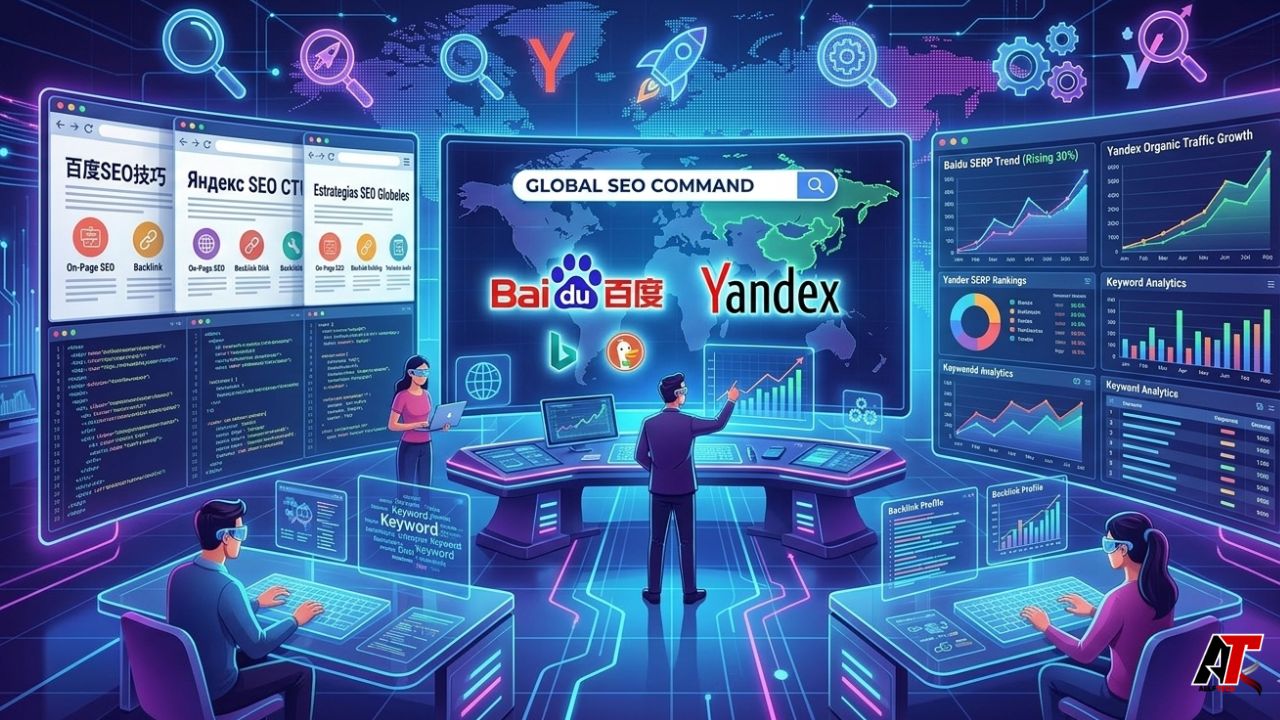
As digital landscapes expand, relying solely on Google is no longer enough for global brands. Creating a comprehensive Digital Strategy means acknowledging that billions of searches happen daily on alternative platforms like Baidu, Yandex, Yahoo, and within specific browser environments like Safari. By understanding how to optimize for these distinct ecosystems, businesses can tap into highly lucrative, less saturated markets and secure a truly borderless online presence.
Baidu SEO Company and Baidu SEO Service: What Businesses Need
China’s search market operates behind a unique digital firewall, making it inaccessible to traditional Google tactics. To succeed in this massive market, Western businesses frequently partner with a specialized baidu seo company. Navigating this ecosystem requires native fluency, deep cultural understanding, and strict technical compliance.
A comprehensive baidu seo service goes far beyond translating English blog posts into Mandarin. It involves navigating Chinese Internet Content Provider (ICP) licensing, securing local hosting inside mainland China, and adapting to Baidu’s heavy reliance on its own digital properties (like Baidu Baike and Baidu Zhidao). For a deeper dive into finding the right partner in this region, explore our Baidu SEO insights.
Baidu SEO Tool: What to Track and Test
Because Google Analytics and Google Search Console are often blocked, severely delayed, or inaccurate inside China, optimizing your site requires a dedicated baidu seo tool. Platforms like Baidu Webmaster Tools (Ziyuan) and Baidu Tongji are absolute necessities for tracking indexation rates, monitoring mobile performance, and submitting new URLs directly to the crawler.
These tools allow marketers to identify crawl errors specific to Baidu’s spider (Baiduspider) and test how quickly content is indexed. Furthermore, leveraging AI in digital marketing within these platforms is increasingly helping brands decipher Baidu’s complex natural language processing algorithms to better match Chinese user intent.
Yandex SEO Consultant: When Regional Expertise Matters
In Russia and surrounding Eurasian markets, Yandex commands a massive share of search traffic. Hiring a dedicated yandex seo consultant is highly recommended because Yandex evaluates websites differently than Google. The algorithm, heavily influenced by its MatrixNet machine learning, prioritizes distinct regional and behavioral signals.
A Yandex expert knows that this search engine weights user behavior metrics—such as dwell time, bounce rate, and click-through rate—much more aggressively than Google. Additionally, Yandex requires precise geotargeting down to the specific city level. Providing Advanced SEO Services for this region requires deep localization, not just direct translation, to ensure grammatical perfection, as Yandex penalizes poor Russian morphology.
Monitor Yahoo SEO: Measuring Non-Google Search Visibility
While Yahoo might seem like a legacy platform in the US, it remains incredibly popular in regions like Japan (Yahoo! Japan) and Taiwan, and it still holds a dedicated user base globally. To effectively monitor yahoo seo, marketers must look under the hood. In most global markets, Yahoo’s organic search results are actually powered by Microsoft’s Bing algorithm.
Therefore, monitoring Yahoo visibility involves setting up and tracking Bing Webmaster Tools. By segmenting your traffic sources in your analytics platform, you can measure exactly how much revenue these alternative search engines drive, ensuring you don’t ignore a reliable, low-competition traffic stream.
Safari SEO: What It Means in Practice
A common point of confusion is the concept of safari seo. Safari is a web browser, not a standalone search engine—it defaults to Google for web searches. However, “Safari SEO” refers to optimizing for the broader Apple ecosystem and browser environment.
In practice, this means ensuring flawless technical performance and mobile responsiveness on iOS and macOS devices. It also involves optimizing for Apple’s native Spotlight search and Siri suggestions. By embracing semantic SEO and robust Schema markup, you ensure your content is structured clearly enough for Apple’s web crawler (Applebot) to extract and display in rich iOS results, while also adapting to Safari’s strict Intelligent Tracking Prevention (ITP) privacy rules.
Key Differences Between Google, Baidu, and Yandex SEO
Understanding the varied priorities of these search engines is crucial for international success.
Google Focus
Prioritizes high-quality backlinks, mobile-first indexing, Core Web Vitals (speed and UX), and advanced semantic understanding (E-E-A-T). Global reach with universal guidelines.
Baidu & Yandex Focus
Baidu: Requires local Chinese hosting/ICP licenses, heavily favors fresh content, respects meta keywords, and prioritizes Baidu’s own properties.
Yandex: Heavily weighs user behavior metrics, demands exact regional targeting, and analyzes complex Russian linguistics and morphology.
Common Mistakes in Non-Google SEO
The most frequent error global marketers make is blindly applying Google tactics to other platforms. Ignoring local link-building practices, failing to submit XML sitemaps to regional webmaster tools, and neglecting localized hosting will severely limit your reach. By reviewing international SEO case studies and staying updated with digital marketing insights, you can avoid these costly missteps.
Building a Smarter Multi-Engine SEO Strategy
Global dominance requires a multi-engine approach. Whether you are optimizing for Baidu’s strict Chinese regulations, Yandex’s behavioral algorithms, or ensuring Applebot can parse your site in Safari, adapting to the local digital environment is key to capturing international revenue. Ready to see how your site performs beyond Google? Request a free SEO audit today, and let Aelftech build a truly global search strategy for your brand.
Frequently Asked Questions (FAQs)
1. What does a Baidu SEO service include?
A comprehensive Baidu SEO service includes Chinese keyword research, content localization into simplified Mandarin, technical compliance (such as ICP licensing guidance and local hosting setup), Baidu Webmaster Tools configuration, and link-building within the Chinese digital ecosystem.
2. When should a business hire a Baidu SEO company?
A business should hire a Baidu SEO company when they are ready to actively target the mainland Chinese market. Because the ecosystem requires native language proficiency, cultural understanding, and navigation of complex internet regulations, specialized local expertise is mandatory.
3. What is a Baidu SEO tool used for?
A Baidu SEO tool, such as Baidu Webmaster Tools (Ziyuan) or Baidu Tongji (their analytics equivalent), is used to monitor site indexation, track keyword rankings, identify crawl errors, and analyze user behavior specifically within the Baidu search engine environment.
4. What does a Yandex SEO consultant do?
A Yandex SEO consultant optimizes websites for the Russian and Eurasian markets. They focus on strict regional geotargeting, optimizing for Yandex’s heavy reliance on user behavior metrics (like dwell time), and ensuring content meets high morphological and grammatical standards in Russian.
5. How do you monitor Yahoo SEO performance?
Because Yahoo’s organic search results are largely powered by Microsoft Bing, you can monitor Yahoo SEO performance by setting up Bing Webmaster Tools. Additionally, you can filter your traffic sources in Google Analytics to track visitors specifically arriving from Yahoo search.
6. Is Safari SEO the same as search engine optimization?
Not exactly. Safari is a web browser, not a search engine. “Safari SEO” refers to ensuring your website performs flawlessly on iOS/macOS devices, adheres to Apple’s privacy tracking rules (ITP), and uses structured data so that Applebot can display your content in Siri suggestions and Spotlight search.
7. Is non-Google SEO worth it for international businesses?
Yes, absolutely. In markets like China (Baidu) and Russia (Yandex), Google holds a very small market share. Furthermore, optimizing for Bing and Yahoo captures millions of desktop users globally, often with higher conversion rates and lower competition.
8. Do I need different SEO strategies for Baidu and Google?
Yes. Baidu and Google have completely different algorithms and technical requirements. For example, Baidu favors websites hosted in China, still considers meta keywords, has different mobile rendering rules, and places a high priority on its own web properties compared to Google.
Leave a Reply