
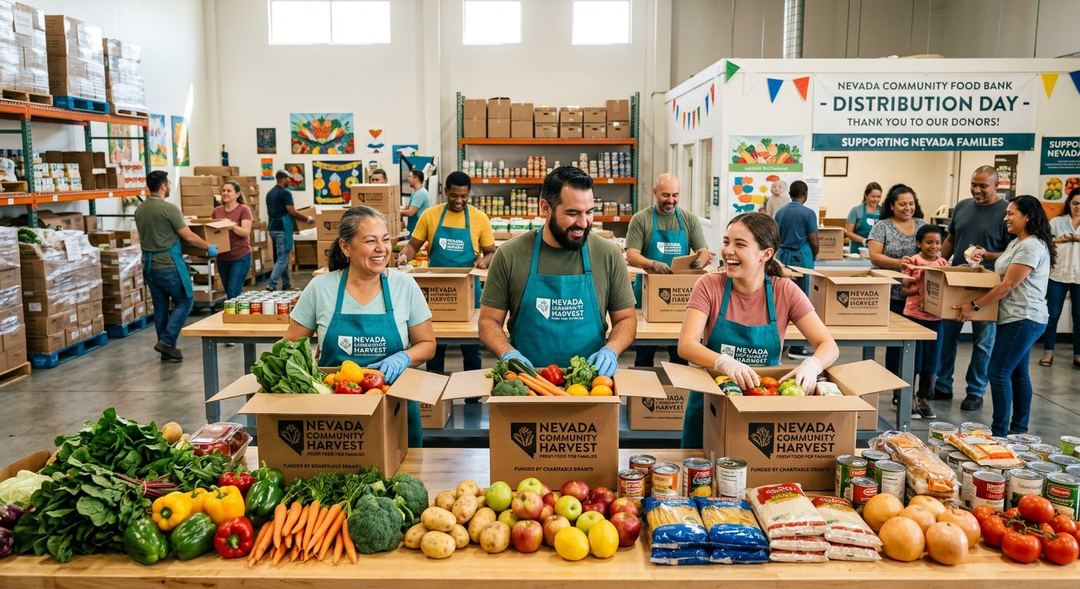
Nevada’s nonprofit organizations play an important role in addressing community needs, supporting vulnerable populations, expanding educational opportunities, and strengthening local economies. From food assistance programs in Las Vegas to rural healthcare initiatives and environmental conservation projects, charitable organizations contribute to the well-being of communities throughout the Silver State. Access to grants for nonprofits can help these organizations maintain essential programs, develop new services, and respond to changing community priorities.
However, securing grants for nonprofits requires more than identifying available funding. Organizations must demonstrate a clear mission, establish financial accountability, understand eligibility requirements, and communicate measurable community benefits. For Nevada nonprofits operating in urban, suburban, and rural communities, a structured funding strategy can improve grant readiness and help organizations pursue opportunities aligned with their long-term goals.
Understanding the Role of Nonprofit Organizations in Nevada
Nonprofit organizations serve communities by addressing social, educational, cultural, environmental, and economic needs.
Unlike businesses organized primarily to distribute profits to owners, nonprofit organizations operate to advance defined missions.
Depending on their legal structure and tax classification, these missions may include charitable, educational, religious, scientific, or other qualifying purposes.
Nevada nonprofits work across many sectors.
Common areas of activity include:
- Food security and emergency assistance.
- Affordable housing and homelessness prevention.
- Youth education and development.
- Healthcare access and community wellness.
- Environmental conservation.
- Arts and cultural programs.
- Workforce development.
- Disability services.
- Senior support.
- Community development.
The availability of grants for nonprofits can influence how organizations plan and deliver services.
However, grants are only one part of nonprofit financing.
Donations, earned revenue, sponsorships, memberships, and fundraising events may also support operations.
Why Nonprofits Matter in the Silver State
Nevada includes major metropolitan areas, rapidly developing communities, and geographically dispersed rural regions.
These different environments create varied service needs.
Organizations in Las Vegas and Henderson may focus on urban housing challenges, youth development, and community assistance.
Reno and Sparks nonprofits may support education, healthcare, arts, and regional development.
Rural organizations may address transportation barriers, limited service availability, and access to essential resources.
A nonprofit’s effectiveness depends on understanding the specific community it serves rather than applying the same solution everywhere.
Why Funding Stability Is Important
Nonprofits often operate with limited financial flexibility.
Restricted funding, fluctuating donations, and increasing operating expenses can make long-term planning difficult.
Grants for nonprofits may provide resources for particular projects or organizational needs.
However, many grants have defined spending restrictions and reporting obligations.
A responsible funding strategy should therefore balance grant opportunities with other sustainable sources of support.
What Are Grants for Nonprofits?
Grants for nonprofits are financial awards provided by governments, foundations, corporations, or other funding organizations to support eligible charitable activities.
Unlike ordinary commercial loans, grants generally do not require repayment when recipients comply with the award conditions.
However, grants are not unrestricted gifts in every case.
Funders may specify how money must be spent, what outcomes should be achieved, and which reports must be submitted.
How Nonprofit Grants Work
The grant process usually begins when a funding organization identifies a charitable objective or program priority.
Eligible nonprofits may then submit proposals explaining how their activities align with that objective.
Applications often require organizational information, project descriptions, budgets, and supporting documents.
Funders evaluate proposals according to their published criteria.
Successful applicants receive an award agreement outlining the terms.
Common Types of Nonprofit Grants
Different grants support different needs.
- Program grants fund defined services or activities.
- General operating grants support eligible organizational expenses.
- Capital grants help finance facilities or major equipment.
- Capacity-building grants support organizational improvements.
- Research grants fund qualifying investigations or studies.
- Matching grants require recipients to secure additional eligible funding.
- Emergency grants may address urgent needs following qualifying events.
Understanding these distinctions helps Nevada organizations pursue appropriate opportunities.
7 Powerful Strategies for Finding Grants for Nonprofits in Nevada
Finding suitable funding requires a systematic approach.
The following strategies can help Nevada nonprofit leaders identify opportunities and prepare stronger applications.
1. Research Federal Grant Opportunities
Federal programs can provide funding for eligible nonprofit activities.
The United States government administers grants through different departments and agencies.
Funding priorities may include education, healthcare, housing, workforce development, environmental protection, and community services.
Use Grants.gov
Grants.gov is the federal government’s centralized portal for finding many discretionary grant opportunities.
Organizations can search funding announcements by agency, eligibility category, and program area.
However, not every federal funding opportunity is available directly to every nonprofit.
Some programs provide money to state or local governments, which may distribute funding through separate processes.
Understand Federal Eligibility
Federal grants for nonprofits may require specific organizational qualifications.
Certain programs accept organizations with recognized tax-exempt status.
Others may permit different legal entities or partnerships.
Always review the eligibility section of the individual funding announcement.
Prepare for Federal Registration
Organizations applying directly for many federal awards must complete applicable registration requirements.
These commonly include obtaining a Unique Entity ID and maintaining an active registration in the System for Award Management, known as SAM.gov.
Additional requirements may apply.
Applicants should allow sufficient time for registration and verification before deadlines.
2. Explore Nevada State Government Funding
Nevada state agencies administer or coordinate funding programs connected to public priorities.
These may include healthcare, education, housing, workforce services, and community development.
Some programs use federal funds distributed through state-level systems.
Others involve state-authorized resources.
Finding State Funding Opportunities
Nonprofit leaders should review official Nevada government websites relevant to their mission.
For example, organizations working in healthcare or human services may monitor appropriate state health and social service agencies.
Education-focused organizations may review opportunities associated with education programs.
Environmental nonprofits may identify relevant conservation or natural resource initiatives.
Why State-Level Alignment Matters
State funding programs often have specific policy objectives.
An organization seeking grants for nonprofits should demonstrate how its activities contribute to the program’s stated goals.
Applications that do not meet the eligibility requirements are unlikely to succeed, regardless of the project’s broader value.
3. Research Nevada Community Foundations
Community foundations are important participants in charitable funding.
They may administer grant programs, donor-advised funds, and other philanthropic resources.
However, each foundation establishes its own funding priorities and eligibility conditions.
Community Foundation of Northern Nevada
The Community Foundation of Northern Nevada is an established philanthropic organization serving communities in northern Nevada and beyond.
Its activities include charitable fund administration and community-focused philanthropy.
Nonprofits should review the foundation’s current website to identify relevant opportunities.
The existence of a foundation does not mean every organization can apply for unrestricted funding.
Nevada Community Foundation
Nevada Community Foundation supports charitable giving and philanthropic activities associated with Nevada communities.
Organizations interested in potential funding should verify current grant programs and application requirements.
Funding availability may change over time.
Why Foundation Research Matters
Foundation grants for nonprofits may emphasize particular populations, geographic areas, or community outcomes.
Before applying, review the funder’s mission and recent public information.
This can help determine whether the opportunity aligns with the nonprofit’s work.
4. Build Relationships With Corporate Giving Programs
Some businesses support nonprofit organizations through charitable giving, sponsorships, employee volunteering, or community investment initiatives.
Nevada’s economy includes industries such as hospitality, entertainment, logistics, healthcare, technology, and financial services.
Companies operating in these sectors may maintain charitable programs.
However, corporate support varies widely.
Corporate Grants vs Sponsorships
Corporate grants generally provide charitable support under defined funding conditions.
Sponsorships may involve promotional or commercial arrangements.
The legal and accounting treatment can differ.
Nonprofits should understand the terms before accepting funds.
Develop Meaningful Partnerships
A strong corporate relationship should reflect shared community interests.
For example, a workforce development nonprofit may seek collaboration with employers interested in expanding employment opportunities.
An environmental organization may connect with businesses supporting conservation initiatives.
These partnerships should be based on genuine alignment rather than assumptions about available funding.
5. Identify Local Government Opportunities
Cities and counties may administer programs supporting eligible community services.
Funding availability depends on local budgets, federal allocations, and program rules.
Some Nevada jurisdictions participate in federal community development programs.
Community Development Block Grant Funding
The Community Development Block Grant program, commonly called CDBG, supports eligible community development activities.
The U.S. Department of Housing and Urban Development oversees the federal program.
Certain local governments receive allocations and administer qualifying projects.
Nonprofit organizations may participate through eligible arrangements, depending on local requirements.
However, CDBG funding is not a general grant program available for every nonprofit activity.
Projects must satisfy applicable national objectives and other rules.
Contact Local Funding Administrators
Nonprofits should monitor official city and county announcements.
Local funding opportunities may have short application periods.
Maintaining contact with relevant administrators can help organizations stay informed without relying on outdated directories.
6. Use Specialized Nonprofit Grant Databases
Grant research platforms can help organizations identify private and public funding opportunities.
Some databases provide information about foundations, historical awards, and funding priorities.
Examples include Candid’s nonprofit and foundation research resources.
However, access conditions and subscription requirements vary.
Benefits of Grant Research Tools
Research databases may help nonprofits:
- Identify funders supporting similar missions.
- Review available funding history.
- Find geographic funding priorities.
- Compare eligibility requirements.
- Organize application deadlines.
- Discover potential partnership opportunities.
- Reduce time spent reviewing unsuitable programs.
These tools should complement official funder information.
A database listing does not guarantee that a grant is currently open.
Verify Every Opportunity
Before investing time in an application, confirm the program through the funder’s official website.
Check deadlines, eligibility, required documents, and award conditions.
Avoid websites requesting suspicious upfront payments or sensitive financial information without clear legitimacy.
7. Develop a Long-Term Grant Funding Strategy
Successful grant seeking involves more than responding to individual announcements.
Organizations benefit from a structured approach to funding development.
Create a Grant Calendar
A grant calendar helps track opportunities, deadlines, reporting obligations, and renewal periods.
It can include:
- Funding organization.
- Program name.
- Application deadline.
- Eligibility requirements.
- Funding purpose.
- Required documents.
- Internal responsibilities.
- Decision timeline.
This information helps teams plan their workload.
Prioritize Suitable Opportunities
Not every available grant deserves an application.
Organizations should evaluate mission alignment, funding restrictions, administrative requirements, and the likelihood of delivering the proposed activities.
A smaller, well-matched opportunity may be more useful than a larger award with unsuitable conditions.
Diversify Funding Sources
Heavy dependence on one grant can create financial uncertainty.
A diversified strategy may include individual donations, earned income, corporate partnerships, and multiple appropriate grants.
Diversification does not eliminate funding risk, but it can reduce reliance on a single source.
Major Sources of Grants for Nonprofits in Nevada
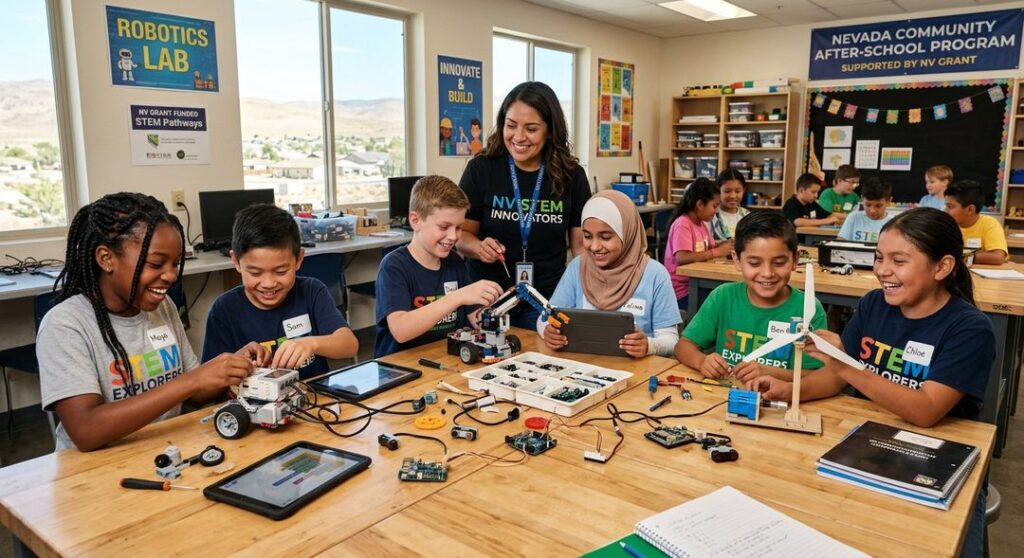
Nevada nonprofits can explore several categories of funding.
| Funding Source | Potential Focus | Where to Research |
|---|---|---|
| Federal agencies | Education, healthcare, housing, research, community services | Grants.gov |
| Nevada state agencies | State program priorities | Official Nevada government websites |
| Community foundations | Local philanthropy and community needs | Foundation websites |
| Corporate giving programs | Community investment and charitable initiatives | Company giving pages |
| Local governments | Eligible neighborhood and public service projects | City and county websites |
| Private foundations | Mission-specific charitable activities | Official foundation information |
| Grant research platforms | Funding discovery and research | Established nonprofit databases |
Eligibility and availability vary by program.
This comparison should be used as a research starting point rather than a list of guaranteed funding sources.
Who Is Eligible for Nonprofit Grants in Nevada?
Grant eligibility depends on the funder’s rules.
However, many charitable funding programs require applicants to demonstrate a legitimate nonprofit purpose and appropriate organizational standing.
Federal Tax-Exempt Status
Many private foundations prefer or require applicants to hold recognition under Internal Revenue Code Section 501(c)(3).
However, not every grant requires this classification.
Some opportunities accept other nonprofit categories, public entities, or fiscal sponsorship arrangements.
Nevada Organizational Requirements
Nonprofits operating in Nevada may need to comply with state corporate registration and reporting requirements.
Charitable solicitation requirements may also apply, depending on the organization’s activities and legal status.
Organizations should review applicable Nevada Secretary of State requirements.
Financial Accountability
Funders often request evidence of responsible financial management.
This may include budgets, financial statements, and internal controls.
Larger awards may involve additional audit or reporting requirements.
Demonstrated Community Need
Many grants for nonprofits require applicants to explain the problem their project addresses.
Strong applications use credible information rather than unsupported claims.
For example, a food assistance organization may use reliable local data to describe service demand.
Organizational Capacity
Funders may assess whether the nonprofit has sufficient staffing, governance, and operational resources to deliver the proposed work.
A worthwhile mission alone may not establish implementation capacity.
How to Apply for Grants for Nonprofits
A structured application process can improve accuracy and reduce avoidable mistakes.
Step 1. Define the Funding Need
Identify the specific activity requiring support.
Examples may include expanding a food distribution program, purchasing equipment, or developing a youth mentoring initiative.
Clearly distinguish between essential needs and desirable additions.
Step 2. Research Suitable Funders
Review the funder’s priorities and eligibility rules.
Avoid applying to organizations whose mission does not align with the proposed project.
Step 3. Prepare Organizational Documents
Depending on the grant, required materials may include:
- IRS determination letter.
- Organizational registration information.
- Board of directors list.
- Current operating budget.
- Financial statements.
- Project budget.
- Program descriptions.
- Relevant policies.
- Prior program results.
- Letters of support.
Not every funder requests the same documents.
Step 4. Write a Clear Proposal
Explain the community need, proposed activities, intended beneficiaries, and expected outcomes.
Use specific language.
Avoid vague promises of transforming communities without explaining how the project will operate.
Step 5. Develop a Realistic Budget
A project budget should reflect actual expected expenses.
Include eligible personnel, materials, services, and other relevant costs.
Do not assume every funder permits administrative or indirect expenses.
Review the program rules carefully.
Step 6. Submit Before the Deadline
Allow time for technical problems and internal approvals.
Some grant systems require registration or organizational authorization.
Submitting early can reduce deadline-related complications.
Step 7. Maintain Records and Follow Up
Retain copies of applications and supporting materials.
If awarded, review the grant agreement before spending funds.
If unsuccessful, consider whether the funder provides feedback.
How to Write a Strong Nonprofit Grant Proposal
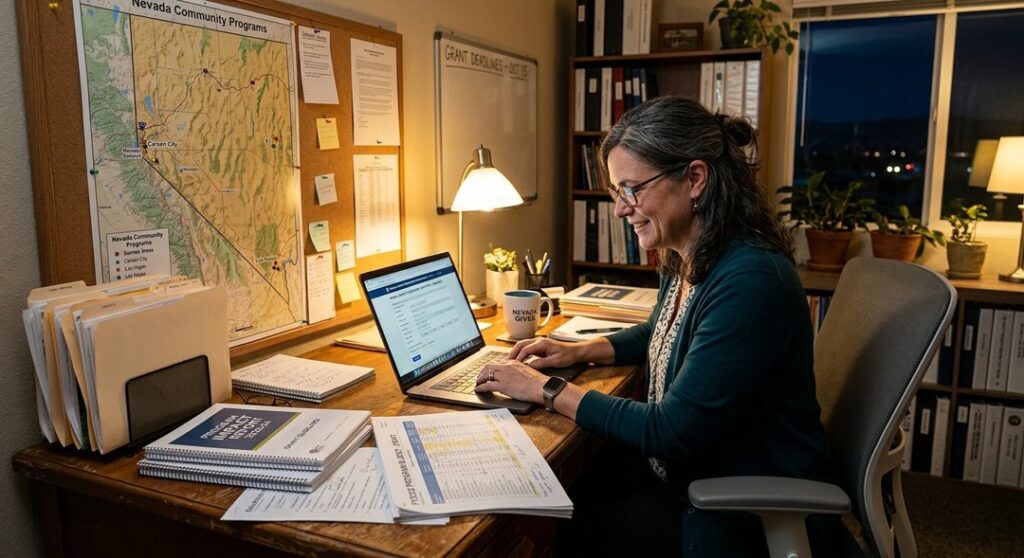
A grant proposal should help reviewers understand what the organization intends to accomplish and why funding is justified.
Start With a Clear Problem Statement
Describe the community challenge using credible evidence.
For example, a rural Nevada nonprofit seeking transportation funding should explain the practical barriers faced by its target population.
Avoid exaggerated claims.
Explain the Proposed Solution
Describe activities in enough detail for reviewers to understand implementation.
Include relevant schedules, staffing arrangements, and service methods.
Identify Measurable Outcomes
Outcomes should reflect meaningful changes.
A workforce development program might measure training completion, employment placement, or retention over a defined period.
However, results should not be guaranteed when external factors influence success.
Demonstrate Organizational Experience
Relevant past work may strengthen credibility.
Describe completed projects accurately.
If the nonprofit is newly established, explain the qualifications and experience of its leadership team.
Create a Sustainable Plan
Funders may want to know what happens when the grant ends.
Explain whether the program will continue, conclude, or transition to another funding model.
Do not promise future funding that has not been secured.
Common Mistakes When Applying for Grants for Nonprofits
Avoiding common errors can improve the quality of applications.
Applying Without Checking Eligibility
Ineligible applications may be rejected before substantive review.
Read all requirements carefully.
Using Generic Proposals
A proposal that does not address the funder’s priorities may appear poorly matched.
Adapt each application to the specific opportunity.
Providing Unrealistic Budgets
Budgets should reflect plausible costs.
Underestimating expenses can create problems during implementation.
Making Unsupported Claims
Statements about community needs and expected results should be supported by reliable information.
Missing Required Documents
Incomplete applications may be disqualified.
Use the funder’s checklist.
Ignoring Reporting Obligations
Grant recipients may need to submit financial and performance reports.
Failure to comply can affect current awards and future eligibility.
Depending Entirely on Grant Funding
Grants can be competitive and restricted.
A sustainable nonprofit should evaluate additional appropriate revenue sources.
Grants for Small Nonprofits in Nevada
Smaller nonprofits may face particular challenges when competing for funding.
They may have limited staff, fewer administrative resources, and less experience preparing proposals.
However, smaller organizations can still pursue suitable opportunities.
Focus on Mission Alignment
A small nonprofit should prioritize funders interested in its specific activities.
Broad applications to unrelated programs can waste limited time.
Start With Manageable Projects
Smaller projects may be easier to budget, deliver, and evaluate.
Successful implementation can provide evidence for future proposals.
Develop Partnerships
Partnerships may help organizations coordinate resources or expand service capacity.
However, responsibilities and financial arrangements should be documented.
Consider Fiscal Sponsorship
Some projects without independent tax-exempt recognition may work through a qualified fiscal sponsor.
The sponsor generally assumes defined legal and financial responsibilities.
Not every grant program accepts fiscal sponsorship.
The arrangement should be reviewed carefully.
Grants for Rural Nevada Nonprofit Organizations
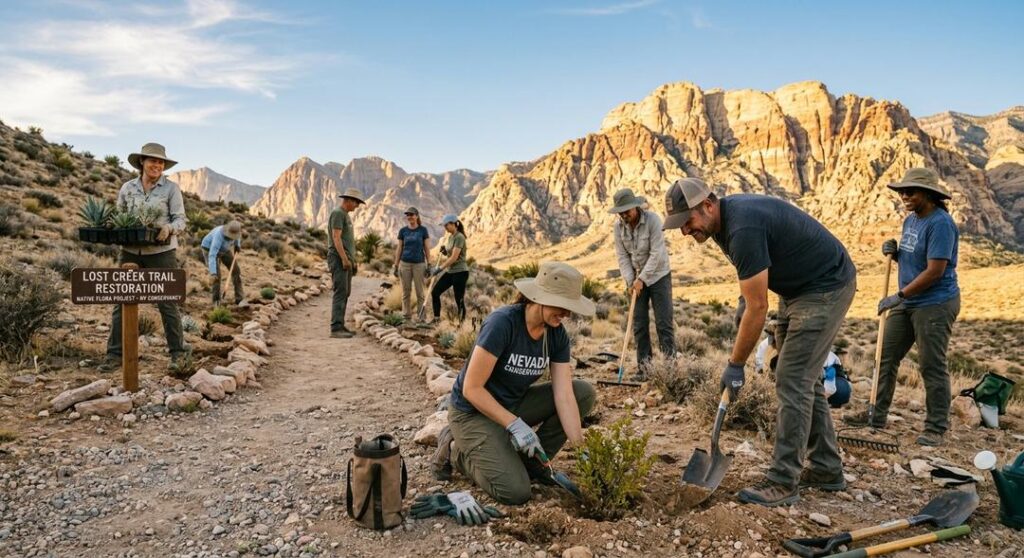
Rural Nevada communities may experience service delivery challenges related to distance, population distribution, transportation, and infrastructure.
These conditions can affect nonprofit operations.
Rural Healthcare Support
Organizations working on healthcare access may explore eligible federal, state, and philanthropic programs.
Funding priorities may involve healthcare workforce development, outreach, or service accessibility.
However, program eligibility varies.
Community Facilities
Certain federal rural development programs support eligible community infrastructure.
For example, USDA Rural Development administers programs involving community facilities and other qualifying activities.
Nonprofits should review current program rules to determine eligibility.
Education and Youth Development
Rural education programs may focus on learning access, after-school activities, or workforce preparation.
Suitable funding depends on the specific program and population served.
Transportation and Accessibility
Transportation can influence access to healthcare, employment, and essential services.
Nonprofits should research relevant public and private funding opportunities.
However, not every transportation grant permits nonprofit applicants directly.
Grants for Las Vegas and Southern Nevada Nonprofits
Southern Nevada includes large urban communities with diverse service needs.
Organizations may focus on housing, healthcare, education, food assistance, workforce development, and family support.
Housing and Homelessness Programs
Eligible nonprofits may participate in funding programs connected to housing stability and homelessness services.
Some opportunities are administered through local government or regional coordination systems.
Youth Development
Organizations supporting children and young adults may seek funding for mentoring, education, and enrichment activities.
Funders often require evidence of program design and intended outcomes.
Workforce Training
Workforce development nonprofits may explore grants supporting eligible training and employment initiatives.
Partnerships with employers and educational institutions can be relevant.
Community Health
Programs involving health education, prevention, or service access may qualify for certain funding opportunities.
Applicants should verify specific eligibility and reporting requirements.
Grants for Reno and Northern Nevada Nonprofits
Northern Nevada nonprofits serve communities with needs involving education, housing, healthcare, arts, environmental protection, and economic development.
Educational Programs
Organizations may pursue funding for tutoring, educational enrichment, or access to learning resources.
Arts and Culture
Arts organizations may research opportunities through public arts agencies and private foundations.
Funding priorities can include performances, exhibitions, education, and community engagement.
Environmental Conservation
Northern Nevada contains ecosystems and natural resources that support conservation initiatives.
Nonprofits may explore funding related to habitat protection, education, and responsible land management.
Community Services
Organizations providing food assistance, family support, and other essential services may identify appropriate charitable funding programs.
Grant availability should always be confirmed through current announcements.
How Nonprofits Can Build Financial Sustainability
Grant funding can support important activities, but long-term sustainability requires broader financial planning.
Build Individual Giving Programs
Regular donations may provide flexible support.
However, fundraising results vary according to donor relationships and economic conditions.
Develop Corporate Partnerships
Businesses may support community initiatives through donations, sponsorships, or employee volunteering.
Partnerships should align with the nonprofit’s mission.
Consider Earned Revenue
Some nonprofits generate revenue through services, educational programs, or other mission-related activities.
Tax and regulatory considerations may apply.
Maintain Financial Reserves
Appropriate reserves can help organizations manage unexpected expenses.
Reserve policies should reflect organizational needs and legal restrictions.
Improve Financial Reporting
Accurate records support responsible decision-making.
Financial transparency can also help maintain donor confidence.
How to Measure the Impact of Nonprofit Grants
Funders often want evidence that financial support contributes to meaningful outcomes.
However, measuring impact requires more than counting activities.
Outputs vs Outcomes
Outputs describe completed activities.
For example, a nonprofit may distribute 500 food packages.
Outcomes describe the changes associated with those activities.
These might involve improvements in access to food or reduced short-term hardship.
Measuring outcomes can be more complex because external conditions also influence results.
Establish Baseline Information
Collect relevant information before the funded activity begins.
This allows the organization to compare later results with initial conditions.
Select Practical Metrics
Metrics should align with the project’s purpose.
Avoid collecting unnecessary data merely because it is easy to measure.
Protect Participant Privacy
Nonprofits working with vulnerable populations may handle sensitive information.
Data collection and reporting must follow applicable privacy requirements.
Report Results Accurately
Do not exaggerate outcomes.
Explain limitations and challenges where relevant.
Transparent reporting supports trust.
Nonprofit Grant Compliance and Reporting
Receiving an award creates responsibilities.
Requirements differ between federal, state, local, and private funding programs.
Financial Documentation
Organizations may need to track grant expenditures separately.
Records should demonstrate that funds were used for permitted purposes.
Performance Reporting
Funders may request progress updates.
Reports can include activities completed, outcomes measured, and challenges encountered.
Federal Grant Requirements
Certain federal awards are subject to requirements under 2 CFR Part 200, commonly called the Uniform Guidance.
The applicable provisions depend on the award and recipient circumstances.
Organizations should review current requirements and award conditions.
Record Retention
Grant agreements may specify documentation retention periods.
Recipients should follow applicable rules.
Audit Responsibilities
Some organizations receiving federal awards may be subject to additional audit requirements based on applicable expenditure thresholds and regulations.
Nonprofits should consult qualified accounting professionals when necessary.
The Future of Grants for Nonprofits in Nevada
Funding opportunities change as government priorities, philanthropic interests, and community needs evolve.
Nevada nonprofits should monitor developments without assuming that any particular funding stream will continue indefinitely.
Greater Focus on Demonstrated Outcomes
Many funders emphasize measurable results.
Organizations may benefit from improving evaluation methods.
Technology and Nonprofit Operations
Digital tools can support donor management, reporting, and service coordination.
However, technology investments should match organizational needs.
Collaboration Between Organizations
Partnerships may help address complex challenges involving multiple services.
Clear governance remains important.
Community-Based Funding Decisions
Some philanthropic approaches emphasize local knowledge and community participation.
The availability of such opportunities depends on individual funders.
Long-Term Organizational Capacity
Strong governance, financial management, and skilled leadership remain important regardless of funding trends.
Grants for nonprofits are most useful when organizations can manage them responsibly.
FAQ’s
1. Where Can I Find Grants for Nonprofits in Nevada?
Grants for nonprofits can be researched through Grants.gov, Nevada government agencies, community foundations, local governments, and established grant research platforms.
2. Can Small Nonprofits Apply for Grants in Nevada?
Yes. Small nonprofits may qualify for grants when they meet the funder’s eligibility requirements, demonstrate organizational capacity, and propose suitable activities.
3. Do Nevada Nonprofits Need 501(c)(3) Status to Receive Grants?
Many charitable funders require 501(c)(3) recognition, but requirements vary. Some programs accept other eligible entities or approved fiscal sponsorship arrangements.
4. Are Government Grants Available for Nevada Nonprofits?
Yes. Eligible nonprofits may access certain federal, state, and locally administered programs. Availability depends on funding announcements and program rules.
5. What Documents Are Required for Nonprofit Grant Applications?
Common requirements include organizational information, budgets, financial statements, project proposals, board details, and tax-exempt documentation where applicable.
6. How Can Nonprofits Improve Their Chances of Receiving Grants?
Focus on mission-aligned opportunities, follow application instructions, use credible evidence, prepare realistic budgets, and demonstrate measurable community outcomes.
Conclusion
Grants for nonprofits can provide important financial support for organizations working to strengthen communities throughout Nevada. From urban service programs in Las Vegas to rural healthcare initiatives and educational opportunities in northern Nevada, charitable organizations address a wide range of needs across the Silver State. Federal agencies, state programs, local governments, community foundations, and private funders may offer relevant opportunities, but eligibility and availability vary. Successful grant seeking requires careful research, accurate documentation, realistic budgeting, and clear evidence of community benefit.
For Nevada organizations seeking long-term stability, grants for nonprofits should form part of a broader funding and organizational development strategy. Building relationships with funders, maintaining transparent financial practices, measuring program outcomes, and diversifying revenue sources can support responsible growth. Rather than pursuing every available opportunity, nonprofits should focus on funding that aligns with their missions and operational capabilities. With thoughtful planning and consistent accountability, grant funding can help organizations expand meaningful services and contribute to stronger, more resilient communities across Nevada.
Leave a Reply