
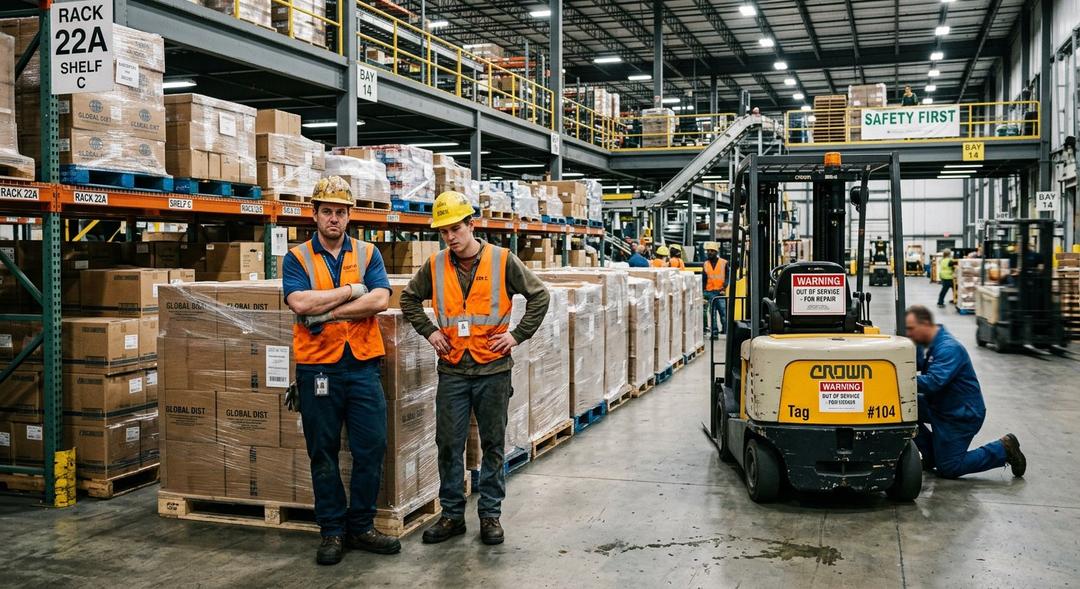
The Forklift Downtime Cost is often much greater than the amount shown on a repair invoice. When a forklift becomes unavailable, warehouse operations may experience delayed pallet movements, interrupted loading schedules, reduced employee productivity, and additional pressure on other equipment. These disruptions can affect several departments even when only one machine is out of service.
Understanding the complete financial impact helps warehouse managers make better maintenance and equipment decisions. Forklift downtime may be planned for inspections or repairs, or it may occur unexpectedly because of mechanical faults, battery problems, damage, or operational errors. Measuring direct expenses alongside productivity losses and service disruption provides a more realistic picture of what equipment unavailability actually costs.
What Is Forklift Downtime Cost?
Forklift Downtime Cost refers to the financial impact associated with a forklift being unavailable for its intended work. It can include repair expenses, maintenance labor, lost productivity, replacement equipment, and other operational consequences.
The actual cost depends on the warehouse’s workload, equipment availability, staffing arrangements, and the duration of the interruption. A machine that fails during a quiet period may create less disruption than one that becomes unavailable during a major shipping deadline.
Direct Downtime Costs
Direct expenses are costs that can usually be identified through invoices or internal accounting records. These may include replacement parts, technician labor, equipment transportation, and rental forklifts.
Forklift Downtime Cost calculations should include these expenses when they are caused by the breakdown or maintenance event. However, routine planned maintenance should be evaluated differently from unexpected repair costs.
Indirect Downtime Costs
Indirect costs arise when forklift unavailability affects other activities. These may include delayed orders, idle employees, additional handling, or reduced loading capacity.
Such costs can be difficult to calculate accurately. Forklift Downtime Cost estimates should use documented operational impacts rather than assuming every unavailable hour produces the same financial loss.
Why Warehouses Underestimate Forklift Downtime Cost
Many businesses calculate downtime by adding repair labor and replacement parts. This approach overlooks the effect of equipment failure on warehouse workflows.
A forklift may be responsible for receiving goods, replenishing shelves, supplying production areas, or loading vehicles. When it stops working, several connected tasks may be affected.
Repair Bills Show Only Part of the Problem
A repair invoice describes the cost of restoring the equipment. It does not necessarily show how much work was delayed while the forklift remained unavailable.
Forklift Downtime Cost should therefore be assessed through both maintenance records and operational data. Combining these sources provides a more complete financial picture.
Disruptions Can Spread Across Departments
A delayed pallet movement may affect picking, packing, production, or shipping activities. The overall impact depends on how closely these processes depend on the unavailable forklift.
Forklift Downtime Cost can increase when several teams are waiting for the same equipment. However, alternative equipment or workflow adjustments may reduce the actual loss.
The Main Causes of Forklift Downtime
Forklift downtime can result from mechanical deterioration, operating conditions, maintenance problems, and unexpected damage. Identifying recurring causes helps businesses prioritize prevention.
A reliable Forklift Downtime Cost reduction strategy begins with understanding why equipment becomes unavailable.
Mechanical Failures
Forklifts contain components that experience wear during normal operation. Hydraulic systems, brakes, steering assemblies, lifting mechanisms, and other components may require repair or replacement.
Routine inspection can identify some developing faults. However, not every mechanical failure can be predicted or prevented.
Battery Problems
Electric forklifts depend on suitable battery performance and charging arrangements. Battery deterioration, charging faults, or insufficient available charge can interrupt operations.
Forklift Downtime Cost may increase when charging schedules are poorly coordinated with workload. Battery management should follow manufacturer instructions and workplace safety requirements.
Tire Damage
Forklift tires experience demanding operating conditions, particularly on rough surfaces or in facilities with debris. Tire damage can affect equipment availability and handling.
Appropriate inspections and replacement policies can reduce avoidable problems. The correct tire type depends on the forklift and operating environment.
Operator-Related Damage
Collisions, improper loading, and unsuitable operating practices can damage equipment. These incidents may also create serious safety risks.
Forklift Downtime Cost can include repair expenses and operational interruption following an incident. Training and supervision are important preventive measures.
How Forklift Downtime Affects Warehouse Productivity
Forklifts support material movement throughout many warehouses. Their availability can influence how quickly goods move between receiving, storage, production, and dispatch.
Forklift Downtime Cost increases when equipment failure reduces the facility’s ability to complete scheduled work.
Delayed Goods Receiving
Incoming shipments may need to be unloaded and moved to designated locations. If suitable handling equipment is unavailable, vehicles may wait longer.
These delays can affect dock schedules and storage operations. The financial impact depends on the facility’s agreements and available alternatives.
Slower Order Picking
Some warehouse picking and replenishment activities rely on forklifts. Equipment failure may prevent stock from reaching the required locations.
Forklift Downtime Cost can include additional travel, waiting time, or reduced order throughput when these effects are measurable.
Loading and Dispatch Delays
Outbound shipments often depend on timely pallet movement. A forklift breakdown during dispatch can interrupt loading schedules.
Late departures may create additional transportation or customer-service costs. However, penalties should only be included in calculations when they actually apply.
Labor Costs During Forklift Downtime
Employees may remain on duty while waiting for equipment to become available. In these circumstances, wages continue even when planned tasks cannot proceed.
Forklift Downtime Cost may include the value of genuinely lost productive labor time. However, managers should avoid treating all paid time during a breakdown as wasted if employees complete useful alternative work.
Idle Labor
Workers may be unable to complete specific tasks when material handling equipment is unavailable. The resulting delay can reduce output.
A realistic calculation should identify affected employees and the duration of lost activity. Forklift Downtime Cost estimates become less reliable when every worker in the building is assumed to be idle.
Overtime Expenses
A warehouse may use overtime to recover delayed work after repairs are completed. This creates additional wage expenses when overtime would not otherwise have been necessary.
Forklift Downtime Cost should include the incremental overtime cost rather than the full amount of wages already budgeted.
Temporary Labor
Some facilities may bring in temporary workers to recover delayed operations. Whether this is practical depends on training requirements and available tasks.
Temporary labor costs should be included only when they directly result from the downtime event.
Equipment Rental and Replacement Costs
A warehouse may need replacement equipment when a critical forklift becomes unavailable. Rental forklifts can help maintain operations, but they introduce additional expenses.
Forklift Downtime Cost may include rental charges, transportation, insurance, and other relevant fees.
Emergency Forklift Rentals
Short-notice rentals may differ in price and availability from planned equipment hire. The replacement must also be suitable for the intended loads and operating environment.
A warehouse should not use an incompatible forklift simply to avoid delays. Capacity, dimensions, attachments, and operator training matter.
Equipment Transportation
Moving a rental forklift to the facility may involve delivery and collection charges. These costs can be significant when equipment is needed urgently.
Forklift Downtime Cost calculations should use actual supplier quotations or invoices rather than unsupported assumptions.
Backup Equipment
Some warehouses maintain spare forklifts for operational resilience. These machines create ownership and maintenance costs even when not regularly used.
The value of backup capacity depends on downtime risk and the consequences of equipment unavailability.
Repair Costs and Maintenance Expenses
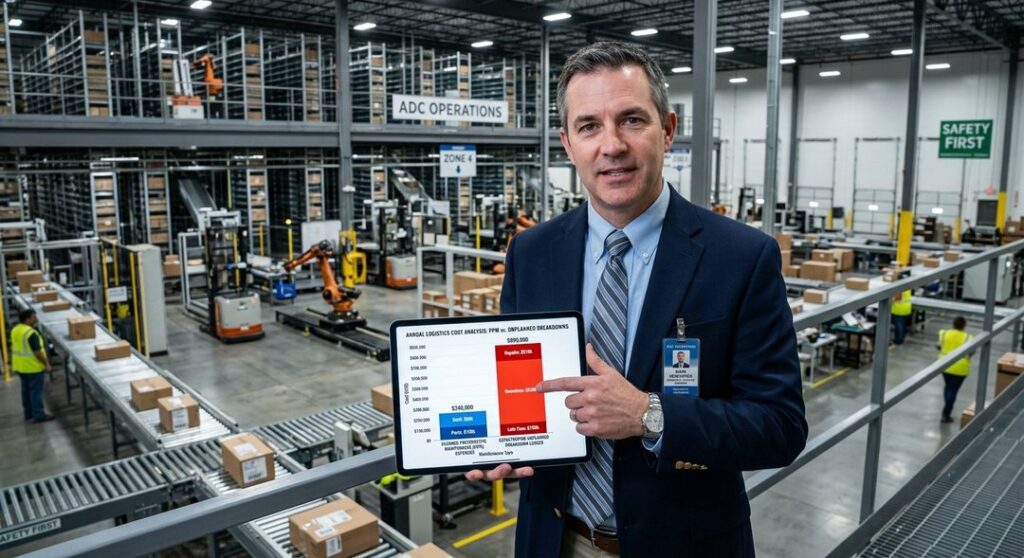
Repair expenses are among the most visible components of Forklift Downtime Cost. They may include diagnostic work, parts, labor, and testing.
However, the cheapest immediate repair is not always the most economical long-term option. Repeated failures can create additional costs.
Replacement Parts
Parts availability can influence repair duration. Some components may be readily available, while others require ordering.
Warehouses should evaluate critical spare-parts needs according to equipment models and failure history.
Technician Labor
Qualified technicians need time to diagnose, repair, and verify equipment condition. Labor requirements depend on the fault and forklift design.
Forklift Downtime Cost should include the actual maintenance expense attributable to the event.
Repeated Repairs
A forklift that repeatedly fails may create recurring operational disruption. Repair history can help determine whether replacement or major refurbishment deserves consideration.
Managers should compare future expected costs rather than relying exclusively on the latest invoice.
Customer Service and Delivery Consequences
Warehouse reliability influences delivery performance and customer expectations. Equipment downtime can affect service when critical activities cannot be completed on schedule.
Forklift Downtime Cost may include measurable customer-related consequences, but these should not be exaggerated without evidence.
Missed Shipping Deadlines
A breakdown may delay orders when no suitable alternative equipment is available. The impact depends on order priority and recovery options.
Late shipments can affect service agreements or customer relationships. Actual financial consequences should be recorded where possible.
Contractual Penalties
Some business contracts include penalties for missed performance commitments. These may apply when downtime causes a qualifying failure.
Forklift Downtime Cost calculations should include only documented penalties directly associated with the event.
Customer Confidence
Repeated operational delays can influence customer satisfaction. However, translating reputational effects into a precise financial figure is difficult.
Managers should monitor service performance without assigning unsupported monetary values to every complaint.
How to Calculate Forklift Downtime Cost
Calculating downtime requires combining direct expenses with measurable operational losses. The formula should reflect the warehouse’s actual processes.
A practical Forklift Downtime Cost model can begin with repair and rental expenses, then add incremental labor and documented disruption costs.
Basic Downtime Cost Formula
A useful calculation is:
Total downtime cost = Direct repair expenses + Replacement equipment expenses + Incremental labor costs + Measurable operational losses.
This framework is intentionally broad because each warehouse has different cost drivers. The calculation should avoid counting the same expense twice.
Example of a Four-Hour Breakdown
Consider a hypothetical warehouse experiencing a four-hour forklift failure. Suppose the event generates $400 in repairs, $250 in additional labor costs, and $150 in documented operational expenses.
The total Forklift Downtime Cost would be $800 for that event. This is an illustrative calculation, not an industry average or guaranteed outcome.
Calculate Hourly Downtime Cost
Dividing the total cost by actual unavailable hours can provide an hourly measure. In the example above, $800 divided by four hours equals $200 per hour.
However, hourly Forklift Downtime Cost may vary substantially between events. A breakdown during peak dispatch can have different consequences from one during a quiet shift.
Why Downtime Cost Varies Between Warehouses
Two warehouses with similar forklifts can experience very different financial impacts from the same repair. Their workloads, layouts, staffing, and backup capacity may differ.
Forklift Downtime Cost should therefore be calculated using facility-specific information.
Warehouse Size
Larger facilities may depend on multiple forklifts and complex workflows. Some have enough spare capacity to absorb a breakdown.
Smaller facilities may rely heavily on one machine. Their operational disruption can be substantial even when total inventory volume is lower.
Workload Intensity
High-volume operations may have limited flexibility during peak periods. Equipment downtime can affect several scheduled activities.
Forklift Downtime Cost may rise when the unavailable machine is essential to a time-sensitive process.
Equipment Redundancy
Warehouses with suitable backup equipment can sometimes continue operating. This may reduce indirect losses.
However, maintaining spare equipment involves additional capital and operating expenses. Managers should compare these costs with expected downtime exposure.
Planned Versus Unplanned Forklift Downtime
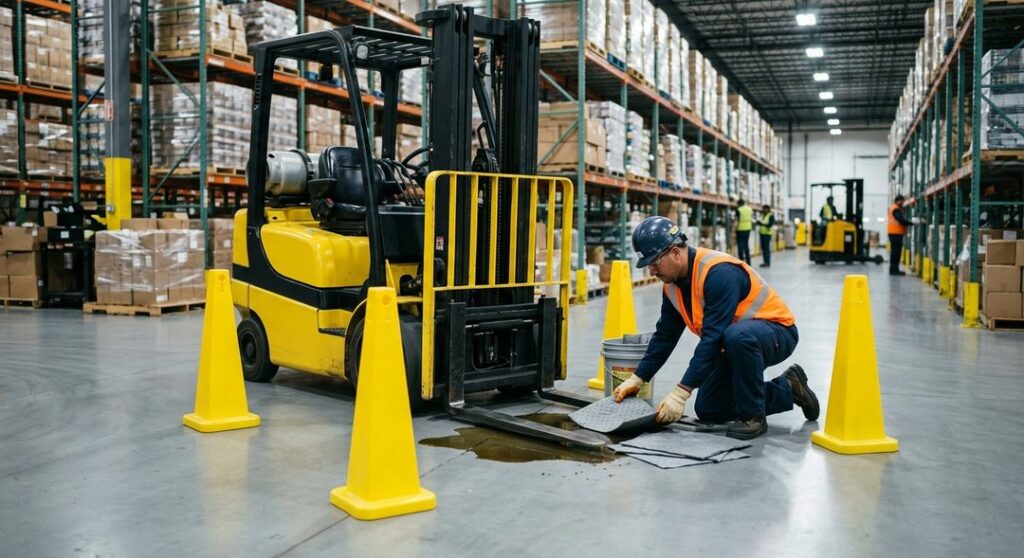
Not all downtime should be treated as a failure. Planned maintenance and inspections are necessary for safe equipment operation.
Forklift Downtime Cost analysis should distinguish scheduled unavailability from unexpected breakdowns.
Planned Maintenance
Scheduled inspections and servicing allow facilities to prepare alternative equipment or adjust workloads. This can reduce disruption.
Maintenance should never be skipped merely to improve apparent equipment availability.
Unplanned Breakdowns
Unexpected faults can interrupt operations without warning. They may require urgent repairs and schedule changes.
A major objective of Forklift Downtime Cost management is reducing avoidable unplanned downtime while preserving essential safety checks.
Preventive Maintenance and Downtime Reduction
Preventive maintenance involves servicing equipment according to manufacturer guidance, operating conditions, and applicable requirements.
A structured program can identify some problems before they cause major failures. However, maintenance does not guarantee that every breakdown will be prevented.
Scheduled Inspections
Forklift maintenance schedules may include checks of brakes, hydraulic systems, tires, steering, and other components.
The exact requirements depend on the equipment and manufacturer instructions.
Maintenance Documentation
Recording service history helps identify recurring faults and track component replacement.
Forklift Downtime Cost analysis becomes more useful when maintenance records can be connected with actual downtime events.
Qualified Maintenance Personnel
Forklift repairs should be performed by appropriately trained and authorized individuals.
Improper repairs can create additional failures and safety hazards.
Daily Forklift Inspections
Pre-use inspections help operators identify visible defects before equipment enters service. Inspection requirements should follow manufacturer instructions and applicable workplace rules.
Forklift Downtime Cost can increase when minor problems are ignored until they become larger failures.
Check Visible Damage
Operators should look for obvious damage, leaks, tire problems, and other relevant concerns.
Any defect affecting safe operation should be reported according to workplace procedures.
Check Safety Functions
Forklifts require functional brakes, steering, warning devices, and other safety-related components.
Equipment with safety-critical defects should not remain in operation.
Record Inspection Findings
Digital or paper checklists can help maintain accountability.
A clear reporting process allows maintenance teams to respond before problems worsen.
Operator Training and Forklift Reliability
Operator behavior affects equipment condition and workplace safety. Incorrect load handling, collisions, and unsuitable operating practices can contribute to damage.
Forklift Downtime Cost reduction should therefore include proper training and supervision.
Safe Load Handling
Forklift operators must understand capacity limits, load stability, and approved attachments.
Overloading can damage equipment and create serious safety risks.
Driving Practices
Sudden impacts, excessive speed, and inappropriate turning can increase equipment stress.
Training should emphasize safe operation rather than simply maximizing movement speed.
Reporting Problems Early
Operators should report unusual noises, leaks, warning indicators, or changes in handling.
Early reporting may prevent a small defect from becoming a major breakdown.
Battery Management for Electric Forklifts
Electric forklifts depend on battery systems and charging infrastructure. Poor battery management can reduce availability and create operational problems.
Forklift Downtime Cost may increase when charging arrangements do not match working schedules.
Charging Schedules
Charging requirements depend on battery chemistry and manufacturer specifications.
Facilities should plan charging around equipment usage while following applicable safety procedures.
Battery Condition Monitoring
Battery deterioration can affect runtime and performance. Appropriate monitoring may help identify replacement needs.
However, battery condition should be assessed using suitable diagnostic methods rather than guesswork.
Charging Infrastructure
Insufficient charging capacity can create bottlenecks in electric forklift fleets.
Forklift Downtime Cost planning should consider both vehicle availability and supporting electrical infrastructure.
Lithium-Ion and Lead-Acid Battery Considerations
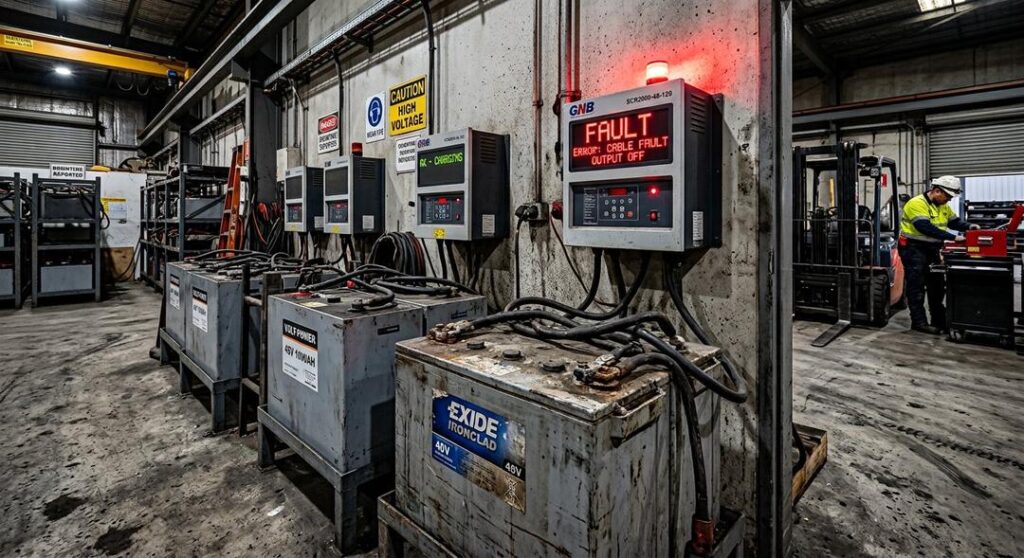
Different battery technologies have different operating and maintenance characteristics. Their suitability depends on equipment compatibility, duty cycles, and cost.
Electric forklift fleets should follow manufacturer-approved battery and charging arrangements.
Lead-Acid Batteries
Lead-acid systems may require specific charging, maintenance, and ventilation procedures.
Improper handling can create chemical and electrical hazards.
Lithium-Ion Batteries
Lithium-ion systems may support different charging patterns and management features, depending on design.
However, lithium-ion batteries also require appropriate safety controls and manufacturer-approved equipment.
Predictive Maintenance and Forklift Monitoring
Predictive maintenance uses equipment data to identify patterns that may indicate developing problems.
Some modern forklifts support telematics and diagnostic monitoring. These systems can provide useful information when properly configured.
Telematics Data
Telematics may record operating hours, fault codes, impacts, and other equipment information.
Forklift Downtime Cost analysis can use these records to identify recurring issues.
Maintenance Alerts
Automated alerts can notify maintenance teams when defined thresholds or faults occur.
However, alerts require appropriate review and response. Software alone does not repair equipment.
Data Quality Matters
Incomplete or inaccurate data can create misleading predictions.
Predictive maintenance should complement physical inspections and professional judgment.
Fleet Management Software and Downtime Visibility
Fleet management systems can help warehouses monitor equipment availability, utilization, and maintenance history.
Forklift Downtime Cost reporting becomes more accurate when downtime events are recorded consistently.
Equipment Utilization
Utilization data shows how much forklifts are used during selected periods.
A machine with low utilization may not always require replacement, while a heavily used machine may deserve closer maintenance attention.
Fault History
Repeated fault patterns can identify equipment requiring investigation.
Maintenance teams can compare breakdown frequency across models and operating conditions.
Cost Reporting
Software can connect repairs, downtime hours, and operational records.
Forklift Downtime Cost dashboards should use consistent definitions to support meaningful comparisons.
Forklift Downtime and Warehouse Safety
Equipment failure can create pressure to continue operating a damaged forklift. This is unsafe and can increase the consequences of a breakdown.
Forklift Downtime Cost management must never encourage employees to bypass safety requirements.
Remove Unsafe Equipment From Service
Forklifts with safety-critical defects should be taken out of operation according to workplace procedures.
Repairs and inspections should be completed before the equipment returns to service.
Avoid Overloading Remaining Equipment
When one forklift becomes unavailable, other machines may face increased demand.
Supervisors should ensure operators continue following capacity limits and safe operating practices.
Manage Pedestrian Safety
Changes to material-handling routes can create new interactions between vehicles and pedestrians.
Temporary operational plans should maintain appropriate separation and traffic controls.
When Should a Forklift Be Repaired or Replaced?
Repair-versus-replacement decisions depend on equipment condition, repair costs, future reliability, and operational requirements.
Forklift Downtime Cost provides useful information but should not be the only factor.
Review Maintenance History
Frequent breakdowns can indicate increasing reliability concerns.
Compare recurring expenses and downtime trends rather than evaluating one repair in isolation.
Consider Equipment Age and Condition
Older forklifts may remain serviceable when maintained appropriately. Newer equipment can also experience faults.
Age alone does not determine replacement timing.
Evaluate Future Operating Costs
Managers should estimate expected maintenance, energy, downtime, and capital costs.
A replacement decision should reflect realistic financial assumptions and operational needs.
Backup Forklifts and Business Continuity
Spare equipment can reduce disruption when a primary forklift becomes unavailable. However, maintaining unused capacity costs money.
Forklift Downtime Cost analysis can help determine whether backup equipment is financially justified.
Critical Operations
Facilities with strict shipping schedules may benefit from suitable standby equipment.
The decision depends on the cost of interruption and the likelihood of failure.
Shared Equipment
Some warehouses can temporarily reassign forklifts between departments.
This approach requires suitable capacity, attachments, and trained operators.
Rental Agreements
Prearranged rental relationships may reduce delays when replacement equipment is needed.
However, availability should be confirmed rather than assumed.
Spare Parts Inventory and Repair Speed
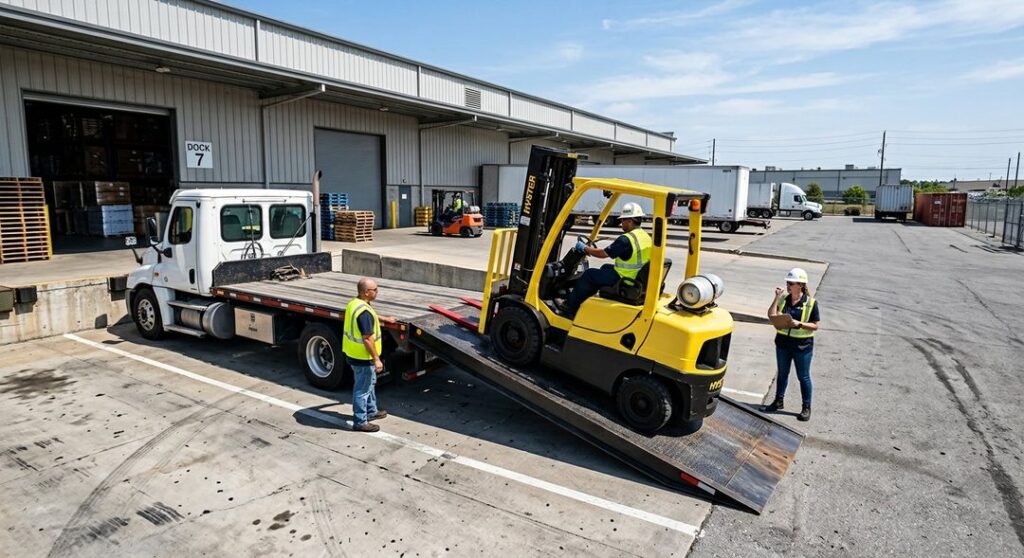
Parts availability can influence how quickly a forklift returns to service.
Warehouses with several similar machines may consider holding selected critical components.
However, excessive spare-parts inventory can create its own costs.
Identify Critical Components
Maintenance history and supplier lead times can help identify parts worth keeping available.
The decision should reflect actual equipment risk.
Coordinate With Suppliers
Reliable service providers can help communicate parts availability and expected repair timing.
Forklift Downtime Cost may increase when procurement delays extend equipment unavailability.
Measuring Forklift Reliability
Reliability metrics help managers understand whether equipment performance is improving.
Common measures include downtime hours, failure frequency, and repair duration.
Mean Time Between Failures
Mean time between failures describes the average operating time between relevant failures for repairable equipment.
Its usefulness depends on consistent definitions and accurate records.
Mean Time to Repair
Mean time to repair measures the average time required to restore equipment after a defined failure.
Lower repair time can reduce disruption, but repairs must still meet safety and quality requirements.
Equipment Availability
Availability measures the proportion of relevant time equipment is capable of performing its intended function.
Forklift Downtime Cost analysis can combine availability data with actual operational consequences.
Common Forklift Downtime Management Mistakes
Warehouses sometimes focus on minimizing maintenance spending without considering the cost of breakdowns.
Other mistakes involve incomplete records, delayed repairs, and unrealistic equipment utilization targets.
Skipping Preventive Maintenance
Delaying required servicing may reduce immediate expenditure but create safety and reliability risks.
Maintenance should follow appropriate schedules and legal requirements.
Ignoring Small Faults
Minor leaks, unusual noises, or warning indicators can signal developing problems.
Operators should report concerns promptly.
Poor Downtime Records
Without accurate event data, managers may underestimate the number and duration of failures.
Forklift Downtime Cost calculations should use consistent records.
Overworking Remaining Forklifts
Increasing workload on other machines may help temporarily, but unsafe operation or inadequate maintenance can create additional problems.
Operational changes should respect equipment limits.
Creating a Forklift Downtime Reduction Plan
A structured plan helps warehouses address recurring equipment problems.
The process should begin with accurate maintenance and operational data.
Record Every Downtime Event
Document the equipment involved, start and end times, cause, repair work, and relevant expenses.
Forklift Downtime Cost becomes easier to measure when events are consistently classified.
Identify Recurring Causes
Review fault history to determine whether certain components, operating conditions, or practices contribute to repeated failures.
Prioritize problems with meaningful safety or operational consequences.
Improve Maintenance Planning
Adjust maintenance procedures according to manufacturer guidance and observed conditions.
Changes should be reviewed by qualified personnel.
Train Operators
Provide suitable instruction and refresher training.
Encourage prompt reporting of equipment problems.
Monitor Results
Track downtime, repair costs, equipment availability, and operational performance.
Forklift Downtime Cost reduction should be evaluated using actual results rather than assumptions.
The Future of Forklift Maintenance and Downtime Management
Forklift technology continues evolving through electric power systems, telematics, diagnostics, and fleet management software.
These tools may improve maintenance visibility and support better planning.
However, advanced technology cannot eliminate equipment wear or operational mistakes.
Forklift Downtime Cost will remain relevant because every warehouse must balance equipment availability, maintenance investment, and operational risk.
FAQ’s
What is Forklift Downtime Cost?
Forklift Downtime Cost includes repair expenses, replacement equipment, incremental labor, and measurable operational losses caused by forklift unavailability.
How much does forklift downtime cost per hour?
There is no universal hourly figure. Costs depend on warehouse operations, staffing, workload, equipment redundancy, and the consequences of delayed work.
What causes the most forklift downtime?
Common causes include mechanical faults, battery problems, tire damage, operator-related incidents, and maintenance issues. Actual failure patterns vary by fleet.
Can preventive maintenance reduce Forklift Downtime Cost?
Preventive maintenance can identify some developing problems and reduce avoidable breakdowns. It cannot guarantee that every equipment failure will be prevented.
How can warehouses calculate Forklift Downtime Cost?
Add direct repair expenses, replacement equipment charges, incremental labor, and documented operational losses while avoiding double-counting.
When should a warehouse replace an unreliable forklift?
Replacement may be appropriate when future repair costs, downtime exposure, and operating limitations make continued ownership less economical or suitable.
Conclusion
Forklift Downtime Cost extends far beyond the immediate expense of repairing a broken machine. Equipment unavailability can interrupt receiving, storage, order picking, production support, and shipping activities while creating additional labor and rental expenses. The actual financial impact depends on the warehouse’s workload, available alternatives, and the duration of the interruption, making accurate measurement essential.
Reducing Forklift Downtime Cost requires a combination of preventive maintenance, operator training, suitable battery management, reliable repair support, and consistent performance monitoring. Warehouses that connect maintenance records with operational data can identify recurring problems and make better equipment decisions. By treating forklift availability as both a safety and business continuity concern, organizations can reduce avoidable disruption without compromising responsible equipment operation.
Leave a Reply