
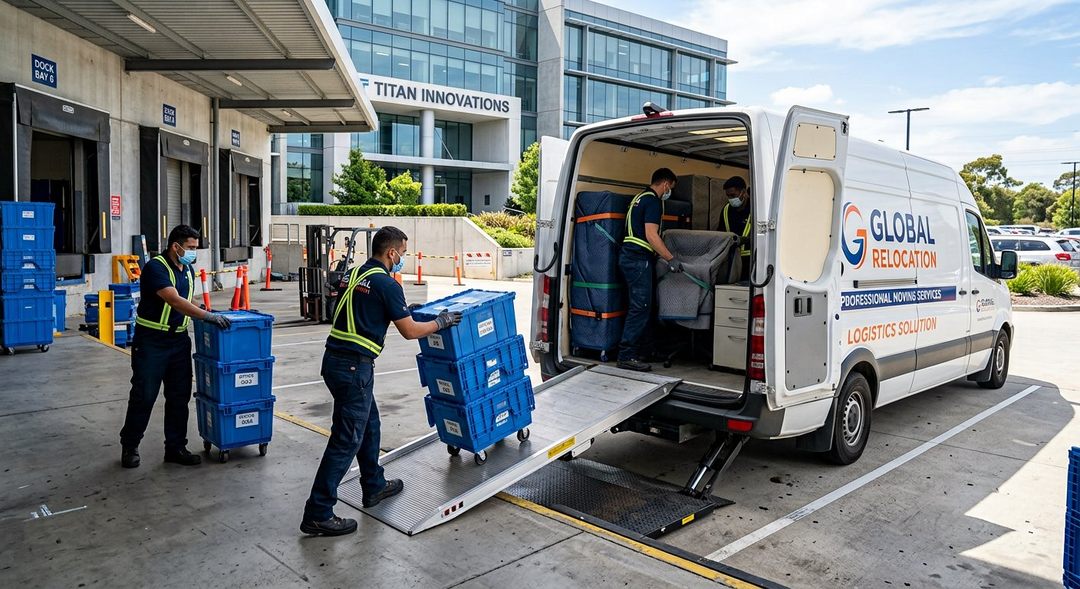
Choosing a dependable office relocation service can make a significant difference when moving your business into a new workplace. Unlike a typical household move, office relocation involves furniture, computers, confidential documents, communication systems, and employees who depend on an organized transition. Poor planning can lead to unnecessary downtime, misplaced equipment, unexpected expenses, and operational disruption.
A professional office removal company can help businesses coordinate packing, transportation, furniture handling, and relocation schedules. However, not every provider offers the same expertise, insurance protection, or service flexibility. Understanding what to look for before signing a moving contract helps businesses select a reliable company while keeping costs, safety, and business continuity under control.
Why Choosing the Right Office Relocation Service Matters
Moving an office requires careful coordination between business owners, employees, removal teams, building managers, and sometimes external IT specialists. Every stage must be planned to ensure important equipment and documents arrive at the correct destination.
A reliable office relocation service helps organize these activities through structured planning and professional handling. The objective is to complete the physical move efficiently while reducing unnecessary interruption to daily business operations.
Business Continuity During Relocation
Business continuity is one of the biggest concerns during an office move. Employees may need access to computers, communication systems, customer records, and essential equipment throughout the transition.
An experienced office relocation service should discuss moving schedules that fit operational requirements. Evening, weekend, or phased relocations may be possible, depending on availability and the agreed service scope.
Protecting Valuable Business Assets
Office furniture, computers, servers, printers, and specialist equipment can represent a significant financial investment. Incorrect handling or unsuitable packaging can result in damage during transportation.
Professional movers should use appropriate protective materials and handling equipment. Businesses should also confirm insurance arrangements before allowing valuable items to be transported.
What Does an Office Relocation Service Include?
An office relocation service provides commercial moving assistance for organizations changing premises or reorganizing workplace locations. Services vary between providers, making it important to understand the exact scope of each quotation.
Some companies focus on transportation, while others offer complete relocation coordination. Businesses should select services according to their size, inventory, and operational requirements.
Pre-Move Planning and Assessment
Planning usually begins with an assessment of furniture, equipment, access conditions, and moving requirements. This allows the provider to estimate the resources and time needed.
A professional office relocation service should identify foreseeable challenges before moving day. These may include limited lift access, heavy furniture, restricted loading areas, or sensitive equipment.
Professional Packing Services
Packing involves preparing office items for safe transportation. Different equipment types may require protective wrapping, specialist cartons, or additional handling precautions.
An office relocation service may provide packing materials and trained staff as part of the agreed package. Businesses should verify whether these costs are included in the quotation.
Furniture Dismantling and Reassembly
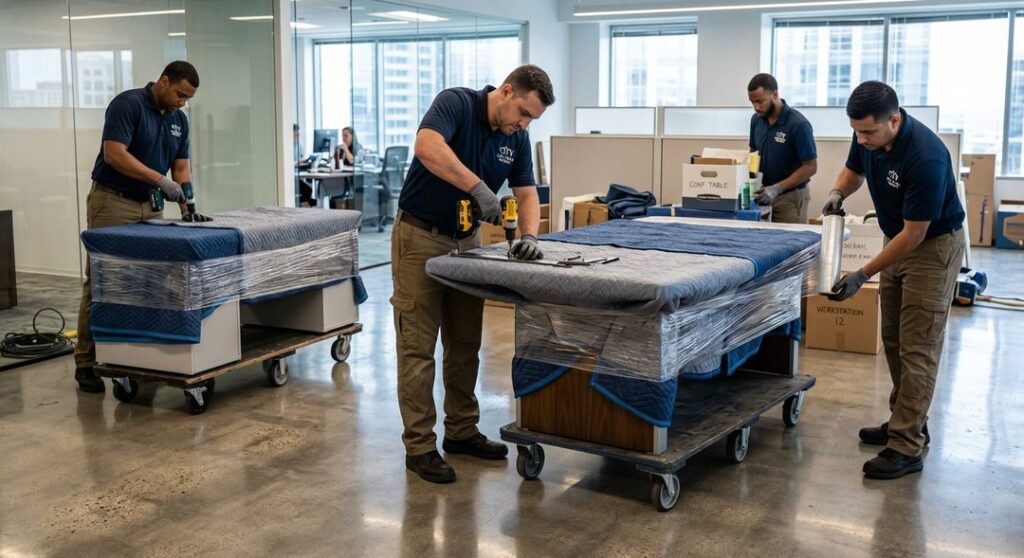
Large workstations, conference tables, and modular office furniture may need dismantling before moving. Correct reassembly is important for stability and continued use.
A reliable office relocation service should explain which furniture systems its team can handle. Specialist installations may require approved technicians or manufacturer guidance.
Transportation and Unloading
Commercial moving vehicles transport furniture and equipment between locations. Suitable loading techniques help protect items and reduce handling risks.
Professional movers should follow an organized unloading plan. Clear room labels and furniture placement instructions can make the new workplace easier to prepare.
Look for Commercial Moving Experience
Experience is one of the most important factors when selecting an office removal company. Commercial relocation can involve requirements that differ considerably from residential moving.
An office relocation service should understand workplace equipment, moving schedules, building access procedures, and business continuity concerns. Experience with similar projects can help reduce avoidable logistical mistakes.
Ask About Previous Office Moves
Request information about relocations involving businesses of comparable size or complexity. Moving a small consultancy differs from relocating a large organization across multiple floors.
A provider should explain how previous projects were organized and which responsibilities it handled. Relevant experience offers useful context, although it does not guarantee a problem-free move.
Confirm Specialized Capabilities
Some businesses use heavy machinery, specialist furniture, laboratory equipment, or sensitive technology. These items may require additional expertise beyond standard office removals.
Before booking an office relocation service, confirm whether the company can safely handle the specific equipment involved. Specialist contractors may be necessary for certain tasks.
Check the Company’s Reputation and Reviews
Customer feedback can help businesses understand how a moving company communicates and performs. Reviews may reveal information about punctuality, handling practices, and responsiveness.
However, online ratings should not be the only selection criterion. An office relocation service should also provide clear documentation, realistic quotations, and appropriate insurance information.
Focus on Commercial Customer Reviews
Reviews from businesses are generally more relevant than household moving experiences. Commercial customers may describe issues involving scheduling, equipment handling, or workplace disruption.
Look for consistent feedback across several sources. One unusually positive or negative review may not represent typical service quality.
Request Business References
Some companies may provide references from previous commercial clients with their permission. These conversations can help clarify how the provider handled communication and unexpected changes.
An office relocation service should respect client confidentiality when sharing references. Businesses should ask specific questions rather than relying only on general recommendations.
Verify Insurance and Liability Coverage
Insurance is essential when moving valuable business property. Accidents can occur even when experienced professionals use appropriate handling procedures.
A trustworthy office relocation service should explain its insurance arrangements and contractual liability limits. Businesses should understand which items and circumstances are covered.
Goods in Transit Insurance
Goods in transit insurance may protect certain items during transportation. Coverage depends on policy terms, exclusions, and declared values.
Ask whether computers, furniture, and specialist equipment fall within the policy. Do not assume every office relocation service provides identical protection.
Public Liability Insurance
Public liability insurance may address certain claims involving third-party injury or property damage. The level and scope of protection depend on the policy.
Businesses should request relevant insurance information before signing a contract. Insurance should complement appropriate safety procedures.
Understand Insurance Exclusions
Certain items may require additional coverage or special handling arrangements. High-value equipment and confidential materials deserve particular attention.
An office relocation service should explain exclusions clearly. Businesses may also need to consult their own insurer before the move.
Request a Detailed Office Moving Survey
A moving survey helps establish the true scope of the project. Without an accurate assessment, quotations may underestimate the equipment, labor, or transportation required.
A professional office relocation service may conduct an on-site survey or a detailed remote assessment. The method should provide enough information for realistic planning.
Create an Accurate Inventory
The inventory should include furniture, storage units, computers, meeting-room equipment, and other approved items. It should also identify anything that will remain behind.
A complete inventory helps prevent unnecessary transportation and missing items. It also supports accurate cost comparisons between providers.
Assess Building Access
Commercial buildings may have restricted loading areas, service lifts, parking rules, or designated moving hours. These requirements can affect the schedule.
An office relocation service should discuss access arrangements before moving day. Building management approval may also be necessary.
Compare Office Relocation Service Quotes Carefully
Moving quotations can differ because providers include different services. A lower price may exclude packing materials, furniture assembly, or additional labor.
Businesses should compare the complete scope rather than focusing only on the final amount. A clear office relocation service quotation helps avoid misunderstandings.
Understand the Included Services
A written quotation should identify the work being provided. Important items may include:
- Packing materials
- Packing labor
- Furniture dismantling
- Furniture reassembly
- Transportation
- Loading and unloading
- Specialist equipment handling
- Temporary storage
- Evening or weekend work
- Additional access requirements
Not every office relocation service includes all these activities. Businesses should request clarification before accepting an estimate.
Ask About Additional Charges
Unexpected costs may arise if the moving scope changes or access conditions differ from those originally described. Some contracts also contain charges for waiting time or additional services.
A reliable provider should explain how these situations are handled. Written terms provide better protection than verbal assumptions.
Evaluate the Relocation Planning Process
Good planning reduces confusion and establishes responsibilities before moving day. Businesses should understand who manages each activity and how progress will be communicated.
An office relocation service may assign a move coordinator or project manager. This person can help organize the agreed logistics and communicate with relevant teams.
Develop a Realistic Moving Timeline
A moving schedule should include packing, equipment preparation, transportation, unloading, and final checks. Larger businesses may require several stages.
The office relocation service should identify critical deadlines and potential constraints. Businesses should allow reasonable flexibility for unforeseen delays.
Establish Clear Responsibilities
The removal company may manage furniture and transportation, while the business handles employee communication and internal technology preparation. These responsibilities should be documented.
Clear task ownership helps prevent essential activities from being overlooked. A professional office relocation service should explain exactly where its responsibilities begin and end.
Protect Computers and IT Equipment
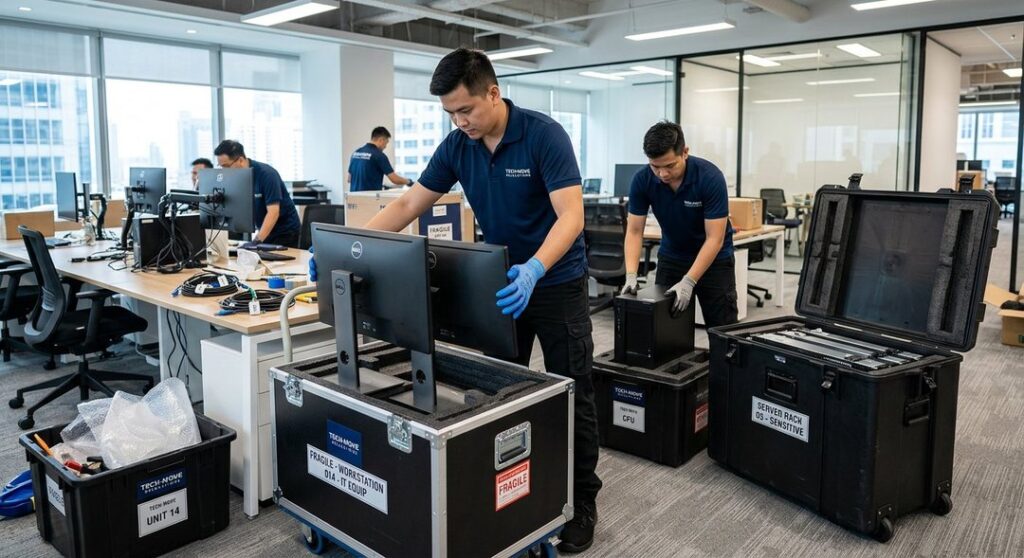
Technology is central to most modern workplaces. Computers, monitors, networking devices, and communication equipment may require careful handling and coordinated setup.
An office relocation service may transport these items, but technical shutdown and reconnection should be assigned to appropriately qualified personnel. Physical moving experience does not automatically include IT expertise.
Back Up Important Data
Businesses should maintain appropriate backups before moving computers or servers. Backup integrity should be verified according to internal IT procedures.
An office relocation service should not be assumed responsible for digital data protection unless explicitly contracted. Data recovery after equipment damage can be complex and expensive.
Label Cables and Devices
Workstations may contain monitors, docking stations, keyboards, and numerous cables. Clear labeling can simplify reconnection at the new premises.
A structured labeling system helps IT teams identify equipment ownership and destination. This can reduce setup delays after transportation.
Use Suitable Protective Packaging
Computers and monitors may require padded packaging or specialist containers. Loose equipment can be damaged during loading or transportation.
An office relocation service should use methods appropriate to each item. Particularly sensitive equipment may require additional precautions.
Plan Server and Network Relocation Separately
Servers and networking equipment can be more complex to relocate than ordinary office computers. Technical shutdown procedures, connectivity, cooling, and physical security may require specialist attention.
A general office relocation service should coordinate with qualified IT professionals when necessary. Technical preparation should be completed before movers handle approved equipment.
Check the New IT Infrastructure
The new office should have suitable power, network connections, equipment space, and environmental conditions. These requirements should be verified before the move.
An office relocation service can coordinate transportation timing with the IT team. However, infrastructure installation and technical testing may fall outside its scope.
Test Systems Before Employees Return
Critical systems should be checked after installation. Businesses may need to verify internet access, telephones, printers, and internal applications.
Testing helps identify problems before normal operations resume. A relocation should not be considered fully complete until essential workplace functions are available.
Secure Confidential Documents During Relocation
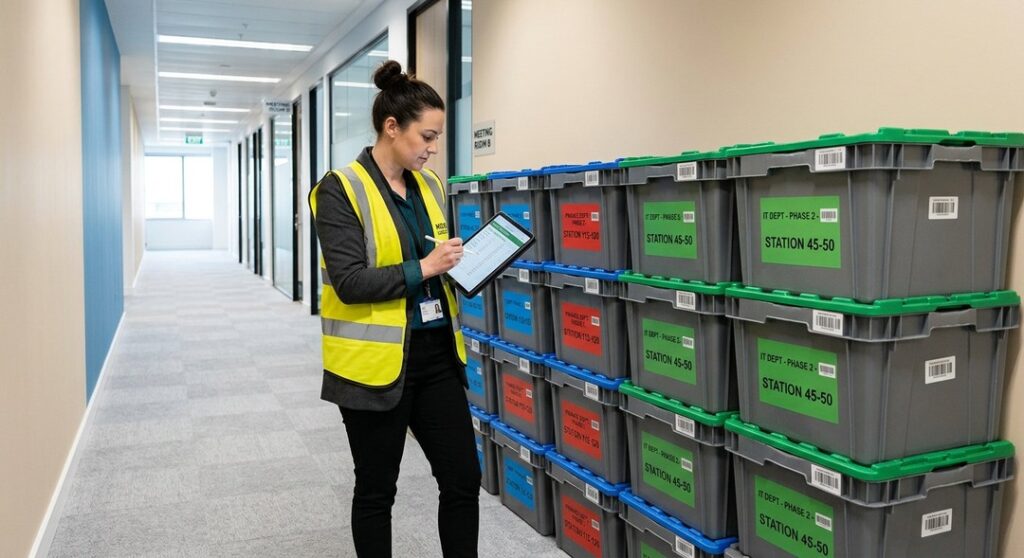
Business premises often contain sensitive records, including employee information, contracts, financial documents, and customer data. These materials require careful handling.
An office relocation service should follow agreed document security procedures. Businesses remain responsible for identifying confidential information and appropriate access restrictions.
Use Secure Packing Containers
Sensitive paperwork may require sealed boxes or other controlled containers. Labels should identify destinations without unnecessarily revealing confidential contents.
The office relocation service should understand which items require restricted handling. Highly sensitive records may need additional arrangements.
Maintain Document Accountability
Businesses should know which confidential records are being moved and where they are delivered. Inventory records may be useful for important files.
Chain-of-custody procedures may be appropriate for particularly sensitive materials. These should reflect the organization’s legal and operational requirements.
Protect Personal Data During an Office Move
Office relocation can involve personal information protected by data protection laws. In the UK, relevant obligations may arise under the UK GDPR and Data Protection Act 2018.
Businesses should assess how documents, devices, and storage media will be handled. An office relocation service should not receive unnecessary access to personal information.
Limit Access to Sensitive Information
Only authorized individuals should handle confidential records where appropriate. Packing methods should prevent unnecessary exposure during transportation.
Businesses should also consider data security when disposing of old equipment. Removing a computer from service does not automatically erase stored information.
Use Secure Disposal Services
Unwanted documents and electronic equipment may require confidential destruction or data sanitization. These tasks should follow appropriate procedures.
An office relocation service may offer disposal coordination, but businesses should verify who performs the work and what documentation is provided.
Check Packing Materials and Moving Equipment
Different office items require different levels of protection. Fragile monitors, heavy cabinets, and upholstered furniture should not all be packed using identical methods.
An office relocation service should have suitable equipment and materials for the agreed inventory. Correct handling can reduce damage and improve efficiency.
Furniture Protection
Protective blankets, covers, and suitable wrapping can help prevent scratches and surface damage. Materials should be appropriate for the furniture finish.
Professional movers should also protect vulnerable corners and edges. Careful loading is as important as protective packaging.
Moving Trolleys and Lifting Equipment
Large furniture may require dollies, trolleys, or other handling equipment. These tools can reduce manual handling demands when used correctly.
An office relocation service should ensure its employees understand equipment limitations. Overloading or incorrect use can create safety risks.
Consider Staff Training and Professionalism
Moving teams may work in busy buildings alongside employees, contractors, and visitors. Professional conduct and clear communication are therefore important.
An office relocation service should use appropriately trained personnel and follow relevant workplace safety requirements. Staff should understand safe handling and agreed project procedures.
Manual Handling Knowledge
Heavy furniture can create injury risks when moved incorrectly. Appropriate techniques and equipment should be used.
The moving company should assess difficult items before lifting. Employees should not be expected to handle loads beyond their training or ability.
Communication During the Move
Movers may need to coordinate with reception staff, building security, and internal managers. Clear instructions help prevent access problems and misplaced items.
A reliable office relocation service should provide an identifiable contact person. This makes it easier to resolve questions promptly.
Ask About Temporary Storage Options
Some businesses cannot move directly into their new premises. Others may need to store unused furniture during refurbishment or downsizing.
An office relocation service may offer storage directly or through an external provider. Businesses should clarify responsibility, costs, and access conditions.
Short-Term Storage
Temporary storage can bridge the gap between leaving one office and entering another. It may also support phased moves.
Ask about handling arrangements and retrieval times. Storage charges should be clearly documented.
Long-Term Storage
Businesses may retain furniture for future expansion or alternative use. Long-term storage conditions should suit the items involved.
An office relocation service should explain insurance and environmental conditions where relevant. Electronics and sensitive materials may require special arrangements.
Plan the New Office Layout Before Moving

A clear layout helps movers place furniture in the correct locations. Without a plan, items may need to be moved repeatedly after delivery.
An office relocation service can use room labels and floor plans to organize unloading. Businesses should provide accurate measurements and destination information.
Measure Furniture and Available Space
Desks, meeting tables, storage cabinets, and large equipment must fit within the new office. Doorways, lifts, and corridors should also be considered.
Checking dimensions before moving day can prevent unnecessary delays. Large items may require dismantling or alternative access arrangements.
Consider Employee Workflows
Furniture placement should support practical movement and daily activities. Access routes, shared equipment, and collaborative areas all influence workplace functionality.
An office relocation service can follow the agreed placement plan. However, workplace design decisions usually remain with the business or its appointed designers.
Move Large Office Furniture Safely
Large furniture can be difficult to transport through narrow corridors, stairways, and lift entrances. Dismantling may be necessary for safe movement.
An office relocation service should assess each major item before moving day. Improvised dismantling can damage fittings or compromise structural stability.
Modular Workstations
Some workstations contain specialized connectors, electrical components, or integrated cable systems. These may require trained installers.
Confirm whether the moving company can handle the furniture correctly. Manufacturer guidance may be necessary.
Filing Cabinets and Storage Units
Heavy storage furniture can create handling risks, especially when loaded. Contents may need to be removed before transportation.
An office relocation service should explain preparation requirements. Businesses should protect confidential contents separately where appropriate.
Minimize Business Downtime
Downtime can affect customer service, employee productivity, and business revenue. Reducing unnecessary interruption is therefore a common relocation objective.
An office relocation service can help schedule physical moving activities around operational requirements. However, uninterrupted business operations cannot be guaranteed in every situation.
Consider Weekend or Evening Moves
Out-of-hours relocation may reduce disruption to normal working activities. Availability and additional charges should be confirmed beforehand.
Building access and staff availability also need coordination. A weekend move is only practical when the necessary facilities and personnel are available.
Use a Phased Relocation Strategy
Larger organizations may benefit from moving departments in stages. This can allow certain functions to continue while others transition.
An office relocation service should coordinate each phase carefully. Clear communication is necessary to prevent equipment and staff arriving at different times.
Communicate With Employees Before Moving Day
Employees need to understand when the move will occur and what preparation is expected. Unclear instructions can create delays and unnecessary confusion.
The office relocation service may provide packing guidance, but internal communication remains a management responsibility. Information should be shared early enough for employees to prepare.
Provide Clear Packing Instructions
Employees should know whether they need to pack personal belongings or departmental materials. The business should also explain labeling procedures.
Consistent instructions make unloading easier. They reduce the likelihood of items arriving in the wrong department.
Explain New Workplace Arrangements
Parking, transport links, building access, and workstation assignments may change after relocation. Employees should receive relevant information before the first working day.
This preparation can help make the transition smoother. It also allows concerns to be addressed in advance.
Update Business Addresses and Contact Information
Changing premises may affect customer correspondence, deliveries, invoices, and online business listings. These updates should be planned alongside the physical move.
An office relocation service usually does not manage every administrative address change. Businesses should assign responsibility internally.
Notify Important Contacts
Suppliers, customers, service providers, and relevant authorities may need the new address. The timing depends on business requirements.
Early communication can reduce deliveries to the wrong location. It also helps customers understand any temporary service changes.
Update Digital Information
Website contact pages, business profiles, email signatures, and other public information may require updates.
Consistent information supports customer communication. Businesses should verify changes after the move.
Check Building Management Requirements
Commercial properties often have rules governing moving activities. These may include lift reservations, loading-bay access, parking arrangements, and permitted operating hours.
An office relocation service should understand these requirements before arriving. Businesses may need to obtain approvals from building management.
Reserve Service Lifts
Some buildings require advance booking for moving large items. Lift capacity and dimensions may also restrict transportation.
Confirm these details before finalizing the schedule. Unexpected access problems can increase moving time.
Protect Shared Building Areas
Building managers may require protective coverings for floors, walls, and lifts. Damage to shared areas can create additional costs.
An office relocation service should clarify who provides these materials. Responsibilities should be documented before moving day.
Evaluate Health and Safety Procedures
Commercial moves involve vehicles, heavy objects, busy corridors, and manual handling. These activities can create workplace hazards.
A professional office relocation service should assess relevant risks and follow applicable safety requirements. Procedures should reflect the actual moving environment.
Moving Risk Assessments
A risk assessment can identify hazards involving stairs, loading areas, equipment, and access routes. Appropriate controls can then be planned.
The assessment should be specific to the project. Generic documents may overlook important site conditions.
Maintain Emergency Access
Boxes and furniture should not block fire exits or emergency equipment. Clear routes are important throughout the move.
An office relocation service should coordinate storage and movement of items to avoid unnecessary obstructions. Building safety rules remain applicable during relocation.
Reduce Unnecessary Office Moving Costs
Moving costs can increase when businesses transport unwanted furniture or fail to prepare items properly. Reviewing inventory before packing can reduce unnecessary work.
An office relocation service should receive an accurate description of what needs moving. This helps ensure quotations reflect actual requirements.
Declutter Before Relocation
Unused furniture, duplicate equipment, and unnecessary paperwork can increase moving volume. Businesses should identify items suitable for retention, reuse, or disposal.
Confidential documents and electronic equipment require appropriate disposal procedures. Decluttering should not compromise record-retention obligations.
Reuse Existing Furniture
Replacing every desk or cabinet can increase relocation expenses. Suitable furniture may remain useful in the new workplace.
Evaluate condition, dimensions, and practicality before purchasing replacements. A clear floor plan can support these decisions.
Sustainable Office Relocation Practices
Business moves can generate waste through packaging, unwanted furniture, and equipment disposal. Organizations may wish to reduce unnecessary environmental impact.
An office relocation service may support reuse and responsible waste handling. However, sustainability claims should reflect actual practices rather than vague marketing statements.
Reusable Moving Crates
Reusable crates can reduce reliance on disposable packaging in suitable circumstances. Their environmental value depends on repeated use and logistics.
Ask whether the moving provider offers this option. Crate collection arrangements should also be confirmed.
Responsible Equipment Disposal
Old computers and electronic equipment may contain valuable materials and sensitive information. Disposal should follow applicable waste and data-security requirements.
A specialist recycling or data-destruction provider may be necessary. An office relocation service should clarify any subcontracting arrangements.
Common Office Relocation Mistakes to Avoid
Several mistakes can create unnecessary delays or costs. Poor planning, incomplete inventory information, and unclear responsibilities are common examples.
A dependable office relocation service can help identify logistical problems, but businesses must also prepare internally.
Booking Movers Too Late
Waiting until the moving date is close may limit available providers. Larger relocations usually require additional preparation.
Contact companies once the project scope becomes reasonably clear. This allows time for surveys and quotations.
Ignoring IT Requirements
Technology systems may require advance preparation and post-move testing. Failing to coordinate these tasks can delay operations.
An office relocation service should work alongside the organization’s IT team. Technical responsibilities must remain clearly assigned.
Underestimating Packing Time
Documents, equipment, and furniture can take longer to prepare than expected. Rushed packing can increase errors.
Allow sufficient time and identify items needing specialist attention. A realistic schedule reduces unnecessary pressure.
Choosing Only by Price
A cheap quote may exclude important services or contain restrictive liability terms. Businesses should compare the complete offering.
The best office relocation service is the one that provides suitable capabilities at a reasonable overall cost.
Questions to Ask Before Hiring Office Movers
A detailed discussion helps establish whether a company can meet the project’s needs. Businesses should prepare questions before requesting quotations.
Important questions include:
- Have you completed similar office moves?
- Will you carry out a moving survey?
- What services are included in the quotation?
- Who will coordinate the relocation?
- What insurance coverage is provided?
- How are fragile items protected?
- Can you dismantle and reassemble our furniture?
- Are storage facilities available?
- Do you offer weekend or evening moves?
- How are additional charges calculated?
- What happens if the move is delayed?
- How are damage claims handled?
- Will subcontractors be involved?
- What preparation is required from our employees?
An office relocation service should provide clear responses. Written confirmation is especially important for costs, insurance, and service responsibilities.
How to Compare Office Removal Companies
Comparing providers is easier when every company receives the same project information. This allows more meaningful assessment of price and service scope.
An office relocation service should be evaluated according to experience, resources, planning, insurance, communication, and suitability.
Compare Operational Capabilities
Check whether the provider has appropriate vehicles, staff, and handling equipment. Larger or more complex projects may require additional resources.
A company should explain how it intends to complete the work. General assurances are less useful than a realistic plan.
Review Contract Terms
Moving contracts may include liability limits, cancellation conditions, payment schedules, and additional charges.
Businesses should understand these terms before signing. Seek professional advice when contractual risks are significant.
Consider Communication Quality
Clear communication during the quotation process can indicate how a provider approaches customer service. Responses should be timely and specific.
However, friendly communication alone does not establish technical competence. It should be considered alongside other evidence.
Creating a Practical Office Relocation Checklist
A structured checklist helps businesses coordinate the move from initial planning through final setup. The exact tasks depend on workplace size and operational complexity.
An office relocation service can contribute to the physical moving plan. Internal teams should manage their own technology, communication, and administrative responsibilities.
Before Moving Day
Confirm the moving schedule, inventory, building access, insurance, packing arrangements, and IT preparation.
Employees should receive clear instructions. Sensitive documents and equipment should have suitable handling plans.
During the Move
Maintain communication with the relocation coordinator and monitor progress against the agreed schedule.
Important items should follow documented handling procedures. Unexpected problems should be reported promptly.
After the Move
Inspect delivered items and verify their placement. Report suspected damage according to the contract.
Technical teams should test essential systems before normal operations resume. Administrative address updates should also be checked.
What Happens After an Office Relocation?
The physical move may finish before the business is fully operational. Furniture placement, IT testing, employee access, and other activities may still require attention.
An office relocation service should complete its agreed responsibilities and address outstanding moving issues. The business should coordinate remaining setup tasks.
Inspect Equipment and Furniture
Check delivered items against inventory records. Inspect for visible damage or missing components.
Report concerns promptly according to contractual procedures. Photographs and written records may support communication.
Review Workplace Readiness
Confirm that desks, communication systems, meeting areas, and essential facilities are available. Employees should know how to report setup problems.
A structured review helps identify issues before they affect customers or daily work.
Why Professional Office Relocation Supports Business Growth
Businesses relocate for reasons such as expansion, consolidation, cost management, or changing workplace needs. A well-organized move can support these transitions.
A professional office relocation service helps manage agreed physical moving tasks while the business focuses on its wider objectives. Clear planning and realistic expectations remain essential.
The strongest relocation projects involve cooperation between movers, employees, building managers, and specialist contractors. Each party should understand its responsibilities before work begins.
FAQ’s
What does an office relocation service include?
An office relocation service may include planning, packing, furniture handling, transportation, unloading, reassembly, and storage. Exact inclusions depend on the provider and agreed contract.
How do I choose a reliable office relocation service?
Compare commercial moving experience, insurance arrangements, written quotations, customer feedback, planning procedures, and the ability to manage your specific equipment.
How much does an office relocation service cost?
Costs depend on inventory volume, office size, distance, access conditions, labor, and additional services. A detailed moving survey can support a more accurate quotation.
Can office movers relocate computers and servers?
Some companies transport IT equipment, but technical shutdown, reconnection, and server migration may require qualified specialists. Confirm responsibilities before booking.
How early should I book an office relocation service?
Contact providers as early as practical once the moving date and scope are reasonably clear. Large or complex moves generally need more preparation time.
Does an office relocation service provide insurance?
Insurance arrangements vary. Ask about goods in transit coverage, public liability insurance, exclusions, liability limits, and any additional protection required.
Conclusion
Choosing the right office relocation service can help businesses manage workplace changes with greater organization and fewer avoidable disruptions. Experienced movers can support packing, furniture handling, transportation, and relocation coordination while protecting business property through suitable procedures. However, successful relocation also depends on accurate planning, appropriate insurance, secure information handling, and cooperation between all involved parties.
Businesses should compare office relocation service providers using relevant experience, transparent quotations, operational capabilities, and clear contractual responsibilities rather than price alone. By preparing employees, coordinating IT requirements, checking building access, and organizing the new workplace before moving day, companies can make their relocation more manageable and support a smoother return to normal operations.
Leave a Reply