
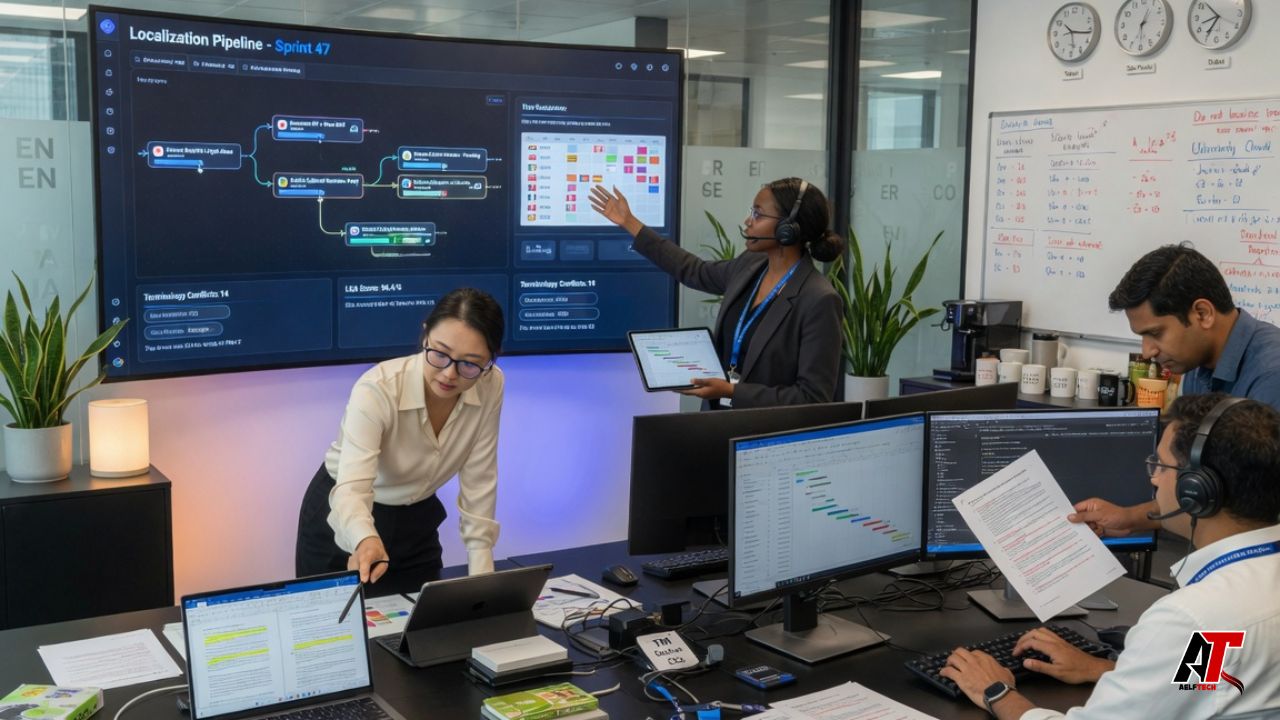
Expanding global operations requires precise cross-lingual communication across international markets. Whether translating legal contracts, medical documentation, technical manuals, or digital platforms, partnering with the best translation office ensures cultural accuracy and regulatory compliance. Automated online translation apps frequently struggle with regional dialects, complex industry terminology, and nuanced brand messaging. Consequently, professional organizations rely on certified linguistic agencies to eliminate communication barriers. However, selecting an ideal agency requires evaluating quality control standards, data security protocols, subject-matter expertise, and technological workflows. This comprehensive industry guide analyzes the primary selection criteria, quality frameworks, and technology tools used by leading global language service providers.
What Defines the Best Translation Office for Global Growth
Navigating international markets demands higher precision than simple word-for-word language translation. A professional linguistic agency integrates native translators, industry specialists, and localization technologies to adapt content seamlessly for target audiences.
| Service Feature | Basic Automated Translation | Best Translation Office Standard |
|---|---|---|
| Linguistic Precision | Literal, context-blind word translation | Culturally adapted, contextual localization |
| Subject Expertise | Generic vocabulary processing | Specialized legal, medical, or technical linguists |
| Quality Control | Zero human editing or proofreading | Multi-tier Translation, Editing, and Proofreading (TEP) |
| Data Protection | Public cloud storage vulnerabilities | ISO-certified end-to-end data encryption |
| Formatting Support | Unformatted raw text output | Full Desktop Publishing (DTP) layout matching |
Working with certified professionals ensures that localized materials preserve structural formatting and tone. Furthermore, choosing the best translation office protects companies from costly legal misunderstandings and embarrassing cultural missteps.
7 Secrets to Select the Best Translation Office
Selecting the right language partner requires looking beyond basic price-per-word metrics. Below are seven essential criteria every corporate buyer should evaluate.
1. Verify ISO Certification in the Best Translation Office
International Organization for Standardization (ISO) certifications confirm that an agency follows audited quality management processes. Specifically, look for ISO 17100 certification, which governs specialized translation services. In addition, ISO 27001 certification proves that the firm enforces strict information security controls. Therefore, choosing an ISO-certified firm guarantees standardized quality checks across every translation project.
2. Demand Native-Speaking Subject Matter Experts
Linguistic fluency alone is insufficient when translating specialized commercial documents. The best translation office assigns projects exclusively to native speakers of the target language who hold professional degrees or certifications in relevant fields. For example, patent translations require certified intellectual property attorneys, while clinical trial logs require qualified medical professionals. Consequently, subject-matter expertise prevents critical terminology errors.
3. Assess Advanced Translation Memory and CAT Tools
Modern language service providers utilize Computer-Assisted Translation (CAT) software and Translation Memory (TM) databases. These tools store previously translated phrases, ensuring consistency across large document volumes. Furthermore, leveraging translation memory reduces client costs over time by eliminating duplicate translation charges for repeated phrases.
4. Ensure Stringent Data Security Protocols
Corporate documents, financial records, and medical files contain sensitive, proprietary information. Therefore, an authoritative language bureau enforces non-disclosure agreements (NDAs) and secure file transfer protocols (SFTP). Furthermore, the best translation office utilizes encrypted cloud servers to prevent unauthorized data access.
5. Evaluate Multi-Language Localization Capabilities
As corporate operations expand into multiple global regions, managing separate vendors for every target language becomes inefficient. A full-service language center manages multi-lingual campaigns across dozens of dialects simultaneously. Consequently, centralized project management simplifies communication and maintains unified brand consistency globally.
6. Review Desktop Publishing and Formatting Quality
Complex documents—such as user manuals, brochures, and CAD schematics—contain complex visual layouts. When text transitions from English to languages like German or Arabic, character lengths and reading directions shift significantly. The best translation office employs specialized Desktop Publishing (DTP) teams to reformat translated files, ensuring final documents match original graphic design layouts perfectly.
7. Confirm Transparent Turnaround Timelines and Pricing
Reputable language agencies provide detailed cost breakdowns without hidden administrative fees. Furthermore, the agency establishes firm delivery milestones backed by dedicated project managers. Consequently, clear project scoping prevents unexpected delivery delays during time-sensitive commercial launches.
Technological Frameworks Used by the Best Translation Office
Leading language providers combine human linguistic talent with advanced technology to accelerate project delivery without compromising contextual accuracy.
| Workflow Stage 1: Preparation | Workflow Stage 2: Processing | Workflow Stage 3: Final Delivery |
|---|---|---|
| File Parsing & Terminology Setup | Hybrid Human-AI Translation | Desktop Publishing & QA Audit |
| Project managers extract source text, build terminology glossaries, and assign subject-matter linguists. | Native translators work alongside Translation Memory software to draft and edit precise content. | DTP specialists format document layouts, followed by final quality assurance sign-offs. |
Integrating Neural Machine Translation (NMT) alongside human post-editing (NMTPE) allows agencies to process large document volumes quickly. However, human post-editing remains essential to correct grammatical nuances, stylistic tone, and context errors that automated software overlooks.
Sector-Specific Solutions Across Best Translation Office Providers
Different commercial sectors present distinct linguistic challenges, requiring specialized workflow protocols.
| Industry Sector | Primary Translation Challenge | Essential Quality Standard |
|---|---|---|
| Legal & Regulatory | Precise statutory terminology and jurisdictional rules | Certified legal translators & notarized affidavits |
| Medical & Life Sciences | Strict patient safety data and regulatory approvals | Dual-blind back-translation & clinical review |
| Technical Engineering | Complex schematics, software UI, and measurement units | ISO-standardized glossaries & CAD layout formatting |
| Financial Services | Fast turnaround on market reports and audits | Strict NDA compliance & encrypted data transfers |
| E-Commerce & Marketing | Cultural adaptation of slogans and marketing copy | Transcreation specialists & localized SEO research |
By matching specialized teams to specific industry sectors, the best translation office guarantees that technical jargon is adapted accurately for every target market.
Quality Assurance Workflows in the Best Translation Office
Achieving consistent linguistic accuracy requires enforcing strict quality assurance models. Reputable agencies utilize the industry-standard TEP framework:
- Translation: A native subject-matter expert translates the source document into the target language using specialized terminology glossaries.
- Editing: A second independent linguist reviews the translated text against the original source file, correcting minor grammatical errors or context mismatches.
- Proofreading: A final linguistic reviewer reads the polished text to ensure natural flow, stylistic consistency, and proper formatting alignment.
Enforcing this three-tier editing methodology minimizes linguistic oversights, delivering audit-ready documents to clients every time.
Conclusion: Partnering with the Best Translation Office
Scaling an international brand successfully requires reliable, accurate cross-border communication. As highlighted throughout this guide, selecting the best translation office involves evaluating ISO certifications, native subject-matter expertise, data security protocols, and advanced localization technology. By avoiding unverified automated translation tools and partnering with a certified language agency, organizations protect their brand reputation and satisfy regulatory requirements. Furthermore, leveraging translation memory technology and specialized desktop publishing services reduces long-term localization costs while accelerating time-to-market. Ultimately, investing in a high-caliber language partner empowers your business to build authentic relationships with international clients and achieve sustainable global growth.
Frequently Asked Questions (FAQs)
What is the difference between translation and localization?
Translation converts written text from one language to another, while localization adapts cultural idioms, visual layouts, currency formats, and local regulations.
What ISO certifications should the best translation office hold?
Look for ISO 17100 for specialized translation quality standards and ISO 27001 for strict corporate data security management.
How does translation memory lower project costs over time?
Translation memory software stores previously translated phrases, allowing agencies to offer discounted rates for repeated sentences in future projects.
What is certified translation and when is it required?
Certified translation includes a signed statement of accuracy from the agency, required for legal contracts, court filings, immigration papers, and official records.
Why is human post-editing required for machine translation?
Machine translation often misinterprets context, slang, and technical terminology; human editors correct these errors to ensure complete accuracy.
How do translation agencies handle formatting in complex documents?
Top agencies employ Desktop Publishing (DTP) specialists who adjust graphic layouts, fonts, and page elements to match the original source file formatting.
Leave a Reply