
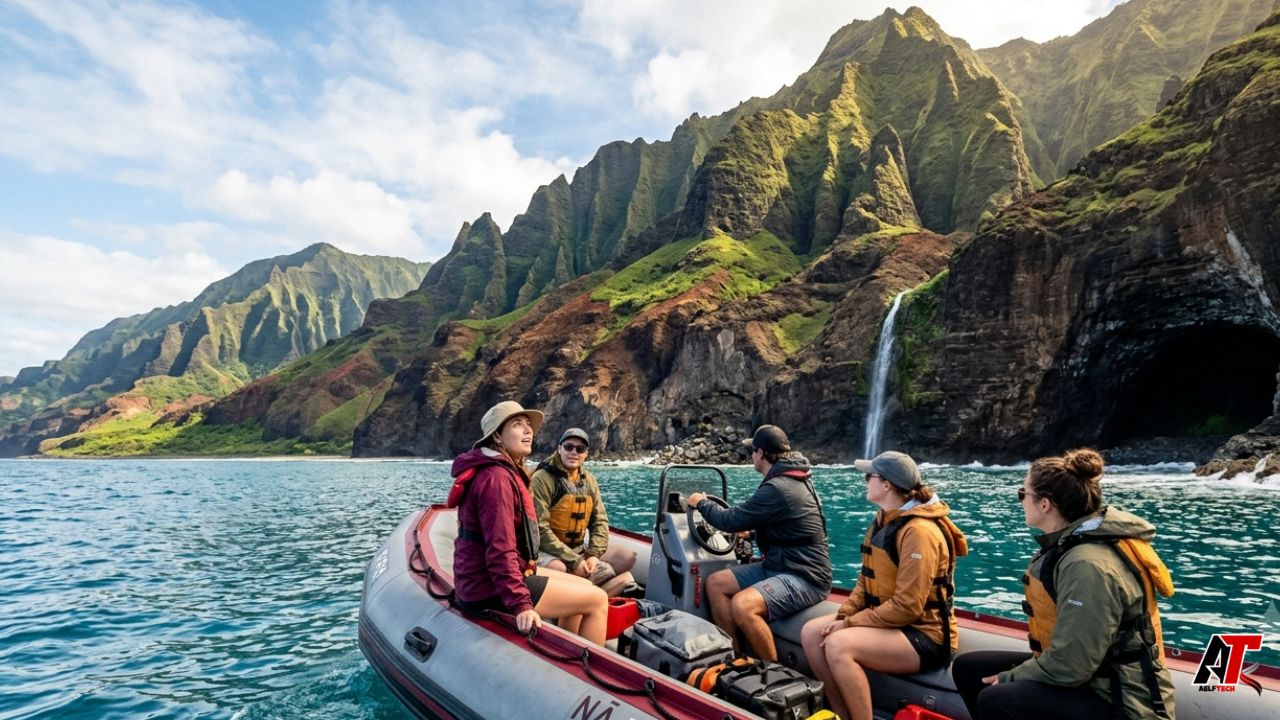
A journey along Kauaʻi’s Nā Pali Coast feels less like ordinary sightseeing and more like entering a living landscape. Emerald ridges rise sharply from the Pacific, waterfalls thread down weathered cliffs, and small beaches appear where roads cannot reach. For many visitors, a boat trip is the most practical way to experience this remote shoreline at close range. Understanding what to expect on Na Pali Coast tours helps you choose the right vessel, prepare for changing ocean conditions, and enjoy the scenery without unpleasant surprises.
The experience can range from a relaxed catamaran cruise to an energetic raft expedition. Both reveal memorable views, yet they differ significantly in comfort, speed, access, and physical intensity. The best tour is not simply the most adventurous option; it is the one that matches your health, confidence on the water, travel companions, and expectations.
Why the Nā Pali Coast Looks So Extraordinary
The coast occupies a roadless section of northwestern Kauaʻi, shaped by erosion, rain, wind, and relentless surf. From the water, you can see deeply folded valleys, narrow ridgelines, sea arches, waterfalls, and secluded coves that remain hidden from most roads and overlooks. The scale is difficult to appreciate in photographs because the cliffs seem to keep rising as the boat approaches them.
A boat also changes your perspective throughout the trip. Distant ridges first appear like a green wall, then separate into valleys and pinnacles. Light shifts across the rock, clouds gather over the higher ridges, and waterfalls may become more prominent after passing showers. This constant visual change is one reason the return journey rarely feels repetitive.
Choose the Right Type of Tour Before You Book
Your vessel determines much of the day’s rhythm. Larger catamarans usually provide more deck space, onboard facilities, shade, and a steadier platform. They often suit families, first-time boat travelers, photographers who need room to move, and guests who value comfort. Their size, however, may prevent them from entering narrow sea caves or approaching certain rock formations closely.
Rigid-hull inflatable rafts are smaller, faster, and more responsive. They may reach caves, waterfalls, and rugged coastal features that larger boats must view from farther away. That access comes with a more forceful ride. Guests may sit along padded tubes or fixed seating, hold safety lines, and absorb repeated movement over waves. The linked Na Pali Coast tours page describes its 30-foot Zodiac expedition as a fast and rough ocean adventure rather than a leisurely cruise.
| Tour style | Usually best for | Main advantage | Trade-off |
| Catamaran | Families, comfort seekers, first-time boat guests | More space, stability, shade, and facilities | Less access to narrow caves |
| Zodiac / raft | Active travelers seeking close coastal access | Speed, small groups, and cave approaches | Rougher, wetter, physically demanding |
| Sunset cruise | Couples, scenery, relaxed photography | Golden-hour views and slower atmosphere | May offer less cave or snorkel time |
Tour features vary by operator, vessel, season, and ocean conditions.
Expect the Ocean to Shape the Itinerary
No reputable operator can guarantee an identical route every day. Wind, swell direction, rainfall, visibility, and wave action near the cliffs influence where the captain can safely travel. A calm harbor departure does not necessarily mean the entire coast will be smooth. Conditions can change as the boat rounds exposed points or travels into open water.
The captain may shorten a cave visit, skip snorkeling, alter the turnaround point, or remain farther from the cliffs. These decisions are not signs of a poor tour. They reflect the reality of operating along a powerful, remote coastline. Travelers who treat the published itinerary as a plan rather than a promise usually have a better experience.
Sea Caves Are a Highlight, Not a Certainty
Smaller boats may approach or enter the coast’s hidden sea caves, including caverns with dark entrances, arched openings, or ceilings that allow sunlight to fall onto the water. Inside, sound changes dramatically. Waves echo against stone, the temperature feels cooler, and reflected light can turn the water an intense blue or green.
Nevertheless, cave entry depends entirely on safe ocean conditions and the captain’s judgment. Even during a generally favorable season, surge at a cave mouth can make entry unsafe. A satisfying tour should therefore be judged by the whole coastline—its cliffs, waterfalls, valleys, wildlife, and stories—not only by whether the vessel enters a particular cave.
The Ride May Be Wetter and Rougher Than Expected
Spray is part of the experience, especially on a raft. The bow can rise and settle repeatedly, and passengers may feel jolts as the vessel crosses chop. A light jacket can protect against wind after you become wet, while quick-drying clothing remains more comfortable than heavy cotton. Secure hats with a strap and avoid carrying loose objects that could blow away.
Motion-sensitive travelers should take the possibility of seasickness seriously. Consider speaking with a healthcare professional before the trip about an appropriate preventive option, because some remedies work best when taken before boarding. Eat a light meal, stay hydrated, look toward the horizon, and avoid spending long periods staring at a phone or camera screen.
Wildlife Sightings Are Possible but Never Guaranteed
The waters around Kauaʻi support spinner dolphins, sea turtles, tropical fish, seabirds, and seasonal humpback whales. A pod of dolphins may travel beside the vessel, turtles may surface briefly, and seabirds may circle cliff ledges. These moments often happen quickly, so keep your camera accessible but safely secured.
Wildlife should remain a welcome surprise rather than the sole reason for booking. Animals move freely, and responsible captains avoid chasing or crowding them. Whale sightings are associated mainly with the winter season, while summer trips are often chosen for more favorable access to caves and snorkeling areas. Every season offers a different balance of scenery, marine activity, and ocean behavior.
Snorkeling Depends on Your Specific Tour and the Day
Some excursions include a dedicated snorkeling stop, while others focus only on sightseeing and cave exploration. Read the product description carefully instead of assuming every boat trip includes water time. The linked three-hour Sea Caves Raft Expedition currently states that snorkeling is not included, whereas the operator lists a separate raft-and-snorkel experience.
When snorkeling is included, the stop still depends on visibility, current, swell, and the captain’s assessment. Guests entering the water should be comfortable swimming in open-ocean conditions and follow every crew instruction. Those who prefer not to swim can usually remain aboard, enjoy the scenery, and use the break to rest or take photographs.
What to Wear and Pack
Pack lightly because space aboard smaller vessels is limited. Wear a swimsuit or quick-drying layers, and bring a towel, reef-conscious sunscreen, sunglasses, and a light wind-resistant layer. A secure waterproof pouch is useful for a phone, while a floating wrist strap adds another level of protection. Many raft operators ask guests to remove footwear, so choose sandals or shoes that are easy to take off.
Use sunscreen before boarding and reapply according to its directions. A hat provides useful shade, but it should have a chin strap. Bring only necessary valuables, medication, and photography equipment. Operators often provide a dry bag, snacks, drinks, or flotation equipment, yet inclusions vary. Confirm details directly before departure rather than relying on a general packing list.
Who Should Think Carefully Before Choosing a Raft
Adventure rafts are not suitable for every traveler. The repeated impact of a fast ride can aggravate back, neck, joint, or recent surgical issues. Pregnancy, certain medical conditions, limited mobility, frailty, and difficulty holding a secure seated position may also make a raft inappropriate. Age requirements alone do not prove that the experience is physically suitable.
Review the operator’s restrictions honestly and contact the company before booking when a health concern exists. A larger catamaran may offer a better balance of scenery and comfort, although no ocean vessel can promise a completely smooth ride. Choosing a gentler platform is not missing the experience; it is choosing the version you can enjoy safely.
Weather Changes, Delays, and Cancellations
Kauaʻi’s weather can vary from one part of the island to another. Rain near the cliffs may produce stronger waterfalls and vivid rainbows, while wind and swell can affect the route. Operators continuously assess conditions, and a tour can be modified or canceled even when the weather at your hotel looks pleasant.
Book the excursion early in your stay rather than on your final full day. This gives you a chance to move the trip if conditions force a cancellation. Read the cancellation and rescheduling policy before paying, keep your phone available for updates, and avoid scheduling a tightly timed activity immediately after the expected return.
Check-In Logistics Can Affect the Morning or Afternoon
Departure points may be in Port Allen, Kekaha, Waimea, or another west-side harbor, depending on the company and season. Check-in may occur at an office before guests drive separately to the harbor. Parking can involve a fee, and transportation from resorts may not be included. Allow extra time for traffic, parking, waivers, restroom use, and the safety briefing.
Arriving late can mean missing the boat because captains must work within weather and harbor schedules. Confirm the check-in location—not only the departure harbor—the day before the trip. Save the address offline, charge your phone, and bring the payment method or identification requested by the operator.
A Note for Travelers Reading “05/10” as May 10
If 05/10 in your planning notes means May 10, verify the exact tour product before making nonrefundable arrangements. The linked non-snorkel Sea Caves Raft Expedition currently lists an operating season beginning May 17 and ending September 20 for 2026. The same company presents its separate raft, cave, and snorkel experience as a year-round offering. Schedules, departure times, and seasonal availability can change, so the booking page should remain your final source.
Early May can sit near a seasonal transition. Conditions may be favorable, but no calendar date can guarantee calm water or cave access. Flexible planning remains more valuable than choosing a date based only on historic averages.
How to Get Better Photos Without Missing the Experience
Use a wrist or neck strap, enable burst mode, and clean salt spray from the lens with a microfiber cloth. A wide-angle setting works well for cliffs and cave entrances, while moderate zoom helps capture waterfalls and wildlife without leaning over the side. Keep your equipment inside a waterproof case whenever it is not in use.
Photography is easier on a catamaran because you can often change position, whereas raft passengers may need to remain seated during faster sections. Ask the crew when it is safe to stand or move. Take several photographs, then put the camera down. The coastline’s scale, sound, wind, and movement are difficult to preserve in an image and deserve your full attention.
Respect the Coast and the Crew
Nā Pali is more than a scenic backdrop. Its valleys, archaeological sites, waters, and Hawaiian place names carry cultural and historical meaning. Listen to the crew’s interpretation, avoid touching wildlife, keep all waste onboard, and use reef-conscious products. Do not pressure a captain to enter a cave or approach an animal when conditions or regulations do not support it.
A respectful traveler follows instructions quickly, keeps the vessel tidy, and understands that safety decisions are final. This mindset protects passengers, crew, wildlife, and a coastline whose remoteness is central to its appeal.
Final Thoughts
The best Nā Pali outing begins with realistic expectations. You are likely to see immense cliffs, folded valleys, waterfalls, remote beaches, and changing shades of Pacific blue. You may also encounter spray, strong movement, a revised route, or a missed cave entry. Those variables are not separate from the adventure; they are part of experiencing an exposed natural coast.
Choose a vessel that matches your body and travel style, prepare for water and wind, and leave space in your itinerary for weather changes. With thoughtful planning, the journey can become one of the most vivid memories of Kauaʻi. For more practical travel and lifestyle guidance, explore aelftech.
Leave a Reply