
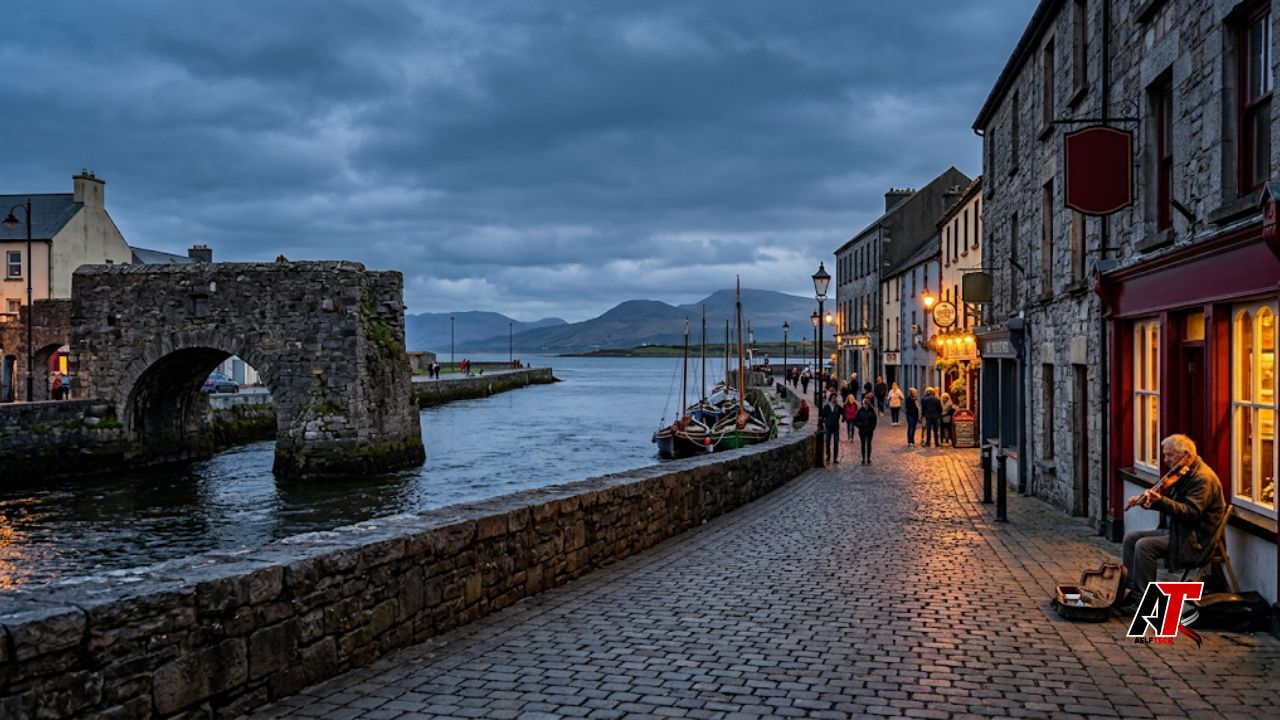
Ireland’s west coast has a way of slowing travel down in the best possible sense. The road opens to Atlantic light, stone walls, green fields, music spilling from pub doors, and towns where the past still feels close. Galway sits at the heart of that feeling. It is lively without losing its old soul, compact enough to explore on foot, and rich enough to reward a longer stay. For anyone interested in Galway heritage on Ireland’s west coast, the city is more than a stop on a route. It is a doorway into medieval trade, Irish language culture, coastal life, music, food, and landscapes shaped by the ocean.
Galway is often linked with the Wild Atlantic Way, the great coastal route that follows Ireland’s western edge. Yet the city also has its own rhythm. A short walk can take you from Eyre Square to the Latin Quarter, from the River Corrib to the Spanish Arch, and from street performers to quiet church interiors. The best way to discover Galway is not to rush through it. Let the city open in layers, then move outward to Connemara, the Aran Islands, and the villages that keep the west coast story alive.
Why Galway Matters on Ireland’s West Coast
Galway has long been a meeting point between land and sea. Its position on Galway Bay helped shape its growth as a trading town, while its streets carried influences from Ireland, Britain, Spain, and the wider Atlantic world. The city’s old merchant families, often called the Tribes of Galway, left their mark on buildings, place names, and civic memory. Today, that history is not locked away. It sits beside cafes, shops, music venues, and waterside paths.
This blend of old and new is what makes Galway so appealing. It is a university city, a festival city, and a gateway to some of Ireland’s most dramatic scenery. At the same time, it still feels connected to older traditions. The Irish language has a strong presence in County Galway, especially in nearby Gaeltacht areas. Traditional music is part of daily life rather than a staged extra. Local food is shaped by the sea, by farms, and by the markets that connect small producers with visitors and residents.
Start in Eyre Square and Walk Into the Old City
A Galway journey often begins at Eyre Square, the open public space at the centre of the city. It is officially known as John F. Kennedy Memorial Park, but most people still call it Eyre Square. The area has been associated with markets and public gathering for centuries, and it remains a practical starting point for exploring the city on foot. From here, the old streets pull you toward Shop Street, High Street, Quay Street, and the Latin Quarter.
This part of Galway is busy, colourful, and easy to enjoy. Musicians play outside shops. Restaurants place menus near old stone walls. Visitors stop for photographs, but locals still use the same streets for ordinary errands. That is part of Galway’s charm. Heritage does not feel separate from modern life. The city’s past is woven into the routes people still use every day.
The Latin Quarter: Streets Full of Story
The Latin Quarter is one of Galway’s most recognisable areas. Its narrow streets, lively pubs, small shops, and historic corners make it one of the best places to feel the city’s character. The area stretches around Quay Street, Cross Street, Middle Street, and toward the Spanish Arch. It is a natural place to wander without a strict plan. Look above the shopfronts and you will often notice older stonework, unusual windows, and signs of buildings that have changed purpose many times.
In the evening, the Latin Quarter becomes even more atmospheric. Traditional music sessions, conversation, and the sound of people moving between pubs and restaurants fill the streets. For travellers, this is a good reminder that heritage is not only about monuments. It is also about habits, songs, tastes, and shared public spaces. Galway’s living culture gives its historic centre a pulse that many polished tourist districts lack.
Spanish Arch and the City Walls
The Spanish Arch is one of Galway’s key heritage landmarks. Built in the late sixteenth century as an extension of the old town walls, it stands near the River Corrib and Galway Bay. Its name reflects Galway’s trading links and the maritime world that helped the city grow. The arch also shows how Galway looked outward. Ships, merchants, and goods moved through this part of the city, connecting the west of Ireland with wider European routes.
Today, the Spanish Arch is a peaceful place to pause, take photographs, and think about the city’s coastal identity. Just beside it, Galway City Museum gives visitors a deeper look at local archaeology, history, art, and everyday life. A visit here helps turn a walk through the streets into a clearer story. You begin to see Galway not just as a pretty city, but as a place shaped by trade, resilience, language, religion, fishing, and community.
Galway Cathedral and a Different Kind of Heritage
Galway Cathedral is much newer than the city walls, yet it has become part of the city’s identity. Built on the site of the former city prison, the cathedral was completed in the 1960s and stands beside the River Corrib. Its dome, stone exterior, stained glass, and quiet interior give it a strong presence. For visitors, it offers a different kind of heritage: not medieval, but modern Irish religious and architectural history.
The Claddagh and Galway’s Maritime Memory
Across the water from the Spanish Arch is the Claddagh, once a fishing village with its own customs and strong community life. The area is closely associated with the famous Claddagh ring, known for its heart, hands, and crown design. Many visitors recognise the ring as a symbol of love, friendship, and loyalty, but seeing the place linked with its story gives the symbol more meaning.
A walk toward the Claddagh and Salthill shows another side of Galway. The city opens toward the bay, and the Atlantic becomes part of the view. On a clear day, the light over the water can make even a simple walk feel special. On a windy day, the coast feels raw and alive. Either way, this side of Galway helps visitors understand why the sea has always mattered here.
Beyond the City: Connemara’s Wild Beauty
Galway city is the best starting point, but the wider county carries much of the west coast’s power. Connemara is the landscape many travellers imagine when they think of western Ireland. It has mountains, bogland, lakes, winding roads, stone cottages, beaches, and villages where Irish language and local traditions remain visible. The scenery is not simply beautiful. It feels ancient, open, and deeply connected to place.
Kylemore Abbey is one of Connemara’s most visited landmarks. Set against mountains and woodland, it combines architecture, family history, religious life, gardens, and dramatic scenery in one stop. Connemara National Park is another highlight, especially for travellers who want walking routes and wide views. Even a short drive through Connemara can become one of the strongest memories of a Galway trip because the landscape changes constantly. Lakes appear suddenly. Mountains rise behind stone walls. The Atlantic comes in and out of view.
The Aran Islands: Older Stones, Stronger Winds
For a deeper heritage experience, the Aran Islands are hard to match. Located off the coast of Galway and Clare, the three islands are known for Irish language culture, stone walls, early Christian sites, sea cliffs, and traditional craft. Inis Mór, the largest island, is home to Dún Aonghasa, a prehistoric stone fort set dramatically on a cliff edge above the Atlantic. Standing there, it is easy to understand why the west coast has inspired so much folklore, poetry, and storytelling.
Food, Music, and Festivals in Galway
Galway’s heritage is also found at the table and in the music. Seafood is a natural part of the city’s food culture, especially oysters, mussels, fish, and chowder. Local bakeries, markets, and restaurants make it easy to taste the region without needing a formal food tour. The city is also known for festivals, from arts and theatre to food and traditional music. These events show how Galway continues to create culture rather than only preserve it.
Practical Travel Tips for a Galway Heritage Journey
Galway is easy to include in a wider Ireland itinerary. Many travellers arrive from Dublin, and booking the Dublin Galway train can be a convenient way to reach the city without driving. Once in Galway, you can explore the centre on foot, then use tours, buses, ferries, or a rental car for Connemara and the Aran Islands.
If your journey includes Britain as well as Ireland, rail travel can also shape the wider route. For example, travellers planning a multi-country trip may compare Irish routes with the London to Edinburgh by train before deciding how to organise their days. The main point is to avoid packing too much into a short stay. Galway rewards slow travel, so leave time for weather, music, sea views, and unplanned walks.
A three-day Galway plan can work well for many visitors. Spend the first day in the city centre, including Eyre Square, the Latin Quarter, the Spanish Arch, Galway City Museum, the cathedral, and the Claddagh. Use the second day for Connemara, Kylemore Abbey, or coastal villages. Keep the third day for the Aran Islands or a relaxed Salthill walk with more time in the city. If you have five days, slow everything down and add more time for local food, evening music, and scenic drives.
Best Time to Visit Galway
Galway can be visited in every season, but the experience changes with the weather. Late spring and summer bring longer days, busier streets, and more outdoor energy. Autumn can be a beautiful time for softer light, fewer crowds, and cosy evenings. Winter is quieter and more atmospheric, though daylight is shorter and Atlantic weather can be strong. The key is to pack for change. On Ireland’s west coast, sunshine, mist, wind, and rain can all appear in the same day.
A Journey That Feels Personal
What makes Galway special is not one single landmark. It is the way everything connects. Medieval walls lead toward music-filled streets. A modern cathedral looks over a fast river. A fishing village gives meaning to a famous ring. A city visit opens into Connemara, and then into islands where ancient stone forts face the Atlantic. This is why Galway heritage on Ireland’s west coast feels personal. You do not just see history. You move through it, eat beside it, listen to it, and carry part of it with you when you leave. For more travel-friendly digital content ideas, visit aelftech.com. Galway is not a place to tick off quickly. It is a place to notice. Watch the river. Listen to the street music. Step into the museum. Walk toward the bay. Take the road into Connemara if time allows. Cross to the Aran Islands if the weather is kind. By the end of the journey, Ireland’s west coast will feel less like a destination and more like a memory with sound, colour, wind, and story inside it.
Leave a Reply