
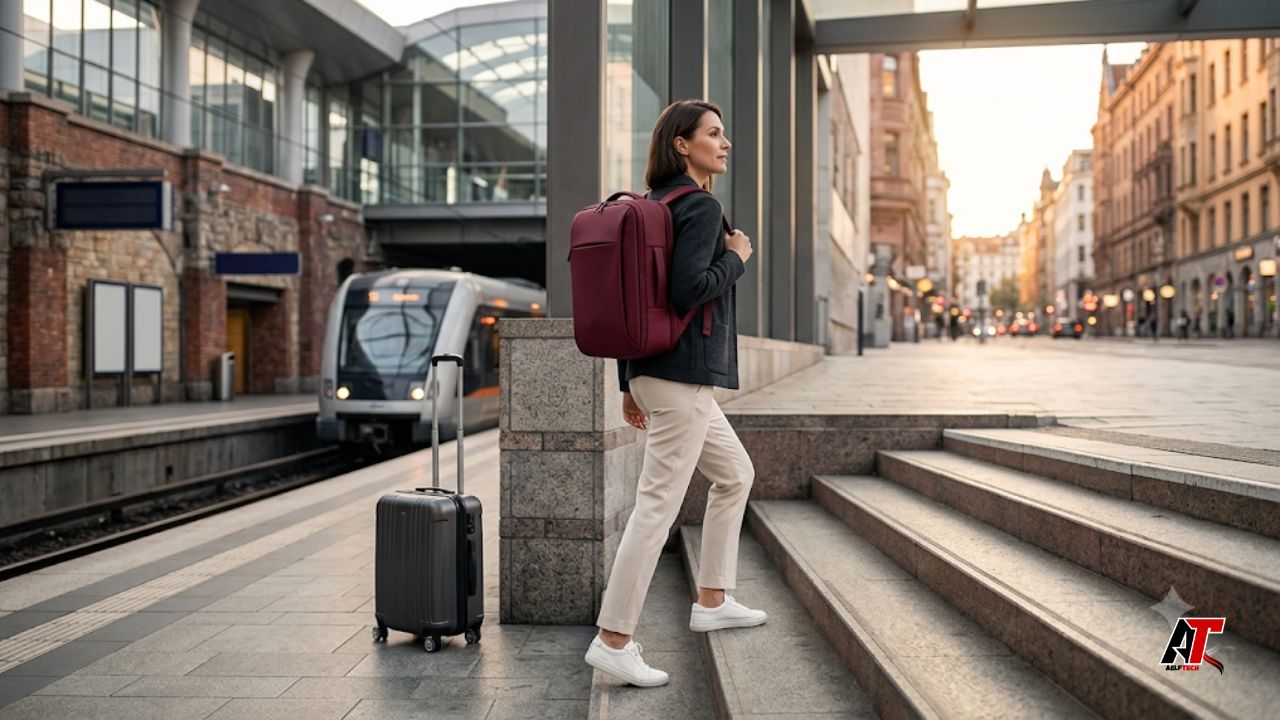
Travel habits have changed. Many people now move between airports, trains, buses, shared rides, city streets, hostels, business hotels, and short-term rentals during a single journey. In that environment, a traditional rolling suitcase can feel less convenient than it once did. It works well on smooth floors, but it can become awkward on stairs, cobblestones, crowded platforms, narrow aisles, or uneven sidewalks. This is one reason convertible backpacks are becoming a preferred choice for modern travelers.
A convertible travel bag combines the structure and organization of luggage with the mobility of a backpack. Depending on the design, it may include padded shoulder straps that can be hidden, side and top grab handles, a suitcase-style opening, a luggage sleeve, and enough shape to keep clothing and electronics organized. The result is a bag that can adapt to the trip instead of forcing the traveler to adapt to the bag.
Suitcases remain useful, but travelers who value speed, flexibility, and lighter movement often find that a well-designed convertible backpack solves more real-world problems.
What Is a Convertible Backpack?
A convertible backpack is a travel bag that can be carried in more than one way. It usually works as a backpack, but it may also be carried like a briefcase, duffel, or soft-sided suitcase. The shoulder straps can often be tucked behind a panel when they are not needed, which gives the bag a cleaner appearance and prevents loose straps from getting caught during storage or transport.
Unlike a basic daypack, many convertible models open from the front or around three sides. This clamshell-style opening makes packing easier because the interior can be accessed like a suitcase. Some designs include compression straps, separate laptop storage, quick-access pockets, shoe sections, or water-resistant fabric. These features make the bag suitable for leisure trips, business travel, weekend breaks, and carry-on-only journeys.
1. Easier Movement Through Real Travel Environments
The strongest advantage of a convertible backpack is mobility. A suitcase rolls easily across a polished airport floor, but travel rarely stays that simple. A traveler may need to climb a station staircase, walk across a bridge, pass through a crowded market, enter a small elevator, or move quickly between terminals. Carrying the bag on the back keeps both hands free and removes the need to pull luggage behind the body.
This can be especially useful in older cities where sidewalks are narrow or uneven. It also helps on rainy streets, escalators, ferry ramps, and platforms where wheels may become noisy or unstable. Travelers can move more naturally, keep the bag close, and reduce the risk of blocking other people in busy spaces.
2. Multiple Carrying Options in One Bag
Convertible bags provide different carrying modes for different moments. Backpack straps are practical during long walks or transfers. A side handle is useful when lifting the bag into an overhead compartment. A top handle makes it easier to move the bag a short distance. Some models also include a removable shoulder strap for duffel-style carrying.
Because one carrying method is rarely ideal for an entire trip, travelers can switch modes for meetings, flights, walks, and public transport. Hidden straps also create a cleaner, more professional appearance.
3. Better Support for Carry-On-Only Travel
Many travelers are trying to avoid checked luggage because it adds cost, waiting time, and the possibility of delayed or lost bags. A convertible carry-on backpack can help travelers pack within airline cabin limits while using available space efficiently. Soft-sided construction can fit more naturally into overhead compartments than a rigid suitcase, although travelers should always check the exact size and weight limits of their airline.
Carry-on-only travel also makes arrival faster. There is no need to wait at baggage claim, and the traveler can leave the airport or station soon after landing. This is valuable during short trips, multi-city itineraries, and journeys with tight connections.
Travelers comparing practical cabin-size formats can review a Convertible Carry-On Backpack to understand how suitcase-style access and backpack mobility can be combined in one design.
4. Smarter Organization Than a Basic Backpack
Traditional backpacks are often packed from the top. This can make it difficult to reach clothing or accessories at the bottom without removing everything above them. Convertible travel backpacks commonly use a wide opening, internal straps, and divided compartments. That layout makes it easier to separate clothing, toiletries, electronics, documents, and small items.
Good organization also improves the travel experience at security checkpoints and during hotel stays. A dedicated laptop section can keep a device accessible. A front pocket can hold a passport, boarding pass, or charging cable. Internal mesh compartments make small items visible, while compression straps help stop clothing from shifting. The traveler spends less time searching and more time moving confidently.
5. More Practical for Multi-Stop and Mixed-Transport Trips
A suitcase is most convenient when a traveler moves from a car to an airport and then directly to a hotel. A convertible backpack becomes more valuable when the route includes several types of transport. Backpack mode works well for train changes, bus stations, metro systems, rideshare pickups, and walking routes. Handle mode is useful for short indoor movements, while a luggage sleeve may allow the bag to sit on a rolling case when more than one bag is necessary.
This adaptability suits digital nomads, students, remote workers, and multi-city travelers. The same bag can support a flight, a workday, and a city walk without looking out of place.
6. Easier Storage in Small Rooms and Shared Spaces
Rigid suitcases keep their shape even when empty. That can be inconvenient in hostels, compact hotel rooms, cruise cabins, studio apartments, and homes with limited storage. A soft-sided convertible backpack usually takes up less space and can often be placed under a bed, inside a wardrobe, or against a wall.
Its smaller footprint also helps on crowded trains and buses, where the bag may fit on a rack, under a seat, or between the feet instead of occupying an aisle.
7. A More Comfortable Choice on Uneven Ground
Suitcase wheels perform best on smooth surfaces. Gravel, broken pavement, stairs, snow, sand, and cobblestones can slow them down or damage them. A backpack avoids that problem by keeping the load off the ground. With padded shoulder straps, a supportive back panel, and a sensible weight, the bag can be carried over surfaces where rolling luggage becomes frustrating.
Comfort still depends on design and packing. A bag that is too heavy or lacks support can strain the shoulders. Travelers should look for wide padded straps, breathable backing, load-stabilizing adjustments, and a shape that sits close to the body. A sternum strap can improve stability, while a hip belt may help with heavier loads on longer walks.
8. Modern Designs Can Look Professional
Older travel backpacks often had an outdoor or hiking appearance. Modern convertible bags are available in cleaner shapes, neutral colors, and structured fabrics that work in airports, offices, hotels, and meetings. Hidden straps and smooth exterior panels allow the bag to shift from casual backpack mode to a more professional briefcase-style appearance.
Business travelers can use one bag for clothing, a laptop, documents, and daily essentials, reducing the need for a separate work bag. Specialist travel-bag retailers such as witzman.com show how current travel designs balance function with a polished look.
Convertible Backpacks vs. Suitcases: Quick Comparison
| Travel Factor | Convertible Backpack | Suitcase |
| Stairs and uneven streets | Easy to carry on the back | Can be difficult to lift or roll |
| Smooth airport floors | Convenient, but carried weight remains | Very easy to roll |
| Hands-free movement | Yes in backpack mode | Usually no |
| Packing access | Often opens like a suitcase | Wide, structured opening |
| Small-space storage | Usually flexible and compact | Rigid and space-consuming |
| Business appearance | Strong when straps are hidden | Generally polished |
| Heavy loads | Less comfortable if overloaded | Easier to roll on smooth ground |
When a Suitcase Is Still the Better Choice
Convertible backpacks are not automatically better for every traveler. A wheeled suitcase may be the smarter option when the load is heavy, the route includes mostly airports and hotels, or the traveler has back, shoulder, or mobility concerns. Suitcases can also protect delicate formal clothing more effectively because their shape is usually more rigid.
Families carrying children’s items, travelers packing for long stays, and people transporting bulky equipment may prefer the capacity and rolling convenience of a suitcase. The best choice depends on the route, physical comfort, trip length, packing style, and transportation plan. A traveler should choose the bag that removes the most friction from the specific journey.
Who Benefits Most From a Convertible Backpack?
A convertible backpack is especially suitable for travelers who take short or medium-length trips, use public transport, change locations frequently, or prefer to travel with one cabin bag. It can also work well for people who combine business and leisure because the bag can look casual while walking and more professional when carried by the handle.
Weekend travelers, students, remote workers, and city explorers often benefit from the format. It is also useful when both hands are needed for a phone, ticket, umbrella, or child. The key is manageable weight and a proper fit.
How to Choose the Right Convertible Travel Backpack
The best bag is not simply the one with the most pockets. It should match the traveler’s body, airline requirements, and typical itinerary. Before buying, consider the following points:
- Size and airline compatibility: Compare the bag’s external dimensions with the carry-on limits used by the airlines you fly most often.
- Comfort: Check shoulder padding, back support, adjustability, and whether a sternum or hip strap is included.
- Opening style: A wide clamshell opening usually makes clothing easier to pack and access.
- Laptop protection: Look for a padded compartment that fits the device securely and remains easy to reach.
- Material and weather resistance: Durable fabric, protected zippers, and reinforced stitching help the bag handle frequent use.
- Hidden strap system: Make sure the straps can be stored neatly and deployed without difficulty.
- Useful organization: Prioritize pockets you will actually use rather than unnecessary compartments that add weight.
- Empty weight: A lighter bag leaves more of the airline allowance available for personal items.
Packing Tips for Better Comfort and Organization
Even a high-quality backpack becomes uncomfortable when it is packed poorly. Place heavier items close to the back panel and near the middle of the bag. This keeps the center of gravity closer to the body. Use packing cubes to group clothing, but avoid filling every available space simply because it exists. A smaller, well-planned load is easier to carry than an overfilled bag.
Keep frequently used items accessible, but place passports and wallets in protected compartments. Tighten compression straps and test the packed bag at home; a short walk can reveal pressure points before departure.
Final Thoughts
More travelers prefer convertible backpacks because modern journeys demand flexibility. A trip may involve smooth terminals one hour and steep stairs the next. A bag that changes between backpack, briefcase, and suitcase-style use can make those transitions easier. It supports hands-free movement, efficient organization, compact storage, and carry-on-only travel without giving up a clean appearance.
The editorial team aelftech.com recommends choosing travel gear based on the full route rather than airport use alone. Consider how often you will walk, climb stairs, change transport, access electronics, and store the bag in small spaces. For mobile, multi-stop travel, a convertible backpack can be a more practical companion than a traditional suitcase. For heavy loads and simple hotel-based trips, rolling luggage may still be the more comfortable choice.
Leave a Reply