
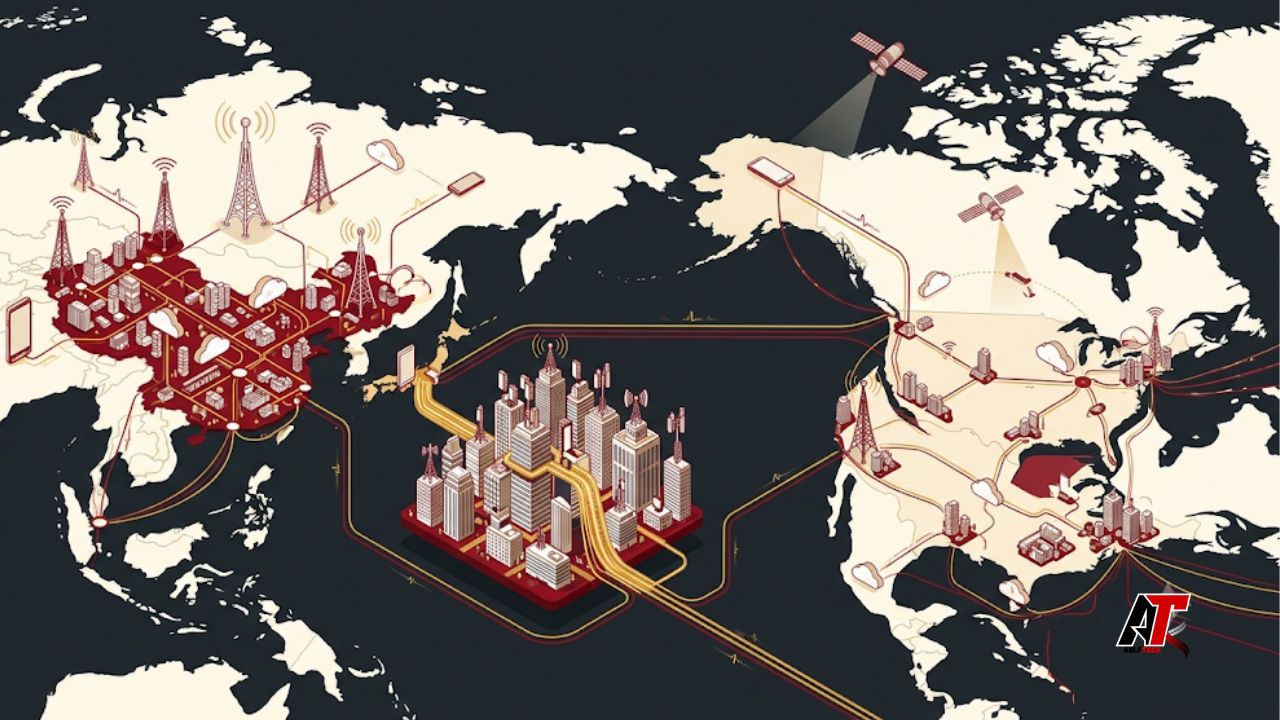
China, the United States, and Japan are three of the world’s most influential technology markets. Each country has advanced mobile networks, strong digital industries, and millions of connected users. Yet the online experience can feel very different in each place. Speed alone does not explain the difference. Regulation, geography, carrier competition, device support, pricing, and access to digital platforms all shape everyday connectivity.
The connectivity gap between China, USA and Japan matters to travelers, remote workers, global companies, app developers, and online retailers. A service that works smoothly in Los Angeles may need a different setup in Shanghai. A device configured for the United States may connect in Tokyo, but its supported bands or eSIM settings can affect performance. Therefore, anyone operating across these markets needs a practical view of the entire connectivity environment.
This guide compares mobile coverage, 5G maturity, fixed broadband, eSIM access, digital regulations, and business requirements. It also explains how users can prepare for reliable communication across all three countries.
China: Massive Network Scale With a Distinct Digital Environment
China’s greatest strength is scale. Its operators serve a huge population and have deployed extensive 4G and 5G networks across major cities, industrial zones, transport corridors, and many smaller communities. China passed one billion 5G connections by the end of 2024, which shows how quickly new network technology can reach mass adoption in the country.
However, the digital environment differs from the United States and Japan. Some global websites, cloud tools, social platforms, and messaging services may be unavailable or may behave differently because of local regulations. Cross-border data routes can also create extra latency. Therefore, an international company may have excellent local bandwidth but still face delays when connecting to overseas systems.
Travelers also need to check their device and plan before arrival. A travel data package can be convenient, but domestic device support, identity requirements, network routing, and access rules may vary. Users comparing an esim china plan should review coverage, activation instructions, hotspot support, and whether the plan provides the online access they expect.
The United States: Strong Innovation, Uneven Coverage
The United States has a competitive wireless market, advanced 5G services, a large cloud-computing sector, and broad eSIM support. Major cities usually offer several mobile providers, high-capacity home broadband, public Wi-Fi, and extensive access to global digital platforms. The country also has a mature device market, so new smartphones and connected products often launch there early.
Still, the size of the country creates an uneven experience. Dense urban areas may have very fast mid-band or high-band 5G, while rural roads, mountains, deserts, and remote communities may depend on lower-frequency coverage. In some locations, a user can see a 5G symbol without receiving the same performance available in a downtown business district.
The United States is also highly carrier-dependent. A phone may support 5G but miss a carrier’s most important bands. In addition, a locked device can limit the use of local or international eSIM plans. Travelers should confirm that their phone is unlocked and compatible before they leave.
Japan: Reliable Urban Connectivity and High Service Quality
Japan combines extensive fiber broadband with strong mobile coverage in its major population centers. Tokyo, Osaka, Yokohama, Nagoya, Fukuoka, and other large cities support demanding digital lifestyles. Commuters stream media, use mobile payments, navigate rail systems, and communicate through connected services throughout the day.
However, Japan’s geography still creates challenges. Mountains, islands, tunnels, older buildings, and less populated regions can affect signal quality. Indoor coverage may also change between floors or construction types. Moreover, local mobile plans can require identity checks, specific payment methods, or longer contracts, which may not suit short-term visitors.
For tourists and business travelers, an esim japan plan can reduce the need to visit a store or handle a physical SIM. Still, users should install the profile before travel when possible, confirm that data roaming is enabled for the eSIM, and keep the primary SIM protected from accidental roaming charges.
5G Is Not the Same Experience in Every Country
China, the United States, and Japan all have advanced 5G networks. Nevertheless, the technology serves different priorities in each country. China emphasizes rapid national deployment, industrial integration, and very large subscriber numbers. The United States combines coverage layers, using low-band spectrum for reach and mid-band or high-band spectrum for capacity. Japan focuses on dense urban performance, transport corridors, and gradual capacity improvement.
The 5G icon on a phone does not reveal the whole story. Real performance depends on spectrum, backhaul, congestion, device antennas, network configuration, and the distance from a site. A user may receive high download speeds but weaker upload performance. Another user may get stable latency but only moderate speed. For video meetings, cloud work, gaming, and live broadcasting, consistency often matters more than a single speed test.
Fixed Broadband, Wi-Fi, and the Last-Mile Difference
Mobile networks receive most of the attention, but fixed broadband remains essential. It supports offices, homes, cloud backups, streaming, software development, and connected equipment. China has expanded fiber access across large urban regions. Japan is known for widespread high-quality fiber in populated areas. The United States has excellent fiber in many locations, but cable remains common and rural availability can be inconsistent.
The last mile often creates the biggest gap. A city may have a modern national backbone, yet an individual building may use older wiring. Apartment rules, landlord agreements, local permits, and provider competition can all affect the final connection. As a result, two offices on the same street may receive different speeds and service options.
Regulation and Platform Access Shape the Real User Experience
Connectivity is not only a technical issue. It is also a policy issue. China uses a distinct regulatory and platform ecosystem. Many local apps are deeply integrated into payments, transport, shopping, communication, and identity services. However, some international platforms may not be directly accessible. Companies entering China often need local hosting strategies, approved partners, data-governance reviews, and alternatives for essential communication tools.
Japan also provides broad platform access, while maintaining strong expectations for privacy, consumer protection, reliability, and local-language support. Companies may discover that their technology works, but their onboarding flow, documentation, or customer service does not meet local expectations. Therefore, digital readiness includes both network compatibility and market adaptation.
eSIM Access Can Narrow the Traveler Connectivity Gap
eSIM technology allows a compatible device to download a mobile plan without inserting a physical card. This feature helps travelers compare plans before departure, keep their main number active, and avoid searching for a SIM shop after landing. It can also simplify short business trips across several countries.
However, eSIM does not remove every connectivity issue. The phone must support the required bands and remain unlocked. The plan must cover the correct destination. Some packages offer data only, while others include calls or texts. Network priority, fair-use limits, hotspot rules, and routing can also affect performance.
China requires extra preparation because device models and local activation options can differ from other markets. Japan is generally straightforward for travel eSIM users, although installation and troubleshooting are easier with stable Wi-Fi. The United States has broad eSIM adoption, but carrier locks remain a common obstacle for visitors and residents.
What the Connectivity Gap Means for Global Businesses
A multinational company cannot treat China, the United States, and Japan as one network environment. It needs a country-specific design. In China, the plan may require local cloud resources, approved connectivity partners, and careful cross-border data management. In the United States, the priority may be carrier diversity, rural backup options, and strong identity security. In Japan, local service expectations, building access, language, and disaster resilience may shape the design.
Applications also need regional testing. A platform may load quickly from a US data center in California but respond slowly for users in China. A mobile app may work on one Japanese carrier but show poor indoor performance on another device. Therefore, testing should include real networks, local devices, peak hours, and common user journeys.
For companies building cross-border technology strategies, team aelftech.com highlights a useful principle: design around the user’s actual location, device, carrier, and regulatory environment rather than assuming that global connectivity is uniform.
How Travelers and Remote Workers Can Prepare
Preparation can prevent most connectivity problems. First, confirm that the device is unlocked and supports the main network bands used at the destination. Next, update the operating system, download offline maps, and install essential authentication apps before departure. Users should not depend on receiving a verification text after they lose access to their home network.
Second, choose at least two ways to get online. A travel eSIM can serve as the primary option, while hotel Wi-Fi, a local SIM, or a portable hotspot can provide backup. Remote workers should also test their company VPN and collaboration tools before traveling. In China, they should confirm which approved tools their employer supports.
Will the Gap Become Smaller?
The infrastructure gap will continue to shrink in many areas. China is expanding 5G-Advanced and industrial connectivity. The United States is adding mid-band capacity, fixed wireless access, fiber, and satellite options. Japan is improving 5G capacity while preparing networks for more automation, smart mobility, and next-generation services.
Yet some differences will remain because they come from geography, market structure, policy, and user behavior. China’s digital ecosystem will continue to prioritize local platforms and regulatory control. The United States will continue to balance innovation with a fragmented provider landscape and a large rural footprint. Japan will continue to combine high reliability with local service requirements and geographic constraints.
Therefore, the goal is not to wait for every market to become identical. The better approach is to build flexible devices, applications, and business processes. Companies that support multiple carriers, regional cloud architecture, eSIM onboarding, offline workflows, and clear security rules will adapt more easily.
Conclusion
The connectivity gap between China, USA and Japan is not a simple ranking of fast, faster, and fastest. China leads through network scale and industrial deployment, but its digital rules create a distinct online environment. The United States offers innovation, broad platform access, and strong 5G development, although geography and provider availability create uneven results. Japan delivers dependable urban connectivity and excellent fixed broadband, while local requirements and terrain still affect some users.
Travelers should check device compatibility, eSIM activation, roaming settings, and access to essential apps. Businesses should test real user journeys in each country, build backup connections, and adapt their cloud and compliance strategies. With the right preparation, organizations can reduce disruption and provide a consistent digital experience across three very different connectivity markets.
Frequently Asked Questions
Which country has the best connectivity: China, the USA, or Japan?
There is no single winner. China stands out for 5G scale and industrial use. The United States offers a broad digital ecosystem and strong network innovation. Japan is known for reliable urban mobile service and extensive fiber broadband. The best option depends on location, device, carrier, and the service a user needs.
Can a US phone work in China and Japan?
Many unlocked modern phones can work in both countries, but users must check supported frequency bands and eSIM or physical SIM compatibility. Carrier-locked phones may not accept a travel plan. Some device variants sold for specific markets can also have different SIM features.
Is eSIM a good option for China and Japan?
Yes, a travel eSIM can be convenient for short visits. However, users should confirm device compatibility, plan coverage, data limits, hotspot rules, and activation steps. China may require more planning because the local digital environment and device support can differ from other countries.
Why does internet speed feel different even when 5G is available?
The 5G label does not guarantee a specific speed. Performance changes with spectrum, congestion, signal strength, backhaul, device hardware, and indoor conditions. The route to an overseas website or cloud service can also add delay.
Leave a Reply