
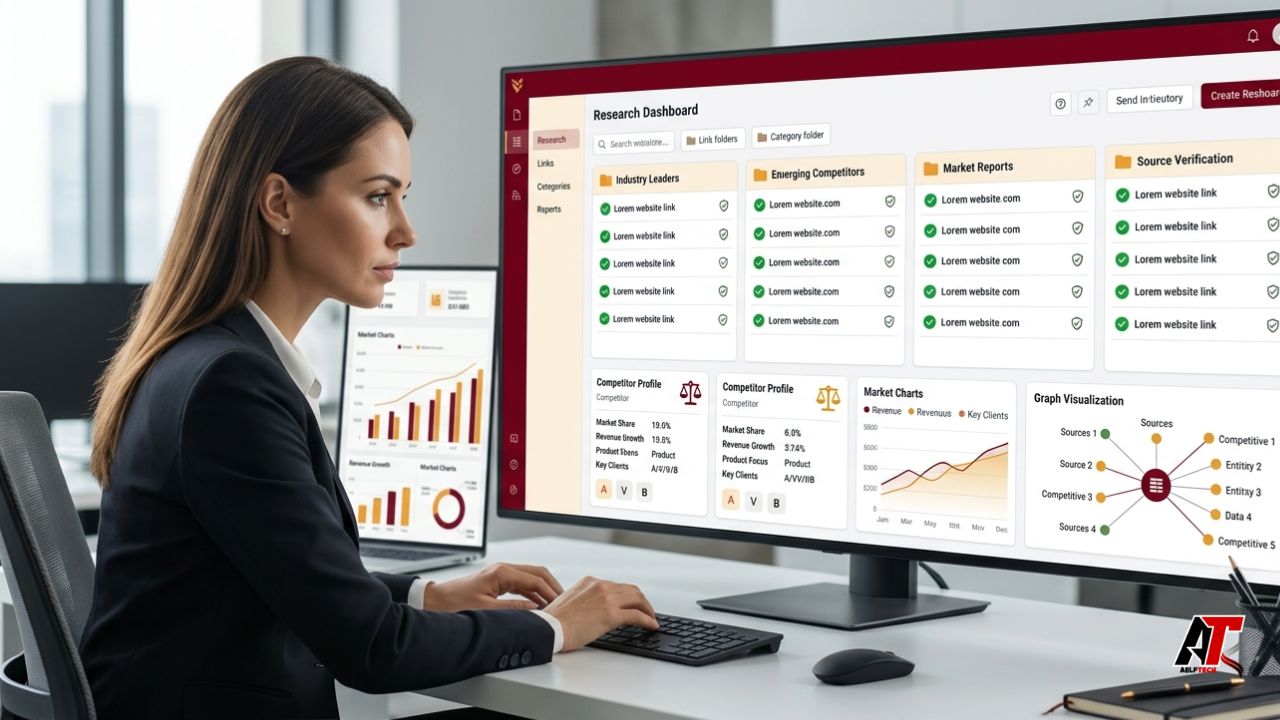
Business research often begins with a simple search, yet useful competitive intelligence rarely comes from the first result. Search engines mix official company pages, advertisements, outdated articles, copied profiles, social posts, and unverified claims. A verified link directory can reduce that noise by organizing destinations into categories and helping researchers reach relevant websites faster. Used carefully, it becomes a practical starting point for market mapping, competitor discovery, supplier research, trend monitoring, and source collection.
The key phrase is “starting point.” A directory can save time, but it should not replace independent verification. Strong competitive intelligence depends on confirming who owns a website, when information was published, whether the source is primary, and whether two or more credible sources support the same conclusion. This guide explains how to use verified link directories efficiently while preserving accuracy, ethics, and analytical discipline.
What Are Verified Link Directories?
Verified link directories are curated collections of website links arranged by topic, industry, popularity, geography, or function. Unlike a raw search-results page, a directory aims to reduce navigation effort by grouping useful destinations in one place. Some directories focus on government resources, professional associations, suppliers, software tools, media outlets, marketplaces, or local businesses. Others cover a broad mix of categories and update links periodically.
For example, jusolink.net presents itself as a categorized repository of current website addresses and says it updates selected links regularly. For a business researcher, a platform like this can be useful for discovering unfamiliar portals, communities, consumer services, regional platforms, and category leaders. However, a directory’s label of “verified” should be treated as an editorial claim, not as conclusive proof that every linked page is official, safe, current, or suitable for business decisions.
Why Link Directories Matter for Competitive Intelligence
Competitive intelligence is not corporate spying. It is the lawful and ethical process of collecting public information, comparing signals, and turning those signals into better decisions. Researchers may study competitors’ product ranges, pricing language, customer segments, partnerships, recruitment patterns, geographic coverage, content strategy, technology choices, and regulatory disclosures. The challenge is finding relevant sources without wasting hours on repetitive searching.
A well-structured directory helps by improving discovery. It can reveal category clusters, regional websites, industry communities, comparison services, news sources, and digital channels that may not appear prominently in a standard English-language search. It can also help teams build a repeatable source map. Instead of depending on one researcher’s bookmarks, an organization can document which directories, official databases, trade sources, and company pages should be checked for each intelligence question.
Start with a Clear Research Question
Before opening any directory, define the decision you are trying to support. “Research our competitors” is too broad. A stronger question would be: Which companies are expanding into our target city? How are three leading brands positioning their premium service? Which marketplaces are competitors using to reach Korean consumers? What product features are becoming standard in our category? A clear question determines which categories, links, and evidence deserve attention.
Write down the research scope, geography, time period, target companies, and output format. Decide whether you need a quick landscape scan, a detailed competitor profile, or ongoing monitoring. This prevents “link collecting” from becoming an end in itself. The purpose is not to gather the largest number of URLs. The purpose is to find evidence that answers a business question and can be explained to decision-makers.
Use the Directory as a Discovery Map
Begin by exploring relevant categories rather than clicking every popular link. Look for official company sites, government portals, industry publications, marketplaces, professional communities, job platforms, financial tools, customer-review environments, and regional news sources. Record promising destinations in a research sheet with columns for the URL, category, source type, date accessed, intended use, and verification status.
Pay attention to the structure of the directory itself. Category names can reveal how a market is organized locally. Rankings may indicate visibility or audience interest, although they do not necessarily prove market share or quality. Repeated appearances across categories may suggest that a platform has broad reach. These are research leads, not final conclusions. Capture them as hypotheses that require further checking.
Verify Every Important Destination
A researcher should independently validate any link that will influence a report or recommendation. First, inspect the domain carefully for spelling changes, unusual subdomains, redirects, or lookalike addresses. Confirm that the website uses secure HTTPS, but remember that a security certificate only encrypts the connection; it does not prove the organization is trustworthy. Check the site’s About, Contact, Terms, Privacy, and corporate-information pages for consistent identity details.
Next, compare the domain with external records. ICANN’s registration data lookup tool can provide current public registration information, registrar details, domain dates, nameservers, and status data when available. For U.S. public companies, SEC EDGAR offers free access to official filings and company information. The USPTO trademark search can help confirm brand ownership and related marks. When a claim concerns market size or local demographics, Census Business Builder and other official statistical tools are more reliable than an unsourced blog post.
Build a Source Hierarchy
Not all links deserve equal weight. Create a hierarchy before analyzing findings. Primary sources should normally come first: official company websites, regulatory filings, government databases, court records, patent or trademark databases, direct product documentation, and published company statements. Secondary sources include reputable journalism, analyst reports, trade publications, and academic research. Community posts, rankings, social discussions, and anonymous pages can provide signals, but they should rarely stand alone as proof.
Use directory links to move from lower-confidence discovery toward higher-confidence confirmation. A community page may alert you to a new product launch. The company newsroom may confirm the date and features. A regulatory filing may reveal financial significance. Customer reviews may then show how users reacted. This layered approach produces a richer and more defensible picture than relying on any single source.
Collect Evidence in a Structured Way
Create an evidence log rather than saving loose bookmarks. For each finding, record the exact claim, page title, organization, URL, publication or update date, access date, source type, relevant excerpt in your own words, and confidence level. Add a screenshot or archived copy when permitted and necessary, especially for pricing pages or frequently changing content. Distinguish clearly between fact, interpretation, and assumption.
A simple confidence scale can improve team consistency. Mark information as high confidence when it comes from an authoritative primary source and is current. Use medium confidence when a credible secondary source reports the information but primary confirmation is unavailable. Use low confidence for anonymous, outdated, promotional, or single-source claims. Reports should emphasize high-confidence evidence and label uncertainty honestly.
Research Competitors from Multiple Angles
Verified link directories can support several forms of competitor analysis. Start with positioning: examine headlines, value propositions, target audiences, proof points, and calls to action on official websites. Then study products and services, including package structure, features, pricing models, guarantees, delivery areas, and support options. Compare what competitors emphasize and what they omit.
Next, investigate market activity. News portals may reveal partnerships, funding, acquisitions, events, or expansion. Recruitment sites can indicate which skills, locations, and departments a company is investing in. Marketplaces and review platforms can reveal assortment, recurring complaints, service gaps, and customer vocabulary. Social and community links can show which topics generate attention, but engagement metrics should be interpreted cautiously because they can be influenced by paid promotion, platform algorithms, or artificial activity.
Turn Links into Competitive Intelligence
A collection of verified URLs is still not intelligence. Intelligence emerges when evidence is organized around patterns, implications, and decisions. After gathering data, compare competitors across a consistent set of dimensions such as audience, offer, price, channel, geography, trust signals, content themes, partnerships, and recent changes. Use a matrix so differences become visible.
Then ask analytical questions. Which competitor is moving fastest into a new channel? Which customer need is repeatedly mentioned but poorly addressed? Are several companies hiring for the same capability? Has a once-distinctive feature become standard? Which claims are supported by strong evidence, and which remain speculative? The final output should explain what changed, why it matters, what could happen next, and what action the business should consider.
A Repeatable Seven-Step Workflow
A practical workflow begins with a decision question and ends with an actionable brief. First, define the objective and scope. Second, use a relevant directory to identify categories and potential sources. Third, verify domains and organizational identities. Fourth, prioritize primary and authoritative sources. Fifth, capture evidence in a structured log. Sixth, compare findings across competitors and time periods. Seventh, write a concise intelligence brief with confidence labels, citations, implications, and recommended next steps.
This workflow can be repeated monthly or quarterly. For ongoing monitoring, maintain a watchlist of important company pages, filings, trademarks, newsrooms, job listings, marketplaces, and industry portals. Review changes at consistent intervals. A stable process makes trend detection easier because researchers can distinguish a genuine change from a one-time observation.
Common Mistakes to Avoid
The first mistake is assuming that “verified” means permanently accurate. Domains change ownership, pages move, redirects are introduced, and websites can be compromised. The second mistake is confusing popularity with authority. A highly visited platform may be useful for audience insight but weak for confirming legal, financial, or technical facts. The third mistake is copying directory descriptions into a report without opening and evaluating the destination.
Other common problems include using outdated pages, ignoring regional language sources, collecting data without recording dates, and presenting estimates as facts. Researchers also sometimes cherry-pick evidence that supports a preferred conclusion. A better practice is to search actively for contradictory evidence and document why one source was given more weight than another.
Ethical and Legal Boundaries
Business research should rely on lawful access and responsible use. Do not bypass paywalls, login controls, technical restrictions, or privacy protections. Avoid collecting personal data that is irrelevant to the business question. Respect website terms, copyright, database rights, and applicable privacy laws. When using domain registration information, follow the tool’s terms and use the data only for legitimate purposes.
Competitive intelligence should help organizations understand markets, not harass individuals or obtain confidential information. Teams should establish written research standards covering approved sources, data retention, citation requirements, conflicts of interest, and review procedures. Ethical discipline protects both the quality of the analysis and the reputation of the organization using it.
How Small Businesses Can Apply This Method
Small businesses do not need expensive intelligence software to benefit from this method. A shared spreadsheet, a directory, official databases, and a regular review schedule can produce valuable insights. A local retailer might map competing stores, delivery platforms, review sites, and demographic data. A digital agency might compare competitors’ services, case studies, job openings, technology partners, and content themes. A manufacturer might research distributors, trade portals, certifications, and trademark activity.
The process becomes more valuable when insights are connected to action. A pricing pattern may support a new package. Repeated complaints may inspire a service improvement. Competitor hiring may signal an emerging capability. Regional platform discovery may reveal a new marketing channel. For additional digital research and technology guidance, aelftech.com can serve as an internal resource within your broader research workflow.
Final Thoughts
Verified link directories can make business research faster, more organized, and more geographically inclusive. They are especially useful for discovering relevant websites, building category maps, and identifying sources that conventional searches may overlook. Their real value, however, depends on what the researcher does after clicking a link.
Treat every directory as a navigation aid rather than a guarantee. Verify important destinations, prioritize primary sources, record evidence systematically, compare multiple perspectives, and separate facts from interpretation. When these habits become part of a repeatable process, directories stop being simple lists of websites and become useful gateways to reliable competitive intelligence.
Leave a Reply