
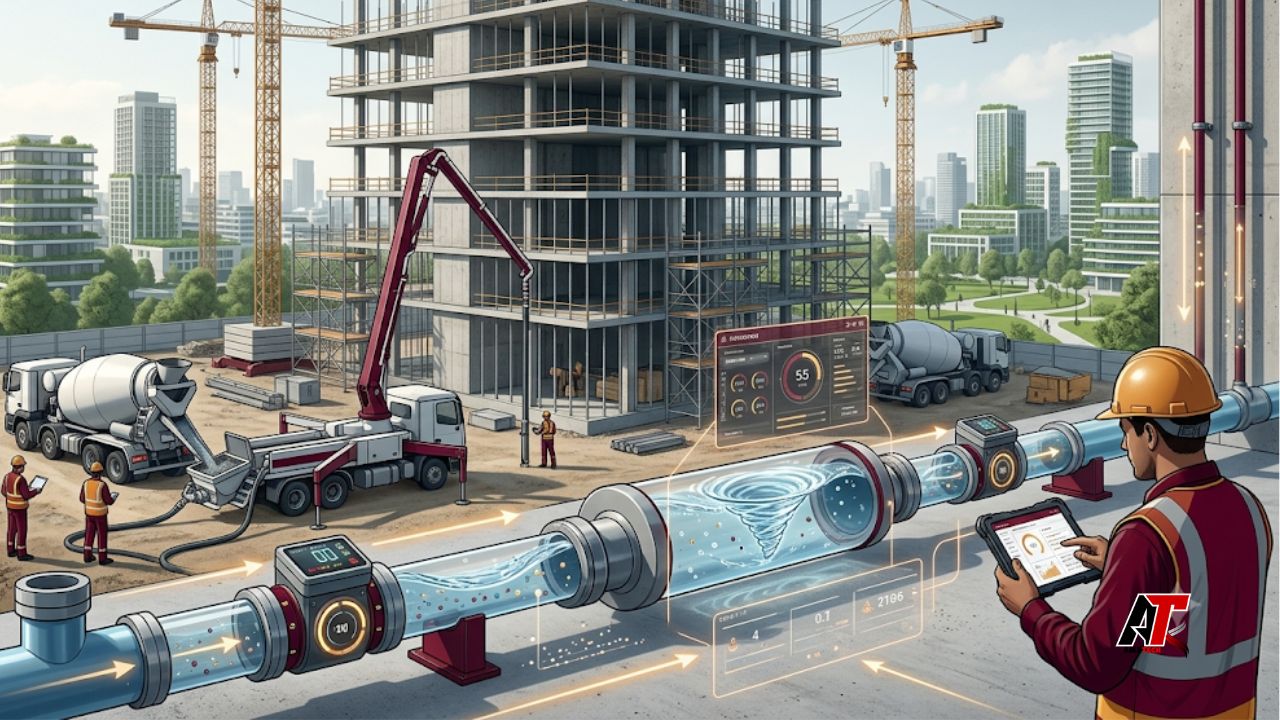
Urban construction is under pressure to deliver more buildings while using less water, less energy, and fewer raw materials. Contractors must also deal with tighter project schedules, aging municipal infrastructure, water scarcity, and growing expectations for sustainable design. These challenges are pushing engineers to examine not only how much water a project uses, but also how water behaves during mixing, treatment, circulation, and long-term building operation.
Structured water technology is becoming part of that discussion. The term commonly refers to water that has been physically treated through magnetic fields, vortex flow, controlled turbulence, or other non-chemical processes intended to alter measurable characteristics such as surface tension, mineral behavior, or interaction with cement particles. In construction research, magnetically treated water is the most frequently studied category.
The technology is not a replacement for sound engineering, approved mix designs, or certified water-efficiency products. However, early research suggests that carefully controlled water treatment may support better concrete workability, improved hydration, reduced scaling, and more efficient water management in selected applications. As urban projects become more data-driven, structured water systems may move from an experimental add-on to a tested component within sustainable construction strategies.
What Is Structured Water Technology?
Structured water technology describes equipment or processes that expose water to a controlled physical condition before it is used. A system may pass water through a magnetic field, create a vortex, change pressure and flow patterns, or combine several treatment stages. Supporters argue that these processes can influence the arrangement and behavior of water molecules and dissolved minerals for a limited period.
For construction professionals, the practical question is not whether water has been given a new label. The real question is whether the treatment produces repeatable changes that can be measured through accepted tests. These measurements may include pH, conductivity, hardness, turbidity, surface tension, concrete slump, setting time, compressive strength, permeability, or scale formation.
This testing-first approach matters because water quality already affects concrete production, curing, plumbing systems, cooling towers, and equipment life. The Water Treatment Laboratory operated by The Bureau of Reclamation’s Technical Service Center, for example, evaluates membrane processes, granular activated carbon, ion exchange, fouling, cleaning, and multiple water-quality parameters. Its work shows the level of controlled testing needed before any treatment method is adopted for important infrastructure.
Why Urban Construction Is Looking at Water Differently
Water has traditionally been treated as a simple input: it arrives on site, enters the concrete mix, supports curing, cleans equipment, and later serves the finished building. That view is changing. Dense cities often face limited supply, higher utility costs, stricter discharge rules, and greater risk from leaks or infrastructure failure.
Modern projects therefore examine the complete water cycle. Designers consider where water comes from, how it is treated, how efficiently it is distributed, how much is lost, and whether it can be reused. Digital meters, leak-detection sensors, rainwater systems, recycled process water, and efficient fixtures are already becoming standard parts of high-performance buildings.
Structured water technology fits into this wider shift because it focuses on the quality and behavior of water, not only its volume. A treatment unit may be evaluated alongside filtration, softening, reverse osmosis, dosing, monitoring, or recycling. The strongest business case appears when the system solves a defined problem, such as scale buildup, inconsistent concrete workability, high cleaning demand, or excessive water use, rather than being installed on the basis of general marketing claims.
Potential Impact on Concrete and Cement-Based Materials
Concrete is the area where structured water technology has attracted the most construction research. Water controls cement hydration, workability, porosity, curing, and ultimately the strength and durability of the finished material. Even small changes in the water-to-cement ratio can affect performance.
Studies of magnetically treated water have reported improvements in slump, compressive strength, permeability, and hydration under particular laboratory conditions. One proposed explanation is that treatment may change the way water and dissolved ions interact with cement particles, allowing more uniform wetting and hydration. Some experiments also suggest that a similar strength level may be achieved with less cement or a lower water content.
These findings are promising, but they are not universal design rules. Results depend on magnetic-field strength, exposure time, flow velocity, source-water chemistry, cement type, supplementary materials, aggregate grading, temperature, and curing conditions. A treatment that performs well in one laboratory may produce a smaller effect on a busy urban site.
For that reason, contractors should use trial batches before changing a specification. The comparison should include untreated and treated water under the same conditions. Tests should cover fresh properties, seven-day and 28-day strength, shrinkage, permeability, durability, and any project-specific requirement. Only statistically reliable results should support a change in cement content, water ratio, admixture dosage, or structural design.
Reducing Scale and Supporting Building Systems
Urban buildings depend on complex water systems, including domestic plumbing, boilers, heat exchangers, cooling towers, pumps, and irrigation networks. Hard-water minerals can form deposits inside pipes and equipment. Scale reduces heat-transfer efficiency, restricts flow, increases maintenance, and may shorten equipment life.
Some structured water devices are marketed as non-chemical scale-control systems. The idea is that physical treatment may influence how minerals crystallize, making deposits less likely to attach firmly to surfaces. In the right conditions, this could reduce cleaning frequency or chemical use.
Yet scale control is highly dependent on water chemistry, temperature, pressure, residence time, and equipment design. Project teams should not assume that a device will replace conventional softening or chemical treatment. A better approach is to establish baseline data, install the system in a limited zone, inspect surfaces, monitor pressure and energy use, and compare results over a defined period. Where health, safety, or code compliance is involved, approved treatment methods must remain in place.
Water Efficiency Across the Project Lifecycle
The biggest transformation in urban construction may come from combining water-treatment innovation with proven efficiency measures. Structured water alone cannot solve urban water stress. Its value increases when it is integrated into a complete plan that includes metering, leak prevention, efficient fixtures, landscape controls, responsible cleaning, and water reuse.
A detailed article from the EPA explains practical ways to reduce indoor and outdoor water use and highlights the connection between water and energy. EPA WaterSense resources also emphasize independently certified products that meet efficiency and performance criteria. For developers, this provides an important lesson: new technology should complement verified conservation measures, not distract from them.
During construction, teams can reduce potable-water demand by improving washout management, capturing rainwater where permitted, using treated recycled water for suitable tasks, and preventing hose or pipe leaks. In completed buildings, efficient faucets, toilets, irrigation controllers, appliances, leak monitors, and optimized hot-water distribution can deliver measurable savings.
Structured water technology may support this system by improving a specific process, but the full water balance should remain the primary performance target. A project dashboard can track incoming water, temporary site use, recycled volume, discharge, final building consumption, and maintenance trends.
How the Technology Changes Project Planning
If structured water systems gain wider acceptance, they will reshape construction planning in several ways. First, water will become a specified performance variable rather than an assumed commodity. Tender documents may define source-water quality, treatment conditions, monitoring points, and acceptance tests.
Second, contractors may need compact treatment units installed near batching plants, curing stations, mechanical rooms, or water-reuse systems. These units will require space, power, bypass lines, isolation valves, commissioning procedures, and maintenance access.
Third, project data will become more important. Building information modeling can record equipment location, flow requirements, service intervals, and sensor connections. Digital twins may compare treated and untreated system performance over time. Facility managers could then identify whether claimed savings continue after handover.
Finally, procurement teams will need better vendor evaluation. They should request independent test reports, clearly defined operating limits, warranties, maintenance costs, and evidence from projects with similar water chemistry. A credible supplier should be willing to support a pilot and accept performance-based evaluation.
Possible Benefits for Urban Developers
When a structured water system is properly selected and validated, developers may see several potential benefits. Better concrete workability could make pumping and placement easier in congested high-rise projects. Improved hydration or lower permeability could support durability. Reduced scale may lower maintenance demand in mechanical systems. More efficient cleaning or treatment could help decrease water and chemical consumption.
There may also be indirect benefits. A project that carefully measures water behavior is more likely to detect leaks, inconsistent batching, equipment fouling, or inefficient operations. The evaluation process itself can improve quality control.
However, savings should be calculated conservatively. The financial model must include equipment purchase, installation, energy use, maintenance, monitoring, laboratory tests, downtime, and replacement parts. Claimed reductions in cement, chemicals, or energy should not be entered into the budget until demonstrated under project conditions.
Challenges and Evidence Gaps
The main challenge is inconsistency. “Structured water” can describe very different products, and vendors may use scientific language without providing enough detail about the mechanism or testing method. This makes direct comparison difficult.
Another issue is durability evidence. A short-term increase in compressive strength does not automatically prove better long-term performance. Concrete must also be assessed for shrinkage, cracking, reinforcement corrosion, freeze-thaw resistance, sulfate exposure, chloride penetration, and other conditions relevant to the location.
Standards and approvals are equally important. Engineers cannot modify structural mix designs merely because a device appears to improve water behavior. Changes must follow applicable codes, material standards, quality-control procedures, and the engineer of record’s approval.
The responsible position is neither automatic rejection nor automatic acceptance. Structured water technology should be treated like any emerging construction system: define the claim, design a test, compare against a control, review the data, and scale only when results are repeatable.
A Practical Adoption Roadmap
Urban contractors considering this technology can follow a simple adoption process. Start by identifying one measurable problem. It might be high concrete water demand, recurring scale, excessive boiler cleaning, or inconsistent batching.
Next, collect baseline data before installing anything. Record water chemistry, flow, pressure, energy use, maintenance frequency, concrete results, and operating costs. Select a system that is designed for the actual flow rate and water conditions.
Run a limited pilot with a control. For concrete, use side-by-side trial batches. For mechanical systems, use comparable loops or a defined before-and-after monitoring period. Have an independent laboratory or qualified consultant review the results.
Then assess compliance, risk, and economics. Confirm that the system does not interfere with disinfection, corrosion control, approved mix requirements, warranties, or health standards. Scale gradually and continue monitoring after handover.
Technology publications such as aelftech.com can help construction decision-makers follow developments in smart infrastructure, water monitoring, building technology, and sustainable materials. Still, final project decisions should always rely on site data, professional engineering judgment, and applicable regulations.
The Future of Structured Water in Cities
The future is likely to be more practical than promotional. Structured water devices may become connected components within smart water networks, equipped with sensors that track flow, conductivity, temperature, pressure, scale risk, and equipment condition. This data could allow systems to adjust treatment intensity and provide evidence of performance.
Research may also establish clearer links between treatment parameters and concrete outcomes. If repeatable standards emerge, batching plants could specify treatment settings for particular water sources and mix designs. Prefabrication factories, where conditions are controlled, may adopt the technology earlier than open construction sites.
Urban development will continue to demand buildings that use fewer resources and operate with lower maintenance. Structured water technology may contribute to that goal, but its long-term role will depend on transparent testing, independent verification, and integration with proven water-efficiency practices.
Conclusion
Structured water technology is reshaping the conversation around water in urban construction. Instead of treating water as a passive input, engineers are studying how its quality, flow, treatment, and interaction with materials affect project performance.
The most credible opportunities currently involve controlled applications such as magnetically treated mixing water, scale-management pilots, and integration with smart building water systems. Potential benefits include improved concrete performance, lower maintenance, and more efficient resource use. At the same time, results vary, and broad claims should never replace laboratory testing, engineering approval, or certified conservation measures.
For urban developers, the right strategy is evidence-led adoption. Begin with a real problem, measure the baseline, test the technology against a control, and expand only when the benefits are repeatable. That approach allows innovation to support safer, more durable, and more water-efficient cities.
Leave a Reply