
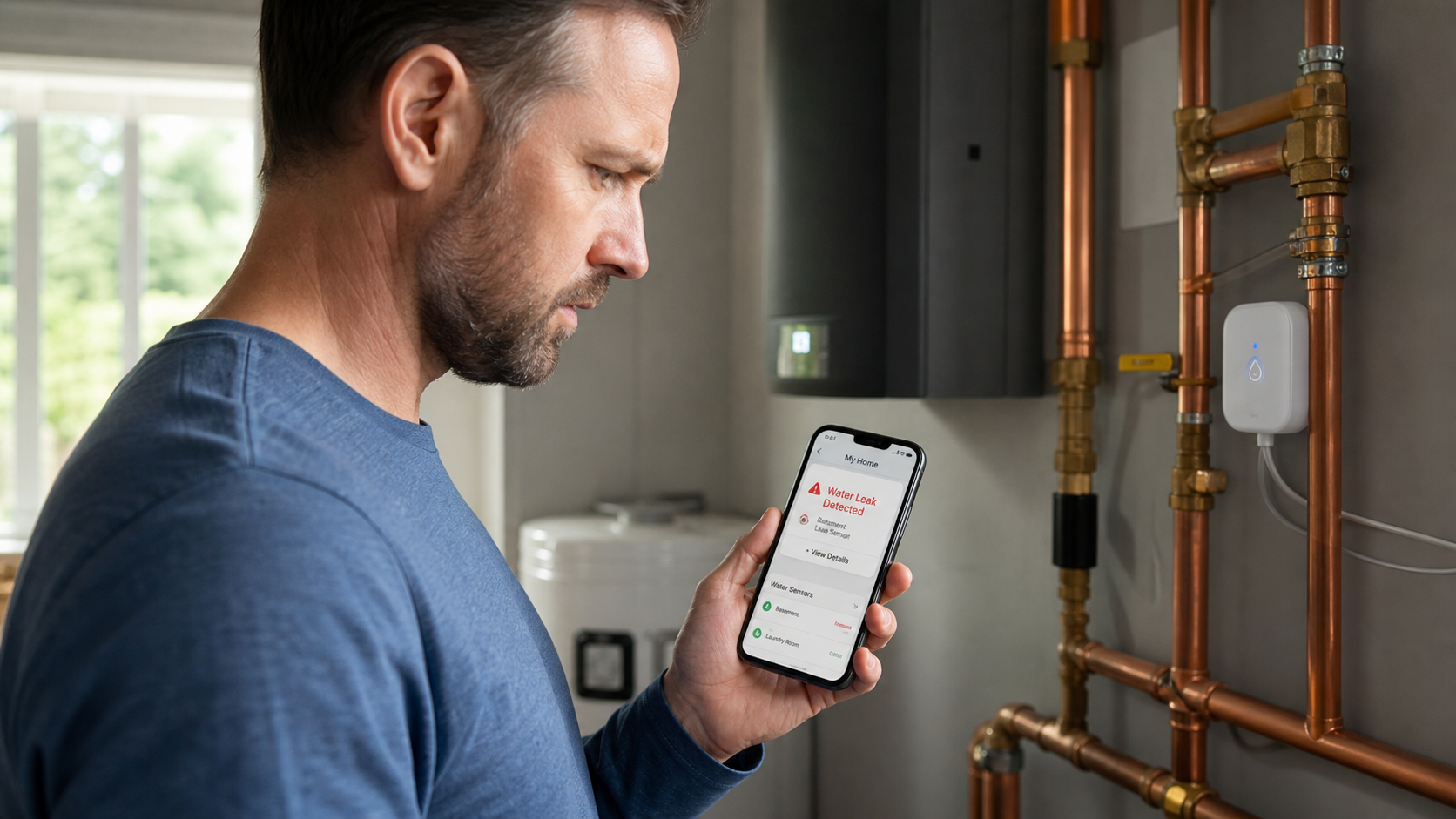
Smart homes are becoming remarkably good at noticing trouble.
A leak sensor can alert you when water appears under a sink. A connected thermostat can warn you when indoor temperatures change unexpectedly. Cameras can show you who is standing at the front door. Air-quality monitors can track particles, humidity, and other conditions that might affect how comfortable your home feels.
These devices give homeowners something that was difficult to achieve in the past: awareness.
But awareness is not the same as prevention.
A sensor may tell you that something has gone wrong, yet it usually cannot repair the source of the problem. A camera can document what happened, but it cannot always stop it. A smart appliance can send an error message, but someone still has to investigate the cause.
As homes become more connected, it is important to understand where technology helps and where traditional maintenance, professional expertise, and simple human attention still matter.
Smart Homes Are Becoming Better at Early Detection
One of the greatest benefits of smart home technology is speed.
In the past, homeowners might not discover a small plumbing leak until a ceiling stain appeared or a cabinet started to swell. Today, a relatively inexpensive water sensor can send an alert within minutes of detecting moisture.
That early warning can make a major difference.
Smart thermostats provide another example. Besides automatically adjusting temperatures, many modern systems can notify homeowners when heating or cooling performance appears unusual. Sudden temperature changes may signal an open window, equipment problem, or other issue that deserves attention.
Connected smoke alarms and carbon monoxide detectors can also send notifications to a phone. This can be useful when homeowners are away from the property.
The common advantage is not that these devices solve the problem.
They help people notice it sooner.
That distinction matters because early detection can limit damage when homeowners respond quickly.
Cameras Give Homeowners Visibility
Home security has changed dramatically because of connected cameras.
Doorbell cameras allow homeowners to see visitors even when they are not home. Outdoor cameras can provide additional visibility around entrances, garages, yards, and other parts of the property.
Motion notifications can also make monitoring easier.
Instead of recording hours of footage that nobody watches, smart systems can notify users when movement occurs. Some devices can distinguish between people, vehicles, packages, and other types of activity.
This makes cameras useful for more than security.
A homeowner might notice that a delivery has arrived, an animal is repeatedly entering the yard, or a maintenance worker has reached the property.
Still, cameras mostly provide information.
They may discourage certain behavior, but they do not create a completely protected property. Locks still need to work. Doors and windows still need maintenance. Exterior lighting still matters.
Technology becomes most effective when it supports physical security rather than replacing it.
Leak Detection Is Valuable, but Plumbing Still Requires Maintenance
Water damage is one area where smart technology can be especially useful.
Small leaks are easy to overlook. They can develop behind appliances, underneath sinks, near water heaters, or around washing machines.
Smart leak detectors can identify moisture quickly. More advanced systems may even monitor water usage and recognize unusual patterns that could indicate a hidden leak.
Some connected shutoff valves can automatically stop water flow when a major leak is detected.
That is a powerful improvement.
However, the technology still does not repair worn seals, damaged pipes, corroded fittings, or failing appliances.
Homeowners need to inspect plumbing systems, replace aging components, and respond when warning signs appear.
Smart technology reduces the amount of time a problem can remain unnoticed. It does not eliminate the physical conditions that create the problem.
Air-Quality Sensors Can Reveal What You Cannot See
Many household concerns are invisible.
Humidity is a good example.
A room can feel comfortable while still having moisture levels that encourage condensation or mold growth. Smart humidity sensors make those conditions easier to monitor.
Air-quality devices can also track certain particles and pollutants. Some connected systems can automatically activate ventilation or air purification equipment when conditions change.
These features help homeowners understand their indoor environments.
However, monitoring data is only useful when someone acts on it.
If humidity remains high because of poor ventilation or a roof leak, watching the number on an app will not correct the underlying cause.
The same principle applies throughout a connected home.
Technology can reveal patterns.
People still have to decide what those patterns mean and what to do about them.
The Household Problems Technology Still Can’t Solve for You
Some home problems simply require physical intervention.
A smartphone notification cannot repair damaged wiring. A sensor cannot replace a broken pipe. A camera cannot reinforce a weakening structure.
Pest problems provide another useful example.
A smart camera might capture rodents moving around a garage. A connected monitoring system could potentially alert you to unusual activity. Sensors may even help identify conditions such as excess moisture that make certain areas more attractive to pests.
But detecting activity does not remove an infestation.
Pests can enter through tiny openings, reproduce in hidden areas, damage materials, and move through parts of a property that ordinary consumer technology cannot monitor effectively. When the problem becomes persistent, homeowners may need help from a trusted Phoenix pest control company that can inspect the property, identify the source of the activity, and recommend appropriate treatment.
The same logic applies to many household issues.
Technology can help identify symptoms.
Fixing the cause may still require a plumber, electrician, roofer, HVAC technician, pest professional, or another skilled specialist.
Connected Appliances Still Need Human Attention
Modern appliances are becoming increasingly sophisticated.
Washing machines can notify users when a cycle is finished. Refrigerators can provide temperature alerts. Ovens can connect to mobile apps. Some appliances can even run basic diagnostic checks when something stops working correctly.
These features make appliances easier to manage.
They can also help homeowners notice problems earlier.
For example, a refrigerator that reports rising internal temperatures gives you an opportunity to investigate before food spoils. A washing machine error message may help identify a drainage problem before another load is started.
But connected diagnostics have limits.
A notification might tell you that something is wrong without explaining why it happened. Mechanical parts still wear out. Filters still become dirty. Hoses still deteriorate.
Technology improves communication between the appliance and the homeowner.
It does not make the appliance maintenance-free.
Automation Works Best Alongside Simple Maintenance
There is a temptation to think that adding enough technology will eventually create a home that takes care of itself.
That is unlikely.
Homes are physical structures exposed to moisture, heat, cold, dust, insects, animals, aging materials, and everyday wear.
No app changes those realities.
Roof inspections still matter. Gutters still need cleaning. HVAC filters still need replacement. Exterior cracks need attention. Plumbing fixtures should be checked for leaks. Smoke alarms require testing even when they are connected to an app.
In many cases, the best smart home is not the house with the most devices.
It is the house where technology makes routine maintenance easier to manage.
A homeowner might use reminders to schedule inspections. Sensors can reveal changes between inspections. Cameras can provide visibility when the property is empty.
Technology becomes another layer of protection rather than a substitute for basic care.
Too Many Alerts Can Become Their Own Problem
More information is not always better.
A home filled with connected devices can generate a surprising number of notifications.
There may be motion alerts, temperature warnings, door notifications, appliance messages, security updates, battery reminders, and software notices.
Eventually, people may start ignoring them.
This creates a problem known as alert fatigue. When every small event generates a notification, truly important warnings become easier to overlook.
Homeowners should decide which alerts actually deserve immediate attention.
A water leak notification may be urgent. A refrigerator door being left open might deserve a warning after several minutes. Routine system updates probably do not need the same level of urgency.
Smart technology works better when homeowners configure it around real priorities.
Technology Can Support Healthy Routines, but It Cannot Replace Support
Connected technology has also moved beyond home maintenance.
Phones, watches, sleep trackers, fitness devices, and wellness apps can remind people to exercise, drink water, maintain routines, or track certain habits.
These tools can be helpful.
They can make patterns easier to see and give people simple ways to measure progress.
But serious behavioral health challenges are different from forgetting to complete a daily habit.
An app cannot fully understand someone’s personal circumstances. A notification cannot replace meaningful conversation, clinical judgment, or professional care. When substance use or related challenges require deeper support, resources such as therapy for addiction recovery involve human guidance that technology alone cannot provide.
Digital tools may support healthy routines.
They should not be expected to carry responsibilities they were never designed to handle.
The Smartest Home Still Needs an Engaged Homeowner
Smart home technology has changed what homeowners can see.
Problems that once stayed hidden for days or weeks can now trigger an alert within minutes. Cameras offer more visibility. Sensors reveal changes in water, temperature, humidity, and air quality. Connected appliances provide information that previous generations of devices could never communicate.
Those improvements are valuable.
But they work best when expectations remain realistic.
Technology detects. It monitors. It records. It reminds.
People still inspect, repair, maintain, respond, and make decisions.
The future of the smart home is therefore unlikely to be a house that requires no human attention. It will be a home that gives people better information so they can act before small problems become expensive ones.
Use smart technology as an extra set of eyes around your home. Just remember that when those eyes notice something wrong, someone still has to take the next step.
Leave a Reply