
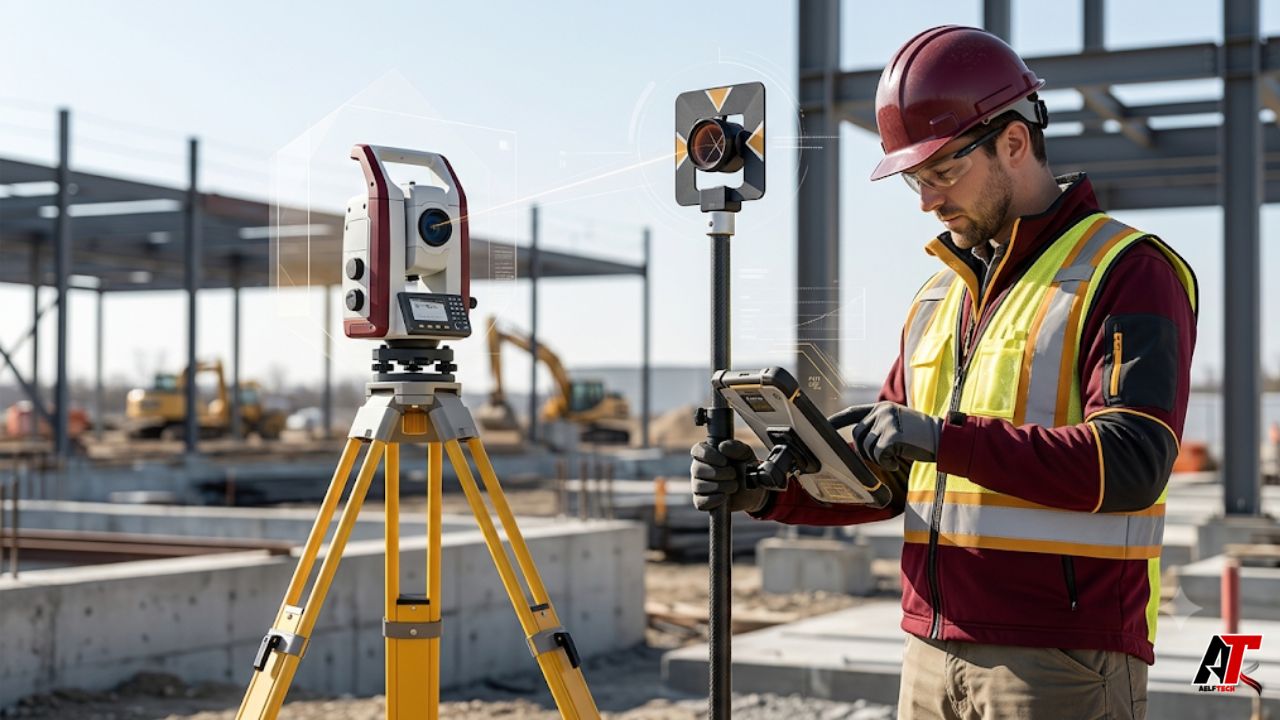
Surveying has always depended on accuracy, field discipline, and good coordination. But today, many firms are under pressure to complete layout, topographic pickup, and site verification faster while keeping labor costs under control. A modern robotic total station helps solve that problem by allowing one trained operator to control the instrument remotely, track the prism, collect measurements, and stake points from a field controller.
This does not mean one person should handle every survey task alone. It means many suitable jobs can be planned around a smarter workflow. With the right equipment, setup routine, safety plan, and quality checks, a one-person survey crew can reduce field expenses, improve scheduling flexibility, and still deliver accurate professional results. This guide explains how the system works and how to use it without creating avoidable risk.
What Is a Robotic Total Station?
A robotic total station measures horizontal angles, vertical angles, and distances, just like a manual total station. The difference is automation. Robotic models use motorized movement, automatic target recognition, and prism tracking so the instrument can follow the prism while the operator works from the pole location.
In a traditional two-person setup, one worker stays behind the instrument and another moves the rod. In a robotic workflow, the rod person carries the prism pole and controller together. The controller shows live position, point codes, design data, stakeout directions, and measurement results. The operator can collect points, check offsets, and store observations directly in the field file.
The instrument still needs correct setup. Leveling, instrument height, prism constant, backsight checks, calibration, and control verification remain essential. Automation saves time, but it does not replace survey knowledge or professional judgment.
Why One-Person Survey Crews Are Growing
Many survey and construction teams are adopting robotic systems because labor is often the largest field cost. Sending two people to every small layout visit, as-built check, or pickup job can be expensive, especially when the actual measurement work takes only a few hours. A solo robotic workflow allows a skilled surveyor to complete suitable tasks without waiting for a second crew member.
Scheduling also becomes easier. A company can cover more small jobs in a week, respond faster to contractor requests, and keep senior staff available for calculations, drafting, client communication, or complex fieldwork. For small and mid-size firms, that flexibility can improve profitability without immediately hiring more people.
Data quality can improve as well. The person holding the pole sees the design file and stored measurement on the controller at the exact point being surveyed. If a code is wrong, a stakeout offset looks unusual, or a control check fails, the operator can catch it immediately instead of discovering the problem later in the office.
Where the Cost Savings Come From
The clearest saving is reduced labor per visit. When one trained person can safely complete a task that previously required two, the business lowers field hours and travel costs. But the savings also come from less waiting, fewer radio instructions, fewer repeated setups, and faster point collection.
Robotic tracking reduces the constant back-and-forth between an instrument operator and a rod person. Over dozens or hundreds of points, those small time savings become meaningful. A one-person crew can move from point to point, watch the controller, confirm the shot, and continue without stopping to explain every movement.
There is also a rework benefit. Because the operator can review points, tolerances, and design information in real time, mistakes are easier to catch before leaving the site. Avoiding one return visit can protect both profit and client confidence.
Basic Equipment for a Solo Robotic Crew
A practical setup includes a robotic total station, stable tripod, prism pole, compatible prism, field controller, radio or Bluetooth connection, charged batteries, site drawings, control-point data, measuring tape, marking supplies, and safety gear. The controller should already contain the latest coordinate system, point list, linework, and design files before the operator arrives.
The instrument is usually set over a known control point or positioned by resection from multiple known points. After leveling the instrument, entering the correct heights, and connecting the controller, the operator should check the backsight and verify control coordinates. This first quality check is the foundation of the entire job.
Once the setup is confirmed, the surveyor carries the prism pole and controller to the work area. The instrument tracks the prism while the software displays the next point, cut/fill, offset, or live coordinate. If lock is lost because of equipment, vehicles, workers, or walls, the operator uses the search or re-lock function to continue.
Step-by-Step Workflow for One-Person Surveying
Start with office preparation. Check the scope of work, upload the correct job file, confirm the drawing revision, verify the coordinate system, and review control descriptions. Many costly field errors begin with outdated files or unclear instructions.
Next, choose a stable instrument location. It should have good visibility to the work area, limited vibration, and low risk from traffic or machinery. Set the tripod firmly, level carefully, enter accurate heights, and complete the backsight or resection check before collecting production points.
Before working alone across the site, coordinate with the superintendent, foreman, or client representative. Explain where the instrument is placed, where you will be moving, and what zones should remain clear. A one-person workflow should never ignore site safety just to save labor.
During measurement or stakeout, use consistent point coding and record notes when conditions are unusual. For critical layout points, repeat the shot or check from control when needed. If the task involves legal boundary work, control networks, or high-risk construction, follow the professional standards required for that project.
Before leaving, review stored points, check closure or control results, export or sync the file, photograph important marks if helpful, and note any limitations. A strong closeout routine is especially important because there is no second crew member casually spotting missing information.
Best Jobs for a Robotic One-Person Crew
Robotic one-person surveying works well for construction layout, building corners, utility layout, curb and sidewalk staking, anchor bolt checks, floor control, topographic pickup, stockpile support, as-built measurements, and routine site verification. It is also useful when contractors need fast response after design changes.
However, some jobs still need more people. Dense traffic corridors, unsafe slopes, confined spaces, rail areas, heavy-equipment zones, and complex boundary surveys may require a second worker for safety, visibility, or verification. The right question is not only, “Can one person do it?” The better question is, “Can one person do it safely and accurately?”
Training and Standard Procedures
Robotic equipment is powerful, but it is only as reliable as the operator using it. Training should cover setup, backsight checks, prism search, tracking modes, resection, coordinate systems, point coding, stakeout routines, battery planning, file transfer, and field notes.
Companies should also create simple standard operating procedures. A checklist for office preparation, field setup, control verification, production measurement, and closeout keeps work consistent. New users should practice on low-risk sites before handling high-value layout alone.
Buying New vs. Used Robotic Equipment
New instruments offer warranty support, current software compatibility, clean service history, and confidence for daily production work. They are often the best option for firms that rely heavily on construction layout or need the latest tracking and integration features.
A used robotic total station can be a smart choice when the budget is limited or when a company wants to test solo workflows before investing in a full fleet. Before buying, check calibration status, service records, battery condition, controller compatibility, firmware, accessories, and return policy.
Compare angular accuracy, distance range, tracking performance, communication range, battery life, weather rating, data export formats, and local service options. The cheapest unit is not always the lowest-cost option if it creates downtime or unreliable measurements.
Common Mistakes That Raise Costs
The first mistake is using a solo crew on every job. One-person surveying is efficient only when the site and task are suitable. The second mistake is skipping control checks. A robotic system can collect wrong points quickly if the setup is wrong.
Other common problems include outdated design files, weak battery planning, missing accessories, poor field notes, and unrealistic expectations about line of sight. Robotic tracking still needs a clear path between the instrument and prism. Better preparation prevents wasted time.
How to Build a Cost-Effective Solo Survey System
Begin with repeatable, lower-risk tasks and track the time spent before and after adopting robotic workflows. Real job data will show whether the investment is reducing cost, improving speed, and increasing crew availability.
Standardize the equipment kit, label batteries, maintain prisms and poles, schedule calibration, and keep backup supplies in the vehicle. Also connect field productivity with better digital visibility. Technical companies that clearly explain their process online can attract more qualified leads; for that kind of growth support, visit aelftech.com USA.
Final Thoughts
A robotic total station can help survey and construction teams complete suitable field tasks with fewer labor hours, faster scheduling, and cleaner data. The best results come from balance: use automation where it improves productivity, but keep safety, control verification, training, and professional judgment at the center of the workflow.
When implemented properly, a one-person robotic survey crew is not a shortcut. It is a disciplined modern method for delivering accurate field results while cutting unnecessary field costs.
FAQs
Can one person really run a survey crew with a robotic total station?
Yes, one trained operator can complete many survey and layout tasks with a robotic total station, prism pole, and field controller, as long as the site is safe and the task is suitable.
Does robotic equipment replace survey knowledge?
No. It automates tracking and remote operation, but the surveyor still needs to understand control, coordinates, setup, tolerances, field notes, and quality checks.
What is the biggest cost benefit?
The biggest benefit is lower field labor per suitable job, supported by faster point collection, fewer communication delays, and reduced rework.
Leave a Reply