
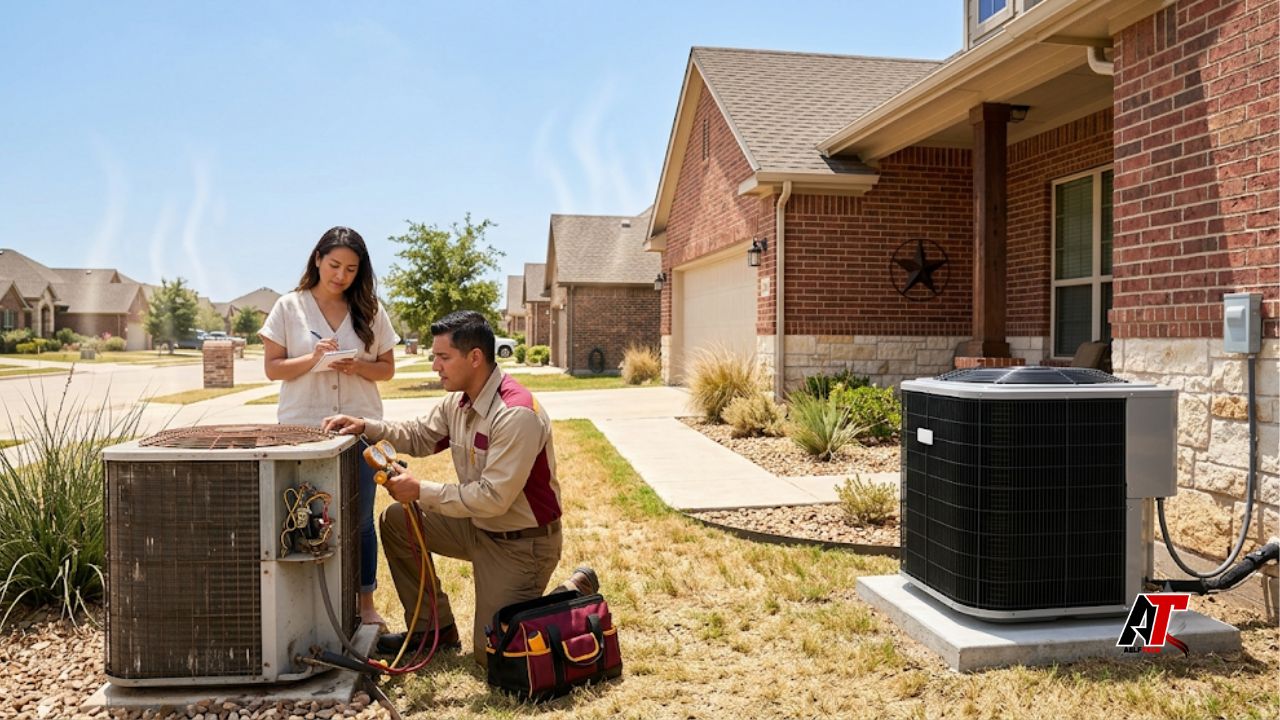
A struggling air conditioner is never convenient, but in Texas, it can quickly become a serious comfort and safety concern. When outdoor temperatures stay high for days or weeks, your cooling system runs longer, works harder, and has less time to recover. That makes one question especially important for homeowners: should you pay for another repair, or is it time to replace the system?
The right answer depends on more than the price of a single service call. System age, repair history, energy use, indoor comfort, refrigerant type, and your plans for the home all matter. This guide explains how to evaluate those factors so you can make a practical decision without rushing into an unnecessary replacement or repeatedly spending money on an AC that is near the end of its useful life.
Why the Texas Heat Changes the Repair-or-Replace Decision
Air conditioners in Texas often operate under heavier seasonal demand than systems in milder climates. Long cooling seasons, high afternoon temperatures, humidity, dust, and heat trapped around outdoor equipment can all increase wear. A unit that might limp through another summer elsewhere may fail repeatedly when it is running for extended periods in a Texas home.
Heavy use also magnifies small performance problems. A dirty coil, weak capacitor, refrigerant issue, failing blower motor, or poor airflow may cause longer run times and uneven temperatures. The system can still produce cool air, yet consume more electricity and place extra stress on major components. For that reason, a repair should not be judged only by whether the unit turns on again. You also need to consider whether the repair restores dependable, efficient performance for the remaining life of the equipment.
When AC Repair Usually Makes Sense
Repair is generally the better option when the system is relatively young, the problem is isolated, and the rest of the equipment is in good condition. A qualified technician should be able to identify the failed component, explain why it failed, and check whether related parts show signs of unusual wear.
Repair is often reasonable in the following situations:
- The AC is under about 10 years old and has received routine maintenance.
- The repair is minor or moderate, such as a capacitor, contactor, drain-line blockage, thermostat, relay, or small electrical component.
- The system has not needed frequent repairs during the last two cooling seasons.
- The unit still cools the home evenly and can maintain the thermostat setting during normal hot-weather conditions.
- Energy bills have not increased sharply without another explanation.
- Replacement parts and the correct refrigerant are readily available.
- The repair is covered partly or fully by a manufacturer, labor, or home warranty.
A repair can also make sense when you need time to plan and budget for a future replacement. However, a temporary repair should be approached honestly. Ask how long the technician expects the fix to last, whether another major component is likely to fail soon, and whether the repair cost can be credited toward replacement if the system breaks down again.
Signs It May Be Smarter to Replace Your AC
Replacement becomes more attractive when the current system is old, unreliable, inefficient, or unable to keep the home comfortable. No single warning sign automatically means you need a new unit, but several warning signs together usually point toward replacement.
Consider replacing the AC when one or more of these conditions apply:
- The system is around 12 to 15 years old or older and needs a major repair.
- You have paid for multiple service calls or component replacements within a short period.
- The compressor, evaporator coil, condenser coil, or another major component has failed outside warranty.
- The unit runs almost constantly but still leaves rooms warm, humid, or uncomfortable.
- Cooling costs keep rising even after maintenance, duct checks, and basic efficiency improvements.
- The system uses an older refrigerant that is expensive or difficult to source.
- Parts are becoming difficult to obtain, causing longer delays during peak summer demand.
- The equipment is poorly sized, mismatched, or unable to serve renovations and added living space.
- You expect to remain in the home long enough to benefit from improved reliability and efficiency.
The Seven-Factor Test for a Confident Decision
1. Start With the Age of the System
Age is not an automatic expiration date, but it provides important context. A well-maintained unit can last longer than a neglected one, while an AC exposed to extreme use may wear out sooner. If a younger system has a repairable component failure and is otherwise healthy, repairing it is usually sensible. If an older unit needs a costly repair, replacement deserves serious consideration because other components may be approaching failure as well.
2. Compare the Repair Cost With the Remaining Value
Do not compare the repair estimate only with the price of a new system. Compare it with the value and likely remaining life of the existing unit. Spending a modest amount to restore several dependable years can be a good decision. Spending a large amount on an aging system that may fail again next summer is much harder to justify.
Ask for an itemized estimate and a clear explanation of what is included. The lowest quote is not always the lowest total cost if it excludes refrigerant, diagnostics, electrical work, disposal, permits, or follow-up testing. For a major repair, obtain a replacement estimate at the same time so you can compare both paths using the same information.
3. Review the Repair History
One breakdown can be bad luck. Repeated breakdowns usually indicate declining reliability, installation issues, airflow problems, or widespread wear. Review what has been replaced and how often the system has lost cooling. A pattern of capacitors, motors, leaks, and electrical failures can become more expensive than a planned replacement, especially when emergency service is needed during the hottest part of the year.
4. Measure Comfort, Not Just Cold Air
An AC can blow cold air and still perform poorly. Pay attention to temperature differences between rooms, excessive humidity, hot spots, noisy cycling, weak airflow, and long recovery times after the thermostat is adjusted. These symptoms may come from the equipment, ducts, insulation, air sealing, or a combination of issues.
Before replacing the unit, make sure the contractor evaluates airflow and the duct system. Installing new equipment without correcting major duct leakage or restrictions can leave you with many of the same comfort problems.
5. Look at Energy Use and Run Time
A sudden increase in electricity use may indicate a mechanical or airflow problem, while a gradual increase can reflect declining system efficiency, hotter weather, rate changes, or changes in household habits. Compare bills from similar months rather than comparing spring with midsummer.
If the system runs for very long periods, ask whether it is appropriately sized and whether the indoor and outdoor coils are clean. Long cycles are not always bad during extreme heat, but continuous operation combined with poor comfort, high humidity, or unusual energy use deserves investigation.
6. Consider Refrigerant and Parts Availability
Older equipment may use refrigerants and components that are more expensive to obtain. A repair that involves a major leak can become less attractive when the refrigerant itself adds substantial cost and another leak may develop elsewhere. The same concern applies when proprietary boards, motors, or coils are back-ordered or discontinued.
Ask the technician whether the required part is new, rebuilt, universal, or used, and what warranty applies. Availability matters in Texas because waiting days for a part during a heat wave may not be practical for households with children, older adults, pets, or medical needs.
7. Factor In Your Home and Financial Plans
A homeowner preparing to move soon may evaluate the decision differently from someone planning to stay for another decade. Replacement may improve reliability and buyer confidence, but the return depends on the home, local market, equipment quality, and documentation. If you plan to stay, the benefits of quieter operation, improved comfort, lower energy use, and a new warranty may have greater long-term value.
Quick Repair vs. Replace Comparison
| Factor | Repair Usually Fits | Replace Usually Fits |
| Age | Generally under 10 years | Often 12–15+ years |
| Repair type | Isolated, minor, or moderate issue | Compressor, coil, or repeated major failures |
| Reliability | Few previous service calls | Frequent breakdowns or emergency calls |
| Comfort | Maintains temperature and humidity | Hot rooms, weak airflow, long recovery |
| Efficiency | Bills and run time remain reasonable | Rising use despite maintenance |
| Parts | Parts and refrigerant readily available | Obsolete, delayed, or costly components |
| Ownership plan | Shorter stay or near-term budget priority | Longer stay and desire for reliability |
Use this table as a screening tool, not a substitute for an on-site diagnosis.
What to Ask Before Approving a Repair
A trustworthy diagnosis should make the decision easier, not more confusing. Ask the technician to show you the failed part or test result when practical, explain the root cause, and identify any related risks. For a major repair, ask these questions:
- What exactly failed, and why?
- Is the repair likely to solve the problem completely or only temporarily?
- What is the condition of the compressor, coils, blower, electrical components, and duct airflow?
- How much warranty remains on parts and labor?
- What other repairs are likely within the next one or two years?
- Would any portion of this repair cost apply toward a replacement?
- What replacement options fit the home’s size, ductwork, and electrical system?
Getting a professional diagnosis is especially valuable when the repair involves refrigerant leaks, a compressor, a major coil, repeated electrical failures, or poor cooling throughout the home. Texas homeowners who need HVAC evaluation or service can learn more from Copeland Home Services.
How to Extend the Life of an AC You Choose to Repair
If repair is the right decision, protect that investment. Replace or clean filters on schedule, keep supply and return vents open, remove leaves and debris from around the outdoor unit, and arrange preventive maintenance before peak summer demand. Make sure the condensate drain is clear and address water around the indoor unit promptly.
Also avoid setting the thermostat dramatically lower in an attempt to cool the home faster. The AC cools at essentially the same rate; the lower setting usually makes it run longer. Use ceiling fans in occupied rooms, close blinds during strong afternoon sun, seal obvious air leaks, and have damaged ducts repaired. These steps reduce unnecessary strain without sacrificing comfort.
Planning a Replacement the Smart Way
When replacement is the better choice, do not select equipment based only on brand name, tonnage, or the lowest bid. Proper sizing, installation quality, duct condition, airflow setup, refrigerant charging, drainage, electrical work, and commissioning all influence performance.
Request a written proposal identifying the indoor and outdoor equipment, efficiency rating, warranties, labor coverage, thermostat, modifications, permits, disposal, and total price. Ask whether a load calculation is needed, especially after additions or efficiency upgrades. Oversized equipment can cycle too often and control humidity poorly, while undersized equipment may struggle during peak heat.
Whenever possible, plan replacement before a complete failure. A planned project gives you time to compare estimates, verify contractor credentials, understand warranties, and choose equipment without the pressure of an uncomfortably hot house.
Frequently Asked Questions
Is it worth repairing a 15-year-old AC?
It can be worth repairing if the problem is inexpensive and the system has been reliable, but a major repair on a 15-year-old unit often has limited value. Compare the repair cost, condition of other components, refrigerant availability, and expected remaining life before deciding.
How many AC repairs are too many?
There is no universal number, but two or more significant repairs in a short period are a warning sign. Add the costs, review the type of failures, and consider the disruption of another breakdown during extreme heat.
Should I replace the indoor and outdoor units together?
Matched indoor and outdoor equipment is generally important for efficiency, performance, warranty compliance, and refrigerant compatibility. A contractor should verify whether a partial replacement is technically appropriate and permitted by the manufacturer.
Will a new AC automatically lower my electric bill?
A newer, properly installed system may use less energy, but savings depend on equipment efficiency, sizing, duct leakage, insulation, thermostat habits, utility rates, and the condition of the home. Correct installation is essential.
What is the biggest mistake homeowners make?
The biggest mistake is making the decision from a single number. A cheap repair can be poor value on a failing system, and a new system can disappoint if it is poorly sized or installed. Consider the complete picture: age, condition, repair history, comfort, efficiency, warranty, and long-term plans.
The Bottom Line
Repairing your AC usually makes sense when the system is younger, dependable, and facing an isolated problem at a reasonable cost. Replacement is usually the stronger choice when the unit is older, needs a major repair, breaks down repeatedly, uses hard-to-source parts or refrigerant, or can no longer cool the home efficiently and comfortably.
In the Texas heat, reliability has real value. Ask for a complete diagnosis, compare repair and replacement in writing, and consider the cost of future breakdowns as well as today’s invoice. The best decision is the one that provides safe, dependable comfort without committing more money to equipment that no longer earns the investment.
Publisher note: Explore more practical guides and digital resources from aelftech.com.
Leave a Reply