
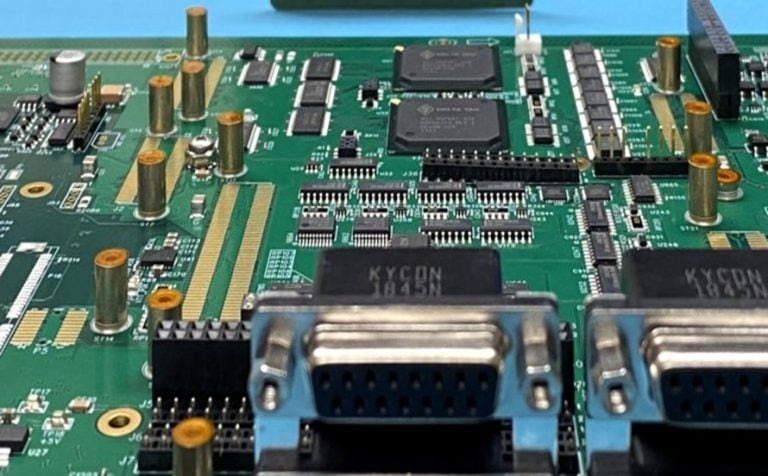
When an electronics project is working against a tight development schedule, finding a PCB assembly supplier that can deliver quickly is important. Quick turn PCB assembly can help engineering teams move from a completed PCB design to a functional prototype in a shorter timeframe. However, fast production should not be the only factor considered when selecting a manufacturing partner.
A supplier that promises a short lead time but lacks proper inspection systems, component controls, or engineering support may create more delays later. Defective boards can require troubleshooting, rework, or another production run. Therefore, buyers should evaluate the complete manufacturing process before deciding which PCBA supplier is the right fit.
Start With the Complete Turnaround Time
Lead time is naturally one of the first things buyers compare. However, it is important to understand exactly what a supplier means by its quoted turnaround.
Some manufacturers may quote only the assembly time while excluding component preparation, inspection, or other production stages. Buyers should ask:
- When does the production timeline begin?
- What processes are included in the quoted turnaround?
- Does the timeline cover inspection and other required production stages?
FastTurnPCB provides PCBA turnaround of approximately 2–3 days, depending on project requirements. This can be particularly useful for engineering teams that need prototypes quickly for testing, validation, or design iteration.
The goal should be to find a supplier that provides a realistic overall turnaround without sacrificing manufacturing quality.
Check Incoming Component Inspection
Component quality is one of the most important areas to investigate before selecting an assembly supplier.
Even when a PCB design is correct, unsuitable, damaged, or incorrect components can cause serious problems during testing. A strong supplier should therefore have procedures for checking components before they enter production.
Buyers should ask whether:
- Incoming parts are inspected
- Specifications are verified
- Component quantities are checked
- Component condition is evaluated
FastTurnPCB performs 100% incoming component inspection, providing an additional quality-control step before components move into the assembly process.
This type of inspection can help identify potential problems early, reducing the risk of discovering component-related issues after the boards have already been assembled.
Evaluate SPI Capabilities
Solder paste application plays an important role in SMT assembly. Incorrect paste volume or positioning can contribute to soldering defects and unreliable connections.
Solder Paste Inspection (SPI) allows manufacturers to check solder paste application before components are placed. This provides an opportunity to identify problems at an early stage instead of allowing them to continue through production.
When comparing suppliers, buyers should ask whether SPI is available and whether the inspection process is applied consistently.
FastTurnPCB provides 100% SPI inspection, helping monitor solder paste application throughout the assembly workflow.
For prototype projects, early defect detection can be especially useful because it helps prevent avoidable problems from affecting later stages of production.
Look for 3D AOI Inspection
Once components have been placed and soldered, another important quality-control stage is Automated Optical Inspection.
3D AOI can examine component placement and visible soldering characteristics using automated imaging. This can help identify:
- Misplaced components
- Soldering irregularities
- Other visible assembly defects
Buyers should ask whether AOI inspection is performed on every board or only on selected samples. They should also determine whether the equipment is suitable for the complexity of their PCB designs.
FastTurnPCB uses 100% 3D AOI inspection, adding another layer of verification after the assembly process.
Ask About X-Ray Inspection
Not every solder connection can be inspected visually. Components such as BGA, QFN, and FPGA packages can contain solder joints underneath the component body.
For these assemblies, X-Ray inspection can provide visibility into hidden connections that cannot be examined using conventional optical inspection.
Buyers working with complex packages should ask:
- Does the supplier have X-Ray inspection capabilities?
- Which assemblies require X-Ray inspection?
- How is X-Ray technology incorporated into quality control?
FastTurnPCB provides 100% X-Ray inspection for BGA, QFN, and FPGA assemblies. This can be particularly valuable for designs where hidden solder joints are critical to overall reliability.
Confirm Small-Component Placement
Modern electronics frequently require smaller components to achieve greater functionality within limited physical space. This makes component-placement accuracy another important factor when evaluating an assembly supplier.
Buyers should review the smallest components listed in their bill of materials and confirm that the supplier’s equipment can handle them reliably.
FastTurnPCB supports 01005 component placement, allowing it to handle extremely small passive components used in compact electronic assemblies.
Providing the supplier with the PCB design and component information before production can help confirm whether the manufacturing process is appropriate for the project’s specific requirements.
Check BGA Rework Capability
Prototype development can sometimes involve component replacement or repair. This makes specialized rework capability useful when choosing an assembly partner.
BGA components are particularly challenging because their solder connections are located beneath the package. Proper BGA rework requires suitable equipment and technical expertise.
FastTurnPCB provides BGA rework capabilities, which can help address certain assembly problems without automatically requiring an entirely new board.
Buyers should discuss rework options before production, especially when their design contains BGA or other complex packages.
Examine the Reflow Process
The reflow soldering process directly affects assembly quality. Temperature must be controlled carefully so that solder joints form correctly without unnecessarily stressing components or the PCB.
A supplier’s reflow equipment should therefore be evaluated according to the requirements of the project rather than simply whether the manufacturer uses a reflow oven.
FastTurnPCB uses a 12-zone nitrogen reflow process. A multi-zone system provides detailed thermal control throughout the reflow cycle, while the nitrogen environment supports controlled soldering conditions for suitable applications.
Buyers should ask whether the supplier can establish an appropriate thermal profile for their particular board and component mix.
Evaluate DFM Engineering Support
Manufacturing problems can sometimes be prevented before production starts.
Design for Manufacturing (DFM) support allows engineers to review a PCB design and identify potential production concerns. These may involve:
- Component spacing
- Component placement
- Manufacturability
- Soldering requirements
- Other assembly considerations
For quick-turn projects, DFM support can be especially valuable. Finding a manufacturing problem before production is usually easier and faster than discovering it after assembled boards have already been produced.
Buyers should ask whether the supplier performs a design review and whether its engineering team can recommend practical changes when potential manufacturing issues are identified.
Review the Overall Manufacturing Workflow
A reliable quick-turn supplier should provide more than fast component placement. Buyers should consider how the manufacturer manages the entire process, from incoming components through assembly and final inspection.
An integrated workflow can provide several advantages:
- Reduced communication gaps
- Easier problem identification
- More consistent production coordination
- A single manufacturing partner instead of multiple suppliers
When evaluating a supplier, buyers should ask how production updates are communicated, how manufacturing concerns are handled, and what happens if an inspection identifies a problem.
Make the Decision Based on More Than Speed
The best supplier is not necessarily the one offering the shortest advertised lead time. Buyers should look for the right combination of speed, inspection, technical capability, and engineering support.
A manufacturer that can deliver quickly while maintaining strong quality controls is more valuable than one that simply promises fast production.
Supplier Evaluation Checklist
Before choosing a quick-turn PCB assembly supplier, buyers should review these seven points:
| Evaluation Area | Key Question |
| Turnaround time | Does the supplier offer a realistic production timeline for the required quantity and complexity? |
| Component inspection | Are incoming components inspected before they enter production? |
| SPI and AOI | Does the supplier use SPI and 3D AOI to monitor assembly quality? |
| X-Ray inspection | Can it inspect hidden solder connections on BGA, QFN, and FPGA packages? |
| Complex components | Can the supplier accurately place miniature components such as 01005? |
| Rework capability | Does it have specialized capabilities such as BGA rework? |
| DFM support | Can its engineering team review the design and identify manufacturing concerns before production? |
Final Thoughts
Selecting a PCB assembly supplier should involve more than comparing prices and delivery dates. Buyers should investigate the manufacturer’s inspection procedures, equipment, component capabilities, rework services, and engineering support.
FastTurnPCB combines approximately 2–3 day PCBA turnaround with:
- 100% incoming component inspection
- 100% SPI inspection
- 100% 3D AOI inspection
- 100% X-Ray inspection for BGA, QFN, and FPGA assemblies
- 01005 component placement
- BGA rework
- 12-zone nitrogen reflow
For buyers looking for a supplier that combines speed with broader manufacturing and quality-control capabilities, Fast Turn PCB can be considered as part of the supplier evaluation process.
Leave a Reply