
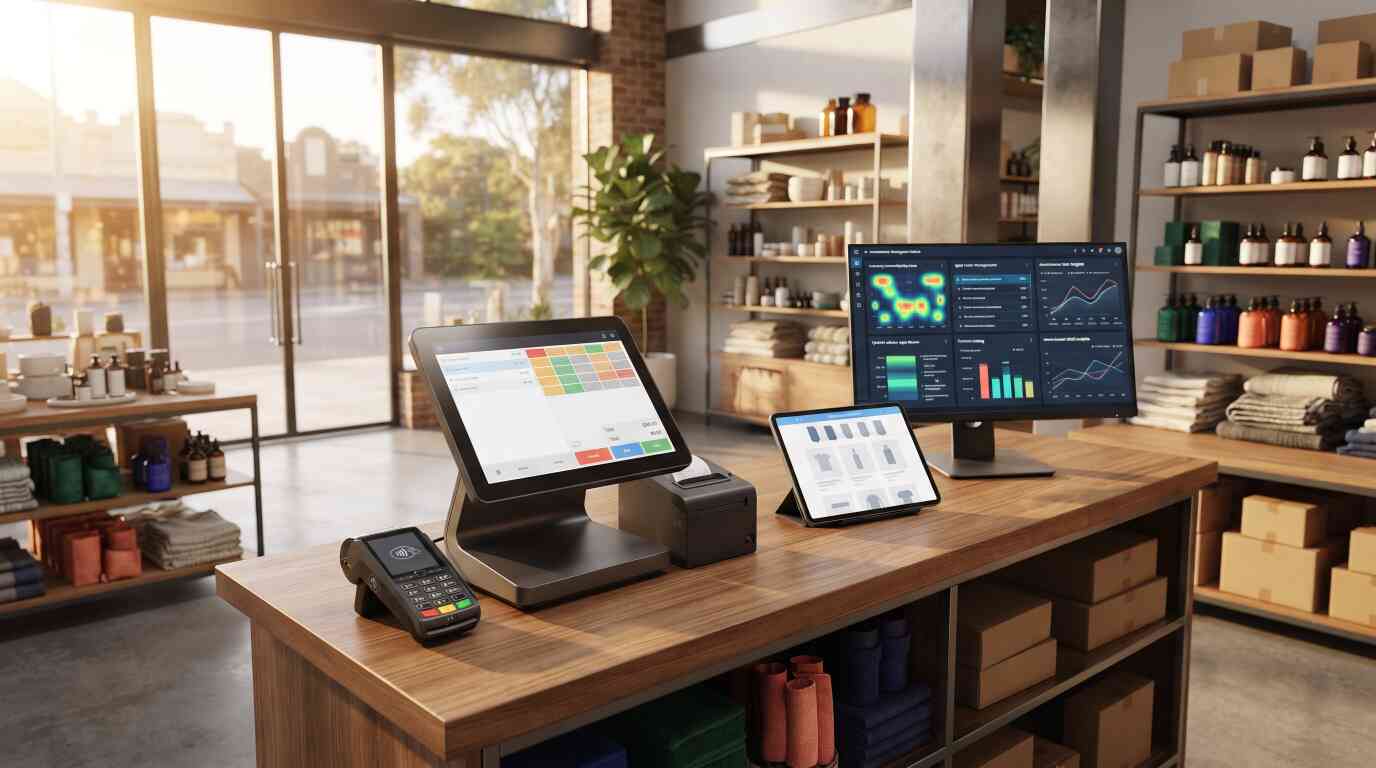
Managing a successful retail business requires reliable technology that connects physical stores, digital storefronts, inventory, payments, and customer relationships. POSApt’s E-Commerce System provides Australian businesses with an integrated solution for selling products online while connecting essential retail operations through a centralised platform.
Modern consumers expect convenient shopping experiences, accurate product availability, secure payment options, and reliable order fulfilment. Managing these requirements through disconnected software can increase administrative workloads and create unnecessary operational challenges.
An integrated e-commerce solution helps retailers overcome these difficulties by connecting important business processes. From independent fashion boutiques to growing grocery stores, businesses can use connected retail technology to improve efficiency, strengthen customer relationships, and develop sustainable growth opportunities.
What Is POSApt’s E-Commerce System?
POSApt is an Australian retail and hospitality technology provider that offers point-of-sale software and e-commerce solutions.
Its e-commerce platform enables businesses to establish a branded online shop independently or connect it with their physical retail operations.
The system is designed around a connected approach to managing digital and in-store transactions, helping business owners reduce the complexity associated with operating separate retail platforms.
For businesses looking to expand beyond traditional storefronts, this approach provides an opportunity to establish an online sales channel without completely restructuring existing commercial operations.
The platform is particularly relevant to small and medium-sized Australian retailers seeking practical alternatives to managing multiple disconnected systems.
Why Modern Retailers Need Integrated E-Commerce Technology
Retail customers increasingly move between digital and physical shopping environments. Someone may research a product online before visiting a store, while another customer may discover a product in person and purchase it later through a website.
Businesses must ensure that these experiences remain consistent and convenient.
Centralised Business Management
Integrated retail platforms help businesses organise important operational information within a connected environment.
Instead of repeatedly transferring information between independent applications, retailers can coordinate essential activities through a more consistent workflow.
Improved Operational Efficiency
Manual data entry can increase administrative expenses and introduce mistakes.
Connected systems can reduce repetitive activities, allowing employees to concentrate on customer service, merchandising, and other valuable responsibilities.
Better Customer Experiences
Customers appreciate accurate information, convenient purchasing options, and dependable service.
Connecting online and physical operations helps businesses provide more consistent experiences throughout the customer journey.
Opportunities for Business Expansion
An online storefront allows retailers to reach customers beyond their immediate geographic location.
Businesses can explore new markets without necessarily opening additional physical premises.
Key Features of POSApt’s E-Commerce System
Understanding the platform’s advertised capabilities helps retailers evaluate whether it meets their operational requirements.
Custom E-Commerce Website Design
POSApt offers branded website development to help retailers establish an individual online identity.
Businesses can organise their storefront presentation around their products, brand positioning, and customer expectations.
Integrated Point-of-Sale Functionality
Retailers can connect the e-commerce platform with POSApt’s point-of-sale solution.
This integration is intended to coordinate important sales activities across physical and digital channels.
Real-Time Inventory Synchronisation
The platform supports connected stock management, helping retailers maintain more accurate product availability information.
This capability can be particularly useful when the same merchandise is sold through several channels.
Product Catalogue Management
Businesses can organise merchandise into relevant categories, maintain product information, and adjust pricing according to operational requirements.
The provider also advertises assistance with initial product uploads.
Centralised Order Management
Connected order workflows help retailers monitor purchases without constantly moving between unrelated applications.
This can simplify responsibilities associated with order preparation and fulfilment.
Customer Reviews and Marketing Features
The e-commerce offering includes customer review functionality and promotional capabilities.
These features can help businesses communicate with customers and support repeat purchasing when implemented responsibly.
Optional Mobile Application
POSApt advertises a customised mobile application option for businesses requiring an additional digital shopping channel.
Retailers should confirm the associated development costs and ongoing maintenance arrangements.
How E-Commerce and POS Integration Works
Connecting an online storefront with a point-of-sale system creates a more coordinated retail environment.
Product Information Management
Retailers establish product records containing essential information such as names, descriptions, prices, images, variations, and stock quantities.
Consistent product records help maintain accurate information throughout the shopping experience.
Online Customer Purchases
Customers browse the digital storefront, select products, and complete purchases through supported payment arrangements.
The resulting order becomes part of the business’s operational workflow.
Physical Store Transactions
Employees process purchases through the point-of-sale system when customers visit a physical store.
Connected retail information helps businesses maintain oversight of transactions occurring through both environments.
Inventory Updates
Stock quantities are adjusted according to completed sales and relevant inventory activities.
Retailers should establish procedures for handling returns, damaged merchandise, reserved stock, and stock transfers accurately.
Order Fulfilment
Employees prepare purchased products for delivery or other supported collection arrangements.
Clear workflows help businesses avoid unnecessary delays and improve communication with customers.
Benefits of POSApt’s E-Commerce System for Australian Retailers
An integrated retail environment can provide several practical advantages for businesses seeking to improve their commercial operations.
Reduce Inventory Discrepancies
Managing separate stock records for digital and physical sales can create inconsistencies.
Connected stock management helps reduce the risk of customers purchasing products that are no longer available.
However, businesses must still maintain accurate opening stock records and regularly reconcile physical inventory.
Save Administrative Time
Employees may spend considerable time updating product details, recording transactions, and preparing sales reports.
Integrated software can reduce some of these repetitive responsibilities.
The actual time savings depend on existing processes, implementation quality, and employee adoption.
Improve Sales Visibility
Business owners benefit from understanding which products perform well and which sales channels produce meaningful results.
Consolidated information can support decisions concerning advertising expenditure, stock purchasing, seasonal promotions, and product development.
Create Additional Revenue Opportunities
An online shop allows customers to explore products outside normal physical store operating hours.
This additional purchasing channel may create new commercial opportunities, although increased revenue depends on demand, marketing quality, and customer experience.
Support Sustainable Growth
Retailers can establish more consistent operational processes before expanding their product ranges or entering additional markets.
A connected technology foundation can reduce some of the administrative complexity associated with business expansion.
Inventory Management and Stock Control
Inventory represents a significant investment for many retail businesses. Poor stock management can result in unnecessary storage expenses, missed sales opportunities, and reduced profitability.
Monitor Product Availability
Retailers should maintain accurate information concerning available stock across relevant sales channels.
Reliable records help employees answer customer questions and make appropriate purchasing decisions.
Establish Reordering Procedures
Businesses can develop stock replenishment processes based on historical demand, supplier lead times, and available inventory.
For example, a grocery retailer may require frequent replenishment of popular products, while a furniture business may operate with longer purchasing cycles.
Reduce Excess Inventory
Monitoring sales patterns helps businesses identify merchandise that remains unsold for extended periods.
Retailers can evaluate appropriate promotional activities, purchasing adjustments, or alternative merchandising strategies.
Manage Product Variations
Retailers frequently sell products with different sizes, colours, materials, or packaging options.
Accurate product variation records help prevent confusion during inventory management and order fulfilment.
Conduct Regular Stock Audits
Automated stock management does not eliminate the need for physical inventory checks.
Businesses should investigate discrepancies and establish documented procedures for correcting inaccurate records.
Creating a Professional Online Shopping Experience
A successful e-commerce website should combine attractive design with practical customer functionality.
Responsive Website Design
Customers should be able to browse products conveniently using smartphones, tablets, and desktop computers.
Responsive layouts support accessibility and reduce unnecessary navigation difficulties.
Clear Product Information
Product descriptions should provide accurate details about materials, dimensions, features, compatibility, availability, and relevant purchasing conditions.
Useful product information helps customers make informed decisions.
High-Quality Product Photography
Professional photographs help customers understand product appearance and important design characteristics.
Images should also be appropriately compressed to avoid unnecessary website loading delays.
Logical Product Categories
A well-organised catalogue helps customers discover relevant merchandise without exploring excessive navigation levels.
Retailers should create categories based on genuine customer shopping behaviour.
Transparent Pricing
Customers should receive accurate information about product prices, shipping expenses, applicable charges, and promotional conditions.
Unexpected costs during checkout can undermine customer trust.
Payment Processing and Transaction Security
Reliable payment arrangements are fundamental to online and physical retail operations.
Businesses considering POSApt’s E-Commerce System should evaluate payment functionality alongside their broader commercial requirements.
Supported Payment Methods
Retailers should confirm which payment methods are available for their particular configuration.
Product type, business eligibility, and payment provider requirements may influence available options.
Payment Data Protection
Businesses should use supported payment processing arrangements and avoid storing sensitive payment information unnecessarily.
Applicable payment security requirements should receive appropriate professional attention.
Refund and Return Management
Clear refund procedures help employees manage customer concerns consistently.
Retailers should test how refunds, cancelled orders, and returned merchandise affect payment and inventory records.
Merchant Transaction Expenses
Payment processing fees can influence retail profitability, particularly for businesses operating with narrow margins.
Retailers should evaluate applicable transaction rates, settlement arrangements, refund charges, and contractual terms before selecting a payment solution.
Omnichannel Retail Management
Omnichannel retail involves coordinating customer experiences across multiple commercial touchpoints.
Rather than treating a physical shop and an online store as completely separate businesses, retailers can develop connected experiences that reflect consistent brand standards.
Consistent Product Information
Customers should receive accurate product details regardless of their preferred shopping channel.
Consistency reduces confusion and supports informed purchasing decisions.
Coordinated Promotions
Businesses can plan promotional activities around seasonal demand, customer preferences, and available inventory.
Promotional terms should clearly explain eligibility, duration, and relevant restrictions.
Convenient Fulfilment Options
Depending on business capabilities, retailers may offer delivery, store collection, or other suitable fulfilment arrangements.
Confirm which options are supported by the chosen platform configuration.
Unified Customer Service
Employees should have appropriate access to relevant purchase and order information when assisting customers.
Information access must remain consistent with privacy and security requirements.
Industries That Can Benefit From Integrated E-Commerce
POSApt’s E-Commerce System is relevant to various Australian retail environments, particularly those seeking to coordinate physical and digital sales.
Fashion and Clothing Retail
Fashion businesses manage products with numerous size, colour, and style combinations.
Integrated technology can help organise collections and coordinate stock information across shopping channels.
Grocery and Convenience Stores
Grocery retailers frequently manage extensive product ranges and changing inventory quantities.
Connected product information can support availability management and more efficient customer service.
Businesses selling perishable products must also consider appropriate storage and delivery requirements.
Florists and Gift Shops
Florists and gift retailers often receive orders for specific occasions and delivery dates.
An online storefront can help customers explore available arrangements, gifts, and relevant purchasing options.
Jewellery and Accessories
Jewellery businesses benefit from detailed product descriptions, high-quality photography, secure payment arrangements, and careful inventory management.
Homeware and Furniture Retailers
Homeware businesses can provide comprehensive product dimensions, material descriptions, availability information, and delivery arrangements through digital storefronts.
Customer Relationship Management and Retail Marketing
Successful retail businesses require more than individual transactions. Developing long-term customer relationships can support repeat purchasing and sustainable commercial performance.
Customer Information Management
Retailers should maintain accurate and relevant customer records while avoiding unnecessary personal data collection.
Employees should receive access only to information required for their professional responsibilities.
Loyalty and Rewards Programs
Appropriately designed loyalty initiatives can encourage repeat purchases and strengthen customer engagement.
Reward conditions should be transparent and financially sustainable.
Permission-Based Email Marketing
Email marketing helps businesses communicate relevant product announcements, seasonal promotions, and useful information to interested subscribers.
Australian retailers must comply with applicable consent, sender identification, and unsubscribe requirements.
Authentic Customer Reviews
Genuine reviews help potential buyers evaluate product quality and customer experiences.
Businesses should avoid fabricated feedback or incentives that undermine review authenticity.
Personalised Shopping Experiences
Relevant product recommendations and voluntarily provided preferences can support more useful customer experiences.
Personalisation should respect privacy expectations and applicable regulations.
E-Commerce SEO Strategies for Retail Businesses
Establishing an online store does not automatically generate organic search traffic.
Retailers should develop an effective search engine optimisation strategy alongside their website implementation.
Conduct Product Keyword Research
Identify relevant search phrases describing products, customer requirements, and purchasing intent.
For example, a Melbourne homeware store might research product-specific keywords alongside genuine local delivery searches.
Optimise Product Page Content
Develop original descriptions explaining important product characteristics and practical customer benefits.
Avoid excessive keyword repetition and generic content that provides little additional information.
Improve Collection Page Structure
Collection pages should organise related products logically and provide useful introductory information where appropriate.
Descriptive headings and clear navigation improve browsing experiences.
Optimise Website Performance
Reduce unnecessary image file sizes, review third-party scripts, and maintain convenient mobile navigation.
Fast, accessible websites can provide better customer experiences.
Develop Relevant Internal Links
Connect product pages, collections, educational resources, delivery information, and customer support pages through logical website navigation.
Establish Local Search Visibility
Eligible retailers with physical premises can maintain accurate business profiles and publish relevant regional information.
Local optimisation can support customers seeking nearby shopping and collection opportunities.
Businesses should confirm which SEO controls are available within their POSApt website configuration before making development commitments.
Generative Engine Optimisation for Online Retail
AI-powered search experiences are changing how consumers discover products and compare businesses.
Generative engine optimisation focuses on making product and business information accessible, accurate, and useful within these emerging discovery environments.
Maintain Reliable Product Specifications
Publish accurate information about product features, materials, sizes, availability, and purchasing conditions.
Answer Common Customer Questions
Provide straightforward explanations concerning delivery, returns, product care, compatibility, and other relevant concerns.
Establish Consistent Business Information
Maintain accurate company details and policies across official websites and relevant business profiles.
Develop Genuine Brand Recognition
Independent editorial references, authentic reviews, and meaningful industry participation can strengthen broader commercial credibility.
No e-commerce platform can guarantee visibility within AI-generated shopping recommendations.
POSApt Reporting and Business Analytics
Reliable business information helps retailers make better operational and financial decisions.
POSApt’s broader retail POS offering includes reporting tools that businesses can use to assess commercial activity.
Sales Performance
Review sales revenue, transaction quantities, popular products, and relevant sales periods.
These insights can support decisions concerning product selection and promotional planning.
Average Order Value
Average order value measures revenue relative to the number of completed orders.
Businesses can evaluate whether product bundles or relevant recommendations improve purchasing outcomes.
Inventory Turnover
Inventory turnover helps retailers understand how efficiently merchandise is sold and replenished.
Interpret this measurement alongside product margins and supplier availability.
Customer Retention
Repeat customer measurements can help businesses evaluate whether customers continue purchasing over time.
Retention strategies should focus on service quality and genuine customer value.
Financial Reporting
Retailers can use supported accounting connections, including POSApt’s advertised Xero integration, to coordinate relevant financial information.
Accurate financial reconciliation remains essential even when automated integrations are available.
How Much Does POSApt’s E-Commerce System Cost?
POSApt publishes separate pricing options for Australian retail businesses.
Retail POS Plan
The advertised retail POS subscription costs AUD $99 per month, including GST.
This option is intended for businesses primarily requiring physical retail management capabilities.
E-Commerce Only Plan
The standalone e-commerce subscription is advertised at AUD $199 per month, including GST.
This option allows businesses to establish an online shop without subscribing to the separate retail POS plan.
Combined POS and E-Commerce Plan
The combined subscription is advertised at AUD $298 per month, including GST.
This package is intended for retailers requiring connected online and physical store operations.
Additional Expenses
Businesses should obtain written confirmation of hardware expenses, merchant transaction charges, optional application development, and customised functionality.
Hardware is quoted separately, while payment rates depend on eligibility and applicable conditions.
Prices may change, so retailers should confirm the latest commercial terms directly before subscribing.
How to Implement an Integrated E-Commerce System
Successful implementation requires planning, accurate information, employee preparation, and comprehensive testing.
Evaluate Business Requirements
Begin by identifying existing operational challenges and desired commercial outcomes.
Consider product catalogue size, sales channels, inventory complexity, payment requirements, and expansion objectives.
Prepare Product Information
Organise accurate merchandise descriptions, photographs, prices, identification codes, and available quantities.
Correcting inaccurate information before implementation reduces subsequent administrative problems.
Configure the Online Store
Establish appropriate branding, navigation, product categories, customer policies, and supported purchasing arrangements.
Review storefront functionality across representative devices.
Train Employees
Employees should understand their responsibilities concerning sales processing, inventory adjustments, customer service, and order fulfilment.
Practical training helps reduce avoidable operational mistakes.
Test the Complete Customer Journey
Before launching, test product selection, payments, order notifications, stock adjustments, refunds, and relevant delivery arrangements.
Monitor Post-Launch Performance
Review operational challenges, customer feedback, transaction accuracy, and website performance after implementation.
Continuous improvements can help businesses maximise the value of their technology investment.
A Practical Example of E-Commerce ROI
Consider a hypothetical Australian retailer operating a physical store and introducing an integrated online shopping channel.
The business generates 150 additional monthly online orders with an average order value of AUD $80.
Additional monthly sales revenue equals AUD $12,000.
Assuming a gross profit margin of 35%, the retailer generates AUD $4,200 in additional gross profit.
Suppose combined software, digital marketing, and incremental fulfilment expenses total AUD $1,500 per month.
The remaining monthly contribution equals AUD $2,700 before other applicable expenses.
Under these simplified assumptions, the return relative to the additional monthly expenditure equals 180%.
Actual results depend on customer demand, existing sales displacement, shipping expenses, product margins, marketing effectiveness, and whether online orders represent genuinely incremental sales.
Common E-Commerce Implementation Mistakes
Ignoring Product Data Accuracy
Incorrect product information can create fulfilment problems and customer dissatisfaction.
Maintain reliable catalogue records before connecting multiple sales channels.
Underestimating Operational Expenses
Software subscriptions represent only one component of e-commerce expenditure.
Businesses must also consider marketing, payment processing, packaging, shipping, returns, and administrative responsibilities.
Neglecting Mobile Shopping Experiences
Complicated mobile navigation can discourage potential customers from completing purchases.
Test essential shopping activities across representative devices.
Failing to Train Employees
Employees require practical guidance to manage inventory, customer orders, and transaction discrepancies effectively.
Overlooking Privacy Requirements
Retailers should establish appropriate information security controls, privacy practices, and customer communication procedures.
Expecting Guaranteed Business Growth
Technology can support improved retail operations, but commercial success also depends on customer demand, product quality, competitive positioning, and marketing effectiveness.
The Future of Integrated Retail Technology
Retail technology continues to evolve alongside artificial intelligence, automated inventory management, digital payments, predictive analytics, and increasingly connected shopping experiences.
Future retail systems may provide more advanced capabilities for demand forecasting, customer assistance, product recommendations, and operational automation.
However, businesses should evaluate these technologies according to practical commercial requirements rather than adopt unnecessary functionality.
Retailers that establish reliable inventory processes, accessible shopping experiences, responsible information management, and meaningful customer relationships will be better positioned to benefit from future technological developments.
Frequently Asked Questions
1. What is POSApt’s E-Commerce System?
It is an Australian e-commerce solution that allows retailers to establish online storefronts and optionally connect them with point-of-sale operations.
2. How much does POSApt e-commerce cost?
The provider advertises its standalone e-commerce subscription at AUD $199 per month and its combined retail POS and e-commerce subscription at AUD $298 per month, including GST.
3. Can businesses use POSApt without a physical store?
Yes. POSApt advertises a standalone e-commerce plan for businesses requiring an online shopping platform without a separate retail POS subscription.
4. Does POSApt support real-time inventory management?
Yes. Its connected retail offering supports stock synchronisation between online and physical sales operations.
5. Is POSApt suitable for small Australian businesses?
Yes. Its retail and e-commerce offerings target businesses seeking manageable online selling and connected retail technology.
6. Does POSApt provide custom website design?
Yes. Branded e-commerce website design and initial product upload assistance are included among its advertised online store services.
7. Can POSApt integrate with accounting software?
POSApt lists Xero integration within its retail POS capabilities. Businesses should confirm compatibility with their specific subscription and accounting requirements.
8. Does POSApt offer customer support?
The provider advertises round-the-clock online assistance and setup training for its solutions.
Conclusion
POSApt’s E-Commerce System offers Australian retailers a practical approach to connecting online storefronts with physical retail operations. By combining branded website development, coordinated inventory management, order processing, promotional functionality, and business reporting, retailers can establish more organised and customer-focused commercial environments. Businesses should evaluate subscription expenses, technical requirements, operational workflows, and long-term objectives before implementation. Combining integrated retail technology with effective marketing, reliable customer service, and responsible information management can create stronger foundations for sustainable e-commerce growth.
Leave a Reply