
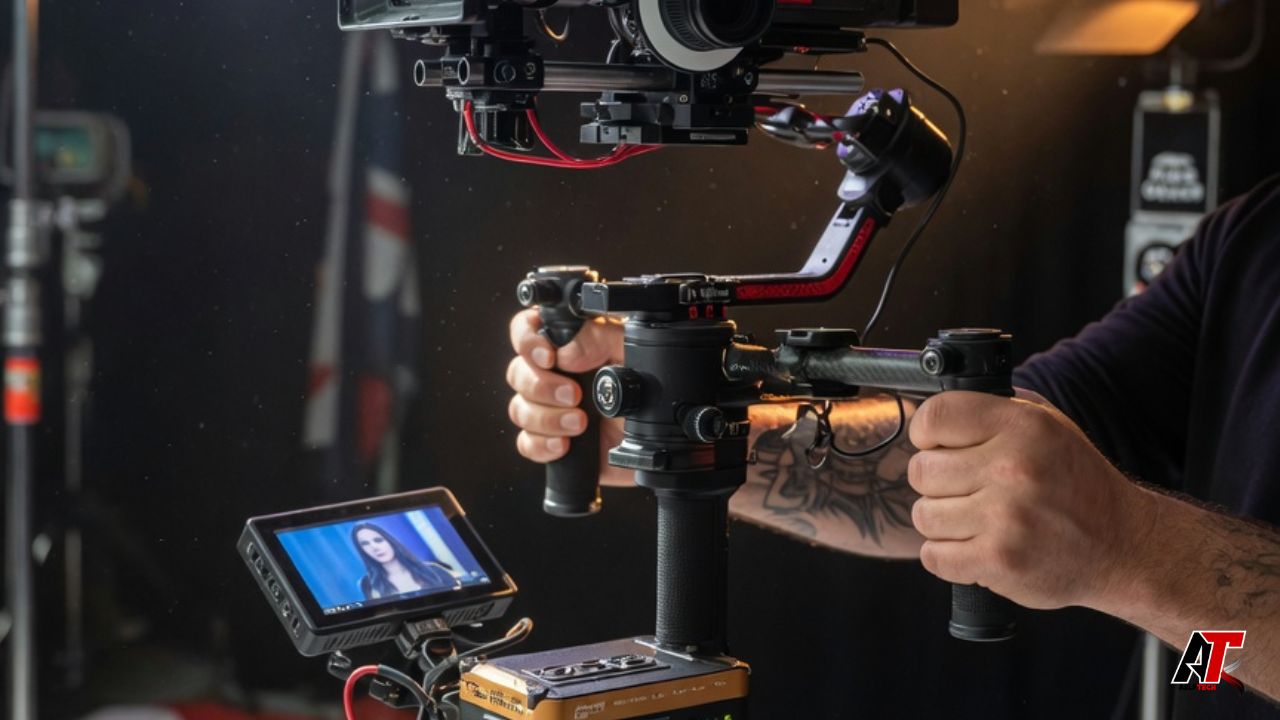
Modern video production demands lightweight gear without sacrificing power reliability. As cinema cameras become smaller, powering monitors, wireless transmitters, and follow-focus motors becomes challenging. Therefore, adopting a mini V mount battery provides an ideal power solution for handheld gimbals and compact camera rigs. Historically, traditional camera batteries were bulky, heavy, and awkward to balance on motor stabilizers. In contrast, modern micro power cells deliver high wattage capacity while maintaining a palm-sized physical footprint. Furthermore, integrated power distribution ports allow filmmakers to run entire camera setups from a single central source. Consequently, selecting a high-quality mini V mount battery transforms how camera operators build versatile, run-and-gun filming setups. This detailed guide analyzes power specs, travel rules, and rigging strategies to help you choose the best power solution for your production gear.
Why Every Videographer Needs a Mini V Mount Battery
Transitioning to smaller camera setups requires efficient power management. Mounting multiple small Sony NP-F or Canon LP-E6 batteries onto individual accessories increases rig weight and creates management headaches.
| Camera Power Phase | Legacy Battery Setup | Modern Mini V Mount Battery Setup |
|---|---|---|
| Power Distribution | Separate batteries for monitor, camera, and transmitter | Single centralized power source for all accessories |
| Rig Balance | Top-heavy, front-heavy, and difficult to calibrate | Compact, centralized center of gravity on gimbals |
| Swapping Efficiency | Changing 3 to 4 independent batteries every hour | Swapping 1 primary battery every several hours |
| Status Monitoring | Unpredictable battery indicators on cheap accessories | Precise OLED screen displaying remaining runtime |
Utilizing a single mini V mount battery streamlines cable management significantly. In addition, powering all camera accessories from a single source eliminates unexpected device shut-offs during active takes. Therefore, filmmakers spend less time troubleshooting power failures and more time capturing creative shots.
Key Features to Evaluate in a Mini V Mount Battery
Selecting the right power cell requires evaluating technical specifications beyond basic physical dimensions. Below are the core factors every videographer must consider before buying.
1. Battery Capacity and Watt-Hour Ratings
Watt-hours (Wh) measure the total energy capacity stored inside the cell. A standard mini V mount battery ranges from 45Wh to 140Wh. Specifically, a 95Wh power cell powers a pocket cinema camera and external monitor for approximately three to four hours continuously. Consequently, balancing total capacity against physical weight is essential for handheld operations.
2. Maximum Continuous Draw Limits
High-draw cinema cameras and powerful LED lights pull significant amperage during operation. Therefore, ensure your mini V mount battery supports continuous current draws between 8 Amps and 12 Amps. Exceeding a battery’s amperage limit triggers internal circuit breakers, causing sudden camera shut-offs during recording.
3. Integrated OLED Status Displays
Visual feedback is crucial on fast-paced production sets. Advanced models feature crisp OLED screens that display remaining battery percentage, output voltage, and real-time operational runtime. Consequently, camera assistants monitor exact power reserves without guessing remaining operation time.
4. Rugged Housing and Drop Protection
Sets can be demanding environments where equipment suffers accidental bumps and drops. Quality power cells utilize flame-retardant polycarbonate shells with rubberized corner bumpers. As a result, a durable mini V mount battery absorbs physical impacts while protecting internal lithium-ion cells from thermal damage.
Output Connectivity Options on a Mini V Mount Battery
Modern power cells act as complete power distribution hubs, featuring multiple auxiliary ports to feed diverse camera accessories.
D-Tap and USB-C PD Outputs on a Mini V Mount Battery
Versatile connectivity is a major advantage of compact power cells. Integrating D-Tap and USB Power Delivery (PD) ports allows you to power cinema gear and consumer electronics simultaneously.
| Output Port Type | Voltage Specifications | Typical Rig Accessory Powered |
|---|---|---|
| V-Mount Wedge | 14.8V Nominal (12V – 16.8V) | Cinema camera bodies and baseplates |
| D-Tap / P-Tap | 14.8V Unregulated | Wireless video transmitters and follow focus |
| USB-C Power Delivery | Bi-directional 45W to 100W PD | Laptops, smartphones, and mirrorless cameras |
| USB-A Standard | 5V / 2.4A Regulated | Mobile devices and small wireless receivers |
In addition, bi-directional USB-C ports allow you to charge the mini V mount battery directly using standard wall chargers. Consequently, filmmakers no longer need to carry heavy V-mount wall chargers when traveling light.
Managing Power Draw with a Mini V Mount Battery
To prevent overloading your rig, calculate the total wattage consumed by all connected accessories. Sum the power consumption of your camera, monitor, and wireless units. If your total rig draws 60 Watts, a 95Wh mini V mount battery will run continuously for roughly 1.5 hours before requiring a swap.
Mini V Mount Battery vs Traditional V Mount Power Options
Comparing compact power cells against full-sized traditional cinema batteries highlights clear operational advantages for modern shooters.
| Feature Category | Traditional Full-Size V-Mount | Mini V Mount Battery |
|---|---|---|
| Physical Dimensions | Large (150mm x 90mm x 80mm) | Ultra-Compact (100mm x 70mm x 50mm) |
| Average Weight | 750g to 1,200g | 300g to 550g |
| Gimbal Compatibility | Poor (Causes motor strain) | Excellent (Easy gimbal balancing) |
| Charging Flexibility | Requires dedicated V-mount dock | Charges via USB-C PD or V-mount dock |
| Mounting Placement | Limited to rear camera plates | Mounts on rods, cages, or top handles |
As shown in this comparison, opting for a mini V mount battery reduces total camera package weight by up to 50 percent. Consequently, operators shoot handheld comfortably for longer periods without physical fatigue.
How to Safely Travel with a Mini V Mount Battery
Flying with high-capacity lithium-ion batteries requires strict adherence to International Air Transport Association (IATA) safety regulations.
| Watt-Hour Capacity Tier | Airline Carry-On Allowance | TSA / IATA Approval Status |
|---|---|---|
| Under 100Wh (e.g., 50Wh, 95Wh) | Unlimited quantity in carry-on bag | Fully approved for carry-on luggage |
| 100Wh to 160Wh (e.g., 140Wh) | Maximum 2 batteries per passenger | Requires airline approval prior to boarding |
| Over 160Wh Capacity | Strictly prohibited on passenger flights | Requires certified cargo freight shipping |
Because lithium batteries represent a fire risk in unpressurized cargo holds, never place a mini V mount battery inside checked baggage. Always pack your power cells inside protective travel cases within your carry-on luggage. Furthermore, cover D-Tap ports with rubber caps to prevent accidental short circuits during transit.
Conclusion: Upgrading Your Rig with a Mini V Mount Battery
Building an efficient, professional camera rig requires dependable power distribution. As detailed throughout this guide, choosing a compact mini V mount battery delivers substantial benefits over bulky legacy batteries and scattered small power cells. By consolidating power delivery into a single lightweight hub, videographers reduce setup clutter, improve gimbal balance, and monitor battery life accurately via OLED screens. Furthermore, integrated D-Tap and fast USB-C Power Delivery ports eliminate the need to carry specialized chargers while traveling. By prioritizing proper watt-hour ratings, continuous amperage limits, and rugged build quality, filmmakers secure a versatile power solution that keeps cinema cameras running smoothly on every production.
Frequently Asked Questions (FAQs)
What is a mini V mount battery?
It is a compact, lightweight lithium-ion power cell designed to power cinema cameras and video accessories using a standardized V-lock mechanism.
How long does a 95Wh mini V mount battery power a camera?
It typically powers a mirrorless or small cinema camera along with a monitor for 3 to 4 hours, depending on total power draw.
Can I charge a mini V mount battery using USB-C?
Yes, many modern models feature bi-directional USB-C PD ports, allowing fast charging with standard laptop power adapters.
Are mini V mount batteries allowed on commercial airplanes?
Yes, batteries under 100Wh are fully approved for carry-on luggage without quantity restrictions under IATA guidelines.
Can I use a mini V mount battery on a handheld gimbal?
Yes, their lightweight footprint makes them ideal for mounting on motorized gimbals without straining stabilization motors.
What is the advantage of D-Tap ports on a mini V mount battery?
D-Tap ports deliver 14.8V power directly to accessories like monitors, wireless video transmitters, and follow-focus motors simultaneously.
Leave a Reply