
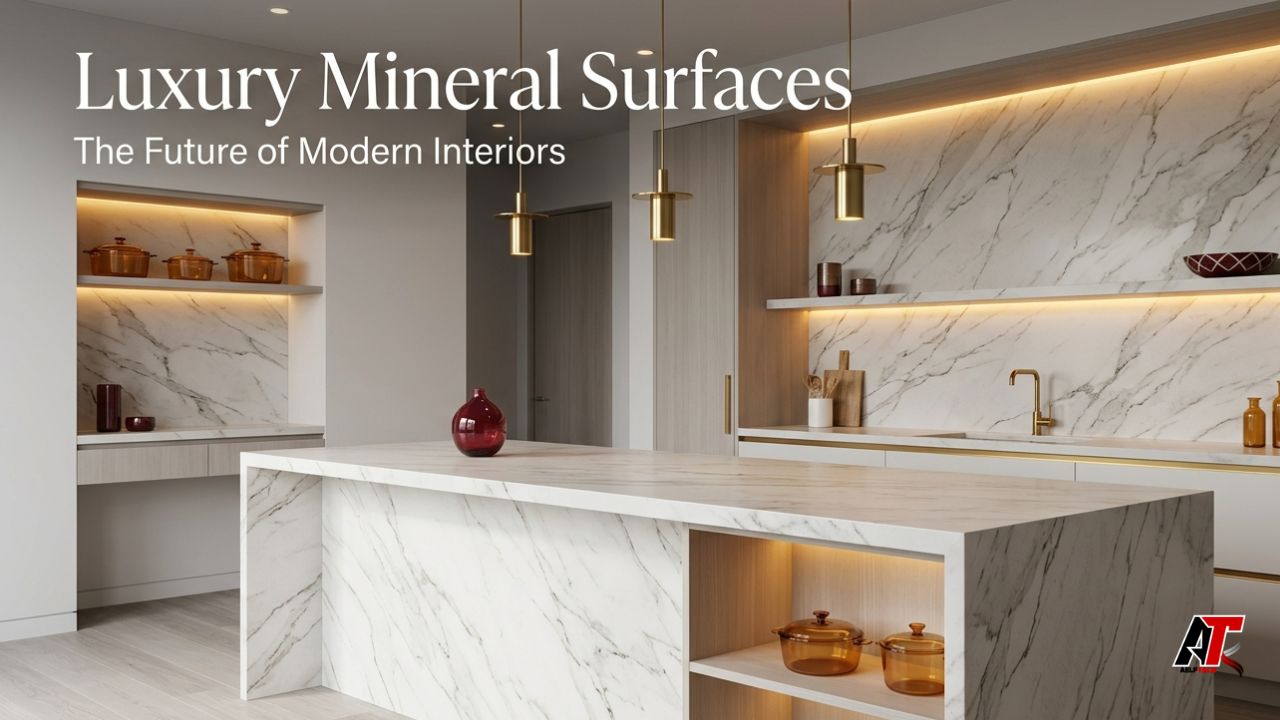
Modern interiors are no longer judged by appearance alone. Homeowners, architects, and commercial designers now expect every material to combine beauty, performance, responsible manufacturing, and long-term value. This shift has brought luxury mineral surfaces into the spotlight. They offer the visual drama of natural stone while supporting the practical needs of contemporary kitchens, bathrooms, hospitality spaces, offices, and retail interiors.
The appeal is easy to understand. A surface occupies a large visual area, receives constant physical contact, and often becomes the anchor of an entire room. When that surface looks refined but is difficult to maintain, inconsistent, or vulnerable to everyday wear, the design quickly loses its sense of luxury. Mineral-based engineered surfaces respond to this problem by combining controlled composition with advanced visual technologies. The result is a material category that feels expressive, dependable, and relevant to the way people live today.
What Are Luxury Mineral Surfaces?
Luxury mineral surfaces are engineered slabs made from mineral ingredients and other carefully selected components. Depending on the manufacturer, the formulation may include recycled glass, non-silicate minerals, binders, pigments, and protective technologies. Unlike natural stone, which is extracted as a finished geological material, an engineered mineral surface is designed to deliver specific visual and performance characteristics.
That distinction matters. Natural marble may have beautiful movement, but every slab varies in color, veining, porosity, and structural behavior. Traditional engineered quartz offers greater consistency, yet some designs can appear repetitive or visually flat. Newer mineral surfaces attempt to combine the best qualities of both categories: the controlled reliability of an engineered product and the dimensional character associated with natural stone.
For example, the manufacturer Revolux describes its surfaces as containing up to 80% recycled content, including reclaimed glass, and uses patented printing technology to reproduce stone-inspired depth. Product-specific composition and certification details should always be verified for the exact collection and slab being specified.
1. Advanced Visual Realism Is Redefining Surface Design
One of the strongest reasons luxury mineral surfaces are gaining attention is their ability to deliver more convincing visual depth. Older printed surfaces often placed a pattern mainly on the top layer. From a distance, they could look attractive, but close inspection sometimes revealed repetition, flatness, or an artificial transition between veins and background color.
New high-definition processes can create layered movement, subtle tonal shifts, and stronger interaction with light. Revolux states that its patented 5D nanotechnology printing penetrates the surface by up to 1 millimeter, helping patterns achieve greater clarity and dimension. This type of Innovative print technology gives designers access to expressive marble effects, soft limestone-inspired patterns, dramatic veining, and contemporary neutral surfaces without relying entirely on the availability of a particular natural slab.
2. Luxury Is Becoming More Practical
The meaning of luxury is changing. It once suggested rarity, delicacy, and formal beauty. Today, clients increasingly associate luxury with effortless daily use. A premium interior should remain attractive while supporting cooking, entertaining, working, bathing, and family life. Materials that demand constant caution can make a space feel restrictive rather than refined.
A well-designed mineral surface can support this practical form of luxury through stain resistance, simple cleaning, and a non-porous or low-porosity structure, depending on the product. These qualities are especially valuable in kitchens and bathrooms, where moisture, spills, cosmetics, food, and cleaning products are part of normal use.
Maintenance still depends on the manufacturer’s care guidance. Even a highly resistant surface should not be treated as indestructible. Hot cookware, abrasive pads, harsh chemicals, unsupported overhangs, and improper installation can reduce performance. The advantage is that homeowners can choose a visually sophisticated finish without accepting the same maintenance profile as every natural stone.
3. Sustainability Is Now Part of the Luxury Conversation
Sustainable design is no longer a separate aesthetic built around visibly recycled materials. It has become a broader strategy that considers durability, waste reduction, responsible sourcing, installation chemistry, maintenance, and the useful life of a space. The American Society of Interior Designers notes that designers are increasingly selecting durable, timeless materials to extend interior life and reduce renovation waste.
This context helps explain the popularity of Luxury mineral surfaces. When a manufacturer incorporates reclaimed glass or recycled mineral content, the surface can redirect material from waste streams while still achieving a polished appearance. A durable product may also reduce the need for premature replacement, which supports a more resource-conscious approach over time.
However, sustainability should never be assumed from a single marketing phrase. Designers should request environmental product declarations, recycled-content documentation, manufacturing information, warranty terms, and relevant third-party certifications. A credible specification looks at the complete material story rather than one attractive statistic.
4. Health-Conscious Material Selection Is Influencing Interiors
Clients are paying closer attention to what goes into their homes and workplaces. This does not mean every surface directly improves indoor air quality, but it does mean material composition, emissions, adhesives, sealants, and cleaning requirements deserve greater scrutiny.
The U.S. Environmental Protection Agency recommends selecting low-toxicity, low-emitting, moisture-resistant materials that are easy to clean and maintain. For interior designers, that guidance encourages a more careful review of the entire installation system. The slab, adhesive, seam treatment, substrate, and cleaning products all contribute to how a finished surface performs in an occupied space.
Some mineral-surface manufacturers also emphasize reduced or zero crystalline silica formulations. These claims are particularly relevant to fabrication and workplace safety, where cutting and finishing can generate hazardous dust. The exact composition, safety data sheet, fabrication procedures, and local regulations must be reviewed before use. A responsible specification balances aesthetics with transparent technical information.
5. Design Flexibility Supports More Cohesive Rooms
Modern interior design often favors visual continuity. Rather than treating each element as a separate object, designers repeat materials across connected areas to create a calm, architectural flow. Mineral surfaces are well suited to this approach because they can be considered for countertops, backsplashes, vanity tops, wall cladding, reception desks, display fixtures, and selected furniture applications.
Using one surface family across several features can make a modest room feel more intentional. A kitchen island may repeat as a full-height backsplash. A bathroom vanity can connect visually with a shower ledge or wall panel. In a hotel or retail setting, the reception counter can establish a material language that continues through service areas and display zones.
This flexibility also supports contrast. A bold veined slab can become the focal point against quiet cabinetry, while a warm mineral texture can soften glass, metal, and concrete. Designers can use the surface as either a statement or a background, depending on scale, lighting, and surrounding finishes.
6. Consistency Makes Complex Projects Easier to Manage
Natural stone selection can be an exciting part of a project, but it may involve quarry variation, slab-by-slab approval, bookmatching decisions, fissures, color changes, and replacement challenges. Those qualities are part of natural stone’s beauty, yet they can complicate projects that require repeated installations or tight visual control.
Engineered mineral surfaces offer a more manageable level of consistency. This is valuable for multi-unit residential developments, restaurants, hotels, clinics, offices, and retail rollouts where the design must be reproduced across several locations. Consistency can simplify approvals, help fabricators plan cuts, and reduce surprises during installation.
7. Durability Helps Preserve the Design Investment
A luxury interior represents more than the purchase price of a material. It includes design fees, fabrication, transportation, installation, coordination, and the disruption caused by future replacement. A surface that remains attractive under normal use protects that broader investment.
Durability should be assessed through realistic questions. Will the surface be used in a busy family kitchen or a low-traffic powder room? Will it be exposed to cosmetics, coffee, oils, cleaning agents, or commercial activity? Does the manufacturer provide testing information for stains, chemicals, heat, impact, and scratch resistance? Is the warranty clear about residential and commercial use?
The best specification is not simply the hardest material. It is the material whose tested performance, edge details, thickness, support requirements, and maintenance needs match the actual project. When selected carefully, luxury mineral surfaces can maintain their visual role for years without making the space feel precious or difficult to use.
8. Technology Gives Designers More Creative Control
Digital fabrication and advanced printing are changing what designers can expect from engineered surfaces. Improved pattern resolution allows more nuanced color transitions. Better slab mapping helps teams plan focal veins and reduce awkward cuts. CNC fabrication supports precise sink openings, edge profiles, waterfall details, and custom furniture components.
This technological control expands the designer’s palette. A client can achieve the atmosphere of a rare marble, a quiet clouded stone, or a dramatic contemporary pattern while selecting a material based on performance and project requirements. It also encourages experimentation with larger vertical applications, where pattern movement becomes part of the architecture rather than a small decorative detail.
9. Mineral Surfaces Fit the Shift Toward Warm Modernism
Many contemporary interiors are moving away from cold minimalism toward warm modernism. The spaces remain clean and uncluttered, but they introduce softer neutrals, natural textures, curved forms, layered lighting, and tactile materials. Stone-inspired surfaces are central to this look because they provide quiet movement without creating visual noise.
Creams, soft whites, greige tones, smoke gray, muted gold veining, and earthy mineral colors pair easily with oak, walnut, brushed metals, plaster walls, and textured fabrics. A surface with controlled depth can make a minimalist room feel richer while preserving clarity.
How to Choose the Right Luxury Mineral Surface
A beautiful sample is only the beginning. Before finalizing a surface, designers and homeowners should compare the complete specification. Review the slab in natural and artificial light, because warm and cool lighting can change the perception of background color and veining. Ask for a full-slab image and confirm whether the pattern is directional.
Check composition, recycled-content documentation, certifications, warranty coverage, recommended cleaners, heat guidance, fabrication requirements, and suitable applications. Confirm whether the chosen finish is polished, honed, textured, or otherwise treated, since finish can influence appearance and maintenance. Discuss seam placement, edge profiles, sink mounting, overhang support, and wall tolerances with the fabricator before production begins.
Finally, select an experienced installer. Even an excellent slab can disappoint when seams are poorly matched, cabinets are not level, cutouts are incorrect, or support is inadequate. Material, fabrication, and installation should be treated as one coordinated system.
Why These Surfaces Matter for the Future of Interior Design
Luxury mineral surfaces are changing modern interior design because they respond to several priorities at once. They provide high-impact aesthetics, controlled visual consistency, practical maintenance, flexible application, and the possibility of more responsible material choices. They also reflect a larger shift in the industry: clients no longer want to choose between beauty and performance.
The future of premium interiors will likely be shaped by materials that are transparent, technically advanced, adaptable, and emotionally engaging. Surfaces will still need to look beautiful, but they will also be expected to explain where they come from, how they perform, and why they deserve a place in a long-lasting interior.
For readers exploring design, technology, and material innovation, aelftech.com can serve as a useful starting point for broader ideas. Ultimately, the strongest projects will come from informed selection: verify claims, compare documentation, work with skilled fabricators, and choose a surface that supports the way the space will truly be used.
Conclusion
The rise of luxury mineral surfaces is not a passing style trend. It represents a meaningful change in how designers define value. Realistic visuals, advanced manufacturing, recycled content, easier upkeep, and application flexibility allow one material to satisfy both emotional and practical expectations.
No surface is universally perfect, and product claims should always be checked against technical documentation. Yet when the right material is matched with thoughtful detailing and expert installation, a mineral surface can become more than a countertop or wall finish. It can anchor the entire interior, support daily life, and preserve the design vision for years to come.
Leave a Reply