
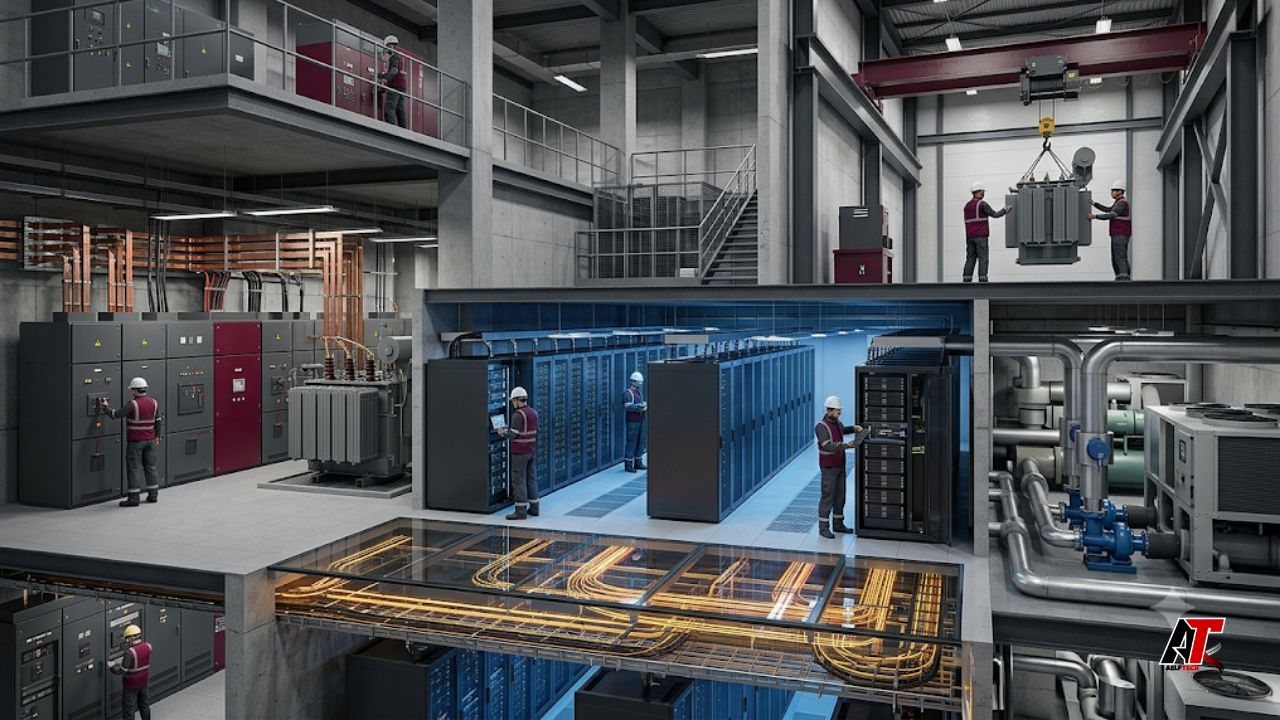
The digital world often feels light and invisible. We send messages, stream videos, use cloud software, and ask artificial intelligence for answers. Everything happens on a screen, so it is easy to think that digital services exist only as software.
The reality is very different. Every online action depends on buildings, machines, power systems, cooling equipment, cables, roads, and skilled workers. Servers must be manufactured, moved, installed, powered, protected, and maintained. If one part of this physical system fails, the digital service can slow down or stop.
This hidden infrastructure is the industrial side of the digital world. Most users never see it, yet it supports banking, healthcare, shopping, communication, entertainment, and business operations every day.
The Internet Has a Physical Foundation
A website or mobile app may look simple, but it needs physical equipment to work. Processors perform calculations. Storage devices keep files and records. Network equipment moves information from one place to another. These machines are installed in secure facilities and arranged in rows of cabinets called racks.
Many of these facilities are data centers. They operate more like advanced industrial plants than normal offices. They need a steady supply of electricity, controlled temperatures, fire protection, strong security, and carefully planned maintenance.
The physical network continues outside the building. Fiber-optic cables connect facilities to cities and internet hubs. Utility lines deliver power. Trucks bring generators, transformers, batteries, cooling units, and server equipment. The smooth experience on a phone is the final result of this large physical chain.
Electricity Keeps the Digital World Running
Electricity is the first requirement of digital infrastructure. Servers need power every second. Even a short interruption can stop services, damage equipment, or place data at risk. Important facilities therefore use several layers of electrical protection.
A typical power system may include utility feeds, transformers, switchgear, batteries, uninterruptible power supplies, distribution units, and backup generators. Each part has a clear job. Transformers adjust voltage. Switchgear controls and protects circuits. Batteries provide immediate support during a brief outage. Generators can keep the facility running during a longer interruption.
Redundancy adds another layer of safety. A site may have spare equipment or separate power paths. If one component fails, another can take over. This improves reliability, but it also makes installation and testing more demanding. Every cable, breaker, and backup system must work correctly.
Cooling Protects Sensitive Equipment
Servers create heat while they work. A facility with thousands of servers can produce a large amount of heat in a small space. If this heat is not removed, equipment can slow down, shut off, or fail.
Cooling is therefore a core production system, not a comfort feature. Facilities may use air handlers, chillers, cooling towers, pumps, fans, and heat exchangers. Airflow must be controlled so that hot exhaust does not mix with the cool air entering the servers.
High-density computing is making cooling more complex. Artificial intelligence systems can place more computing power in each rack. Some facilities now use direct-to-chip liquid cooling or other liquid-based methods. These systems may improve heat removal, but they also require pipes, pumps, leak detection, sensors, and trained maintenance teams.
Heavy Equipment Requires Specialist Handling
Many parts of digital infrastructure are too large or heavy for ordinary moving equipment. Transformers, generators, electrical lineups, cooling units, and battery systems may weigh several tons. They are also expensive and difficult to replace.
Before a delivery, teams study the full route. They check road access, bridge limits, doorway sizes, floor strength, turning space, lifting points, and overhead clearance. Depending on the job, they may use cranes, forklifts, gantries, hydraulic jacks, or slide systems.
Indoor work can be especially difficult because space is limited and nearby systems must remain protected. Companies such as prolift rigging help manage transportation, heavy lifting, equipment setting, secure storage, and project logistics. The goal is not only to move a machine. It must reach the correct position safely, at the correct stage of construction, without damaging the site or delaying other work.
Construction Depends on the Right Sequence
A large digital facility contains thousands of connected parts. They cannot be installed in a random order. Electrical rooms, cooling systems, network spaces, server halls, security controls, and fire protection must follow a detailed plan.
One late delivery can affect many later tasks. For example, delayed switchgear can stop electrical testing. A missing chiller can delay cooling tests. If access routes are blocked too early, heavy equipment may no longer reach its final location.
Project teams reduce these risks through staged deliveries, secure off-site storage, prefabricated assemblies, and digital construction models. Equipment is brought to the site when the area is ready. This limits congestion, protects valuable machines, and helps different trades work safely.
Cloud Services Still Depend on Cables
The word cloud can make the internet sound wireless and location-free. In reality, cloud services depend on physical network routes. Fiber-optic cables carry information between buildings, cities, regions, and countries.
Inside a facility, switches and routers direct traffic between servers. Outside, underground conduits, utility poles, carrier routes, and internet exchange points connect the site to the wider network. Even mobile services depend on this system. A phone connects to a tower, but the tower usually sends the traffic into a fiber-based network.
Reliable sites use route diversity. Separate cable paths reduce the chance that one construction accident, flood, fire, or equipment failure will cut every connection. Engineers also consider latency, which is the time information takes to travel. Services that need fast responses are often located closer to users or major network hubs.
Physical Security Supports Cybersecurity
Cybersecurity protects software, accounts, and information. Physical security protects the buildings and equipment that hold that information. Both are necessary.
Digital facilities often use several security layers. These may include fences, guards, cameras, alarms, access badges, biometric checks, locked cages, and restricted rooms. Visitors and contractors receive controlled access. Deliveries may be inspected and tracked from arrival to installation.
Fire and environmental protection are also part of security. Teams monitor smoke, heat, water leaks, electrical faults, and unusual equipment conditions. Early detection can prevent a small issue from becoming a major outage.
Maintenance Is a 24-Hour Responsibility
Digital services run day and night, so maintenance never fully stops. Technicians inspect batteries, generators, electrical connections, pumps, filters, fans, valves, sensors, and fire systems. They also review control software and operating data.
Preventive maintenance is completed before equipment fails. Predictive maintenance uses temperature, vibration, electrical readings, or performance trends to find early warning signs. A small change in a pump or fan may show that a larger problem is developing.
Work on live infrastructure must be carefully controlled. Teams use written procedures, permits, checklists, lockout systems, and peer reviews. A technician must confirm the correct circuit, valve, or machine before making a change. Simple, repeatable processes help prevent avoidable mistakes.
A Large Workforce Supports Every Click
Software developers are important, but they are only one part of the digital economy. Many other professionals keep the physical environment operating.
The workforce includes electrical engineers, mechanical engineers, network specialists, construction managers, electricians, pipefitters, welders, crane operators, riggers, safety professionals, security teams, logistics planners, and facility technicians. Manufacturers and transport companies also play major roles.
These jobs require both technical skill and teamwork. A project can involve designers, contractors, utility providers, equipment suppliers, and local authorities. Clear communication is essential because a decision in one area can affect power, cooling, access, safety, or project timing elsewhere.
Location Changes How a Facility Is Designed
Digital facilities are not placed randomly. Developers study power availability, network access, land, water, roads, workforce, taxes, permits, and room for future growth.
Climate and natural hazards also matter. A cooler location may reduce some cooling demand. A hot or humid area may need different mechanical systems. Floods, wildfires, hurricanes, earthquakes, and severe storms can influence the building design and backup plan.
Location affects nearby communities too. A project may create jobs and tax revenue, but it can also increase demand for electricity, water, roads, and land. Good planning should explain the benefits, expected resource use, and steps taken to reduce local impact.
Efficiency Is Becoming More Important
The physical side of digital technology uses significant resources. Computing and cooling require electricity. Some cooling methods use water. Manufacturing servers, batteries, generators, and electrical equipment requires raw materials and energy. Old equipment can also create electronic waste.
Operators are trying to improve efficiency in several ways. They use more efficient processors, better airflow, advanced cooling, renewable power contracts, energy storage, heat reuse, water-saving systems, and equipment recycling.
There is no single solution for every facility. A cooling method that works well in one climate may be less suitable in another. Renewable energy may not always be available at the exact time demand is highest. Effective planning balances efficiency, reliability, local conditions, cost, and the full life cycle of the equipment.
Why This Hidden Industry Matters
Most people notice digital infrastructure only when something goes wrong. An outage can stop card payments, delay deliveries, interrupt healthcare systems, block remote work, or make communication tools unavailable. These events show that digital reliability depends on physical reliability.
The industrial layer also affects cost. Energy prices, equipment shortages, transport delays, maintenance needs, and limited network capacity can change the price and availability of digital services. Strong infrastructure supports business growth. Weak or delayed infrastructure can slow new products and services.
Readers exploring the link between technology, operations, and business can find practical insights on aelftech.com. The key lesson is simple: every smooth online experience is supported by complex work that takes place behind the screen.
The Future Will Need More Physical Infrastructure
Demand for artificial intelligence, cloud software, streaming, connected devices, and real-time services continues to grow. This means more computing capacity will be needed.
Future facilities may use denser server racks, larger power connections, more liquid cooling, modular construction, automated monitoring, and new forms of on-site energy. Projects will also face pressure to open faster without reducing safety or reliability.
This will increase the value of prefabrication, detailed engineering, secure storage, advanced logistics, and carefully planned installation. Better software will not remove the need for buildings, cables, machines, energy, and skilled people. In many cases, more advanced software will require an even stronger industrial base.
Conclusion
The digital world looks simple because users see polished websites, apps, and online services. The industrial systems behind them are far more complex.
Every search, payment, video call, file upload, and artificial intelligence response depends on physical equipment. That equipment needs reliable power, cooling, networks, security, maintenance, transport, and specialist installation.
Understanding this hidden layer gives us a more complete view of technology. The digital economy is built by software professionals, engineers, tradespeople, manufacturers, transport teams, and facility operators. Their work allows the online world to operate quietly, safely, and continuously.
Leave a Reply