
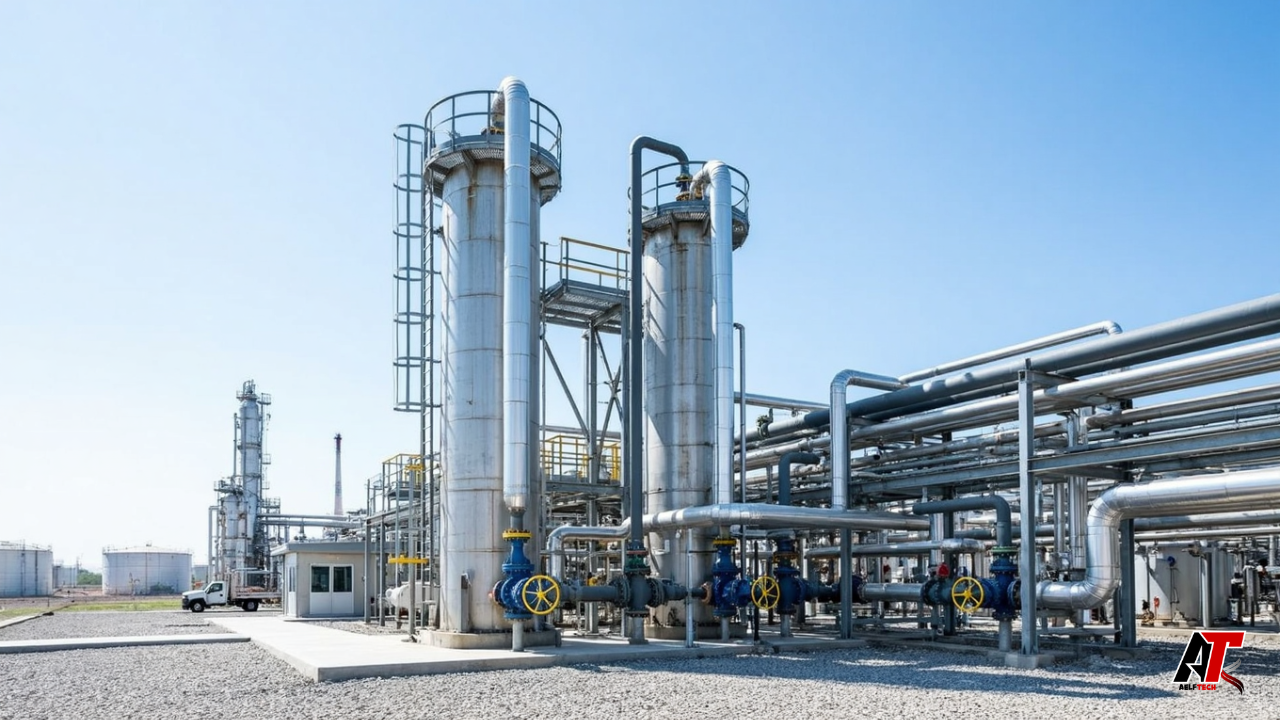
The processing of natural gas and industrial emissions requires rigorous purification to protect downstream infrastructure and meet environmental regulations. The elimination of other acidic gases are carried out by operators using amine treating, physical solvent processes, or membrane separation upstream of the capture unit, matching the removal technology to each stream’s specific contaminant profile. At the center of this purification effort is H2s removal, a critical step that prevents equipment corrosion, avoids catalyst poisoning, and ensures the viability of subsequent carbon capture operations. Hydrogen sulfide is a highly toxic and corrosive gas that must be systematically isolated before the treated gas stream can be safely utilized or vented into the atmosphere.
The Strategic Imperative of H2s removal Upstream of Carbon Capture
Carbon capture units are designed to isolate carbon dioxide from industrial flue gases or natural gas streams. However, these capture units, particularly those using chemical solvents like amine-based loops, are highly sensitive to trace contaminants. If hydrogen sulfide enters the carbon capture unit, it reacts with the capture solvent, causing rapid degradation and foaming. Furthermore, the presence of H2S in the captured CO2 stream renders it unusable for commercial applications like enhanced oil recovery or food-grade manufacturing. Therefore, operators must execute precise H2s removal upstream of the capture unit to ensure the downstream process remains economically and technically viable.
Protecting Capture Unit Infrastructure Through H2s removal
Beyond solvent degradation, hydrogen sulfide poses a severe threat to the metallurgical integrity of carbon capture infrastructure. In the presence of moisture, H2S forms sulfuric acid, which aggressively corrodes carbon steel pipes, valves, and vessels. This localized corrosion leads to leaks, unplanned maintenance shutdowns, and significant safety hazards. By implementing robust H2s removal protocols early in the gas processing train, operators protect the downstream capture unit infrastructure, extending the operational lifespan of the equipment and maintaining continuous plant uptime. Thus, upstream gas sweetening acts as a critical defensive barrier for downstream capital assets.
Amine Treating Processes for H2s removal
Amine treating remains the most widely deployed technology for acid gas removal in the energy sector. This process relies on aqueous solutions of alkanolamines to chemically absorb H2S and CO2 from the gas stream. The rich amine solution, loaded with acidic gases, is then routed to a regenerator unit where heat breaks the chemical bonds, releasing the H2S and allowing the lean amine to be recycled. Operators favor amine treating for its high efficiency and ability to handle large volumes of gas with varying acid gas concentrations.
Tailoring Amine Formulations to Contaminant Profiles in H2s removal
Selecting the correct amine formulation is a matter of matching the removal technology to the stream’s specific contaminant profile. Monoethanolamine (MEA) is highly reactive but energy-intensive to regenerate and prone to degradation. Methyldiethanolamine (MDEA) is favored for selective H2s removal because it reacts quickly with H2S but slowly with CO2, allowing operators to slip CO2 while capturing H2S. This selectivity is crucial when the downstream capture unit is specifically designed to handle CO2. By tailoring the amine formulation and optimizing contactor operating parameters, operators achieve precise separation efficiency tailored to the unique chemical makeup of the incoming gas stream.
Physical Solvent Processes in H2s removal
While chemical solvents like amines rely on chemical reactions, physical solvent processes rely on the solubility of acidic gases in a liquid medium. According to Henry’s Law, the solubility of a gas in a liquid increases with partial pressure. Therefore, physical solvents are highly effective for gas streams operating at high pressures and containing high concentrations of acidic gases. The regeneration of physical solvents typically requires a simple pressure reduction rather than the application of heat, offering significant energy savings compared to amine treating systems.
Matching Physical Solvents to Stream Specifications for H2s removal
Technologies like the Selexol and Rectisol processes utilize physical solvents to achieve deep H2s removal. The Rectisol process, using methanol at sub-zero temperatures, is capable of reducing H2S levels to fractional parts per million, making it ideal for synthesis gas purification in coal gasification or hydrogen production facilities. The Selexol process uses a mixture of dimethyl ethers of polyethylene glycol and is commonly applied in natural gas processing. Operators choose these physical solvent processes when the stream’s specific contaminant profile includes heavy hydrocarbons or high acid gas partial pressures, where amine systems would struggle economically or technically. By matching the solvent to the stream, operators optimize both purification efficiency and energy consumption.
Membrane Separation Technology for H2s removal
Membrane separation represents a newer, more modular approach to acidic gas removal. This technology utilizes semi-permeable polymeric membranes that selectively allow certain gases to pass through faster than others. The driving force is the differential pressure across the membrane. Acidic gases like H2S and CO2 permeate through the membrane material rapidly, while the heavier hydrocarbons like methane remain on the high-pressure side as the purified residue stream. Membrane systems do not require chemical reagents or thermal regeneration, making them environmentally favorable and operationally simple.
Advantages of Membranes for Specific Contaminant Profiles in H2s removal
Membrane separation is particularly advantageous for offshore platforms or remote natural gas wells where space and weight are heavily restricted. When the stream’s specific contaminant profile shows moderate to high H2S and CO2 concentrations, membrane systems can be arranged in multi-stage configurations to achieve the required purity levels. However, membranes are susceptible to plasticization and fouling from heavy hydrocarbons and water. Therefore, engineers must include robust pretreatment systems upstream of the membrane skids. Despite these limitations, the ability to scale membrane capacity simply by adding parallel skids makes this technology highly attractive for fields with changing production rates.
Matching H2s removal Technology to Contaminant Profiles
The core engineering challenge in gas processing is determining which technology—amine treating, physical solvents, or membrane separation—best fits the operational parameters. This decision is driven entirely by the specific contaminant profile of the gas stream. Engineers analyze the partial pressure of the acidic gases, the total flow rate, the presence of trace contaminants like mercaptans and carbonyl sulfide, and the required outlet purity specifications. A mismatched technology results in excessive energy consumption, frequent equipment failures, and failure to meet environmental compliance.
Evaluating Stream Pressure and Composition for H2s removal
Low-pressure gas streams with low acid gas concentrations are typically best suited for amine treating, as the chemical reaction does not rely on high partial pressures. Conversely, high-pressure streams with high acid gas concentrations favor physical solvents, which can strip large volumes of H2S using minimal energy. If the stream contains complex sulfur species like mercaptans, specialized chemical solvents or a combination of physical and chemical solvents may be required. Furthermore, if the objective is bulk removal of H2S rather than deep purification, membrane separation offers a highly cost-effective first stage. By rigorously evaluating stream pressure and composition, operators design a treatment train that perfectly aligns with the specific contaminant profile.
Future Trends in H2s removal and Acidic Gas Management
The landscape of acidic gas removal is shifting as environmental regulations tighten and the push for decarbonization accelerates. Traditional H2s removal processes often result in the combustion of the separated H2S, converting it into sulfur dioxide, which is itself a regulated pollutant. The industry is increasingly moving toward capturing the elemental sulfur via the Claus process and further treating the tail gas to achieve near-total sulfur recovery. Furthermore, there is a growing interest in converting captured H2S directly into elemental sulfur and hydrogen using novel thermochemical and electrochemical processes, adding economic value to what was previously a waste stream.
Hybrid Systems and Process Intensification for H2s removal
To address complex contaminant profiles, operators are increasingly turning to hybrid systems that combine multiple technologies. For example, a membrane system might be used for bulk CO2 and H2S removal, followed by a compact amine unit for final polishing to meet pipeline specifications. This process intensification reduces the overall size of the treatment plant and minimizes energy consumption. Additionally, the integration of artificial intelligence and machine learning into plant control systems allows for real-time optimization of solvent circulation rates and membrane pressure differentials. These advancements ensure that the H2s removal process remains highly efficient even as the feed gas composition fluctuates, representing the next generation of upstream gas treatment technology.
FAQs
1. Why is H2s removal necessary upstream of a carbon capture unit?
Removing H2S upstream prevents solvent degradation, avoids equipment corrosion, and ensures the captured CO2 stream meets commercial purity specifications.
2. How do operators match removal technology to a stream’s specific contaminant profile?
Operators evaluate gas pressure, acid gas concentration, and trace contaminants to select between amines, physical solvents, or membranes for optimal efficiency.
3. What is the difference between amine treating and physical solvent processes?
Amine treating uses chemical reactions to absorb acid gases, while physical solvents rely on gas solubility at high pressures for absorption.
4. When is membrane separation preferred for H2s removal?
Membrane separation is preferred for offshore platforms or remote wells requiring modular, lightweight solutions for bulk acidic gas removal.
5. Can amine treating selectively remove H2S while leaving CO2 in the stream?
Yes, using methyldiethanolamine (MDEA) allows operators to selectively react with H2S while allowing CO2 to slip through for downstream capture.
6. What happens to the hydrogen sulfide after it is removed from the gas stream?
The removed H2S is typically routed to a Claus process unit where it is converted into elemental sulfur for commercial sale or safe disposal.
Conclusion
The purification of industrial gas streams demands a highly strategic approach to technology selection. The elimination of other acidic gases are carried out by operators using amine treating, physical solvent processes, or membrane separation upstream of the capture unit, matching the removal technology to each stream’s specific contaminant profile. This meticulous engineering ensures that H2s removal is achieved efficiently, protecting downstream carbon capture infrastructure from corrosion and solvent degradation. By continuously evaluating pressure, composition, and technological advancements, the energy sector can maintain operational integrity while meeting stringent environmental targets for sulfur and carbon emissions.
Leave a Reply