
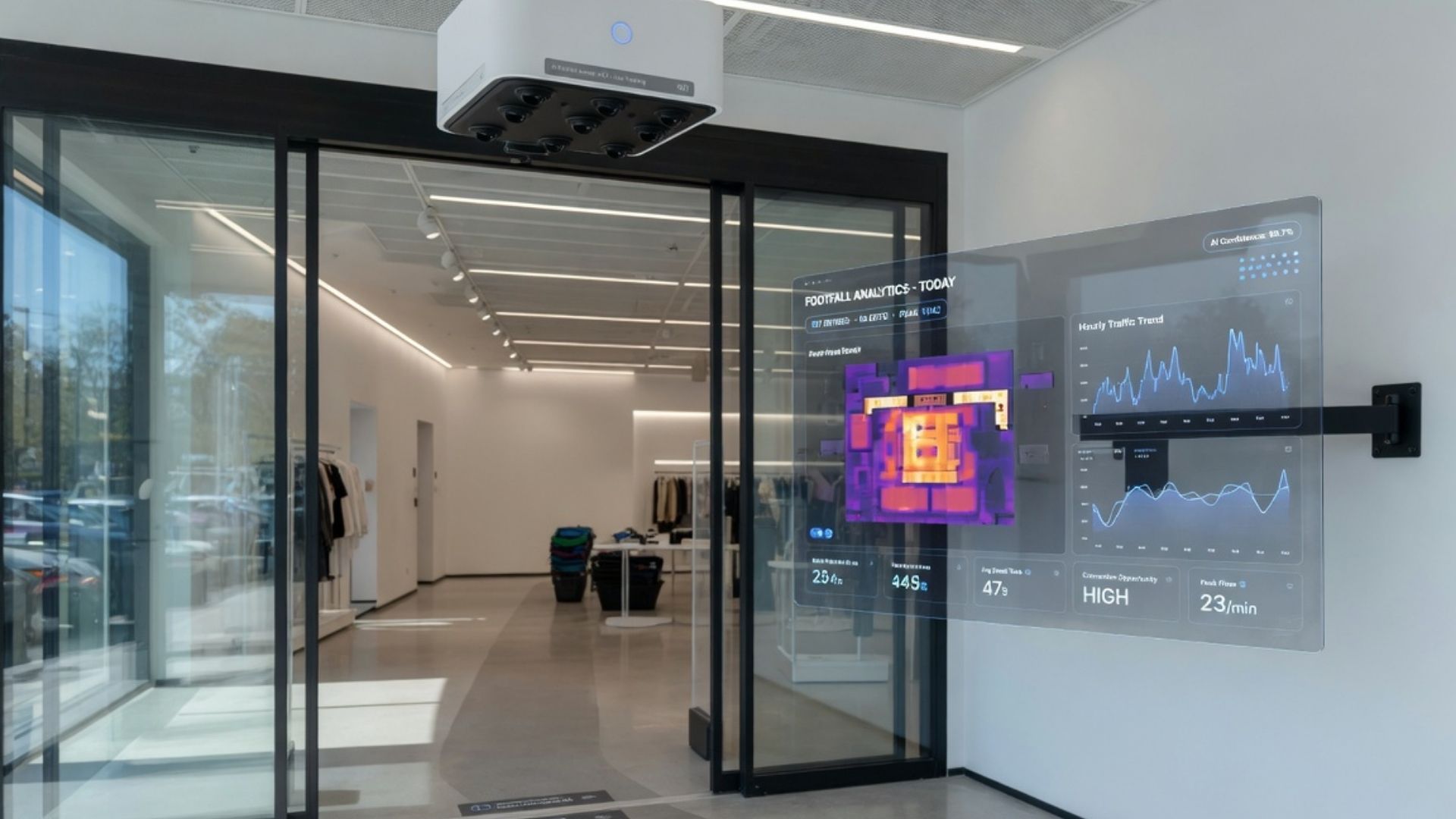
Understanding customer behavior has become an essential part of running a successful business. Whether you own a retail store, shopping mall, supermarket, airport, museum, or corporate office, knowing how many people enter your premises can help you make better operational decisions. A footfall counter is an advanced visitor counting solution that provides valuable insights into customer traffic, helping businesses measure performance, optimize staffing, evaluate marketing campaigns, and improve overall efficiency.
Modern businesses rely on data-driven strategies to remain competitive, and visitor analytics has become one of the most valuable sources of operational intelligence. Rather than relying on assumptions, organizations can use a footfall counter to monitor visitor trends, identify peak business hours, and evaluate the effectiveness of promotions and store layouts. With advancements in artificial intelligence, computer vision, and sensor technology, today’s footfall counters deliver more accurate and actionable insights than ever before.
This comprehensive guide explains how footfall counters work, their benefits, applications, features, and the factors businesses should consider when selecting the right visitor counting solution.
What Is a Footfall Counter?
A footfall counter is a device or software-based system designed to count the number of people entering and exiting a specific location. These systems collect visitor data in real time and generate reports that help businesses understand customer traffic patterns.
Unlike manual counting methods, modern footfall counters use advanced technologies such as infrared sensors, thermal imaging, video analytics, artificial intelligence, and stereoscopic cameras to deliver accurate visitor counts while minimizing counting errors.
Businesses across multiple industries use these systems to improve decision-making, optimize resource allocation, and enhance customer experiences.
How Does a Footfall Counter Work?
The operation of a footfall counter depends on the technology used. Most systems are installed at entry and exit points to detect people as they pass through designated areas.
The process generally includes the following steps:
- Detecting movement through sensors or cameras.
- Identifying individuals entering or leaving the premises.
- Recording visitor counts in real time.
- Processing data through analytics software.
- Generating reports, dashboards, and performance metrics.
- Integrating visitor data with other business intelligence systems where supported.
Many modern systems provide cloud-based dashboards, allowing business owners and managers to access visitor statistics from any location.
Types of Footfall Counter Technologies
Different businesses require different visitor counting solutions depending on their environment, traffic volume, and reporting requirements.
Infrared Footfall Counters
Infrared systems detect people by monitoring interruptions in infrared beams placed across entrances. They are commonly used because they are relatively simple to install and suitable for smaller locations.
Thermal Footfall Counters
Thermal sensors detect body heat rather than visual images, allowing accurate counting under varying lighting conditions while helping distinguish human movement from other objects.
Video Analytics Counters
Video-based footfall counters use cameras combined with intelligent software to identify and count visitors. Advanced image processing improves counting accuracy in busy environments.
AI-Based Footfall Counters
Artificial intelligence enhances visitor counting by recognizing movement patterns, filtering non-human objects, and improving counting precision in complex environments with high pedestrian traffic.
3D Stereo Vision Counters
These systems use stereoscopic cameras to generate depth information, helping distinguish individual visitors even in crowded entrances.
Benefits of Using a Footfall Counter
Installing a footfall counter offers numerous operational and strategic advantages for businesses.
Better Customer Insights
Visitor counting helps businesses understand customer traffic trends throughout the day, week, month, and year. These insights support informed business decisions.
Improved Staff Scheduling
Knowing peak and off-peak hours allows managers to allocate employees more efficiently, improving customer service while controlling labor costs.
Measuring Marketing Performance
Businesses can compare visitor numbers before, during, and after promotional campaigns to evaluate marketing effectiveness.
Enhanced Store Layout Optimization
Footfall data can help identify high-traffic areas, allowing retailers to improve product placement and optimize customer flow.
Performance Evaluation
Retailers often compare visitor numbers with sales data to calculate conversion rates and identify opportunities for improvement.
Data-Driven Decision Making
Instead of relying on estimates, businesses gain measurable data that supports strategic planning and operational improvements.
Key Features of a Modern Footfall Counter
Today’s visitor counting systems offer much more than simple people counting.
Real-Time Visitor Tracking
Businesses can monitor visitor numbers as they occur, enabling faster operational responses.
Historical Data Analysis
Historical reports help identify seasonal trends, recurring traffic patterns, and long-term business performance.
Cloud-Based Reporting
Many systems provide secure online dashboards where managers can access reports from multiple locations.
Occupancy Monitoring
Some footfall counters estimate the number of people currently inside a building, which can support crowd management and operational planning.
Multi-Location Management
Organizations with multiple branches can monitor visitor data across all locations through centralized reporting platforms.
Integration Capabilities
Advanced systems may integrate with point-of-sale software, business intelligence platforms, security systems, or customer relationship management tools to provide broader operational insights.
Industries That Benefit from Footfall Counters
Footfall counters are used across a wide range of industries where understanding visitor activity is valuable.
Retail Stores
Retailers use visitor data to measure store performance, improve merchandising strategies, and calculate conversion rates.
Shopping Malls
Mall management teams monitor visitor traffic to evaluate tenant performance, marketing campaigns, and overall customer engagement.
Supermarkets
Supermarkets use footfall data to optimize staffing levels, manage checkout efficiency, and understand shopping patterns.
Airports and Transportation Hubs
Passenger traffic monitoring helps improve operational planning and resource allocation.
Museums and Exhibition Centers
Visitor counting enables cultural institutions to analyze attendance trends and plan exhibitions more effectively.
Corporate Offices
Organizations use footfall counters to understand office occupancy, monitor visitor activity, and improve facility management.
Healthcare Facilities
Hospitals and clinics may use visitor counting systems to monitor public traffic and support operational planning.
Educational Institutions
Universities, schools, and libraries can analyze visitor numbers to better manage facilities and allocate resources.
How Footfall Data Improves Business Performance
Visitor data becomes significantly more valuable when combined with other business metrics.
For example, retailers often compare visitor counts with completed purchases to calculate conversion rates. If visitor traffic increases but sales remain unchanged, businesses may investigate pricing, customer service, merchandising, or inventory issues.
Similarly, comparing footfall before and after a marketing campaign can help assess whether the campaign successfully attracted more visitors. These insights allow businesses to refine future promotional strategies based on measurable outcomes rather than assumptions.
Long-term traffic analysis also supports budgeting, expansion planning, and investment decisions by revealing consistent customer trends over time.
Factors to Consider When Choosing a Footfall Counter
Selecting the right system requires careful evaluation of several important factors.
Accuracy
Choose a solution that delivers reliable counting performance under your expected traffic conditions.
Installation Environment
Different technologies perform better depending on entrance size, lighting conditions, ceiling height, and visitor density.
Reporting Features
Look for software that offers detailed dashboards, customizable reports, and export capabilities.
Scalability
Businesses planning future expansion should consider systems that support multiple locations and centralized management.
Data Privacy
When using camera-based systems, ensure compliance with applicable privacy regulations and organizational policies. Review how the provider processes, stores, and secures any collected data.
Technical Support
Reliable installation, maintenance, software updates, and customer support contribute to long-term system performance.
Best Practices for Maximizing Footfall Counter Performance
Proper implementation helps businesses obtain the most accurate visitor data.
Install sensors or cameras according to manufacturer recommendations to minimize counting errors. Regular system calibration and maintenance help maintain long-term accuracy.
Businesses should periodically review visitor reports and compare them with sales, staffing, and operational metrics to gain deeper insights into performance.
Employee training is also important so managers understand how to interpret reports and apply visitor analytics to business decisions.
Monitoring trends consistently rather than focusing on isolated daily numbers often provides more meaningful insights for long-term planning.
Future Trends in Footfall Counting Technology
Footfall counting technology continues to evolve alongside advances in artificial intelligence, automation, and business analytics.
AI-powered systems are becoming more capable of distinguishing between different types of movement, reducing false counts, and providing increasingly accurate visitor analytics. Cloud computing enables businesses to access real-time data from virtually anywhere while supporting centralized management across multiple locations.
Integration with broader analytics platforms is also expanding. Businesses can combine footfall data with sales, inventory, staffing, and customer engagement metrics to build a more complete understanding of operational performance.
Predictive analytics is another emerging trend. By analyzing historical visitor patterns, some systems can help businesses anticipate traffic fluctuations and plan staffing, inventory, and promotional activities more effectively.
As organizations continue to prioritize data-driven decision-making, footfall counters are expected to play an increasingly important role in improving operational efficiency and customer experience.
Conclusion
A footfall counter is much more than a visitor counting device—it is a valuable business intelligence tool that helps organizations understand customer behavior, improve operational efficiency, and support informed decision-making. From retail stores and shopping malls to airports, museums, healthcare facilities, and corporate offices, businesses across many industries use visitor analytics to optimize staffing, evaluate marketing performance, and enhance customer experiences. By selecting the right technology, maintaining accurate data collection, and combining visitor insights with other business metrics, organizations can make more effective strategic decisions and adapt to changing customer patterns. As analytics technologies continue to advance, footfall counters will remain an important resource for businesses seeking measurable improvements in performance and operational planning.
FAQs
What is a footfall counter?
A footfall counter is a system that measures the number of people entering and exiting a specific location, providing data that helps businesses analyze visitor traffic and operational performance.
How accurate are modern footfall counters?
Accuracy varies depending on the technology, installation, and environment. Properly installed modern systems using AI, video analytics, or 3D sensors can provide high levels of counting accuracy, though performance may differ by use case.
Which businesses should use a footfall counter?
Retail stores, shopping malls, supermarkets, airports, museums, healthcare facilities, educational institutions, corporate offices, and event venues commonly benefit from visitor counting systems.
Can a footfall counter help improve sales?
A footfall counter does not directly increase sales, but it provides visitor data that businesses can use to evaluate conversion rates, staffing, store layouts, and marketing campaigns, supporting better business decisions.
Are footfall counters difficult to install?
Installation depends on the technology and building layout. Many systems are designed for straightforward installation, while larger or more complex environments may require professional setup.
Can footfall counters integrate with other business systems?
Many modern footfall counters support integration with analytics platforms, point-of-sale systems, security solutions, and business intelligence software, depending on the manufacturer and product capabilities.
Leave a Reply