
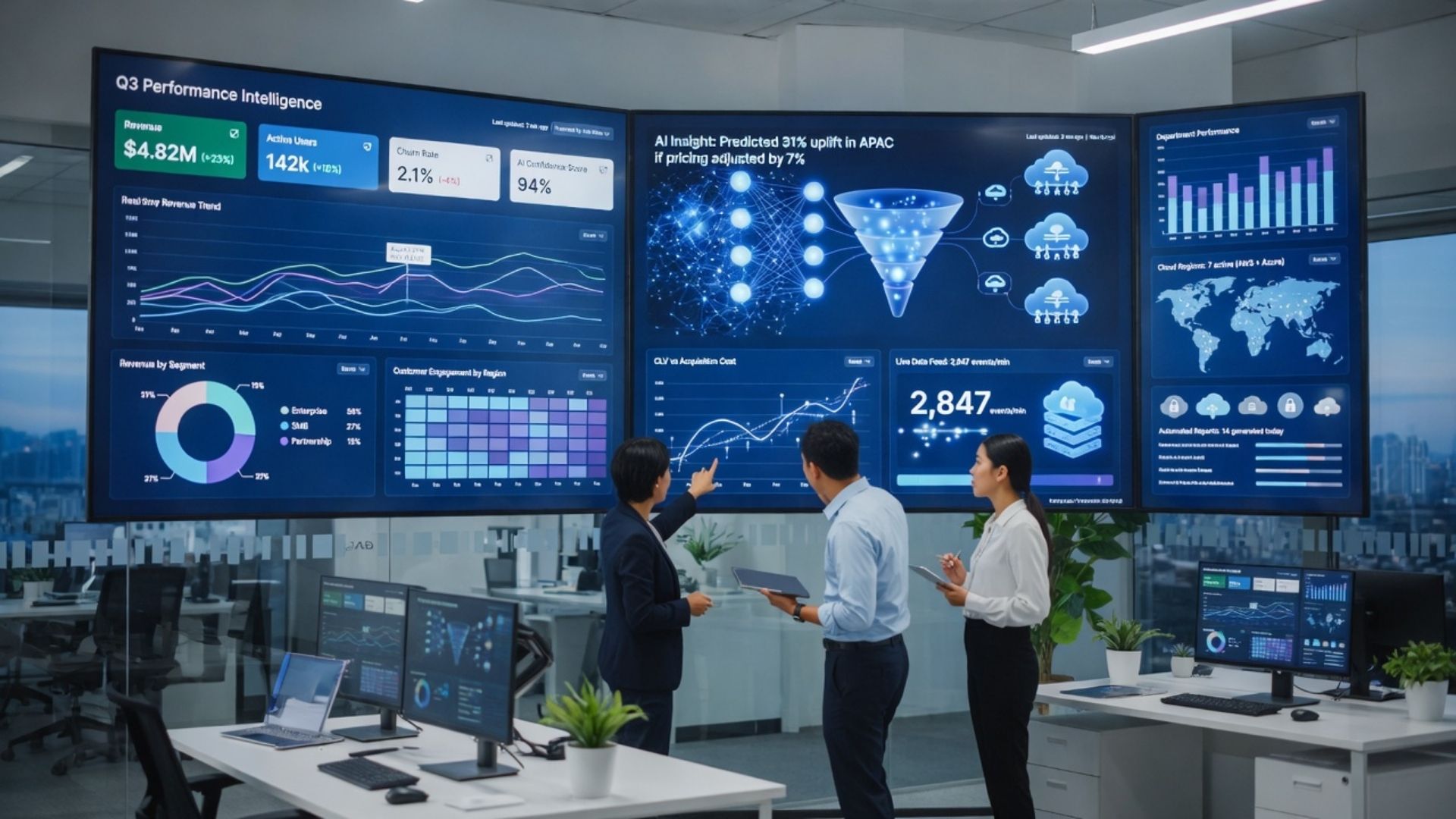
In today’s digital economy, organizations generate enormous amounts of information every day from customer interactions, online transactions, connected devices, business operations, and market activities. Turning this raw information into meaningful insights has become a competitive advantage for companies of all sizes. Data Analytics Applications help businesses collect, process, analyze, and interpret data to improve decision-making, optimize operations, identify trends, and support long-term growth.
From healthcare and banking to retail, education, manufacturing, and logistics, data analytics has become an essential component of modern business strategies. Organizations use analytics to understand customer behavior, forecast demand, improve operational efficiency, manage risks, and identify new opportunities. As technologies such as artificial intelligence, machine learning, cloud computing, and big data continue to evolve, data analytics applications are becoming more sophisticated and accessible across industries.
This comprehensive guide explores the most important data analytics applications, their benefits, real-world use cases, key technologies, implementation challenges, and future trends shaping data-driven decision-making.
What Are Data Analytics Applications?
Data analytics applications refer to the software solutions, platforms, and processes used to collect, organize, analyze, and visualize data to generate actionable insights. These applications help organizations transform large volumes of structured and unstructured data into valuable information that supports strategic and operational decisions.
Rather than relying on intuition or assumptions, businesses can use data analytics to evaluate performance, monitor trends, predict future outcomes, and make evidence-based decisions.
Modern analytics applications often combine multiple technologies, including cloud computing, artificial intelligence, machine learning, statistical analysis, and interactive dashboards to provide comprehensive business intelligence.
How Data Analytics Applications Work
Although implementations vary by organization, most data analytics applications follow a similar workflow.
The typical process includes:
- Collecting data from multiple internal and external sources.
- Cleaning and organizing data to improve quality and consistency.
- Storing information in databases, cloud platforms, or data warehouses.
- Analyzing data using statistical models, machine learning algorithms, or business intelligence tools.
- Visualizing findings through reports, dashboards, and charts.
- Supporting decision-making with actionable insights.
This structured process enables businesses to identify meaningful patterns that may not be visible through manual analysis.
Types of Data Analytics
Different analytical approaches serve different business objectives.
Descriptive Analytics
Descriptive analytics focuses on understanding historical performance by summarizing past events. Businesses use this approach to measure key performance indicators, sales trends, customer activity, and operational performance.
Diagnostic Analytics
Diagnostic analytics investigates why specific events occurred. It helps organizations identify root causes behind performance changes, customer behavior, or operational issues.
Predictive Analytics
Predictive analytics uses historical data, statistical models, and machine learning algorithms to estimate future outcomes. Businesses commonly apply predictive analytics to demand forecasting, customer retention, and risk assessment.
Prescriptive Analytics
Prescriptive analytics recommends possible actions based on analytical findings. These recommendations help businesses optimize decisions and improve operational efficiency.
Key Data Analytics Applications Across Industries
Organizations across virtually every sector rely on data analytics to improve performance and support innovation.
Retail Analytics
Retailers analyze customer purchasing behavior, inventory levels, pricing strategies, and seasonal demand. Analytics helps businesses optimize stock management, personalize customer experiences, and improve sales performance.
Companies also use customer segmentation to deliver targeted marketing campaigns and product recommendations based on shopping habits.
Healthcare Analytics
Healthcare organizations use analytics to improve patient care, support medical research, optimize hospital operations, and monitor public health trends.
Applications include:
- Patient outcome analysis
- Resource planning
- Disease surveillance
- Clinical decision support
- Treatment effectiveness evaluation
Healthcare providers can use analytical insights to improve efficiency while supporting evidence-based medical decisions.
Financial Services
Banks and financial institutions rely on data analytics for fraud detection, credit risk assessment, investment analysis, regulatory compliance, and customer relationship management.
Machine learning models can identify unusual transaction patterns that may indicate fraudulent activity, allowing financial institutions to investigate potential risks more efficiently.
Manufacturing Analytics
Manufacturers analyze production performance, equipment efficiency, quality control, and supply chain operations.
Analytics applications support:
- Predictive maintenance
- Production planning
- Inventory optimization
- Process improvement
- Quality assurance
These insights help reduce downtime and improve operational productivity.
Marketing Analytics
Marketing teams use analytics to measure campaign performance, customer engagement, website traffic, and advertising effectiveness.
Businesses can identify which marketing channels generate the highest return on investment and adjust strategies accordingly.
Marketing analytics also supports audience segmentation and personalized customer communication.
Supply Chain Analytics
Supply chain analytics improves logistics planning, inventory management, supplier performance, transportation efficiency, and demand forecasting.
Organizations can better anticipate disruptions and optimize distribution networks through data-driven insights.
Education Analytics
Educational institutions analyze student performance, attendance, learning outcomes, and resource utilization.
Analytics helps educators identify learning challenges, improve academic support programs, and make informed administrative decisions.
Human Resources Analytics
HR departments use workforce analytics to improve recruitment, employee retention, performance management, and workforce planning.
Organizations can analyze hiring trends, employee engagement, training effectiveness, and turnover rates to support better talent management.
Benefits of Data Analytics Applications
Implementing data analytics provides significant advantages across business functions.
Better Decision-Making
Organizations make more informed decisions based on measurable evidence rather than assumptions or guesswork.
Improved Operational Efficiency
Analytics identifies inefficiencies, bottlenecks, and areas for process improvement, enabling businesses to optimize operations.
Enhanced Customer Experience
Understanding customer preferences and behavior allows businesses to deliver more personalized products, services, and communications.
Risk Management
Analytics supports early identification of operational, financial, and cybersecurity risks through continuous monitoring and predictive modeling.
Cost Reduction
Data-driven optimization helps reduce waste, improve resource allocation, and increase operational efficiency.
Competitive Advantage
Organizations that effectively use analytics often respond more quickly to market changes and customer demands, strengthening their competitive position.
Technologies Behind Data Analytics Applications
Several technologies support modern analytics platforms.
Artificial Intelligence
AI enables systems to identify complex patterns, automate analysis, and generate intelligent recommendations.
Machine Learning
Machine learning algorithms improve predictions by learning from historical data and continuously refining analytical models.
Cloud Computing
Cloud platforms provide scalable infrastructure for storing, processing, and analyzing large volumes of data.
Big Data Technologies
Big data frameworks enable organizations to process massive datasets generated from multiple sources in real time or near real time.
Business Intelligence Tools
Business intelligence platforms transform analytical results into interactive dashboards, reports, and visualizations that support business users.
Challenges of Implementing Data Analytics Applications
Despite their advantages, organizations may encounter challenges when adopting analytics solutions.
Data Quality
Incomplete, inaccurate, or inconsistent data can reduce the reliability of analytical insights.
Data Integration
Organizations often need to combine information from multiple systems, requiring careful planning and integration.
Privacy and Security
Businesses must protect sensitive information and comply with applicable data protection laws and industry regulations.
Skills and Expertise
Successful implementation requires professionals with expertise in data analysis, statistics, software development, and business strategy.
Infrastructure Costs
Advanced analytics platforms may require investments in software, cloud services, data storage, and employee training.
Best Practices for Successful Data Analytics Implementation
Organizations can improve the effectiveness of analytics initiatives by following proven strategies.
Clearly define business objectives before selecting analytical tools or technologies. Focus on solving measurable business problems rather than collecting data without a specific purpose.
Maintain high data quality through regular validation, cleansing, and governance processes. Accurate data produces more reliable insights.
Encourage collaboration between technical teams and business stakeholders to ensure analytical findings align with organizational goals.
Invest in employee training so decision-makers understand how to interpret reports and apply analytical insights effectively.
Continuously monitor analytical performance and update models as business conditions, customer behavior, and market trends evolve.
Future Trends in Data Analytics Applications
The field of data analytics continues to advance rapidly as organizations adopt new technologies and analytical methods.
Artificial intelligence and machine learning are making analytics more automated, enabling systems to identify patterns and generate recommendations with minimal manual intervention.
Real-time analytics is becoming increasingly important as businesses seek immediate insights from streaming data generated by connected devices, online platforms, and digital transactions.
Cloud-native analytics platforms continue to expand, offering greater scalability, collaboration, and accessibility for organizations of all sizes.
Generative AI is also influencing analytics by helping users summarize complex datasets, generate reports, assist with natural language queries, and improve access to business intelligence. While these capabilities can enhance productivity, organizations should validate AI-generated outputs against reliable data sources.
Organizations are also placing greater emphasis on responsible data governance, transparency, and security to ensure analytical processes remain accurate, ethical, and compliant with applicable regulations.
Conclusion
Data Analytics Applications have become a cornerstone of modern business strategy by enabling organizations to transform raw data into actionable insights. Across industries such as healthcare, finance, retail, manufacturing, education, marketing, and logistics, analytics supports better decision-making, operational efficiency, customer engagement, and long-term planning. As technologies including artificial intelligence, machine learning, cloud computing, and business intelligence continue to evolve, data analytics applications will play an even greater role in helping organizations respond to changing market conditions and make informed decisions. Businesses that invest in reliable analytics solutions, maintain strong data governance, and develop analytical expertise are better positioned to improve performance and adapt to future opportunities.
FAQs
What are data analytics applications?
Data analytics applications are software solutions and processes that collect, analyze, and visualize data to help organizations make informed business decisions.
Which industries use data analytics applications?
Industries including healthcare, finance, retail, manufacturing, education, logistics, marketing, telecommunications, and government use data analytics to improve operations and decision-making.
What is the difference between predictive and descriptive analytics?
Descriptive analytics explains historical performance using past data, while predictive analytics uses historical data and statistical models to estimate future outcomes.
How does artificial intelligence improve data analytics?
Artificial intelligence can automate data analysis, identify complex patterns, enhance forecasting, and support decision-making through intelligent recommendations.
Are data analytics applications suitable for small businesses?
Yes. Many cloud-based analytics platforms offer scalable solutions that allow small and medium-sized businesses to analyze customer behavior, sales performance, and operational data without significant infrastructure investments.
Why is data quality important in analytics?
High-quality data improves the accuracy and reliability of analytical insights, while poor-quality data can lead to incorrect conclusions and ineffective business decisions.
Leave a Reply