
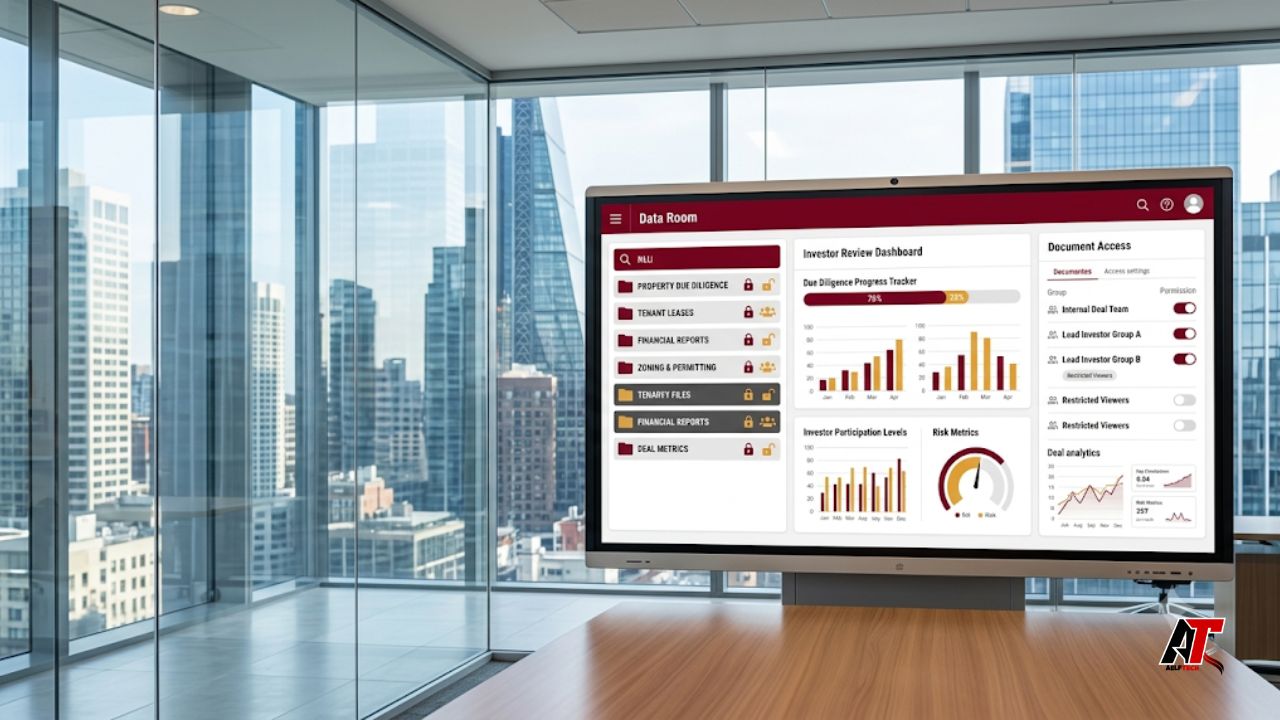
Commercial real estate transactions create a large and sensitive document trail. A single property sale may involve leases, rent rolls, title records, environmental reports, zoning files, building plans, tax documents, operating statements, debt agreements, and investor materials. Portfolio sales and joint ventures add more users and approval steps, making email attachments and basic cloud folders difficult to control.
A virtual data room, often called a VDR, gives the deal team one protected place to organize information and provide controlled access. The right platform can help a seller prepare an asset for market, allow buyers to complete due diligence, support lenders and legal advisers, and give investors a clear review process. It can also record important user activity in an audit trail.
This guide compares leading data room providers for commercial real estate deals, asset sales, and investor review. It focuses on practical fit rather than declaring one provider perfect for every transaction. The best choice depends on deal size, number of bidders, document volume, security requirements, reporting needs, location, and budget.
Why Commercial Real Estate Teams Need a Purpose-Built Data Room
Commercial property deals are different from ordinary file-sharing projects. The information is valuable, the review period is time-sensitive, and access may need to change as bidders move through different stages. A purpose-built data room lets administrators create separate user groups, restrict folders, apply view-only controls, watermark documents, require two-factor authentication, and remove access immediately when a party leaves the process.
A good VDR also improves organization. Administrators can build an index around legal, financial, technical, environmental, leasing, tax, insurance, and property-management records. Reviewers can search files, submit questions, and find newly uploaded material without relying on long email chains. Activity reports can help the sell-side team see which bidders are engaged, which documents are receiving attention, and where the review process is slowing down.
For investor review, the same platform can be used to share offering materials, track engagement, manage follow-up questions, and provide controlled access to financial models or asset-level reports. For recurring transactions, it can support the wider asset lifecycle instead of serving only as a temporary closing folder.
Quick Comparison of Leading Providers
| Provider | Best For | Standout Value |
| iDeals | Balanced deal needs | Usability, permissions, reporting |
| Datasite | Large competitive processes | Enterprise workflow, AI tools, Q&A |
| Intralinks | Institutional and global deals | Governance, collaboration, scale |
| Drooms | European real estate | Property focus, asset lifecycle, EU orientation |
| DealRoom | Buy-side diligence programs | Tasks and documents in one workflow |
| Firmex | Recurring adviser-led deals | Mature VDR and support model |
| SecureDocs | Small to mid-market deals | Fast setup and visible starting price |
Best-fit summary based on common commercial real estate transaction needs.
1. iDeals: Strong All-Round Choice for Secure Property Transactions
For many real estate sponsors, brokers, legal teams, and investment managers, iDeals offers a useful balance of security, usability, document control, and reporting. The platform is designed for due diligence and other confidential transactions, with granular permissions, watermarking, activity tracking, structured Q&A, bulk uploads, and controls over downloading or printing.
That balance makes Ideals a practical option for a single-asset sale, portfolio review, refinancing process, joint venture, or investor diligence exercise. It also suits external reviewers who need a clean interface. Public information from the provider also describes usage-based pricing rather than old-style per-page billing, although every buyer should confirm storage limits, administrator allowances, support terms, and overage rules in writing.
Best fit: Mid-market and enterprise property transactions where the team wants strong controls without making the reviewer experience unnecessarily complex.
2. Datasite: Best Suited to Large, Complex, or Competitive Processes
Datasite is built around high-volume M&A and due diligence workflows. Its platform includes tools for document management, Q&A, audit trails, search, and automated redaction. These capabilities can help with large portfolio sales, competitive auctions, and multi-party reviews.
For commercial real estate teams, Datasite may be attractive when the transaction resembles a major corporate deal: several bidding rounds, large document sets, strict reporting expectations, and a need for hands-on support. Its AI-supported search and redaction may reduce repetitive work, but teams should test these tools on leases, tenant schedules, environmental reports, and scans before relying on them.
Best fit: Institutional sales, complex portfolios, and deal teams that need enterprise-level workflow support and can justify a custom quote.
3. Intralinks: Strong for Institutional Real Estate and Global Collaboration
Intralinks has a long history in virtual data rooms and offers solutions for M&A, fundraising, financing, and real estate. Its real estate materials highlight support for acquisitions, divestments, portfolio management, investor activity, and collaboration with advisers, regulators, and local officials.
The platform is a strong candidate when a transaction crosses borders or involves institutional investors with detailed security and governance requirements. Permission controls and reporting help administrators manage multiple parties and retain a clear activity record. Intralinks may provide more capability than a small property sale requires, so the evaluation should focus on whether its enterprise features match the complexity of the deal.
Best fit: Global investors, real estate funds, REITs, banks, and advisers handling large or regulated transactions.
4. Drooms: A Real Estate-Focused Option for European Transactions
Drooms has a clear focus on real estate, due diligence, asset management, and transaction readiness. Its platform supports organized property documentation, granular permissions, real-time activity reporting, and AI-assisted tasks such as document categorization, redaction, search, and translation. Drooms also provides structured real estate indexes for a more consistent room.
This provider may be particularly relevant for European property transactions, where data location, privacy expectations, and GDPR-related review can influence the buying decision. It can also suit owners that want to maintain asset documents between transactions instead of rebuilding a room from the beginning each time.
Best fit: European real estate firms, recurring asset sales, cross-border reviews, and teams that value property-specific document structure.
5. DealRoom: Useful When Diligence Tasks and Documents Must Stay Connected
DealRoom combines virtual data room functions with due diligence and project-management workflows. The platform links requests, responsibilities, comments, and documents within one workspace.
That approach can help acquisitions teams and internal deal leads manage open items across legal, financial, tax, technical, and commercial workstreams. It may be especially useful when the buyer needs to coordinate many specialists and wants visibility into what has been requested, answered, reviewed, or delayed. For a simple sell-side room, the extra workflow features may be more than necessary.
Best fit: Buy-side teams, active acquisition programs, and organizations that want diligence management and secure document sharing in one platform.
6. Firmex: Reliable for Repeated Deals and Adviser-Led Processes
Firmex is a purpose-built data room used for due diligence, M&A, financing, compliance, litigation, and other confidential projects. Its real estate offering emphasizes document sharing for asset management, financing, debt arrangements, transactions, and investor access.
The platform is worth considering for law firms, advisers, lenders, and property companies that open rooms regularly and need dependable support. Its core offering covers permissions, document organization, user tracking, and secure external collaboration. As with other quote-based providers, compare contract length, storage, support, archival access, and the cost of extending a delayed transaction.
Best fit: Frequent dealmakers and professional-services teams that value a mature platform and ongoing support.
7. SecureDocs: Straightforward Setup and More Visible Pricing
SecureDocs focuses on simplicity, quick setup, and transparent flat-fee pricing. Its public site currently advertises a starting price that includes unlimited users and documents, along with support. The platform includes role-based permissions, dynamic watermarking, NDAs, audit logs, dashboards, Q&A, and room archiving.
This can make SecureDocs appealing to smaller sponsors, owner-operators, and mid-market teams that want to launch a room without a long enterprise sales process. Unlimited usage, however, should not be the only deciding factor. Buyers should still test file preview quality, support response, export options, permission controls, and performance with large plans, scans, spreadsheets, or technical files.
Best fit: Smaller and mid-market deals where fast deployment, predictable pricing, and uncomplicated administration are priorities.
How to Choose the Right Provider for Your Deal
Start with the transaction rather than the software brand. Estimate the number of properties, expected storage, external users, bidder groups, administrators, and months the room may remain open. A large portfolio needs a different setup from a single stabilized asset with a limited buyer list.
Next, map access rules before requesting demonstrations. Decide whether bidders should see the same documents, whether lenders need separate folders, whether personally identifiable information must be redacted, and whether downloads should be disabled during early stages. Ask each provider to demonstrate these exact workflows instead of giving a general sales presentation.
Reporting is also important. Sell-side teams may want bidder engagement data, while compliance and legal teams may care more about complete audit logs and defensible exports. Investor-relations teams may need simple dashboards that show which users have reviewed key materials. Confirm how long activity data remains available after closing.
Finally, compare the total deal cost. Ask about setup fees, storage, additional administrators, external users, support, redaction, archive copies, contract extensions, and overages. A low quote can become expensive when a deal runs longer or document volume grows.
Essential Features for Commercial Real Estate Due Diligence
A commercial real estate data room should provide more than encrypted storage. At minimum, look for granular folder permissions, two-factor authentication, watermarking, audit logs, reliable document preview, bulk upload, full-text search, Q&A, version control, and an easy archive process.
Real estate teams should also test large Excel rent rolls, scanned leases, engineering reports, environmental files, photographs, plans, and other non-standard documents. Some browser viewers handle these formats better than others. Mobile access can help senior reviewers, but it should not weaken security or make sensitive files easy to save elsewhere.
A clear index is equally important. Common sections include corporate and ownership documents, title and survey, zoning and permits, leases and tenant correspondence, rent rolls, historical operating statements, budgets, tax records, insurance, environmental reports, building-condition reports, service contracts, litigation, financing, and closing materials. Consistent file names and visible dates reduce confusion and repeated questions.
Questions to Ask During a VDR Demo
Ask the provider to show how quickly an administrator can create user groups, change permissions, revoke access, publish answers, replace a document, and export a full record after closing. Request a sample archive and confirm whether it includes the folder structure, files, Q&A history, permissions, and activity logs.
Also ask where data is hosted, what security certifications apply to the service, how backups are handled, and what happens when the subscription ends. Confirm support hours and escalation procedures, especially if bidders will be working across time zones. If AI features are included, ask whether customer data is used to train models, where processing occurs, and how results can be checked by a human reviewer.
A short pilot using real but non-sensitive sample documents is often more useful than a feature checklist. Invite a few internal users and advisers, upload typical files, and complete a small mock review. The best provider is usually the one that protects the information while creating the least friction for administrators and serious reviewers.
Final Verdict
The top data room providers for commercial real estate serve different needs. iDeals is a strong all-round option, Datasite and Intralinks suit complex institutional transactions, Drooms stands out for European real estate workflows, DealRoom connects diligence tasks with documents, Firmex supports repeated adviser-led processes, and SecureDocs offers a simpler route with visible starting pricing.
Do not choose a VDR only because it is well known or inexpensive. Match the provider to the deal, test the reviewer experience, verify security and data terms, and obtain a complete written price. The team at aelftech.com recommends treating the data room as part of the transaction strategy: good structure, controlled access, responsive Q&A, and clean reporting can make due diligence easier for every serious party while reducing avoidable risk.
Leave a Reply