
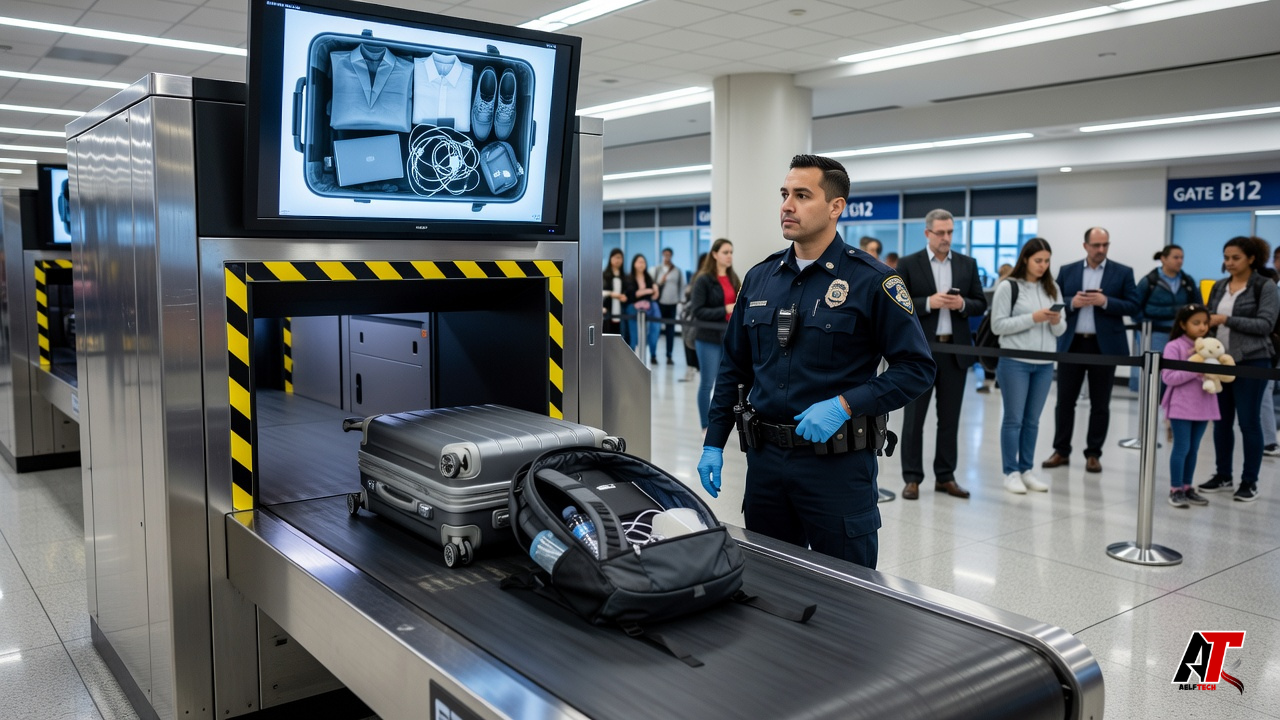
Securing public transit hubs and critical infrastructure requires sophisticated non-invasive inspection technology. The deployment of a baggage scanner machine allows security personnel to view the internal contents of luggage without manual searches. Furthermore, these systems utilize advanced x-ray imaging to identify concealed threats like explosives or weapons. Therefore, understanding the underlying mechanics and operational capabilities of these machines highlights their critical role in modern security infrastructures.
The Evolution of the baggage scanner machine
Historically, security personnel relied on manual bag checks, which created massive bottlenecks and missed concealed items. The introduction of x-ray screening revolutionized this process. A modern baggage scanner machine generates a continuous beam of x-rays that passes through the luggage on a conveyor system. As the radiation exits the bag, sensors capture the data and translate it into a projected image. Consequently, operators can instantly identify dense or suspicious objects. Thus, automated screening drastically improved both security and operational efficiency.
Dual-Energy X-Ray Technology in a baggage scanner machine
Early systems produced simple grayscale images, making it difficult to distinguish between organic and inorganic materials. Today, a standard baggage scanner machine utilizes dual-energy x-ray technology. This system fires two distinct x-ray energy levels through the object simultaneously. By measuring how different materials absorb these varying energy levels, the computer assigns atomic numbers to the contents. Consequently, the system color-codes the image, typically highlighting organic materials in orange, inorganic materials in blue, and metals in green. Therefore, operators can rapidly isolate potential explosive precursors, which are typically organic.
Modern Threat Detection Capabilities of a baggage scanner machine
The sheer volume of passengers passing through an airport security checkpoint demands rapid and highly accurate screening. Human operators face fatigue and cognitive overload when viewing thousands of bag images daily. To combat this, the baggage scanner machine integrates automated threat detection algorithms. These software overlays continuously scan the generated image against a database of known threat signatures. Therefore, if the system detects a shape or density resembling a firearm or improvised explosive device, it triggers an immediate alarm. Consequently, automated systems reduce reliance on human vigilance alone.
Automated Threat Detection Algorithms and AI
Artificial intelligence has deeply penetrated the security screening industry. Machine learning models train on millions of x-ray images, learning to identify complex threat geometries that might fool a human eye. A modern baggage scanner machine equipped with AI can differentiate between a hair dryer and a concealed weapon based on subtle internal component arrangements. Furthermore, the AI continuously learns from new data, adapting to emerging threat designs. Thus, AI-driven detection significantly lowers the false alarm rate while increasing true positive identifications.
Computed Tomography in the baggage scanner machine
Traditional projection x-rays flatten a three-dimensional object into a two-dimensional image. Objects overlap, obscuring critical details. To solve this, manufacturers introduced Computed Tomography (CT) to the baggage screening market. A CT baggage scanner machine rotates an x-ray source around the luggage, capturing hundreds of angular scans. The software then reconstructs these slices into a highly detailed 3D model. Consequently, operators can rotate the image, slice through it, and strip away obscuring layers. Therefore, CT technology represents the gold standard in explosive detection systems.
3D Imaging and Explosive Detection Systems
Regulatory bodies like the Transportation Security Administration mandate strict certification for Explosive Detection Systems (EDS). A CT baggage scanner machine meets these stringent requirements by not only visualizing the shape of an object but analyzing its effective atomic number and density. This allows the machine to automatically detect sheet explosives or liquid threat materials concealed within complex electronics. Furthermore, the 3D rendering allows operators to clear bags remotely on dedicated workstations, keeping the physical checkpoint moving efficiently. Thus, CT imaging streamlines the alarm resolution process.
Operational Workflows at the Security Checkpoint
The effectiveness of a baggage scanner machine relies heavily on its integration into the broader security checkpoint workflow. The conveyor system must maintain a steady feed rate to ensure the x-ray image renders correctly without distortion. If a bag stops mid-tunnel, the system must safely terminate the x-ray beam to prevent overexposure. Furthermore, the physical design of the machine includes heavy lead shielding to contain scattered radiation. Therefore, the mechanical and radiological safety features are just as critical as the imaging software. Consequently, operators must undergo rigorous training to manage the physical hardware properly.
Conveyor Systems and Throughput Optimization
Maximizing passenger throughput without compromising security is the primary goal of any transit hub. High-speed conveyor systems feed bags into the scanner at precise intervals. Modern baggage scanner machine networks utilize divestment belts, where passengers unload their items, and post-scan belts, where cleared items are returned. If a machine flags a bag, automated diversion gates route the luggage to a secondary search station without halting the main queue. Thus, automated material handling ensures continuous passenger flow during peak travel times.
Health and Safety Standards for a baggage scanner machine
The use of ionizing radiation in public spaces requires strict regulatory oversight. A baggage scanner machine must comply with international radiation safety standards. The x-ray dose emitted per scan is incredibly low, ensuring it does not damage film, electronics, or biological tissues. Furthermore, the systems feature redundant safety interlocks. If a cabinet door opens during operation, the interlock immediately cuts power to the x-ray generator. Therefore, operators and the public remain shielded from radiation exposure. Consequently, routine radiological surveys ensure the machine maintains its structural integrity over years of continuous use.
Radiation Shielding and Operator Safety
Lead-lined tunnels and displays keep scattered radiation well below occupational exposure limits. Operators sit at monitors located several feet from the actual x-ray source. The primary occupational hazard for security personnel is not radiation, but rather musculoskeletal strain from lifting heavy bags. Modern baggage scanner machine designs feature ergonomic conveyor heights to minimize lifting injuries. Thus, holistic safety design encompasses both radiological protection and physical ergonomics.
Implementing a baggage scanner machine in Diverse Environments
While airports are the most visible deployment sites, the baggage scanner machine serves critical roles across various sectors. Correctional facilities utilize these machines to screen incoming inmate property for contraband. Courthouses deploy smaller footprint scanners to inspect briefcases and purses entering the building. Furthermore, corporate headquarters and critical infrastructure sites, like power plants, use them to screen incoming mail and deliveries. Therefore, the scalability of the technology allows it to secure environments of any size. Consequently, selecting the right machine depends on the specific threat profile and spatial constraints of the facility.
Airport Security vs. Critical Infrastructure Screening
An airport requires a massive, high-throughput baggage scanner machine capable of processing thousands of bags an hour, often featuring tandem x-ray tunnels. Conversely, a critical infrastructure site might use a smaller cabinet x-ray system to inspect incoming packages. The software calibration also differs; a courthouse might prioritize firearms and knives, while an airport must prioritize liquid explosives and IED components. Thus, operators configure threat libraries to match the specific operational environment.
The Future of the baggage scanner machine
The security landscape constantly evolves as threat actors develop novel concealment techniques. The future of the baggage scanner machine lies in networked, data-driven screening. Future checkpoints will network multiple scanners together, sharing threat data in real time. If a scanner at one terminal detects a novel threat, the system will push that threat signature to all machines across the facility. Furthermore, biometric integration will link the scanned baggage directly to the passenger’s digital identity token. Therefore, if a threat is detected, the system instantly identifies and locates the passenger who divested the bag. Consequently, networked intelligence transforms isolated machines into a cohesive security web.
Machine Learning and Adaptive Screening
Next-generation algorithms will move beyond rigid threat libraries. Adaptive screening will analyze the baseline content of standard luggage. If a bag deviates significantly from the statistical norm for a given passenger profile, the system will flag it for further review, even if it does not match a known threat shape. This behavioral approach to x-ray analysis ensures the system catches unprecedented threats. Thus, the baggage scanner machine transitions from a simple imaging device to a predictive security analytics platform.
FAQs
1. What is a baggage scanner machine used for?
It uses x-ray technology to non-invasively inspect the internal contents of luggage for concealed weapons, explosives, and contraband at security checkpoints.
2. How does dual-energy x-ray technology work in a baggage scanner machine?
It fires two different x-ray energy levels to calculate the atomic numbers of materials, allowing the system to color-code organic and inorganic items on the monitor.
3. What is the difference between a standard x-ray and a CT baggage scanner machine?
Standard x-rays create a 2D image where objects overlap, while CT scanners rotate around the bag to create a 3D model that operators can slice through and rotate.
4. Can a baggage scanner machine detect liquid explosives?
Yes, modern CT-based machines analyze the density and atomic number of liquids, automatically flagging them as potential explosive precursors.
5. Is the radiation from a baggage scanner machine dangerous?
No, the machines emit a highly controlled, extremely low dose of radiation that is safe for electronics, biological tissues, and the general public.
6. Do baggage scanner machines use artificial intelligence?
Yes, modern machines integrate AI and machine learning algorithms to automatically identify complex threat geometries and reduce operator fatigue.
Conclusion
The security of modern transit hubs and critical infrastructure relies heavily on advanced screening technology. The modern baggage scanner machine has evolved from a basic projection imager into a highly sophisticated, AI-driven threat detection platform. By leveraging dual-energy x-rays, computed tomography, and automated algorithms, these machines ensure high-throughput screening without compromising safety. Furthermore, strict radiological standards and ergonomic designs protect both the public and security personnel. As threat vectors continue to adapt, networked intelligence and machine learning will drive the next generation of security checkpoints. Ultimately, continuous innovation in baggage screening technology remains vital for safeguarding global travel and critical assets.
Leave a Reply