
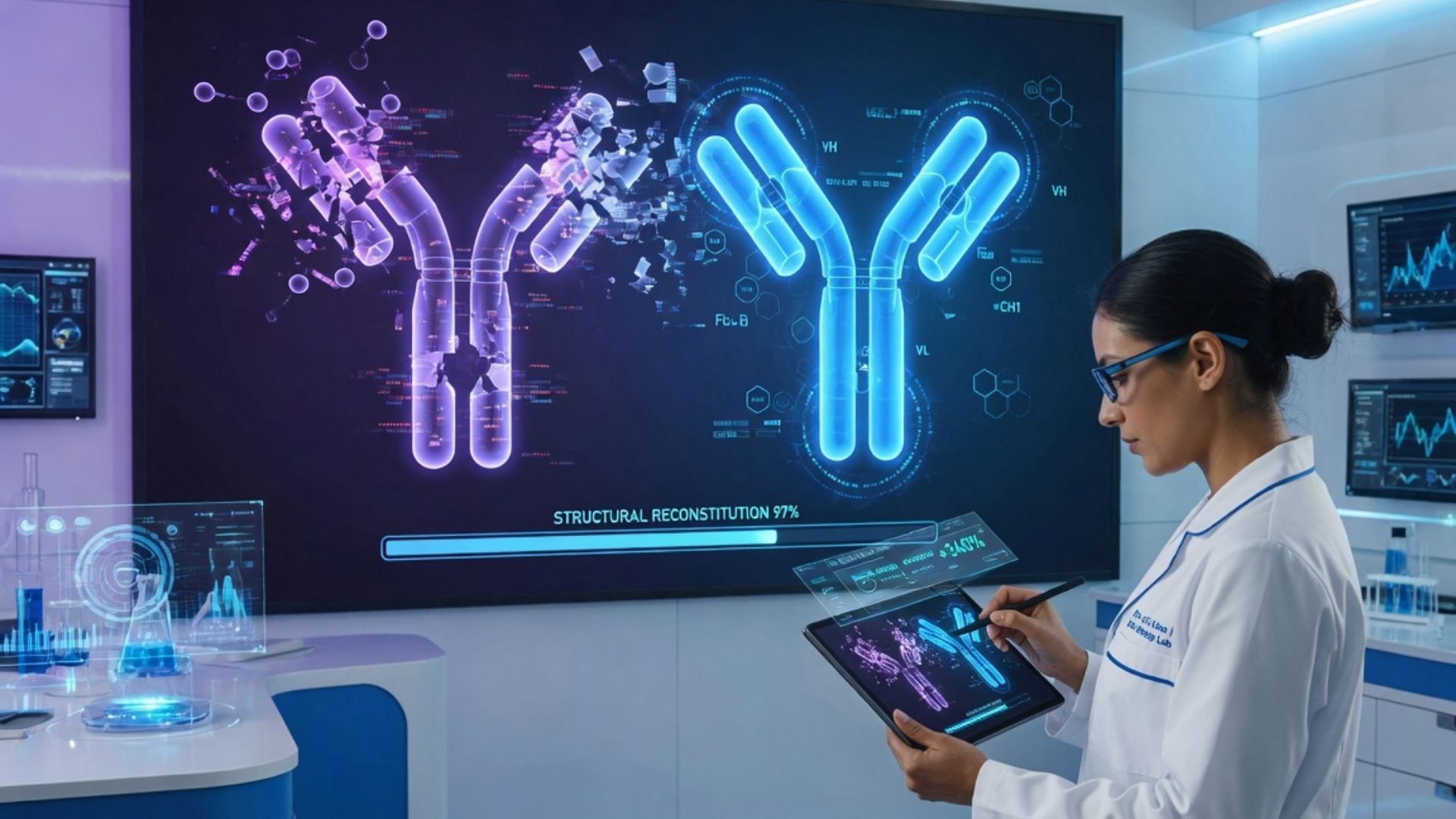
The development of monoclonal antibodies has fundamentally altered the landscape of modern medicine. These treatments offer highly targeted interventions for oncology, autoimmune disorders, and infectious diseases. However, the most potent antibodies discovered through traditional hybridoma technologies in mice are inherently foreign to the human body. When doctors administer these murine proteins to patients, the immune system recognizes them as invasive threats. Consequently, the body mounts a dangerous defense that can neutralize the drug and cause severe toxicities. To overcome this critical barrier, biopharmaceutical developers must utilize an Antibody Humanization Service. Specifically, this specialized biotherapeutic engineering process meticulously transforms non-human antibodies into human-compatible molecules. As a result, it dramatically reduces immunogenicity while rigorously preserving the antigen-binding affinity that makes the drug effective. Ultimately, this blueprint explores the complex science, strategic methodologies, and profound clinical advantages of antibody humanization. Therefore, it provides a comprehensive guide for researchers and developers seeking to accelerate their therapeutic pipelines and secure regulatory approval.
The Critical Need for an Antibody Humanization Service
The journey from antigen discovery to a commercially viable biologic is fraught with complex biological and regulatory hurdles. Notably, the most significant of these hurdles is the biological incompatibility between non-human proteins and the human immune system. When a foreign antibody enters the bloodstream, it acts as a red flag. Consequently, it triggers an immune cascade that can endanger the patient and destroy the therapeutic’s efficacy. Fortunately, an antibody humanization service provides the essential bridge across this gap. It utilizes advanced protein engineering to cloak the non-human antibody in a human-like molecular structure. Thus, it effectively evades immune surveillance and ensures the drug can safely reach its target.
Avoiding the Hidden Dangers of Immunogenicity
Immunogenicity refers to the propensity of a therapeutic agent to provoke an unwanted immune response. In the context of murine monoclonal antibodies, this often manifests as the Human Anti-Mouse Antibody (HAMA) response. When a patient develops HAMA, the immune system rapidly clears the drug from circulation. As a result, the treatment becomes completely ineffective. More dangerously, the resulting immune complexes can deposit in tissues. Consequently, this causes severe hypersensitivity reactions, serum sickness, and even anaphylaxis. By employing a professional antibody humanization service, developers can systematically identify and modify the immunogenic epitopes within the antibody sequence. Therefore, this proactive deimmunization is critical for patient safety. Furthermore, it stands as a non-negotiable requirement for regulatory agencies like the FDA and EMA, who scrutinize anti-drug antibody (ADA) profiles intensely during clinical trials.
From Murine Origins to Human-Compatible Therapeutics
The evolution of therapeutic antibodies has been a story of continuous refinement. Initially, early chimeric antibodies spliced murine variable regions onto human constant regions. This reduced immunogenicity compared to fully murine models. However, they still triggered significant immune reactions because the entire variable framework remained foreign. Ultimately, the true breakthrough came with the advent of humanized antibodies. These advanced molecules retain only the ultra-specific antigen-binding loops from the mouse while utilizing a complete human framework. Consequently, this paradigm shift has made antibody humanization a cornerstone of modern biotherapeutics. It allows developers to leverage the robust immune responses generated in animal models. At the same time, it ensures the final therapeutic product is highly compatible with the human body.
The Core Science Behind Antibody Humanization Service
Antibody humanization is a meticulous, multi-disciplinary process. It requires a profound understanding of structural biology, immunology, and computational protein design. Importantly, the objective is not simply to swap non-human sequences for human sequences. Instead, scientists must do so in a way that preserves the delicate three-dimensional folding of the antigen-binding site. Even a minor disruption to this folding can result in a catastrophic loss of affinity. Therefore, the therapeutic becomes useless. Consequently, the science behind humanization is a delicate balancing act between maximizing human content and maintaining molecular function.
CDR Grafting: The Foundational Technique
The most widely utilized and foundational technique in an antibody humanization service is Complementarity-Determining Region (CDR) grafting. Specifically, the variable region of an antibody contains six hypervariable loops—three on the heavy chain and three on the light chain—known as CDRs. These loops form the physical pocket that directly interacts with the target antigen. Meanwhile, the surrounding framework regions act as the structural scaffolding that holds the CDRs in their precise orientation. In CDR grafting, scientists excise the CDRs of the non-human antibody and transplant them onto a carefully selected human framework region. While this drastically reduces the murine content of the antibody, it often results in a significant loss of binding affinity. This happens because the original non-human framework provided specific, subtle structural support to the CDRs that the new human framework lacks.
Framework Region Optimization and Vital Back-Mutations
To overcome the affinity loss associated with CDR grafting, an expert antibody humanization service must employ framework region optimization. This involves identifying key residues in the original non-human framework that maintain the structural conformation of the CDRs. This region, often referred to as the vernier zone, underlies the CDRs and dictates their spatial orientation. If developers replace these critical vernier zone residues with human counterparts, the CDRs can shift out of alignment. To rescue the binding affinity, scientists introduce back-mutations. Specifically, they selectively revert specific human framework residues back to the original murine amino acids. By carefully selecting which framework residues to mutate back, scientists can restore the precise structural support required by the CDRs. This requires sophisticated structural modeling and a deep understanding of protein-protein interactions. Ultimately, it ensures the final humanized antibody maintains its therapeutic potency without reintroducing severe immunogenicity.
5 Proven Steps in an Antibody Humanization Service Workflow
A high-quality humanization project follows a rigorous, structured workflow. This workflow mitigates risk and ensures the final product meets stringent therapeutic standards. From the initial sequence analysis to the final biophysical validation, developers carefully orchestrate every step to balance human content with antigen-binding affinity. Understanding this workflow allows developers to set realistic expectations. Furthermore, it helps them collaborate effectively with their service provider.
Step 1: Sequence Analysis and Structural Modeling
First, the antibody humanization service begins with the comprehensive bioinformatic analysis of the parental antibody sequence. Structural biologists analyze the sequence to identify the optimal human germline acceptor frameworks. Importantly, the chosen human framework must be highly homologous to the non-human framework. This is especially true for the canonical structures that dictate CDR loop conformation. Next, scientists utilize advanced computational tools, including homology modeling and molecular dynamics simulations, to predict how the CDRs will behave on the new human framework. This in silico modeling is crucial for identifying potential structural clashes. Moreover, it helps plan the necessary back-mutations before any wet-lab work begins, saving invaluable time and resources.
Step 2: In Silico Immunogenicity Assessment and Deimmunization
Second, once engineers design a preliminary humanized sequence, they must rigorously screen it for potential T-cell epitopes. T-cell epitopes are short peptide sequences that MHC class II molecules can present. Consequently, they activate T-cells and trigger an immune response. Therefore, an antibody humanization service will use sophisticated in silico immunogenicity prediction tools to scan the humanized sequence for these dangerous epitopes. If researchers identify high-risk epitopes, they employ protein engineering techniques to mutate the offending residues without disrupting the overall antibody structure. Ultimately, this proactive deimmunization ensures the highest possible safety profile for the therapeutic candidate before it enters in vivo testing.
Step 3: CDR Grafting and Framework Engineering
Third, with the computational groundwork laid, the actual molecular engineering begins. Scientists synthesize the CDRs of the original non-human antibody and graft them onto the selected human framework. Based on the structural modeling from Step 1, they introduce the necessary back-mutations in the vernier zone. This ensures the CDR loops maintain their correct spatial orientation. However, this is a highly iterative process. Researchers generate multiple variants—often ranging from five to fifteen different combinations of back-mutations. They do this to test which structural configuration best restores the original binding affinity. As a result, this careful engineering ensures the humanized antibody retains its therapeutic potency.
Step 4: Affinity Maturation and Preclinical Validation
Fourth, even with the most advanced computational design, CDR grafting and back-mutations often result in some degree of affinity loss. To address this, the humanization workflow frequently includes affinity maturation. This involves generating libraries of antibody variants with targeted mutations in the CDRs. Then, scientists screen them using display technologies such as phage display or yeast display. The goal is to identify variants that not only retain the original binding affinity but in some cases improve it. Once researchers select the optimal humanized variant, it undergoes rigorous preclinical validation. This includes binding assays, functional cell-based assays, and preliminary pharmacokinetic studies. Consequently, these tests confirm the antibody behaves as expected in a biological environment.
Step 5: Biophysical Characterization and Cell Line Development
Fifth, the final step in the antibody humanization service is ensuring the humanized molecule is manufacturable. After all, a brilliant therapeutic is useless if manufacturers cannot produce it at scale. Therefore, the humanized antibody undergoes extensive biophysical characterization. Scientists assess thermal stability, aggregation propensity, and expression yield. Aggregation can not only reduce efficacy but also increase immunogenicity. Thus, developers must strictly control it. Once engineers confirm a stable, high-yielding variant, they optimize the sequence for expression. Then, they transfer it into a mammalian cell line, typically Chinese Hamster Ovary (CHO) cells, for large-scale manufacturing development. Ultimately, this step ensures a seamless transition from the laboratory bench to commercial production.
Unmatched Benefits of a Professional Antibody Humanization Service
Partnering with a specialized service provider offers immense value to drug developers. The humanization process is not merely a technical exercise. Instead, it represents a critical regulatory and commercial strategy. By optimizing the antibody sequence early in the development pipeline, companies can avoid costly clinical failures and accelerate their time to market. Furthermore, the benefits of professional humanization extend far beyond simple sequence modification. Specifically, they encompass safety, efficacy, pharmacokinetics, and overall commercial viability.
Dramatically Reducing Anti-Drug Antibody Responses
Undoubtedly, the most immediate and profound benefit of an antibody humanization service is the dramatic reduction in immunogenicity. By replacing the majority of the non-human protein sequence with human components, the likelihood of triggering an ADA response drops significantly. Consequently, this translates to a much safer drug profile, reducing the incidence of infusion reactions and hypersensitivity. Furthermore, lowering immunogenicity is critical for maintaining the long-term efficacy of the drug. This is especially true for chronic conditions that require repeated dosing over months or years. Often, patients who develop ADAs lose responsiveness to treatment. Therefore, preventing this response is paramount for both patient outcomes and the commercial success of the therapeutic.
Enhancing Pharmacokinetics and Preclinical Development
Frequently, the human reticuloendothelial system recognizes and clears non-human antibodies, leading to a very short serum half-life. By contrast, humanized antibodies can effectively interact with the human neonatal Fc receptor (FcRn). This receptor is responsible for recycling antibodies and extending their half-life in the bloodstream. By utilizing an antibody humanization service, developers ensure their therapeutic benefits from this natural recycling mechanism. As a result, they achieve vastly improved pharmacokinetics. A longer half-life means less frequent dosing. Consequently, this improves patient compliance, reduces healthcare costs, and ultimately enhances the therapeutic efficacy of the drug throughout preclinical development and clinical trials.
Choosing the Right Antibody Humanization Service Provider
The success of a therapeutic antibody program hinges on the expertise of the humanization team. With numerous providers available, selecting the right partner requires careful consideration of their technical capabilities, track record, and approach to problem-solving. Unfortunately, a suboptimal humanization strategy can lead to poor affinity, high immunogenicity, and costly project delays. Therefore, the selection process becomes a critical strategic decision.
Proven Expertise in Protein Engineering and Antibody Discovery
When evaluating a provider, look for a team with deep, cross-functional expertise in antibody discovery and protein engineering. Ideally, the service provider will have a proven track record of successfully humanizing antibodies across a variety of therapeutic modalities and target classes. They should demonstrate a clear understanding of the complex interplay between framework regions and CDR loops. Moreover, they must have a robust methodology for identifying and implementing critical back-mutations. Their experience in antibody discovery ensures they can seamlessly integrate humanization into the broader drug development lifecycle. As a result, they can anticipate downstream manufacturing and regulatory challenges.
AI-Driven Optimization and Computational Power
Currently, the field of antibody engineering is rapidly evolving. Thus, the most effective antibody humanization service providers are those who leverage cutting-edge computational tools. Look for providers that utilize artificial intelligence, machine learning, and advanced molecular dynamics simulations to guide their design decisions. For instance, AI-driven optimization can rapidly analyze vast libraries of human frameworks. It can also predict the structural consequences of mutations and identify the most promising humanization strategies with unprecedented accuracy. Consequently, this computational approach significantly reduces the time and cost associated with traditional empirical screening. Ultimately, it accelerates the path from concept to clinical candidate.
The Future of Antibody Humanization Service and Therapeutic Development
As the biopharmaceutical landscape continues to evolve, the demand for highly sophisticated humanization strategies will only increase. Notably, the rise of novel antibody formats presents new challenges for protein engineering. Bispecific antibodies, antibody-drug conjugates (ADCs), and CAR-T cell therapies all require an even more nuanced approach to humanization. After all, the introduction of non-native linkers and fusion partners can create novel immunogenic epitopes. Therefore, the next generation of antibody humanization services will rely heavily on predictive AI and high-throughput structural validation. By doing so, they will tackle these challenges effectively, ensuring that the biotherapeutics of tomorrow remain as safe and effective as possible.
Conclusion
Navigating the complex transition from a non-human lead candidate to a clinically viable therapeutic requires precision, expertise, and advanced computational capabilities. Fortunately, a dedicated Antibody Humanization Service provides exactly that. By systematically reducing immunogenicity through CDR grafting, framework optimization, and rigorous in silico assessment, this essential process ensures that biotherapeutics are safe, effective, and capable of reaching the patients who need them most. As the biopharmaceutical industry continues to push the boundaries of molecular engineering, partnering with the right humanization experts will remain a critical determinant of success in therapeutic antibody development.
Frequently Asked Questions (FAQs)
1. What is an Antibody Humanization Service?
An Antibody Humanization Service is a specialized biotherapeutic offering that modifies non-human antibodies to resemble human antibodies, drastically reducing immunogenicity while preserving target-binding affinity.
2. Why is CDR grafting important in antibody humanization?
CDR grafting is the core technique where scientists transplant the antigen-binding regions of a non-human antibody onto a human framework, eliminating the majority of the foreign protein content.
3. Does humanizing an antibody reduce its binding affinity?
Initial CDR grafting can reduce affinity, but a professional service restores it through careful framework back-mutations and affinity maturation techniques, often matching or exceeding the original binding strength.
4. How does antibody humanization reduce immunogenicity?
By replacing non-human framework regions with human sequences and removing T-cell epitopes, humanization prevents the patient’s immune system from recognizing the therapeutic as a foreign invader, thereby lowering the risk of anti-drug antibodies.
5. What is the difference between chimeric and humanized antibodies?
Chimeric antibodies combine entire murine variable regions with human constant regions, while humanized antibodies retain only the specific antigen-binding loops from the mouse, making them significantly less immunogenic.
6. How long does the antibody humanization process take?
Depending on the complexity of the antibody and the need for affinity maturation, the complete humanization and validation workflow typically takes anywhere from three to six months.!
Leave a Reply