
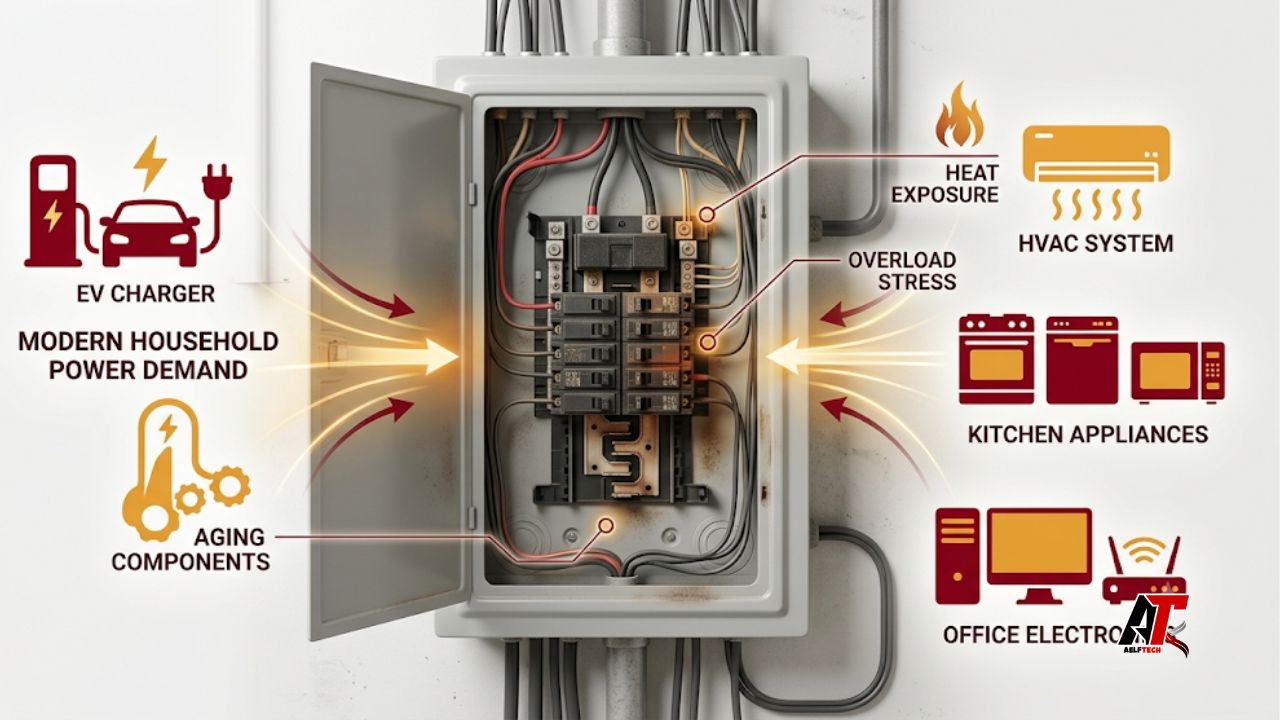
A breaker panel is the heart of a building’s electrical system. It takes power from the utility line and sends it to the circuits that run lights, outlets, appliances, and equipment. When the panel is healthy, power moves through it with stable connections and minimal resistance. As a result, the system works safely and reliably.
However, aging breaker panels do not stay in the same condition forever. Over time, normal electrical wear, long-term heat exposure, dust, moisture, and heavy daily use can slowly reduce performance. In many homes, that problem becomes more noticeable because today’s electrical demand is much higher than it was when older panels were first installed.
This article explains why aging breaker panels become less efficient, what warning signs to watch for, and when repair or replacement makes the most sense. It is written in a simple, practical way so homeowners, property managers, and business owners can understand the issue without getting lost in technical language.
What “Less Efficient” Means in a Breaker Panel
In this topic, efficiency does not mean a breaker panel works like a machine that burns extra fuel. Instead, it refers to how well the panel distributes electricity. A good panel should pass current through tight, clean, and low-resistance connections. It should also keep breakers stable under normal load and trip correctly when there is a fault.
When a panel becomes less efficient, small amounts of energy are lost as heat at weak connection points. In addition, voltage delivery can become less stable, breakers may trip more often, and components may wear out faster. In short, the system has to work harder to do the same job.
1) Electrical Wear Slowly Damages Internal Parts
Every breaker panel experiences wear. Each time a breaker handles a load, interrupts a fault, or even sits under regular electrical stress, its internal parts age a little. That process is normal. Still, after many years, the wear can become significant.
For example, breaker contacts can become pitted or oxidized. Spring tension inside a breaker can weaken. Terminal screws may loosen slightly because of vibration, repeated heating and cooling, or years of service. Once that happens, the connection is no longer as firm as it should be. Consequently, electrical resistance goes up.
Higher resistance creates more heat. More heat then causes even more wear. This is why old panels often decline slowly instead of failing all at once. At first, the signs may seem minor. Later, the damage can become serious.
Another important point is that wear is not always visible from the outside. A breaker handle may look fine even when the contact behind it is damaged. Likewise, a panel cover can appear normal while hidden hotspots are forming inside. That is why a proper inspection matters.
2) Heat Exposure Speeds Up Deterioration
Heat is one of the biggest enemies of electrical equipment. Even a well-installed panel produces some heat during normal operation. However, that heat should stay within safe limits. When a panel is old, overloaded, poorly ventilated, or affected by loose connections, internal temperatures can rise too much.
Once extra heat builds up, materials begin to age faster. Insulation can become brittle. Plastic parts can discolor or warp. Metal components can expand and contract again and again. Over time, that thermal cycling can loosen connections even more. As a result, the panel becomes less reliable and less efficient.
Heat damage also tends to spread. One overheated connection can affect nearby breakers, bus bars, and wiring. Therefore, what starts as a small problem can slowly turn into a wider panel issue if it is ignored.
In practical terms, a warm panel should never be dismissed without a reason. If the cover feels unusually hot, if there is a burning smell, or if you hear crackling sounds, those are warning signs that need immediate professional attention.
3) Modern Power Demand Puts Extra Stress on Old Panels
Many older homes were built for a simpler electrical lifestyle. Years ago, families used fewer kitchen appliances, fewer electronics, and far less heating or cooling equipment. Today, the situation is very different.
Modern buildings often power large refrigerators, microwaves, dishwashers, gaming systems, computers, smart devices, washers, dryers, electric water heaters, and HVAC systems. In addition, some homes now need EV chargers, home offices, and backup power setups. Naturally, this raises the total load on the electrical panel.
If an older panel was designed for a much lighter demand, it may spend long periods operating near its practical limit. Even if it does not fail right away, that constant stress creates more heat and more wear. Over time, the panel can struggle to deliver stable performance.
This is one reason many property owners eventually need upgrades. If a building is adding new circuits or replacing major appliances, it may also need a professional load review. Helpful service options include electrical panel installation services in Clarksville, TN and electrical system upgrade services in Clarksville, TN. These resources are useful for readers who want to compare practical upgrade paths.
4) Common Warning Signs of a Less Efficient Breaker Panel
In many cases, an aging panel gives warnings before a complete failure happens. Therefore, it is smart to notice small symptoms early. Common signs include:
- frequent breaker tripping without a clear explanation
- lights dimming when a large appliance turns on
- buzzing, crackling, or humming near the panel
- a burning smell or signs of scorching
- breakers that feel loose, hot, or hard to reset
- rust, corrosion, or moisture inside or around the panel
- lack of space for new circuits or use of unsafe workarounds
- power fluctuations in outlets or appliances
Not every sign means the entire panel must be replaced. Even so, these symptoms should never be ignored. The earlier the issue is identified, the easier it is to limit damage and reduce safety risk.
5) Why Reduced Efficiency Matters
Some owners think an old panel is acceptable as long as the lights still turn on. Unfortunately, that idea can be risky. A less efficient panel is not just an “older version” of a good panel. In many cases, it is a stressed system that is slowly losing its safety margin.
First, weak connections waste energy as heat. The direct cost may seem small, but the larger problem is the damage that heat causes over time. Second, unstable performance can affect sensitive electronics and important appliances. Third, aging or overloaded equipment may not respond as well during a fault condition, which can increase danger.
In other words, reduced efficiency is often linked with reduced reliability. That is why property owners should treat warning signs seriously rather than waiting for a full breakdown.
6) Inspection and Maintenance Make a Big Difference
A professional inspection is the best way to understand the condition of an aging breaker panel. An electrician can check breaker compatibility, terminal condition, bus bar health, grounding and bonding, service size, and visible signs of overheating or corrosion. In some cases, thermal testing may also help reveal hidden hotspots.
Regular inspection is especially useful in older properties, rental units, and buildings with heavy electrical use. Likewise, it is a smart step after a renovation, appliance upgrade, or any major electrical change.
Homeowners can also help by watching for visible warning signs, keeping the area around the panel clean and dry, and making sure the panel remains easy to access. However, internal work should always be left to a qualified electrician. Panel interiors can contain live parts, even when some breakers are switched off.
7) Repair or Replace?
The right answer depends on the panel’s overall condition. If the issue is limited to one compatible breaker or a small repairable problem, a targeted repair may be enough. On the other hand, replacement is often the better option when the panel shows repeated overheating, corrosion, obsolete parts, limited capacity, or signs of damage on the bus bars or main connections.
Replacement also makes sense when the building’s electrical needs have clearly outgrown the old setup. For example, if the panel is full, if circuits are overloaded, or if future upgrades are planned, installing a modern panel may be the safest long-term choice.
If you want more practical guidance about technology and property systems, you can also visit aelftech.com for helpful updates and information.
8) Benefits of a Modern Panel Upgrade
A modern panel offers more than extra breaker spaces. It can provide stronger and more stable connections, better support for today’s appliances, and easier room for future expansion. In many cases, it also supports improved safety devices and cleaner circuit organization.
Here are a few key benefits of upgrading:
- better support for current household and business loads
- lower risk of heat buildup from weak or aging components
- improved reliability for appliances and electronics
- more circuit space for remodels, additions, or EV charging
- clearer labeling and easier future maintenance
- stronger long-term safety and resale value
Most importantly, an upgrade gives the electrical system a fresh foundation. Instead of relying on tired components, the property can move forward with equipment designed for modern demand.
Frequently Asked Questions
How long does a breaker panel last? There is no single lifespan that fits every panel. Some last for decades, while others develop problems sooner because of heat, moisture, heavy use, poor installation, or limited maintenance.
Can an old breaker panel raise power bills? A panel does not use much power by itself. Still, loose or damaged connections can waste a small amount of energy as heat. More importantly, they create a safety and reliability problem.
Does frequent tripping always mean the breaker is bad? No. Frequent tripping may point to overloads, wiring faults, failing appliances, or a worn breaker. The cause should be tested instead of guessed.
Can I replace a breaker with a higher amp size to stop tripping? No. Breaker size must match the circuit design and wire size. Installing a larger breaker without proper evaluation can create a serious fire hazard.
When should I call an electrician right away? Call immediately if you notice a burning smell, smoke, crackling sounds, melted parts, water inside the panel, repeated trips, or a panel cover that feels hot.
Conclusion
Aging breaker panels become less efficient because electrical wear increases resistance, heat exposure damages materials, and modern power demand places more stress on older equipment. At first, the decline may seem small. However, over time it can lead to nuisance trips, unstable power, hidden overheating, and higher safety risk.
The good news is that these issues can often be spotted before they become emergencies. If your panel shows signs of age, heat, corrosion, limited capacity, or repeated electrical problems, schedule a professional inspection. A well-timed repair or upgrade can protect the system, improve reliability, and support the way modern buildings use power today.
Leave a Reply