
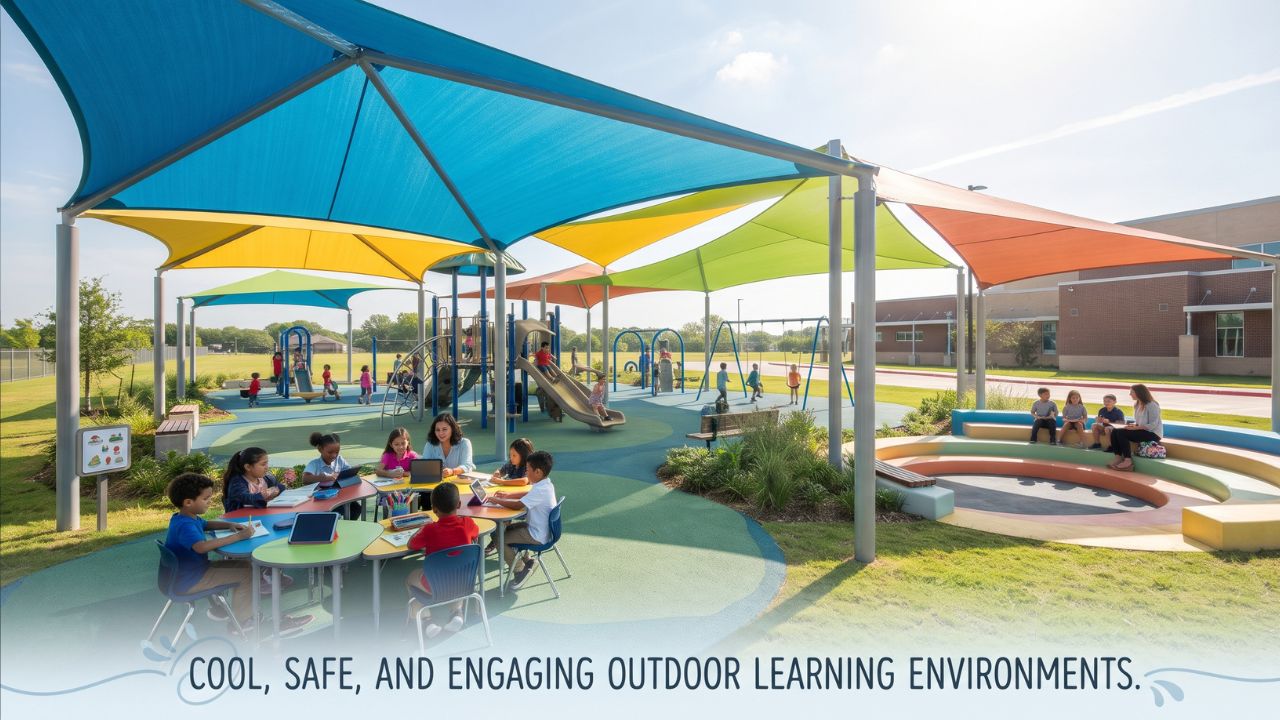
Outdoor play is central to a child’s school day, but from late morning to mid-afternoon, harsh UV radiation and radiant heat can render open yards, courts, and parks uncomfortable and unsafe. Principals, facility managers and councils increasingly rely on engineered canopies to meet their duty of care. Well-designed shade sails for schools, playgrounds, and public areas do more than provide shelter: they lower surface temperatures, protect equipment and extend how grounds are used year-round. Here are seven practical benefits.
1. Reliable Protection Against Harmful UV Radiation
Australia has some of the highest UV levels in the world, and sun damage in childhood raises the risk of skin cancer later in life. Hats and sunscreen remain essential under SunSmart school guidelines, but overhead shade is the main physical barrier at recess, lunch and sport. Quality shade fabrics can block up to 98% of UV radiation, ensuring vital UV protection for students and staff whenever the UV Index reaches 3 or above.
2. Cooler Equipment and Safer Surfaces
Equipment left in full sun can get hot enough to burn skin on contact. Dark wetpour rubber, synthetic turf, metal slides and plastic tunnels absorb solar radiation and can run far hotter than the surrounding air. Overhead playground shade structures block that energy before it reaches the surface, delivering substantial playground surface temperature reduction and keeping equipment comfortable to touch.
3. Longer, More Comfortable Play Sessions
In an unshaded yard, glare and heat exhaust children quickly and send them indoors. Shade creates a cooler microclimate where they can run, climb and socialise for longer. Knitted HDPE shade cloth adds breathable mesh ventilation: hot air escapes through the open knit while breezes pass underneath, keeping areas comfortable even on still afternoons.
4. Shaded Outdoor Classrooms and Dining Areas
Schools are moving lessons into amphitheatres, sensory gardens and decks, but glare and heat often push classes back inside. Tensioned canopies turn underused courtyards into usable outdoor learning spaces and create comfortable shaded zones for lunch and picnics. Councils apply the same approach in parks and reserves, covering seating, barbecue areas and playgrounds.
5. Flexible Designs for Irregular Layouts
Schoolyards are rarely neat rectangles. Trees, swing sets, court run-offs and sloping ground make rigid roofs and bulky pergolas awkward, often forcing columns into active play areas. Custom school shade sails can be made in triangles, squares or overlapping configurations that span large areas with few posts. Steel columns sit outside main running paths, with padded post protectors where needed, and colour can energise play zones or calm sensory gardens.
6. Longer-Lasting Playground Assets
Harsh sunlight steadily degrades school and council infrastructure. UV exposure fades, warps and embrittles plastic slides and panels, dries out timber decking and breaks down rubber soft fall. Shading these assets cuts maintenance costs and extends their service life.
7. Cost-Effective, Long-Term Value
Compared with a steel-framed roof with guttering and stormwater drainage, shade sails cover large areas cost-effectively. Designed to AS/NZS 1170.2 wind-load requirements, using fabrics made to AS 4174 and marine-grade stainless steel hardware on deep footings, they are built for demanding weather. Once posts and footings are in, the fabric canopy can be replaced years later at a fraction of the cost of building a brand-new structure.
Shade Cloth or PVC: Which Sail Suits Your Space?
Most school projects use one of two materials, and the right choice depends on how the space is used.
| Feature | Knitted HDPE shade cloth | Waterproof PVC membrane |
| UV protection | High, with fabric made to AS 4174 | Very high |
| Airflow | Breathable, hot air escapes through the knit | Solid, so ventilation must be designed in |
| Rain cover | Not waterproof | Fully waterproof |
| Heat underneath | Cooler in still conditions | Can feel warmer without airflow |
| Best for | Playgrounds, courts, sandpits, seating | Walkways, lunch hubs, covered learning areas |
| Design needs | Standard tensioning | Engineered drainage falls to prevent pooling |
Shade cloth is typically the optimal fit over active play areas, where airflow and cooler temperatures matter most. PVC suits walkways and lunch hubs that need to stay dry. Many campuses combine both: breathable shade over play areas and waterproof cover over dry paths. Not sure which suits your site? A site assessment covering sun path, drainage and layout shows exactly where each belongs before you commit.
Planning a Safe, Compliant School Shade Project
Good projects start with tracking the sun’s path across morning and afternoon sessions, certified structural engineering and proper groundworks. Engage an experienced commercial builder, and check with your council whether a building permit is required.
About the author: ShadeScape Sails & Structures designs and installs commercial shade structures for schools and public spaces across Melbourne and regional Victoria.
Leave a Reply