
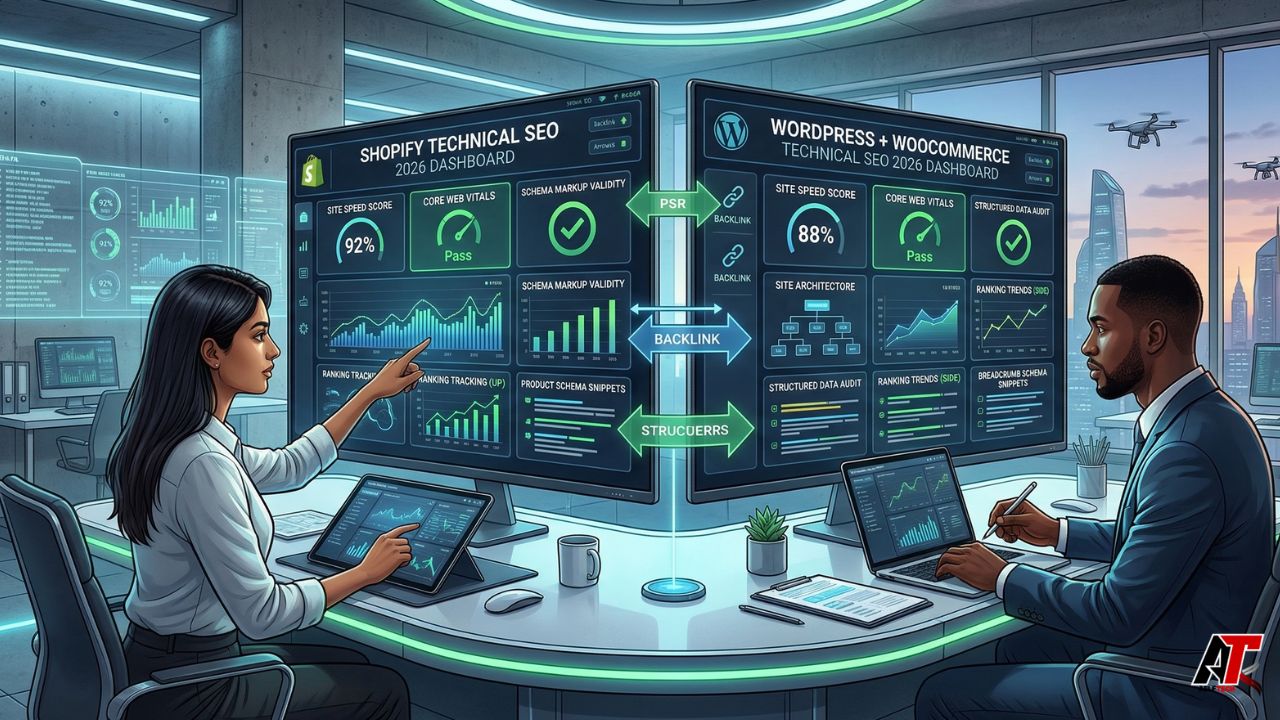
The platform powering your online store shapes more than just your checkout experience—it fundamentally determines how search engines discover, crawl, and rank your products. For ecommerce marketers juggling campaigns, automation, and customer retention, understanding the technical SEO differences between Shopify and WordPress (WooCommerce) isn’t optional anymore. It’s essential for sustainable growth.
Let’s break down what actually moves the needle for rankings in 2026, and how to make the most of whichever platform you’re running.
The Core Technical SEO Battleground
Both Shopify and WooCommerce can rank exceptionally well—but they approach technical SEO from fundamentally different philosophies.
Shopify operates as a managed, hosted solution. Your technical infrastructure is largely handled for you: SSL certificates, server response times, and security patches happen automatically. This predictability is valuable when you’re focused on running campaigns and driving revenue rather than debugging server configurations.
WooCommerce, built on WordPress, offers complete control. You choose your hosting, configure your caching, and manage every aspect of your technical stack. This flexibility is powerful—but it demands ongoing attention and expertise.
The question isn’t which platform is “better” for SEO. It’s which approach aligns with your resources, technical comfort, and growth strategy.
Site Speed: The Non-Negotiable Ranking Factor
Google’s Core Web Vitals remain central to rankings in 2026 with only 48% of mobile pages passing all three metrics, and site speed directly impacts both search visibility and conversion rates.
Shopify’s Advantage: Shopify’s infrastructure is optimized out of the box. Their global CDN delivers assets quickly, and their themes undergo performance reviews. However, you’re somewhat limited in how deeply you can optimize—heavy apps and third-party scripts can still slow things down.
WooCommerce’s Potential: With the right hosting and optimization strategy, WooCommerce sites can achieve exceptional speed scores. But this requires deliberate effort: quality managed hosting, proper caching configuration, image optimization, and careful plugin management.
Actionable Insight: Regardless of platform, audit your site quarterly using Google PageSpeed Insights and Lighthouse. For Shopify, minimize app bloat. For WooCommerce, invest in quality hosting and implement proper caching layers.
URL Structure and Site Architecture
Clean, logical URL structures help search engines understand your content hierarchy and improve crawl efficiency.
Shopify’s Constraint: Shopify enforces a fixed URL structure with mandatory prefixes like /collections/ and /products/. While this creates consistency, you cannot customize these paths. This limitation rarely impacts rankings significantly, but it does reduce flexibility for certain SEO strategies.
WooCommerce’s Flexibility: WordPress allows complete control over permalinks and URL structures. You can create custom taxonomies, optimize category structures, and build exactly the site architecture your SEO strategy requires.
Actionable Insight: For Shopify stores, focus on optimizing what you can control—product titles, collection organization, and internal linking. For WooCommerce, invest time in planning your URL structure before launch, as changes later require careful redirect management.
Schema Markup and Structured Data
Rich results drive click-through ratesRich results drive 82% higher click-through rates according to Google’s data, and proper schema implementation is increasingly important for product visibility.
Shopify’s Approach: Modern Shopify themes include basic product schema automatically. For advanced implementations—FAQ schema, review aggregation, or custom structured data—you’ll typically need apps or theme modifications.
WooCommerce’s Extensibility: WordPress offers numerous schema plugins and complete control over structured data implementation. You can implement exactly the markup your products need, though this requires either plugin configuration or custom development.
Actionable Insight: Validate your schema regularly using Google’s Rich Results Test. Both platforms benefit from ensuring product reviews, pricing, and availability are properly marked up for enhanced search listings.
Crawlability and Indexation Control
Managing how search engines crawl and index your pages prevents duplicate content issues and ensures your most important pages receive proper attention.
Shopify’s Limitations: Shopify’s robots.txt file is system-generated and cannot be fully customized. While Shopify handles most indexation concerns reasonably well, advanced SEO practitioners sometimes find these restrictions limiting—particularly for large catalogs with faceted navigation.
WooCommerce’s Control: Complete access to robots.txt, XML sitemaps, and meta robots directives means you can implement sophisticated crawl management strategies. This control is valuable for stores with thousands of products or complex filtering systems.
Actionable Insight: Monitor your index coverage in Google Search Console monthly. Address crawl errors promptly and ensure your most valuable pages are being indexed while filtered and duplicate pages are properly managed.
The Integration Factor
Technical SEO success depends on more than just platform capabilities—it requires seamless integration with your broader marketing ecosystem.
Both Shopify and WooCommerce integrate with marketing automation platforms that help you capitalize on your organic traffic. When visitors discover your products through search, having robust email and SMS automation in place ensures you capture that interest and convert it into revenue.
For ecommerce marketers evaluating their tech stack, exploring mailchimp alternatives designed specifically for online stores can significantly impact how effectively you monetize your organic traffic. Purpose-built ecommerce platforms offer deeper integration with your store data, enabling more sophisticated automation based on browsing behavior, purchase history, and customer lifecycle stage.
Making Your Platform Work Harder
Regardless of which platform powers your store, these priorities drive rankings in 2026:
Prioritize mobile experience. Mobile-first indexing means your mobile site is your primary site in Google’s eyes. Test thoroughly and optimize accordingly.
Build topical authority. Create comprehensive content around your product categories. Both platforms support blogging—use it strategically to capture informational searches that lead to commercial intent.
Invest in site health monitoring. Regular technical audits catch issues before they impact rankings. Schedule quarterly deep-dives into crawl data, Core Web Vitals, and indexation status.
The Bottom Line
Shopify offers streamlined technical SEO with less maintenance overhead—ideal for marketers who want to focus on campaigns and customer engagement rather than server management. WooCommerce provides maximum flexibility and control for those with technical resources or specific architectural requirements.
Neither platform inherently ranks better than the other. What matters is executing the fundamentals consistently: fast load times, clean architecture, proper structured data, and quality content that serves your customers’ needs.
Choose the platform that aligns with your team’s capabilities, then focus your energy on what actually drives ecommerce growth—reaching the right customers with the right message at the right time.
Leave a Reply