
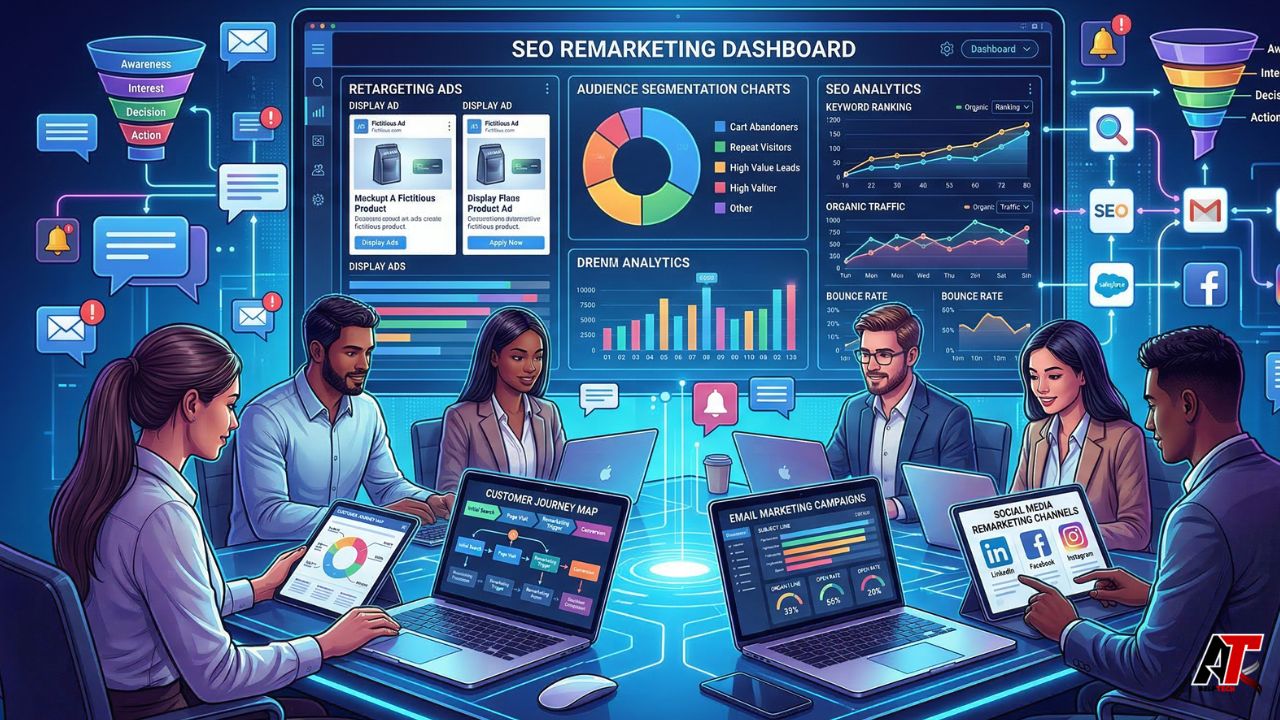
Generating organic traffic is a significant achievement, but it is only the first step in the customer journey. Most visitors will not convert on their first visit to your website, no matter how perfectly optimized the landing page is. To capture these lost opportunities, businesses must implement a cohesive Digital Strategy that connects initial search discovery with strategic follow-up. By bridging the gap between organic traffic, targeted retargeting, and instant communication, you can transform passive readers into highly qualified, ready-to-buy leads.
SEO Remarketing: What It Really Means
When marketers talk about seo remarketing, they are referring to the practice of capturing users who found your site via organic search and continuously engaging them across other digital touchpoints. Because organic search represents high-intent discovery, users arriving from Google are incredibly valuable. SEO remarketing involves tagging these organic visitors (via tracking pixels or cookies) and serving them highly relevant ads, content, or email follow-ups based on the exact search query that brought them to your site.
For example, if a user lands on an organic blog post about “enterprise software migration,” an effective remarketing campaign will immediately serve them targeted ads offering a downloadable migration checklist or a free consultation. This ensures the value of your organic ranking is maximized, pulling the user back into your funnel even after they leave the search engine.
SEO WhatsApp: From Search Discovery to Direct Conversation
In today’s fast-paced digital ecosystem, consumers demand instant answers. Implementing an seo whatsapp strategy bridges the gap between passive content consumption and active, real-time sales conversations. When a user finds your website through a high-ranking organic search, placing a WhatsApp chat widget directly on that high-traffic page provides a frictionless path to communication.
Unlike traditional contact forms that require users to wait 24 hours for an email reply, an SEO WhatsApp integration capitalizes on the immediate intent of the searcher. It builds instant trust, dramatically decreases lead response time, and allows your sales team to answer complex queries exactly when the prospect’s interest is at its peak.
SEO Channels: Why Search Does Not Work Alone
Treating organic search as an isolated department is a critical mistake. To achieve market dominance, businesses must understand how different seo channels interact. Search engines, social media platforms, paid advertising networks, and direct messaging apps must work together to create a unified brand experience. Providing comprehensive digital marketing services requires an understanding of this omnichannel synergy.
Siloed SEO
Focuses only on keyword rankings and organic traffic. Ignores what happens after the user clicks, resulting in high bounce rates and massive amounts of unconverted, wasted traffic.
Integrated SEO Channels
Uses organic traffic to fuel Social Media Marketing retargeting audiences, aligns PPC bidding with organic keyword gaps, and drives traffic to direct conversion tools like WhatsApp.
How to Connect Organic Traffic With Remarketing Workflows
Turning a top-ranking page into a lead-generation machine requires a deliberate workflow. Agencies that provide Advanced SEO Services know that the real work begins after the click. Here is how to connect your traffic to a high-converting workflow:
- Segment by Intent: Group your organic pages into informational (top-of-funnel) and transactional (bottom-of-funnel) categories, and set up distinct remarketing audiences for each.
- Deploy Custom Pixels: Ensure Meta, Google Ads, and LinkedIn pixels are firing correctly on your highest-traffic SEO landing pages.
- Enable Instant Chat: Add floating WhatsApp or live chat buttons specifically on transactional service pages to capture high-intent buyers immediately.
What Metrics Matter Across SEO Channels
To measure the true ROI of an integrated campaign, you must look beyond standard keyword rankings. Tracking the right metrics proves the value of your cross-channel efforts. Reviewing detailed SEO case studies often reveals that the most successful brands track “assisted conversions”—the number of times an organic search touchpoint contributed to a sale that ultimately closed via another channel.
You should also track branded search volume (which indicates growing brand awareness), lead response times (especially if using WhatsApp integrations), and how organic content shares influence social media ranking factors to boost overall visibility.
Common Mistakes in SEO Communication and Follow-Up
The biggest mistake businesses make is fighting hard for page-one rankings, only to ignore the user experience once the visitor arrives. Having a slow, broken contact form or failing to set up retargeting pixels means you are literally paying (in time and resources) to generate traffic for your competitors to eventually capture. Furthermore, deploying a WhatsApp button but leaving leads unread for hours destroys the trust you built through your organic content.
Conclusion
Search engine optimization is no longer just about generating clicks; it is about initiating a conversation and guiding a prospect to a sale. By integrating SEO remarketing, leveraging instant communication tools like WhatsApp, and coordinating across all your digital channels, you can maximize the return on every single organic visitor. Stop letting hard-earned traffic bounce away. Request a free SEO audit to identify your integration gaps, or Contact Aelftech today to build a seamless, conversion-driven search strategy.
Frequently Asked Questions (FAQs)
1. What is SEO remarketing?
SEO remarketing is the strategy of tracking users who visit your website through organic search results and serving them targeted advertisements or follow-up content across other platforms (like social media or Google Display Network) to bring them back to convert.
2. How can SEO WhatsApp support conversions?
Integrating SEO WhatsApp involves placing direct chat links on your top-ranking organic pages. It supports conversions by allowing high-intent searchers to instantly message your sales or support team, drastically reducing lead response times and friction.
3. What are SEO channels?
SEO channels refer to the various digital pathways that interact with and support organic search. This includes your core website, local business profiles, video search (YouTube), and how organic data feeds into social media, email marketing, and paid advertising funnels.
4. Can SEO work together with social media and PPC?
Yes, absolutely. High-performing SEO content can be repurposed for social media, while PPC can be used to bid on keywords where your organic rankings are currently low. Additionally, organic traffic can populate retargeting audiences for highly efficient PPC and social ad campaigns.
5. Does WhatsApp help SEO directly or indirectly?
WhatsApp helps SEO indirectly. While having a WhatsApp button is not a direct ranking factor, it heavily improves user engagement, increases time-on-page, and decreases bounce rates by giving users an immediate action to take, all of which are positive user experience signals for Google.
6. How should businesses follow up with organic leads?
Businesses should follow up instantly. Whether the lead comes through a traditional form, a WhatsApp message, or an email capture from an organic blog post, immediate, personalized follow-up based on the specific page they landed on ensures the highest conversion rate.
7. What should teams track across SEO channels?
Teams should track assisted conversions, multi-channel attribution (how organic search contributes to a final sale on another channel), bounce rates, lead response times, and the growth of branded search queries over time.
8. What are common mistakes in SEO remarketing?
Common mistakes include treating all organic visitors the same (failing to segment audiences based on the specific URL they visited), showing the same ad too many times (ad fatigue), and failing to install tracking pixels correctly before an SEO campaign scales.
Leave a Reply