
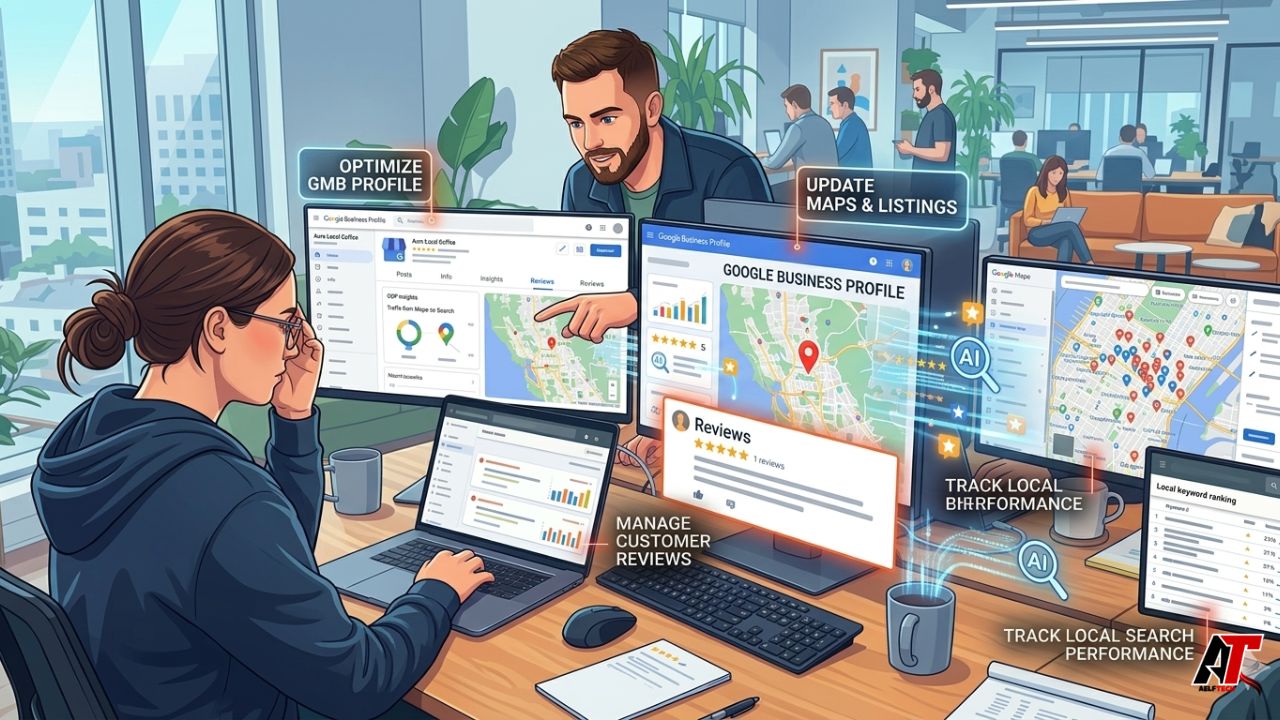
Dominating local search results is no longer just about having a website; it is about building a trusted, highly visible footprint across the platforms where your customers are already searching. From the map pack to local directory listings, every touchpoint matters. A well-planned Digital Strategy ensures that your business outshines the competition by leveraging authentic customer feedback, accurate citations, and fully optimized business profiles to capture high-converting, location-based traffic.
Does Google Reviews Help SEO?
One of the most common questions business owners ask is: does google reviews help seo? The answer is an absolute yes. Google explicitly uses review quantity, velocity, and diversity as primary ranking signals for local search algorithms. High-quality, positive reviews from your customers tell Google that your business is trustworthy, authoritative, and relevant to the local community.
Furthermore, the actual text within the reviews matters. When customers naturally mention specific services, products, or neighborhoods in their reviews, it adds semantic relevance to your profile. This user-generated content acts as long-tail keyword optimization, helping your profile rank for a wider variety of local queries.
Does Responding to Google Reviews Help SEO?
Just as gathering feedback is important, many wonder: does responding to google reviews help seo? Yes, it does. Google has officially stated that responding to reviews improves your local SEO because it demonstrates that you value your customers and actively manage your business. Regular engagement signals to search engine crawlers that your profile is alive and actively maintained.
Replying to both positive and negative feedback provides another opportunity to naturally include relevant keywords and location names. A highly engaged review profile often complements your broader digital reputation, much like your Social Media Ranking efforts across different networking platforms.
Think Local SEO Google My Business Audits: Why Audits Matter
Before executing any new tactics, you must establish a baseline. To uncover hidden optimization opportunities, professionals think local seo google my business audits are the most crucial first step. An audit evaluates whether your business name, address, and phone number (NAP) are consistent, whether your categories are correctly selected, and if there are any duplicate listings hurting your visibility.
If you have noticed a drop in local leads or simply want to know where your profile stands, requesting a free audit is the smartest way to identify exactly what technical and content elements are holding your map rankings back.
Google Places SEO and the Modern Local Search Landscape
Long-time marketers will remember the term google places seo, which was the original name for Google’s local business directory before it evolved into Google My Business, and now, Google Business Profile (GBP). While the name has changed, the core objective remains the same: proving local relevance to the algorithm.
Today, optimizing this profile requires more than just filling out basic information. It involves managing product feeds, uploading geotagged images, and publishing regular GBP posts. Our Advanced SEO Services ensure your profile evolves with Google’s latest feature updates, capturing maximum real estate on the Search Engine Results Pages (SERPs).
GMB SEO Services and Google Maps SEO Service
To truly capture local market share, a localized web page isn’t enough; you need to dominate the map pack. When investing in gmb seo services, it is critical that the strategy extends beyond just the profile dashboard. A comprehensive approach involves a dedicated google maps seo service that focuses on proximity, driving directions, and localized backlink building.
Expert agencies understand that Maps rankings are influenced by the authority of the linked website. Therefore, integrating your Maps strategy with full-suite digital marketing services ensures your main website and your GBP lift each other up simultaneously.
Google Maps / GBP Optimization
Focuses on optimizing your Google-owned profile. High visibility in the “Local Pack” at the top of search results. Relies heavily on Google reviews, proximity to the searcher, and profile completeness.
Traditional Local Website SEO
Focuses on optimizing the pages on your actual website. High visibility in the standard organic blue links below the map. Relies heavily on local content, on-page technical SEO, and localized backlinks.
Yelp Local SEO and Citation Trust Signals
While Google dominates search, third-party directories still play a vital role in establishing entity trust. Yelp local seo is a prime example. Apple Maps natively pulls data and reviews from Yelp, meaning your Yelp profile directly impacts your visibility to millions of iPhone users.
Furthermore, Google crawls Yelp and other top-tier directories to verify your business information. If your business details on Yelp perfectly match your Google profile, it strengthens Google’s confidence in your entity, serving as a powerful citation trust signal.
Whitespark Local SEO and Listing Workflows
Consistency is the backbone of local search. Industry professionals often utilize whitespark local seo methodologies and similar citation-building tools to ensure business data is perfectly synchronized across hundreds of directories, data aggregators, and GPS mapping systems.
A structured citation workflow prevents conflicting information—like an old phone number on a random directory—from confusing search engines and lowering your rank. Staying informed on these technical workflows through digital marketing insights helps you maintain a pristine digital footprint.
Google Stack SEO: What It Means and What It Does Not Do
In certain corners of the internet, you may hear about google stack seo (also known as Google Authority Stacking). This is a tactic where users interlink public Google Docs, Google Sites, Google Sheets, and Google Drive folders to artificially pass “Google authority” to a local website or Maps listing.
While an interesting concept, it is a highly debated, gray-hat tactic. Google’s algorithms are smart enough to devalue manufactured, low-quality links, even if they come from Google’s own properties. Instead of relying on these loopholes, your business marketing strategy should focus on foundational assets, such as high-performance WordPress Development, earning genuine press coverage, and acquiring real customer reviews.
Local SEO Best Practices for Reviews, Maps, and Listings
To secure top local rankings, implement these core best practices consistently:
- Proactive Review Generation: Use automated SMS or email campaigns to ask satisfied customers for reviews immediately after service.
- Accurate Categorization: Select one primary category that perfectly describes your business, and use secondary categories sparingly for specific services.
- Hyper-Local On-Page SEO: Embed a Google Map on your contact page and naturally weave your city and neighborhood names into your website’s heading tags and body content.
- Regular GBP Posts: Treat your Google Business Profile like a micro-blog. Post updates, offers, and events weekly to signal active management.
Conclusion
Local SEO is a dynamic ecosystem that demands constant attention to reviews, citations, and on-page technical factors. By actively managing your reputation, ensuring NAP consistency across the web, and optimizing your Google Business Profile, you create a powerful local presence that drives foot traffic and phone calls. Don’t let your competitors steal the local spotlight. Let Aelftech audit your current standing and build a customized roadmap to help your business dominate the local search results.
Frequently Asked Questions (FAQs)
1. Do Google reviews help SEO?
Yes, Google reviews are a major local ranking factor. A high volume of positive reviews, frequent new reviews, and reviews that contain relevant keywords all strongly signal to Google that your business is authoritative and relevant, boosting your rank in the local map pack.
2. Does responding to Google reviews help SEO?
Absolutely. Google officially recommends responding to reviews. It shows that you value your customers and actively manage your business. It also provides a natural opportunity to inject relevant keywords and location data into your profile.
3. What is the difference between Google Places SEO and Google Business Profile optimization?
There is no functional difference today. “Google Places” was the original name for Google’s local business platform. It was later rebranded to Google My Business (GMB), and is currently known as Google Business Profile (GBP). Optimizing it involves the exact same modern local SEO strategies.
4. What are GMB SEO services?
GMB (Google My Business) SEO services are specialized marketing efforts designed to optimize a company’s Google Business Profile. This includes optimizing categories, managing NAP consistency, uploading geotagged photos, creating weekly posts, and managing customer reviews to improve map pack visibility.
5. How does Google Maps SEO service improve local visibility?
A Google Maps SEO service improves visibility by optimizing proximity signals, building localized citations, and generating local backlinks to the website linked to the Maps profile. This ensures your business appears when nearby users search for your products or services on their mobile devices or desktop maps.
6. Does Yelp help local SEO?
Yes. Yelp is a highly trusted directory. Having a consistent, optimized profile on Yelp acts as a strong citation that verifies your business data for Google. Additionally, Apple Maps pulls its review data directly from Yelp, making it crucial for iOS user visibility.
7. What is included in a local SEO audit?
A comprehensive local SEO audit reviews your Google Business Profile for completeness, checks for duplicate listings, analyzes your competitors in the map pack, audits your website for localized keywords, and checks your NAP (Name, Address, Phone) consistency across all major online directories.
8. What is Google stack SEO?
Google Stack SEO (or Google Authority Stacking) is a debated tactic where marketers link various public Google properties (like Docs, Sheets, and Sites) together, pointing them at a target website to pass “Google authority.” It is considered a gray-hat tactic and is generally less effective than building genuine, high-quality local backlinks.
Leave a Reply