
Real estate marketing in 2026 is becoming less forgiving of broad, generic campaigns. The market is not moving as one uniform category. Some regions have improving inventory, others remain constrained, and specialized property sectors are responding to entirely different demographic, financial, and infrastructure pressures. A message written for “any buyer” or “any seller” therefore reaches many people but often speaks clearly to almost no one.
That is why targeted real estate lead generation is gaining ground. Instead of purchasing large databases or running one-size-fits-all ads, successful teams are defining a narrow audience, identifying the event that triggers action, and matching the offer to a specific property type or local condition. In practical terms, “outperforming” means stronger relevance, better-qualified conversations, lower wasted outreach, and a clearer path from first contact to appointment. It does not mean every niche wins in every city.
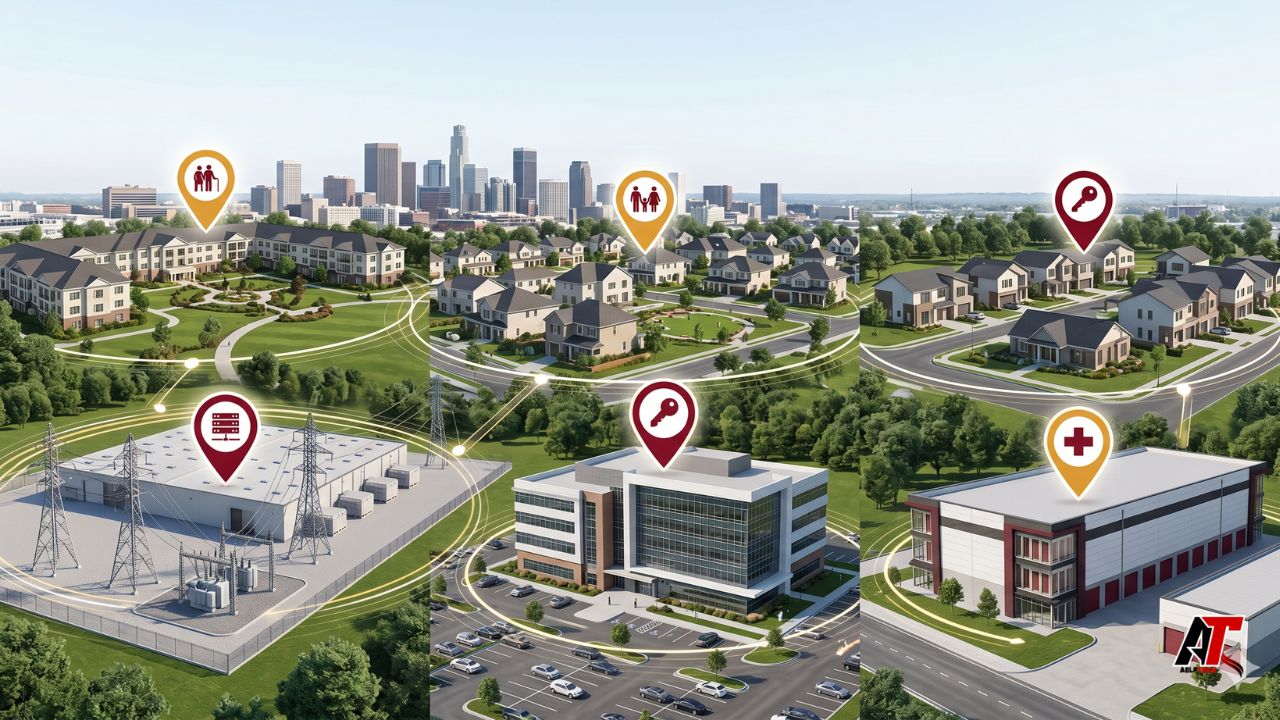
The six niches below show where focused campaigns are especially useful in 2026. Each has a distinct audience, decision timeline, and proof requirement, allowing real estate teams to replace interchangeable outreach with relevant guidance.
Why General-Market Lead Generation Is Losing Efficiency
General real estate campaigns usually compete on familiar promises: local expertise, free valuations, fast closings, or access to new listings. Those messages still have value, but they become expensive when every competitor uses them. The problem is not simply ad saturation. It is that people entering the market in 2026 often have very different constraints. A senior planning a downsizing move needs a transition plan. A first-time buyer needs affordability guidance. A data-center developer needs power, fiber, zoning, and entitlement intelligence—not a standard commercial property brochure.
Market data also shows sharper differences between sectors and locations. In April 2026, the National Association of REALTORS® reported that baby boomers accounted for 42% of U.S. buyers, while first-time buyers represented only 21%, the lowest historical share. Yardi Matrix also describes rental and self-storage performance as uneven by market, making segmentation more useful than national averages.
A niche campaign begins with a precise problem statement: who is moving, investing, leasing, selling, or developing—and why now? From there, the landing page, keyword set, outreach list, content offer, and follow-up sequence can all be designed around one decision. That is the central advantage of specialization.
1. Senior Housing, Downsizing, and Transition-Focused Sellers
Senior-related real estate is one of the clearest examples of demographic demand creating a specialized marketing opportunity. NIC MAP reported that senior housing occupancy reached 89.5% in the first quarter of 2026, up from 89.1% at the end of 2025. PwC’s 2026 outlook also highlights rising demand and unusually slow inventory growth. For residential professionals, the opportunity is broader than senior housing facilities alone. It includes homeowners selling a long-held property, adult children coordinating a move, retirees relocating, and families seeking accessible housing near care or relatives.
The strongest lead magnets are practical and empathetic: downsizing checklists, home-sale timelines, estate clean-out resources, accessibility assessments, and local care or housing guides. Campaigns should avoid fear-based messaging and recognize that several family members may influence the decision.
Targeting can combine age-qualified geographic audiences, long-homeownership neighborhoods, retirement migration patterns, senior-living referral networks, and search terms connected to downsizing or selling a parent’s home. A generic “sell your home” ad misses the emotional and logistical complexity. A transition-focused funnel addresses it directly.
2. First-Time Buyers in Affordable Secondary Markets
First-time buyers are a smaller share of the national market, but that scarcity makes precise targeting more important—not less. NAR’s 2026 generational findings placed first-time buyers at 21% of all buyers. Affordability pressure has pushed many prospects to compare smaller homes, condos, townhouses, suburban nodes, and lower-cost metros in the Midwest and South. These buyers often spend months researching before they are ready to speak with an agent.
The best campaigns do not treat them as a single age group. Useful segments include renters with stable income, professionals relocating to an affordable metro, single buyers, newly married households, and buyers eligible for local assistance programs. Content should answer real questions: how much cash is needed, what monthly payment is realistic, how HOA fees affect affordability, which loan options exist, and what neighborhoods balance price with commute and lifestyle.
A broad buyer campaign may attract people who cannot act in the target area. A city-specific hub can qualify leads by price range, move date, credit readiness, and property preference, then nurture them with mortgage preparation, neighborhood comparisons, and relevant listing alerts.
3. Build-to-Rent and Single-Family Rental Communities
Build-to-rent and professionally managed single-family rental communities remain a distinct niche because they sit between traditional apartment living and homeownership. Yardi Matrix tracks more than 272,000 units in over 960 build-to-rent communities, and its May 2026 report emphasizes that performance is diverging by market. That divergence is exactly why nationwide messaging is inefficient. Operators need leads from households whose income, family size, commute, pet ownership, and preferred lease date fit a particular community.
Effective campaigns should be built around the renter’s use case. Families may want a yard without a down payment; remote workers may value a home office; pet owners may prefer private outdoor space. The landing page should lead with these outcomes, then explain amenities, lease terms, and total monthly cost.
For investor and developer leads, a separate business-to-business funnel is needed. Useful offers include market-level rent studies, land and entitlement briefs, supply pipeline maps, absorption benchmarks, and acquisition criteria. Mixing renter acquisition and investor outreach in one campaign weakens both. Separate audiences, separate proof, and separate calls to action produce cleaner data and better sales conversations.
4. Data-Center Sites and Power-Ready Land
Data-center real estate is one of the fastest-growing specialized sectors, but it cannot be marketed like ordinary industrial land. JLL’s 2026 Global Data Center Outlook projects that global capacity could increase by 97 gigawatts between 2025 and 2030, nearly doubling over five years as AI and cloud demand expand. The lead pool is smaller than the general commercial market, yet every qualified conversation may involve substantial land, infrastructure, power, and development requirements.
The campaign must qualify the site before promoting it. Critical details include available power and delivery timing, proximity to substations and fiber, water or cooling considerations, flood and environmental risk, zoning, tax incentives, entitlement status, parcel size, and access to skilled labor. A beautiful brochure without infrastructure evidence will not satisfy sophisticated buyers.
Target lists should prioritize developers, operators, infrastructure funds, utilities, site-selection consultants, and landowners in power-constrained corridors. Search terms can focus on power-ready sites, utility capacity, and location-plus-megawatt requirements. A confidential data room or infrastructure brief often works better than a standard contact form.
5. Medical Outpatient Buildings and Healthcare Real Estate
Medical outpatient buildings are benefiting from durable healthcare demand, aging demographics, and continued movement of services away from hospital campuses. CBRE reported that U.S. medical outpatient building investment volume rose 78% year over year in the first quarter of 2026 to $2.9 billion. Its research also showed record asking rents and stronger pricing than traditional office buildings. That does not make every medical property attractive, but it does create a clear need for sector-specific prospecting.
Owners and brokers should segment by specialty, patient catchment area, parking, building systems, lease structure, and proximity to hospitals. Dental, urgent-care, imaging, and behavioral-health providers evaluate space differently, so campaign pages should present relevant floor plans, accessibility, technical capability, and local demand.
Investor campaigns also require different evidence: tenant credit, lease duration, rent escalations, renewal history, capital expenditure requirements, and replacement-cost dynamics. Generic office marketing can unintentionally frame a medical asset as just another workplace. Targeted healthcare positioning explains why the location and tenant profile may offer different demand characteristics.
6. Self-Storage in High-Transition Micro-Markets
Self-storage remains highly dependent on local life events and local supply. Yardi Matrix entered 2026 with a cautious national outlook, noting pressure on demand, occupancy, and revenue growth. Yet that national picture does not eliminate opportunity. It makes micro-market targeting essential. Storage demand is often concentrated around household formation, moving activity, apartment density, military transfers, college cycles, downsizing, renovations, divorce, inheritance, and small-business inventory needs.
A citywide campaign can waste budget on residents too far from the facility or unlikely to need storage soon. Better campaigns use tight drive-time radiuses, move-related keywords, local partnerships, seasonal calendars, and remarketing. Size guides, transparent fees, security details, and online reservations reduce uncertainty.
For acquisition and development leads, marketers should map existing supply, planned projects, housing growth, renter density, traffic patterns, and household turnover. The niche works when the campaign is built around a specific demand generator. It performs poorly when “storage near me” is treated as the entire strategy.
How to Build a High-Performance Niche Lead Funnel
A niche is only useful when it changes how the campaign is built. The following framework keeps strategy connected to measurable lead quality.
- Define the trigger event. Identify what causes the prospect to act: retirement, relocation, lease expiration, a new facility requirement, family transition, infrastructure demand, or an investment mandate.
- Create one dedicated landing page. Use the audience’s language, answer its highest-risk questions, show relevant proof, and offer one clear next step. Do not send niche traffic to a generic homepage.
- Qualify without creating friction. Ask only the questions needed to determine fit, such as location, timing, property type, budget range, power need, unit size, or decision role.
- Build a multi-touch follow-up sequence. Combine search, email, retargeting, phone outreach, local partnerships, and useful content. High-value real estate decisions rarely happen after one click.
- Measure business outcomes, not surface metrics. Track qualified lead rate, appointment rate, cost per qualified opportunity, pipeline value, time to conversion, and closed revenue by niche and source.
Teams that need an integrated SEO, paid-media, content, and conversion strategy can connect their niche pages to a broader growth system through aelftech.com USA. The important point is consistency: the keyword, ad promise, landing-page message, form questions, CRM tags, and follow-up content should all describe the same audience.
Common Mistakes That Reduce Niche Campaign Performance
The first mistake is choosing a niche only because it sounds profitable. A viable campaign also needs enough local demand, reachable prospects, credible expertise, and an offer that solves a real problem. The second mistake is over-targeting too early. Extremely narrow audiences can limit learning and raise costs, so begin with a focused but testable segment and refine it using lead-quality data.
Another common error is using the same content for every stage. An educational guide may attract early researchers, while a site brief, valuation, property shortlist, or consultation serves higher-intent prospects. Finally, do not rely on automation alone. AI can help score, route, and personalize leads, but complex real estate decisions still require informed human follow-up, especially in senior transitions, healthcare, infrastructure, and investment transactions.
Conclusion
The 2026 real estate market rewards specificity. Senior transitions, first-time buyers in affordable metros, build-to-rent communities, data-center sites, medical outpatient buildings, and self-storage micro-markets all have distinct demand signals. Their audiences ask different questions, respond to different proof, and move on different timelines. Targeted lead generation works because it aligns marketing with those realities. It narrows the promise, improves qualification, and gives follow-up teams a clearer reason to contact each prospect. The winning approach is not simply to select a fashionable niche. It is to combine credible market intelligence with a dedicated funnel, local relevance, useful content, and disciplined measurement. In a fragmented market, that focus is becoming a competitive advantage.
Leave a Reply