
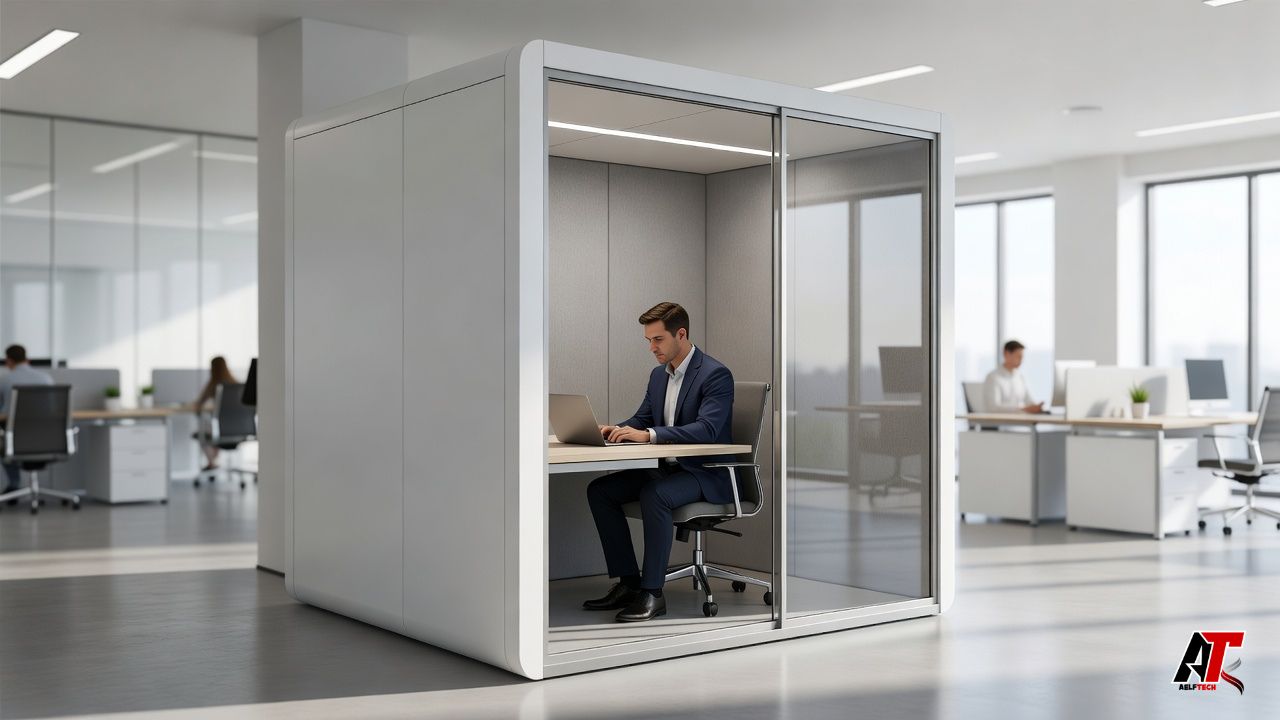
The modern corporate landscape has embraced open-plan offices to foster collaboration and reduce real estate costs. However, this architectural shift often introduces significant acoustic distractions and visual interruptions. Consequently, employees struggle to find quiet spaces for deep, focused work. To address this challenge, facility managers increasingly install the Personal Office Pod. This self-contained, soundproof unit provides an isolated environment within a bustling workspace. Furthermore, it offers a practical solution for private phone calls and video conferences without requiring permanent structural renovations.
The Rise of the Personal Office Pod in Modern Workspaces
Open-plan layouts eliminate physical barriers, which increases ambient noise levels and decreases overall productivity. Therefore, workers experience higher cognitive load as their brains constantly process background conversations and typing sounds. Consequently, organizations recognize the need for architectural acoustics that support both collaboration and concentration. The personal office pod emerged as the most flexible solution to this modern workplace dilemma. It provides a dedicated focus room that employees can use on demand.
Combating Open Plan Office Noise with a Personal Office Pod
Excessive noise ranks as the top complaint in open offices. A personal office pod utilizes advanced acoustic engineering to block external sound. Manufacturers construct these pods using dense acoustic foam, laminated glass, and isolated structural bases. Therefore, conversations inside the pod remain completely inaudible to the outside office. Furthermore, the pod prevents external noise from penetrating the interior. This acoustic isolation allows employees to conduct confidential calls or engage in deep work without distractions. Thus, the pod restores the acoustic privacy lost in the open-plan revolution.
Key Features of a High-Quality Personal Office Pod
Not all acoustic booths offer the same level of performance. Therefore, facility managers must evaluate specific features before investing. A high-quality pod must address thermal comfort, lighting, and technological integration. Simply putting a desk inside a soundproof box quickly becomes uncomfortable. Consequently, manufacturers design these units with sophisticated ventilation and electrical systems to ensure a productive environment.
Acoustic Insulation and Ventilation in a Personal Office Pod
Soundproofing requires airtight construction, which naturally traps heat and carbon dioxide. Therefore, an effective personal office pod must include a mechanical ventilation system. High-end models feature smart sensors that activate fans based on occupancy and internal temperature. These systems circulate fresh air without creating distracting noise. Furthermore, integrated LED lighting illuminates the workspace without causing glare on laptop screens. Consequently, proper ventilation and lighting ensure the occupant remains comfortable and alert during long focus sessions. Thus, environmental controls distinguish a professional-grade pod from a basic telephone booth.
How a Personal Office Pod Boosts Employee Productivity
Interruptions plague the modern office, requiring an average of twenty-three minutes to refocus after a disruption. Therefore, providing access to a quiet space directly impacts the bottom line. When employees need to write complex reports or analyze data, they require uninterrupted focus time. The pod offers a sanctuary where they can escape the constant pinging of Slack notifications and office chatter. Consequently, output quality increases dramatically when workers have control over their acoustic environment.
Creating a Distraction-Free Environment with a Personal Office Pod
Psychological privacy matters just as much as acoustic privacy. When employees feel watched, their stress levels rise. A personal office pod features frosted or tinted glass that allows natural light to enter while obscuring the occupant from direct view. This visual barrier reduces the psychological pressure of working in a fishbowl environment. Furthermore, the pod provides a dedicated space for neurodivergent employees who may struggle with sensory overload in open spaces. Therefore, offering these focus rooms demonstrates a commitment to neurodiversity and inclusive workplace design. Thus, the pod serves as a critical tool for supporting diverse working styles.
Design and Aesthetics of the Personal Office Pod
Workplace aesthetics influence employee mood and corporate culture. Therefore, an office pod must complement the existing interior design rather than looking like an awkward afterthought. Manufacturers now offer extensive customization options. Companies can select exterior finishes, interior fabrics, and frame colors that match their brand guidelines. Furthermore, the modular nature of these pods allows them to blend seamlessly into various office layouts. Consequently, a well-designed pod enhances the visual appeal of the office while serving a highly functional purpose.
Space Optimization and the Personal Office Pod
Corporate real estate remains a massive expense. Building permanent drywall offices requires permits, contractors, and significant downtime. Conversely, a personal office pod installs in a matter of hours. It requires no structural modifications to the building. Furthermore, if a company moves offices, they can simply disassemble the pod and take it with them. Therefore, pods offer incredible capital flexibility. They allow companies to reconfigure their floor plans dynamically as team sizes fluctuate. Thus, modular architecture provides a distinct financial advantage over traditional construction.
Implementing a Personal Office Pod in Corporate Real Estate
Simply dropping a few pods into an office does not guarantee success. Facility managers must develop clear usage policies. If pods remain occupied by one person all day, they lose their utility as shared resources. Therefore, organizations implement booking systems to ensure fair access. Some companies use smart sensors connected to desk-booking software to track pod availability in real-time. Employees can reserve a pod via their smartphone for a specific block of time. Consequently, technology ensures these high-demand resources serve the maximum number of employees effectively.
Cost-Benefit Analysis for the Personal Office Pod
The initial investment for a high-quality acoustic pod ranges from several thousand to tens of thousands of dollars. However, the return on investment justifies the expenditure. First, pods eliminate the need to lease additional square footage for private offices or meeting rooms. Second, the productivity gains from reduced interruptions recoup the cost rapidly. Furthermore, providing high-quality focus spaces improves employee retention. Recruiting and training new staff costs far more than purchasing office furniture. Therefore, the pod acts as an employee benefit that directly supports talent retention strategies.
The Future of the Personal Office Pod
Workplace design continues to evolve rapidly in the post-pandemic era. Hybrid work models mean offices see fewer people daily, but those who attend expect high-quality, purpose-built spaces. The personal office pod fits perfectly into this hybrid model. It provides the dedicated focus space that remote workers miss when they come into the office. Furthermore, manufacturers continue to integrate advanced technology into these units. Future pods will feature built-in air quality monitors that adjust ventilation based on CO2 levels dynamically. Consequently, the evolution of the pod mirrors the evolution of smart building technology.
Smart Connectivity in the Personal Office Pod
Future iterations will seamlessly integrate with enterprise software. Imagine a pod that recognizes an employee via RFID badge and automatically adjusts the lighting and temperature to their preferences. Furthermore, occupancy sensors will feed data into facility management dashboards, helping real estate teams understand utilization patterns. If data shows certain pods sit empty while others are overbooked, managers can physically relocate the underused units. Therefore, data-driven pod management will optimize workplace efficiency entirely. Thus, the acoustic booth will transform from a static furniture piece into an intelligent workspace node.
FAQs
1. What is a Personal Office Pod?
It is a self-contained, soundproof booth placed in open-plan offices to provide employees with a quiet space for focused work or private calls.
2. How does a Personal Office Pod block sound?
Manufacturers use dense acoustic foam, laminated glass, and isolated bases to absorb and block external noise from entering or leaving the unit.
3. Does an office pod have ventilation?
Yes, high-quality pods include smart mechanical ventilation systems that circulate fresh air and manage internal temperature without creating excess noise.
4. Can a Personal Office Pod be moved?
Yes, these pods feature modular designs that allow them to be disassembled, relocated, and reassembled in different office locations easily.
5. How do employees book an office pod?
Many companies integrate pods with desk-booking software or smart sensors so employees can reserve the space via a mobile app.
6. Does an office pod require building permits?
Generally, no. Because they are freestanding furniture modules rather than permanent structural changes, pods usually bypass traditional building permit requirements.
Conclusion
The shift toward open-plan environments necessitated a parallel evolution in workspace privacy solutions. The Personal Office Pod provides a critical sanctuary for focus, confidentiality, and productivity in noisy corporate landscapes. By integrating advanced acoustic engineering, smart ventilation, and modular design, these units offer a financially viable alternative to permanent construction. Furthermore, they support inclusive work cultures by accommodating diverse neurological and acoustic needs. As hybrid work models solidify, providing purpose-built spaces for deep work will remain essential. Ultimately, investing in a Personal Office Pod empowers organizations to balance collaborative openness with the focused isolation employees need to thrive.
Leave a Reply