
Being appointed as an executor of a will is an important legal responsibility that involves managing a deceased person’s estate and carrying out their wishes according to applicable law. Executors may need to identify assets, contact financial institutions, settle outstanding liabilities, handle inheritance tax matters, apply for probate, and distribute the remaining estate to beneficiaries. Because these duties can involve substantial financial and legal consequences, many people choose to talk to experienced probate solicitors before beginning the process.
Estate administration can appear straightforward when a will clearly identifies beneficiaries and assets. However, complications may arise from property ownership, unclear instructions, family disagreements, missing documents, outstanding debts, or tax obligations. Understanding the executor’s responsibilities and knowing when professional guidance may be appropriate can help reduce avoidable errors and make the administration process more manageable.
Understanding the Role of an Executor of a Will
An executor is a person appointed in a valid will to administer the deceased person’s estate. Their role is to deal with estate assets and liabilities before distributing the remaining property according to the will and applicable law.
The executor’s authority and procedural responsibilities depend on the relevant jurisdiction. This guide primarily discusses probate in England and Wales, where the legal framework differs in certain respects from Scotland and Northern Ireland.
People who are uncertain about their appointment or responsibilities may benefit from choosing to talk to experienced probate solicitors. Professional advice can help clarify the legal position before significant decisions are made.
Who Can Be an Executor?
A testator may appoint one or more executors in their will. Executors are often family members, trusted friends, or professional advisers.
Being named does not automatically mean the person must actively administer the estate in every circumstance. Options may exist for renouncing probate or allowing another executor to act, depending on the situation and applicable rules.
Can There Be More Than One Executor?
Yes. A will can name multiple executors, and more than one may be involved in administering the estate.
Joint administration can distribute responsibilities, but it may also require careful coordination. If executors disagree about important decisions, it may be sensible to talk to experienced probate solicitors before the disagreement delays the estate.
What Are the Main Duties of an Executor?
Executors are responsible for managing the estate in accordance with the will and the law. Their duties extend beyond simply passing assets to beneficiaries.
They must identify relevant property, establish liabilities, handle tax matters, and ensure distributions are made appropriately.
Identifying Estate Assets
The executor should establish what the deceased owned at the date of death. This may include property, bank accounts, investments, valuable possessions, and certain business interests.
Ownership arrangements matter because not every asset necessarily passes under the will. Executors may need to distinguish estate assets from property passing through other legal arrangements.
Identifying Debts and Liabilities
The estate may owe money to lenders, service providers, tax authorities, or other creditors. These liabilities need appropriate consideration before beneficiaries receive their inheritance.
An executor who distributes funds prematurely may create problems if insufficient assets remain to settle valid debts. This is one reason to talk to experienced probate solicitors when the financial position is unclear.
Administering the Estate Properly
Estate administration involves keeping records, communicating with relevant parties, and following applicable procedures. Executors should avoid using estate money for personal purposes.
Accurate documentation supports accountability and helps explain how the estate has been managed.
Finding the Original Will
Locating the most recent valid will is an important early step. The document identifies the appointed executors and explains how the deceased intended their estate to be distributed.
The original may be held at home, by a solicitor, or through another storage arrangement. Executors should also consider whether later wills or codicils exist.
Why the Original Document Matters
Probate applications commonly require the original will and any relevant codicils. Missing or damaged documents can create additional legal questions.
If the original cannot be found, it may be appropriate to talk to experienced probate solicitors before assuming a copy is sufficient or that no valid will exists.
Check for Later Documents
A later valid will may revoke an earlier one. Codicils can also modify particular provisions.
Executors should avoid relying on an outdated document without reasonable checks. Uncertainty over competing documents may require legal advice.
Registering the Death and Obtaining Documents
Before many estate administration tasks can proceed, the death must be registered according to the relevant legal requirements. The process and deadlines can depend on circumstances, including whether a coroner is involved.
Executors or other appropriate individuals may need official death certificates to notify financial institutions and deal with assets.
Obtain Sufficient Documentation
Banks, insurers, pension providers, and other organizations may request evidence of death. Their procedures can differ.
Keeping an organized record of notifications can reduce repeated work. Executors should also protect sensitive personal information.
Valuing the Deceased Person’s Estate
Estate valuation is important for inheritance tax reporting, probate applications, and eventual distribution. Assets generally need to be considered at their appropriate date-of-death values.
The required evidence depends on the type and complexity of the asset. Executors handling substantial property or business interests may wish to talk to experienced probate solicitors and suitable valuation professionals.
Property Valuation
Real estate may represent a large proportion of an estate’s value. An appropriate valuation can be important for probate and tax purposes.
The complexity of the property may influence whether specialist valuation advice is needed. Executors should retain supporting documentation.
Bank Accounts and Investments
Financial institutions can provide information about balances and holdings at the date of death. Investment values may require additional documentation.
Executors should consider both assets and relevant liabilities. Accurate records help establish the estate’s overall position.
Personal Possessions
Jewellery, antiques, vehicles, and other valuable possessions may need assessment. Some items have limited financial value but significant sentimental importance.
Where valuation is uncertain or potentially material, professional assistance may be appropriate. Family estimates should not automatically replace suitable evidence.
Understanding Which Assets Form Part of the Estate
Not every asset owned or associated with the deceased necessarily passes under the will. Ownership structure and beneficiary arrangements can affect the legal treatment.
For example, property held as joint tenants in England and Wales generally passes to the surviving joint owner by survivorship. Other arrangements may operate differently.
Executors who are uncertain about ownership should talk to experienced probate solicitors before treating every asset as available for distribution.
Jointly Owned Property
The legal form of joint ownership matters. Joint tenancy and tenancy in common have different consequences following death.
Land Registry records and supporting documents may help establish the position. Legal advice may be necessary when ownership arrangements are disputed.
Pensions and Life Insurance
Some pension death benefits and life insurance proceeds may pass outside the estate, depending on the scheme or policy arrangements.
Their inheritance tax treatment can involve additional considerations. Executors should obtain current professional advice where the position is unclear, particularly because relevant UK tax rules can change.
What Is Probate?
Probate is part of the legal process through which an executor obtains formal authority to administer an estate where a grant is required. In England and Wales, an executor may apply for a grant of probate.
Not every estate requires a grant, but some financial institutions and property transactions may require one. Requirements depend on the assets and circumstances involved.
When Is Probate Required?
Probate is often needed when an estate includes certain assets held solely in the deceased’s name, particularly property or substantial financial holdings.
However, there is no single universal financial threshold that determines whether every estate requires probate. Executors should confirm requirements with the relevant institutions.
Applying for a Grant of Probate
An application generally involves providing information about the deceased, the will, executors, and estate. Inheritance tax reporting requirements may need to be addressed before or alongside the probate process.
If the application involves unusual circumstances, it can be useful to talk to experienced probate solicitors. Errors or missing information may delay the process.
Inheritance Tax Responsibilities
Inheritance tax is an important consideration in many estate administrations. Whether tax is payable depends on the estate’s value, available exemptions, reliefs, gifts, and other relevant circumstances.
Executors must establish the appropriate reporting and payment position. The rules can be complex, so professional advice may be valuable.
Understanding the Nil-Rate Band
In the UK, inheritance tax rules include a standard nil-rate band and potentially other allowances or reliefs. Eligibility depends on the circumstances.
The residence nil-rate band may apply in certain situations involving qualifying residential property and direct descendants. Executors should check current HMRC guidance rather than assuming every estate receives the same allowances.
Reporting Estate Information
Some estates require detailed inheritance tax forms, while others may qualify for different reporting arrangements. The correct process depends on the estate.
Executors who are uncertain about reporting obligations should talk to experienced probate solicitors or qualified tax advisers before submitting information.
Paying Inheritance Tax
Certain inheritance tax payments may be due before probate is granted. Special payment arrangements can apply to some assets, subject to the rules.
Executors should plan carefully when estate assets are not immediately liquid. Selling property or arranging payment without understanding the legal position can create complications.
Managing Estate Debts
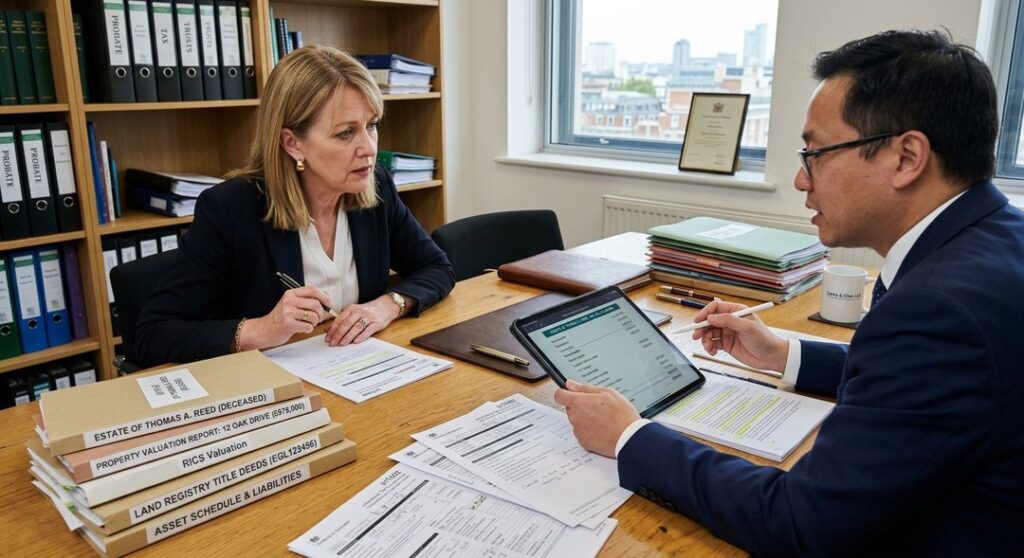
An executor must identify and appropriately settle valid estate debts before distributing the remaining estate. Creditors may include banks, mortgage lenders, utility providers, and other organizations.
The estate’s financial position should be assessed carefully. If debts exceed available assets, special considerations arise.
Contact Relevant Creditors
Executors should identify known creditors and review available financial records. Some liabilities may not be immediately obvious.
Professional assistance may help determine appropriate procedures for identifying claims. Accurate records should be maintained throughout the process.
Avoid Premature Distribution
Distributing assets before liabilities are understood can expose executors to difficulties. A beneficiary may have received funds that the estate later needs.
If the estate’s position remains uncertain, talk to experienced probate solicitors before making substantial distributions.
What Happens if the Estate Is Insolvent?
An insolvent estate is one where liabilities exceed available assets. These situations require particular care because creditors may have different priorities under applicable law.
Executors should not simply pay whichever creditor contacts them first. Incorrect administration can create personal liability risks.
Seek Legal Advice Early
Insolvent estate administration involves specific legal principles and payment priorities. It is generally sensible to talk to experienced probate solicitors before making payments or distributing assets.
Professional advice can help clarify the appropriate approach and reduce the risk of avoidable errors.
Protecting Estate Property
Executors have responsibilities relating to estate assets while administration is ongoing. This can include securing property, maintaining appropriate insurance, and preventing unnecessary loss.
The required steps depend on the nature of the assets. Empty residential property may create particular insurance and maintenance considerations.
Maintain Suitable Insurance
Existing insurance arrangements may need review after the policyholder’s death. Some policies contain conditions relating to unoccupied property.
Executors should notify insurers and confirm ongoing coverage. Failure to do so can create problems if damage occurs.
Secure Valuable Items
Jewellery, documents, keys, and other valuable possessions should be protected from loss or unauthorized removal.
An inventory can support accountability. Family members should not simply divide belongings before the executor has established the proper legal position.
Managing the Deceased’s Home
Property can be one of the most complicated estate assets. The executor may need to consider insurance, maintenance, mortgage obligations, sale arrangements, and beneficiary rights.
A decision to sell or transfer property should reflect the will, ownership structure, and applicable law.
Selling Estate Property
A property sale may be necessary to settle liabilities or distribute value between beneficiaries. Executors should obtain suitable advice and follow appropriate procedures.
Market conditions and property-specific issues can affect timing. Beneficiaries should receive realistic information rather than guaranteed completion dates.
Transferring Property to Beneficiaries
Some wills leave property to particular beneficiaries. The transfer process may require probate and Land Registry procedures.
Executors may need legal assistance with documentation. This is another circumstance where it can be useful to talk to experienced probate solicitors.
Dealing With Digital Assets
Digital accounts and online records are increasingly relevant to estate administration. These may include online banking, digital subscriptions, cloud storage, cryptocurrency, and other services.
Access rights depend on the platform, asset type, and applicable law. Executors should not assume they can lawfully access every account using the deceased’s credentials.
Identify Important Accounts
Email correspondence and financial records may help identify relevant services. However, accessing accounts must follow lawful procedures.
Executors should contact providers through appropriate bereavement channels where available.
Cryptocurrency and Digital Investments
Cryptocurrency holdings may create valuation and access difficulties. Private keys, custody arrangements, and platform policies can affect recovery.
If significant digital assets are involved, talk to experienced probate solicitors and appropriately qualified technical or tax advisers. Careless handling may result in irreversible loss.
Communicating With Beneficiaries
Beneficiaries often want to understand when they may receive their inheritance. Executors should communicate appropriately without promising dates that cannot be guaranteed.
Estate administration can take longer when property sales, tax matters, or disputes remain unresolved.
Provide Reasonable Updates
Clear updates can reduce confusion and unnecessary disagreements. However, executors must also respect confidentiality and legal obligations.
Not every beneficiary is automatically entitled to every document at every stage. Disclosure requirements depend on the circumstances.
Avoid Making Uncertain Promises
The executor may not know how long probate, tax clearance, or asset sales will take. Giving overly confident estimates can create unrealistic expectations.
When delays arise, explain the position accurately. Professional guidance can help when communication becomes difficult.
Executor Responsibilities Toward Beneficiaries

Executors must administer the estate according to the will and applicable legal duties. They should not favor one beneficiary improperly or use their position for unauthorized personal advantage.
Potential conflicts of interest deserve careful management. If the executor is also a beneficiary, that arrangement is common but still requires proper administration.
Acting Impartially
An executor should follow the legal terms of the will rather than personal preferences. Family relationships do not change the underlying duties.
Where instructions are unclear, it may be advisable to talk to experienced probate solicitors before making decisions that affect beneficiaries differently.
Keeping Accurate Records
Executors should retain relevant financial and administrative records. These may include receipts, valuations, correspondence, and payment information.
Good records can help explain decisions and prepare estate accounts. They also support accountability if questions arise.
Preparing Estate Accounts
Estate accounts summarize the financial administration of the estate. They commonly record assets, liabilities, expenses, income, and distributions.
The level of detail depends on the estate and relevant legal requirements. Executors should maintain records from the beginning rather than reconstructing them later.
Record Estate Income
Income received during administration may include interest, rent, or other payments. Its tax treatment can differ from the deceased’s pre-death income.
Executors may need to consider estate income tax obligations. Qualified tax advice can be useful for complicated situations.
Record Administration Expenses
Reasonable estate administration expenses may need to be documented. However, not every personal expense incurred by an executor is automatically recoverable.
A professional adviser can clarify which costs may properly be charged to the estate.
Distributing the Estate
Distribution generally occurs after appropriate liabilities, expenses, and relevant tax matters have been addressed. The executor must follow the will and applicable legal requirements.
Some estates permit interim distributions, but these require careful consideration. Premature payment can create difficulties if additional liabilities arise.
Confirm Beneficiary Details
Executors should verify the identity and payment information of recipients. Mistakes can be difficult to correct once funds are transferred.
Appropriate fraud-prevention procedures are particularly important for large payments.
Consider Minor Beneficiaries
Where beneficiaries are under 18, inheritance may need to be held or managed according to the will and applicable trust law.
Executors should not assume that funds can simply be paid directly to a minor. Legal advice may be appropriate.
How Long Does Probate Take?
Probate and estate administration do not have one guaranteed completion period. Timing depends on the estate’s complexity, tax position, application requirements, and available documentation.
Obtaining a grant is only one part of the process. Selling assets and distributing the estate may take additional time.
Common Causes of Delay
Missing documents, property transactions, inheritance tax questions, and disputes can extend administration. International assets may also create additional requirements.
If delays become difficult to manage, talk to experienced probate solicitors about available options and realistic next steps.
Can an Executor Be Personally Liable?
Executors can face personal liability in certain circumstances if they breach their duties or administer an estate incorrectly. Examples may involve improper distributions or failure to deal appropriately with liabilities.
However, liability depends on the facts and applicable law. Not every honest mistake automatically produces the same legal consequences.
Avoid Acting Without Sufficient Information
Before distributing assets, executors should understand the estate’s financial and legal position. Significant uncertainty deserves careful investigation.
Choosing to talk to experienced probate solicitors can be particularly valuable when decisions may expose the executor to personal risk.
Can an Executor Refuse to Act?
A person named as executor may have options when they do not wish to undertake the role. In England and Wales, renunciation may be possible in appropriate circumstances.
However, actions already taken in relation to the estate can affect available options. Legal advice should be obtained before making assumptions.
Renouncing Probate
Renunciation is a formal process and has legal consequences. It is not simply a matter of telling beneficiaries that the executor has changed their mind.
If considering renunciation, talk to experienced probate solicitors before taking substantial steps in estate administration.
Power Reserved
Where multiple executors are appointed, certain arrangements may allow one executor to remain uninvolved initially while another proceeds.
The correct approach depends on the circumstances. Professional advice can clarify available procedures.
What Happens When Executors Disagree?
Joint executors may disagree about property sales, valuations, administration expenses, or beneficiary communication. These disputes can delay the estate.
The appropriate response depends on the issue and the legal responsibilities involved.
Encourage Clear Communication
Executors should document decisions and share relevant information appropriately. Misunderstandings may sometimes be resolved through discussion.
However, serious disagreements may require formal legal advice.
Seek Professional Guidance
Where disputes affect administration, talk to experienced probate solicitors before taking unilateral action. Legal guidance may help identify duties and possible resolution options.
Litigation can be expensive, so early assessment may be valuable.
What if Beneficiaries Challenge the Will?
A will may be challenged for different legal reasons, including questions about validity or certain statutory claims. The applicable procedures and deadlines depend on the type of claim.
Executors should avoid distributing disputed assets without appropriate advice. The consequences of proceeding during litigation can be significant.
Challenges to Validity
Issues may involve testamentary capacity, undue influence, formal execution requirements, or other legal concerns.
These matters require evidence and careful legal assessment. Executors should not attempt to decide disputed legal questions solely through family discussions.
Claims Against the Estate
Certain eligible individuals may have rights to make claims under applicable inheritance legislation.
Deadlines can be important. Where a claim is threatened or received, it is prudent to talk to experienced probate solicitors promptly.
Executors and Inheritance Disputes
Disagreements may arise even when a will is valid and clear. Beneficiaries may question valuations, delays, expenses, or proposed distributions.
Executors should remain focused on their legal duties rather than personal conflicts.
Keep Communication Professional
Written records and factual explanations can help reduce confusion. Avoid making statements that cannot be supported.
Professional guidance can be useful when emotions interfere with practical administration.
Consider Appropriate Dispute Resolution
Some disputes may be suitable for negotiation or mediation, while others require court involvement.
The appropriate route depends on the legal issues and parties involved. A solicitor can explain available options.
When Should You Talk to Experienced Probate Solicitors?
Not every estate requires extensive professional involvement. A straightforward estate with clear records and no disputes may be manageable by an appropriately informed executor.
However, complex assets, uncertainty, tax matters, or potential liability can justify legal advice.
Complex Estate Assets
Business interests, overseas property, trusts, and unusual ownership arrangements may require specialist knowledge.
An executor should talk to experienced probate solicitors when the correct legal treatment is uncertain.
Inheritance Tax Questions
Tax calculations can involve reliefs, gifts, exemptions, and complex asset valuations.
Professional advice may help identify applicable reporting and payment obligations.
Family Disagreements
Disputes between executors or beneficiaries can disrupt administration. Early legal assessment may clarify the executor’s responsibilities.
Insolvent Estates
An estate with insufficient assets to pay its debts requires particular care.
Executors should seek advice before paying creditors or distributing property.
Benefits of Professional Probate Advice
Professional assistance can help executors understand legal procedures and identify issues that might otherwise be overlooked.
However, using a solicitor does not automatically remove every responsibility from the executor. The scope of the engagement should be clear.
Legal Guidance
Solicitors can explain relevant probate rules, executor duties, and procedures. They may also assist with applications and estate administration.
Choosing to talk to experienced probate solicitors can provide useful clarity before important decisions are made.
Administrative Support
Professional firms may help prepare documents, communicate with institutions, and organize estate records.
The exact services depend on the agreement. Executors should understand which tasks remain their responsibility.
Risk Management
Legal advice may help identify potential liability and compliance concerns.
It does not guarantee that an estate will avoid disputes or delays, but informed decisions can reduce certain avoidable risks.
How to Choose Probate Solicitors

The appropriate solicitor depends on the estate’s complexity, location, legal issues, and cost considerations.
Executors should look for relevant experience and clear communication rather than assuming every legal practice provides identical probate services.
Verify Professional Regulation
In England and Wales, solicitors and firms can be checked through relevant regulatory information, including the Solicitors Regulation Authority’s official resources.
A professional’s title and regulatory status should be verified where appropriate.
Ask About Relevant Experience
Some firms regularly handle estates involving businesses, overseas assets, tax planning, or disputes.
When you talk to experienced probate solicitors, explain the estate’s main complications and ask whether the firm routinely handles similar matters.
Understand Fees
Probate legal fees can be calculated in different ways, including fixed fees, hourly rates, or other agreed structures.
Ask for written cost information and clarification of additional expenses. The least expensive quotation is not automatically the most suitable.
How Much Do Probate Solicitors Cost?
Costs depend on the work required, estate complexity, and the firm’s pricing model. A straightforward probate application may involve less legal work than a disputed or internationally connected estate.
Executors should request a clear explanation of fees and likely additional costs.
Fixed-Fee Services
Some firms provide fixed fees for defined probate tasks. The scope should be carefully reviewed.
Additional services may fall outside the agreed price.
Hourly Fees
Complex estates may involve hourly billing. Costs can increase when unexpected legal issues arise.
When you talk to experienced probate solicitors, ask how progress and expenditure will be monitored.
Estate Administration Expenses
Some professional expenses may be payable from estate funds when properly incurred.
However, the legal and accounting treatment depends on the circumstances. Executors should keep accurate records.
DIY Probate Versus Professional Assistance
Some executors choose to manage straightforward estates themselves. This can reduce certain professional expenses but requires time, organization, and understanding of legal responsibilities.
Others prefer professional assistance because the estate is complex or they are concerned about potential mistakes.
When DIY Probate May Be Practical
An estate with clear assets, straightforward liabilities, and no disputes may be easier to administer.
However, executors must still follow applicable legal and tax requirements. Simplicity should not be assumed without reviewing the estate.
When Legal Assistance Is Preferable
Complex property arrangements, substantial tax questions, international assets, and disputes can create additional risks.
In these situations, it may be sensible to talk to experienced probate solicitors before beginning major administrative tasks.
Common Executor Mistakes to Avoid
Estate administration can involve unfamiliar legal and financial responsibilities. Several mistakes may create delays or additional expense.
Distributing Assets Too Early
Paying beneficiaries before settling liabilities can create financial problems. Executors should establish the estate’s obligations first.
Failing to Keep Records
Missing receipts and incomplete accounts can make decisions difficult to explain.
Accurate documentation should begin early in the process.
Ignoring Tax Responsibilities
Inheritance tax and estate income tax obligations can require separate attention.
Professional advice may be appropriate when the reporting position is unclear.
Overlooking Joint Ownership
Some assets pass outside the will because of ownership arrangements.
Executors should verify the legal position before including them in distributions.
Acting During a Dispute
Unilateral decisions during serious disagreements can increase risk.
It may be appropriate to talk to experienced probate solicitors before proceeding.
A Practical Executor Checklist
A structured checklist can help organize estate administration. The exact process depends on the deceased’s circumstances and applicable law.
Important tasks may include:
- Locate the latest valid will
- Identify appointed executors
- Obtain necessary death documentation
- Secure estate property
- Identify assets and liabilities
- Obtain appropriate valuations
- Review inheritance tax requirements
- Determine whether probate is needed
- Apply for the relevant grant
- Collect estate assets
- Settle valid debts and expenses
- Maintain financial records
- Address relevant tax obligations
- Prepare estate accounts
- Distribute assets appropriately
- Retain important administration records
Executors should adapt these tasks to the actual estate. When legal uncertainty arises, choosing to talk to experienced probate solicitors may help prevent avoidable errors.
How Probate Advice Can Reduce Stress
Bereavement can make administrative responsibilities more difficult to manage. Executors may be dealing with personal loss while responding to financial institutions and beneficiaries.
Professional support can help clarify procedures and distribute some administrative work.
However, estate administration may still require decisions and information from the executor. Clear communication with advisers helps manage expectations.
Why Early Probate Planning Matters
Waiting until problems become serious can make estate administration more complicated. Early identification of assets, liabilities, and legal concerns supports better decisions.
Executors should avoid rushing into distributions or property transactions without understanding the estate’s position.
For complex matters, it can be useful to talk to experienced probate solicitors during the initial stages. Early advice may identify issues that require attention before formal applications are submitted.
FAQ’s
What are the main duties of an executor of a will?
An executor identifies estate assets, establishes liabilities, handles relevant tax matters, obtains probate when required, pays valid debts, and distributes the remaining estate according to the will.
When should I talk to experienced probate solicitors?
Seek advice when an estate involves complex assets, inheritance tax uncertainty, disputes, insolvency, international property, or potential personal liability.
Can an executor administer an estate without a solicitor?
Yes. Some straightforward estates can be administered without extensive professional assistance, but executors remain responsible for complying with applicable legal and tax requirements.
Can an executor be personally liable for mistakes?
Personal liability can arise in certain circumstances, including improper distributions or breaches of executor duties. The outcome depends on the facts and applicable law.
How long does probate take in England and Wales?
There is no guaranteed timeframe. The process depends on application requirements, estate complexity, tax matters, property transactions, and potential disputes.
Do probate solicitors handle inheritance tax?
Many probate solicitors assist with inheritance tax matters, although complex cases may also require specialist tax advice. Confirm the scope of services before engagement.
Conclusion
Being an executor of a will involves important legal, financial, and administrative responsibilities. Executors must identify and protect estate assets, deal appropriately with liabilities, address relevant tax obligations, and distribute the remaining estate according to the will and applicable law. Although some estates are relatively straightforward, others involve complex property arrangements, family disagreements, or significant tax questions that require careful attention.
Choosing to talk to experienced probate solicitors can help executors understand their duties and make better-informed decisions throughout estate administration. Professional advice may be particularly valuable when inheritance tax, insolvency, disputed wills, or potential personal liability is involved. By keeping accurate records, communicating responsibly with beneficiaries, and seeking appropriate guidance when needed, executors can approach their role with greater clarity and reduce the likelihood of avoidable legal problems.
Leave a Reply