
A car accident can leave you shaken, confused, and unsure about what to do next. That stress can feel even worse when another driver caused the crash. Although you may believe the facts are clear, insurance companies still need evidence before accepting responsibility and paying for your losses. The decisions you make in the first few minutes, hours, and days can affect your vehicle repair, medical treatment, insurance claim, and ability to recover fair compensation.
Knowing what to do after a car accident not your fault helps you stay calm and protect yourself. Start with safety, then document the scene, report the collision, get medical care, and keep clear records. The following steps explain the process in simple terms. More practical guides are available at aelftech.com.
1. Check for Injuries and Move to a Safe Place
Stop immediately and check yourself, your passengers, and anyone else involved for injuries. Call emergency services if someone is hurt, appears confused, has trouble breathing, is bleeding heavily, or complains of serious pain. Do not try to move an injured person unless there is an immediate danger, such as fire or moving traffic.
If the vehicles can be moved safely and local rules allow it, move them out of traffic. Turn on hazard lights and use warning devices if available. Otherwise, remain in a protected location and wait for responders. Take quick photos before moving the cars when it is safe.
2. Call the Police and Report the Accident
Call the police when there are injuries, major vehicle damage, a hit-and-run, suspected impaired driving, aggressive behavior, or disagreement about what happened. Some locations also require drivers to report crashes above a certain damage amount. Even after a minor collision, a police response can create an independent record that may help your claim.
When an officer arrives, explain the facts calmly. Ask for the officer’s name, badge number, agency, report number, and instructions for getting a copy. The report may preserve useful details, witness statements, and citations, although it does not always make the final decision about fault.
3. Do Not Admit Fault or Make Uncertain Statements
Be polite and cooperative, but do not apologize in a way that could be misunderstood as accepting blame. You may feel sorry that the accident happened without being legally responsible for it. Instead of saying, “I am sorry, I did not see you,” say something neutral such as, “Is everyone okay?”
Stick to facts you directly observed. Do not estimate speed, distance, or timing unless you are confident. Fault may depend on traffic laws, damage, witnesses, and video evidence, so avoid quick conclusions.
4. Collect Complete Driver and Vehicle Information
Exchange information with every driver involved. Use your phone to photograph documents when possible, but protect sensitive information and share only what the law requires. Collect the following:
- Full name, address, phone number, and email address.
- Driver’s license number and issuing state or province.
- Insurance company, policy number, and claims contact details.
- Vehicle make, model, color, year, and license plate number.
- Name of the registered owner if different from the driver.
- Employer information if the driver was working or driving a commercial vehicle.
If the other driver refuses to cooperate, do not argue or place yourself at risk. Write down the license plate, vehicle description, and any identifying details, then give that information to the police and your insurer.
5. Photograph and Record the Accident Scene
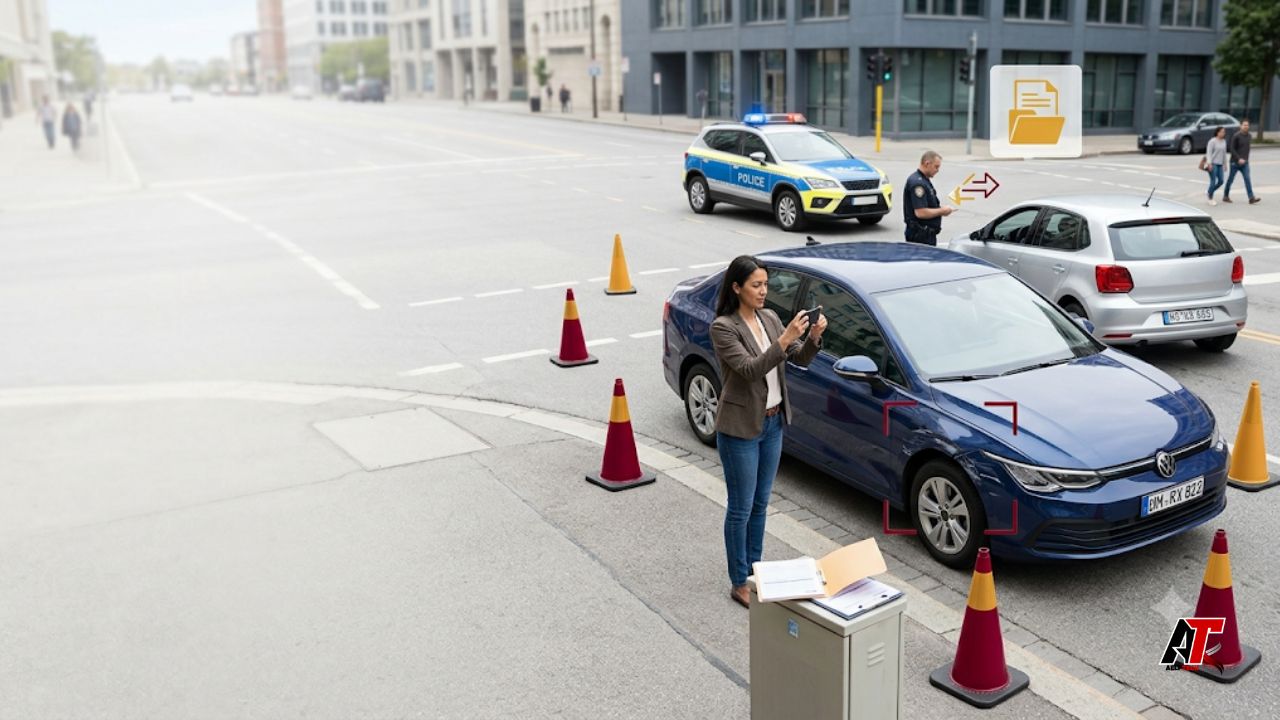
Strong evidence can prevent later disputes. Take wide photos that show the overall scene and close-up photos of damage. Photograph every vehicle from several angles, even areas that appear undamaged. Include traffic signals, stop signs, lane markings, skid marks, debris, road construction, weather, lighting, and anything blocking visibility.
Save dashcam footage before it is overwritten. Write down the date, time, location, direction of travel, and sequence of events while your memory is fresh.
6. Find Witnesses and Ask for Contact Details
Independent witnesses can be especially helpful when drivers tell different stories. Look for pedestrians, nearby drivers, passengers in unrelated vehicles, store employees, or residents who saw the collision. Ask for their name, phone number, and email address. Do not pressure them to support your version. Simply ask whether they are willing to describe what they observed to the police or insurance company.
Also notice nearby businesses, homes, traffic cameras, and doorbell cameras. Video may be deleted quickly, so note the location and request preservation as soon as possible. For a serious accident, a lawyer may be able to send a formal request before footage disappears.
7. Get Medical Attention Even If You Feel Fine
Adrenaline can hide pain immediately after a crash. Headaches, neck stiffness, back pain, dizziness, numbness, bruising, or difficulty concentrating may appear later. Seek emergency treatment for severe symptoms. For less urgent concerns, arrange a medical evaluation as soon as reasonably possible and explain that the symptoms followed a car accident.
Follow treatment instructions and attend recommended appointments. Keep copies of medical records, bills, prescriptions, travel expenses, and work notes. Delaying care can affect your health and may give an insurer a reason to argue that the injury was unrelated or less serious. Never exaggerate symptoms, but do not ignore them either.
8. Notify Your Own Insurance Company Promptly
Report the accident to your insurer even when the other driver appears clearly responsible. Policies often require prompt notice, and your insurer may help arrange towing, inspection, repairs, rental transportation, medical coverage, or communication with the other company. Give accurate facts and provide the evidence you collected.
Your insurer may pay under collision coverage and later seek reimbursement from the at-fault insurer. You might initially owe a deductible, so ask whether it can be recovered. Also ask about uninsured or underinsured motorist coverage when the other driver lacks enough insurance.
9. Be Careful When Speaking With the Other Driver’s Insurer
The other driver’s insurance adjuster may contact you quickly. Be courteous, but remember that the adjuster represents that company, not you. Provide basic claim information, but avoid speculation. You may be asked for a recorded statement. Before agreeing, understand why it is needed, whether local law requires it, and whether you should obtain legal advice first. You generally have stronger duties to cooperate with your own insurer than with the other driver’s insurer.
Avoid discussing the crash or your injuries on social media. Photos and comments can be taken out of context, so limit posting until the claim is resolved.
10. Arrange Towing, Inspection, and Repairs Carefully
Use a reputable towing company and confirm where the vehicle will be stored. Storage charges can increase daily, so contact the insurer quickly. Remove personal property only when it is safe and permitted. Do not authorize major repairs until the insurer has had a reasonable opportunity to inspect the vehicle, unless emergency work is needed to prevent additional damage.
Get a written repair estimate and ask about hidden damage, original equipment parts, aftermarket parts, warranties, alignment, sensors, air bags, and advanced driver-assistance systems. A low-speed crash can still damage components beneath the surface. If a child safety seat was in the vehicle, follow the seat manufacturer’s instructions; replacement may be recommended after a moderate or severe crash.
For additional automotive guidance, repair information, and vehicle options after a serious collision, you can also explore Paulette Auto. Always compare professional inspections, written estimates, and insurance requirements before making a repair or replacement decision.
11. Track Every Accident-Related Loss
Create one folder for the police report, claim numbers, photos, estimates, medical records, and correspondence. Keep a daily note of pain, physical limits, missed activities, and how the injury affects work or family responsibilities. Save receipts for towing, storage, rental cars, rideshares, medication, medical equipment, and travel to appointments.
If you miss work, request written confirmation of lost hours and income. Photograph damaged personal items and keep proof of purchase when available. Organized records make the claim easier to value.
12. Review Settlement Offers Before Accepting
An early offer may seem helpful when bills are arriving, but it may not include future medical care, hidden vehicle damage, lost income, reduced vehicle value, or other losses. Read every release carefully. Once you sign a full settlement and release, you may lose the right to request more money later, even if your condition becomes worse.
Ask the adjuster to explain the offer in writing and show how each amount was calculated. Compare the repair estimate with an independent shop’s assessment. Review your policy for appraisal or dispute options. If you believe an insurer is delaying unfairly, ignoring evidence, or failing to follow the policy, first escalate the issue within the company. You may also contact your state insurance department or similar local regulator.
13. Consider Legal Advice When the Claim Is Complicated
Not every accident requires a lawyer. A straightforward property-damage claim with no injury may be manageable on your own. Legal advice may be useful when there are serious injuries, permanent limitations, disputed fault, several vehicles, a commercial driver, a government vehicle, a hit-and-run, an uninsured driver, a low settlement offer, or pressure to sign documents quickly.
Deadlines for injury claims and lawsuits vary by jurisdiction. Some notice deadlines can be much shorter when a public agency is involved. A qualified local lawyer can explain deadlines, preserve evidence, communicate with insurers, and evaluate damages. Ask about fees, costs, experience, and who will handle your case before signing an agreement.
Common Mistakes to Avoid After a Not-at-Fault Accident
- Leaving the scene without exchanging information or following reporting rules.
- Arguing with the other driver or placing yourself in danger.
- Admitting fault, guessing, or changing your account of what happened.
- Failing to photograph the scene, damage, and relevant road conditions.
- Waiting too long to report the claim or seek medical care.
- Repairing or disposing of the vehicle before it can be inspected.
- Posting accident details, photos, or physical activities on social media.
- Accepting a settlement before understanding the full extent of losses.
Frequently Asked Questions
Should I call my insurance company if the accident was not my fault?
Yes. Promptly notifying your own insurer protects your coverage rights and may give you faster access to towing, repairs, rental benefits, medical coverage, or help dealing with the other insurer. Reporting a claim does not mean you are admitting fault.
Who pays my deductible when the other driver is at fault?
If your own collision coverage pays first, you may have to pay the deductible initially. Your insurer may try to recover its payment and your deductible from the responsible party or insurer. Recovery is not guaranteed and can take time, so ask your adjuster how the process works.
Can I choose my own repair shop?
In many places, you can choose the repair facility, although an insurer may recommend a network shop or require an inspection. Rules vary. Ask whether the work is guaranteed, what parts will be used, and who pays if the shop’s price is higher than the approved estimate.
What happens if the other driver has no insurance?
Your uninsured motorist, underinsured motorist, collision, medical payments, or personal injury protection coverage may help, depending on your policy and local law. Report the crash to police and your insurer, and ask which coverages and deadlines apply.
How long does a not-at-fault accident claim take?
The timeline depends on fault disputes, injuries, repair complexity, available evidence, insurer response, and local claim rules. Simple vehicle claims may resolve quickly, while injury or multi-vehicle cases can take much longer. Keep written records and ask for regular status updates.
Conclusion
The most important steps after a car accident that was not your fault are to protect your safety, report the crash, collect evidence, obtain medical care, and notify your insurer. Stay factual, keep organized records, and do not rush into a settlement before you understand the full damage. Even when another driver caused the collision, a strong claim depends on clear documentation and timely action.
Leave a Reply