
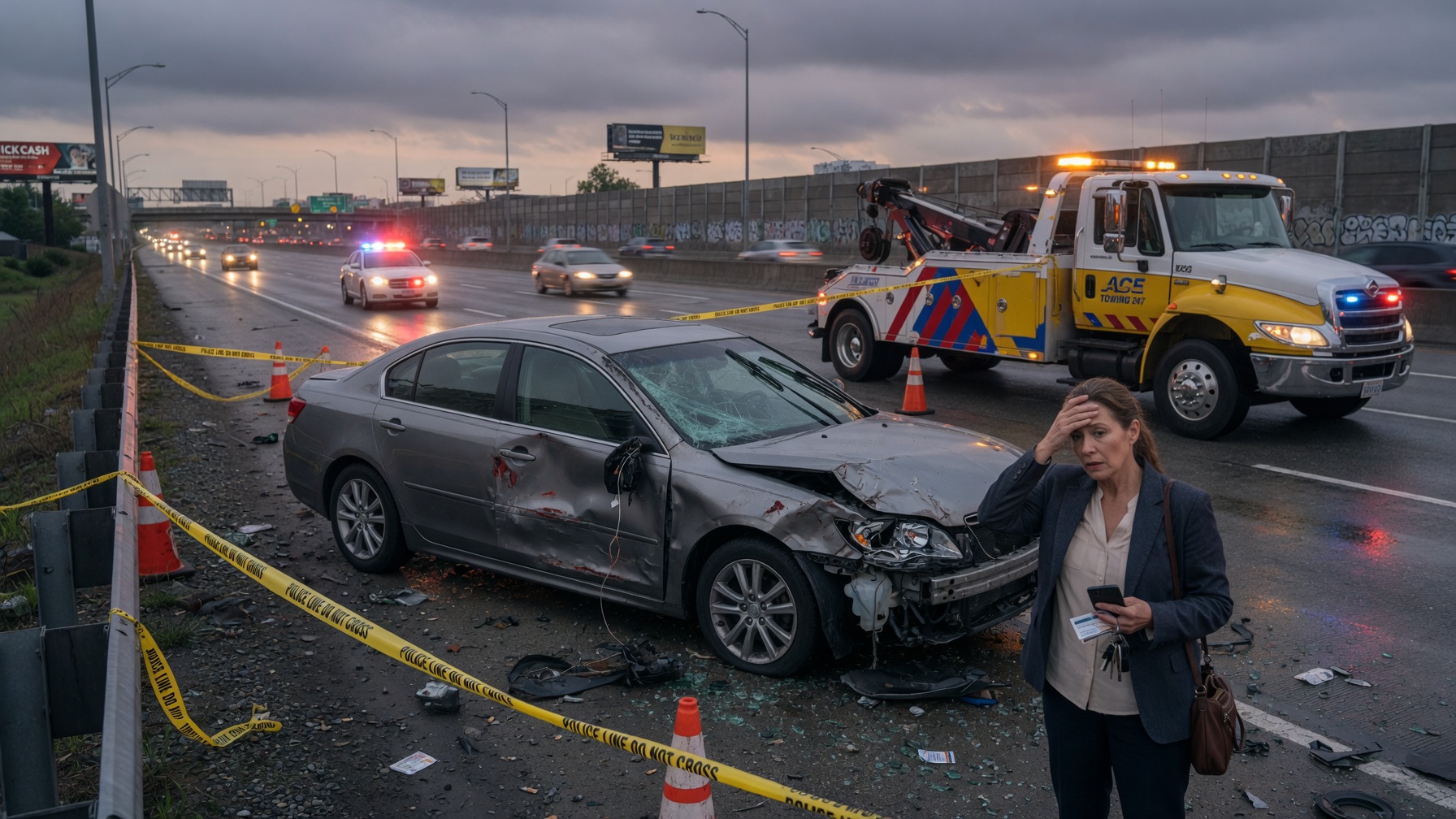
After a collision with a tow truck, the steps you take in the hours and days that follow can significantly impact your physical recovery and financial settlement. Tow trucks are heavy commercial vehicles. When they crash into standard passenger cars, the resulting property damage and bodily injuries are often severe. Navigating the aftermath after a collision with a tow truck is uniquely complex. You are not just dealing with another driver. You are facing a commercial towing company, their corporate insurance adjusters, and a web of liability rules that do not apply to standard car accidents. This comprehensive guide will walk you through the essential steps, legal nuances, and insurance strategies you need to protect your rights and secure the compensation you deserve.
Immediate Steps to Take After a Collision with a Tow Truck
The scene of an accident is chaotic. Your safety and your legal claim depend on the actions you take immediately.
Prioritize Medical Attention and Safety
First, check yourself and your passengers for injuries. Call 911 right away.’ Even if you feel fine, adrenaline can mask serious symptoms. Request police and medical responders.
Move your vehicle to the shoulder if it is safe to do so. Turn on your hazard lights. Be extremely cautious if you exit your car. Tow trucks often operate on busy highways or narrow roadside shoulders, putting you at high risk for a secondary crash.
Call the Police and File a Report
Never let a tow truck driver talk you into handling the accident privately. Commercial drivers risk losing their jobs over accidents. They may try to convince you to skip the police report.
You need an official police report. This document is the foundation of any insurance claim or personal injury lawsuit. When the police arrive, give them the facts. Do not speculate. Do not apologize.
Document the Commercial Vehicle Data
Tow trucks are commercial vehicles. They carry specific identifying information that standard cars do not. Collect the following:
- The driver’s name, contact information, and commercial driver’s license (CDL) number.
- The name, phone number, and address of the towing company.
- The truck’s license plate number and Department of Transportation (DOT) number. This is usually printed on the cab door.
- The insurance information for the towing company.
Take photos of everything. Photograph the damage to both vehicles. Take wide shots of the entire accident scene. Get pictures of skid marks, traffic signs, and road conditions. If the tow truck was carrying a vehicle at the time of the crash, photograph that vehicle as well. It could become part of the liability investigation.
Understanding Liability After a Collision with a Tow Truck
Liability means legal responsibility. In standard car accidents, liability usually rests with one of the drivers. In commercial vehicle accidents, liability can involve multiple parties.
The Tow Truck Driver
The driver is the most obvious at-fault party. They might have been speeding, distracted, or fatigued. They might have failed to secure a towed vehicle properly. Or they might have violated traffic laws by running a red light or failing to yield.
The Towing Company
Under a legal concept called “vicarious liability,” employers are responsible for the actions of their employees. If the tow truck driver caused the accident while performing their job duties, the towing company is liable.
Furthermore, the towing company might share direct liability. Did they fail to maintain the truck properly? Did they force the driver to work long, illegal hours? Did they hire a driver with a known history of DUIs or accidents? If so, the company’s negligence makes them a target of your claim.
The Driver of the Towed Vehicle
Sometimes, the vehicle being towed causes the crash. If the tow truck driver did not properly secure the disabled car, it might swing into traffic. In this case, the tow truck company is at fault for poor securing practices. In other cases, the driver of the towed vehicle might exit their car on the highway and distract the tow truck driver, contributing to the crash.
Third-Party Mechanics or Loaders
If a third party loaded the disabled vehicle onto the tow truck incorrectly, they could be liable. This is especially common with flatbed tow trucks carrying heavy equipment.
Why Commercial Insurance Claims Are Difficult
Filing a claim after a crash with a passenger car is stressful. Filing a claim after a collision with a tow truck is a much tougher battle.
Aggressive Corporate Insurance Adjusters
Towing companies carry large commercial liability policies. The insurance premiums are high. When a crash happens, the insurance company deploys specialized commercial adjusters. Their job is to protect the company’s profits. They will contact you quickly. They will sound friendly. However, their goal is to minimize your payout.
They may ask for a recorded statement. Do not provide one. They will use your words against you. They may offer a fast, lowball settlement. Do not accept it. Once you sign a release, you cannot ask for more money, even if your injuries get worse.
Higher Policy Limits Mean Bigger Fights
Standard auto policies might have $50,000 or $100,000 in liability limits. Commercial policies often carry limits of $500,000, $1’000,000, or more. Because there is so much money at stake, the insurance company will fight your claim aggressively. They will hire accident reconstruction experts and defense attorneys. You need an equally strong legal team to level the playing field.
Complex Evidence and Spoliation
Tow trucks often have dash cameras and GPS tracking systems. This data can prove the driver was speeding or texting. However, this evidence is owned by the towing company. If they suspect they are at fault, they might accidentally “lose” or overwrite this data. You need a lawyer to send a spoliation letter immediately. This legally forces the company to preserve all evidence.
Damages You Can Recover After a Collision with a Tow Truck
If you were injured, you deserve financial compensation. This is called “damages.” Damages are divided into two main categories.
Economic Damages
These are your hard financial losses. They include:
- Medical Bills: Emergency room visits, surgeries, hospital stays, physical therapy, and prescription medications.
- Lost Wages: Income you lost because you could not work while recovering.
- Loss of Earning Capacity: If your injuries prevent you from returning to your old job, or from working at all, you can claim future lost income.
- Property Damage: The cost to repair or replace your vehicle. It also includes damaged personal items like laptops or phones.
Non-Economic Damages
These are the human costs of the accident. They do not have a set dollar amount. They include:
- Pain and Suffering: Compensation for your physical pain and emotional trauma.
- Loss of Enjoyment of Life: If you can no longer participate in hobbies, sports, or activities you loved before the crash.
- Mental Anguish: Anxiety, depression, or PTSD resulting from the collision.
Punitive Damages
In rare cases, the court awards punitive damages. This happens if the tow truck driver acted with extreme recklessness. For example, if they were driving under the influence of alcohol, the court might punish them with extra financial penalties.
How to Protect Your Legal Rights
The insurance company will not tell you how to build a strong case. You must take proactive steps to protect yourself.
Seek Immediate Medical Treatment
Go to the doctor right away. Follow all medical advice. If you wait days or weeks to seek treatment, the insurance adjuster will argue that you were not really hurt. They will say your injuries are fake or unrelated to the crash. Keep all your medical appointments and save every bill.
Do Not Sign Anything Without Legal Review
Insurance companies will push you to sign a release of liability. They might offer a check that covers your immediate medical bills. Do not cash it. Cashing a check often constitutes acceptance of a settlement. Let a personal injury attorney review any documents before you sign them.
Avoid Posting on Social Media
Do not post about your accident or your injuries online. Insurance adjusters monitor social media. If you post a picture of yourself at a party or doing yard work, they will use it to claim you are not injured. Stay off social media until your case is fully resolved.
Hire a Personal Injury Attorney
Commercial vehicle claims are too complex to handle alone. You need a lawyer who understands state and federal towing regulations. You4 A skilled2 attorney will handle the insurance adjusters. They willF will gather the black box data- data and dashcam footage. They will hire medical experts and accident reconstructionists. Most importantly, they will take your case to trial if the insurance company refuses a fair settlement.
Conclusion
Recovering after a collision with a tow truck is a daunting process. You are facing off against a commercial entity, aggressive insurers, and complex liability laws. However, you do not have to face it alone. By taking immediate action at the scene, understanding the multiple layers of liability, and refusing to accept lowball insurance offers, you can protect your future. The most critical step you can take after a collision with a tow truck is consulting with an experienced personal injury attorney. They have the resources and knowledge to investigate the crash, hold the negligent parties accountable, and fight for the maximum compensation you need to rebuild your life.
Frequently Asked Questions (FAQs)
1. Who is liable if+ if a tow truck hits my car?
C The tow truck driver, the towing company that employs themC them, or even the owner of the towed vehicle could share liability depending on the cause of the crash.
2. Do tow trucks have higher insurance limits?
Yes, tow trucks are commercial vehicles and typically carry much higher liability policy limits than standard personal passenger automobiles.
3. What if the tow truck driver was not carrying a towed vehicle?
The same commercial liability rules apply; the towing company is still vicariously liable for the actions of their employee while on the job.
4. Should I give a recorded statement to the tow truck’s insurance company?
No, you should never provide a recorded statement to a commercial insurance adjuster without first consulting a personal injury attorney.
5. Can I sue the towing company for poor maintenance?
Yes, if an investigation reveals that mechanical failure due to poor maintenance caused the accident, the towing company can be held directly liable.
6. What if I was partially at fault for the crash?
Even if you share some fault, many states follow comparative negligence laws, meaning you can still recover a reduced percentage of compensation based on your level of blame.
Leave a Reply