
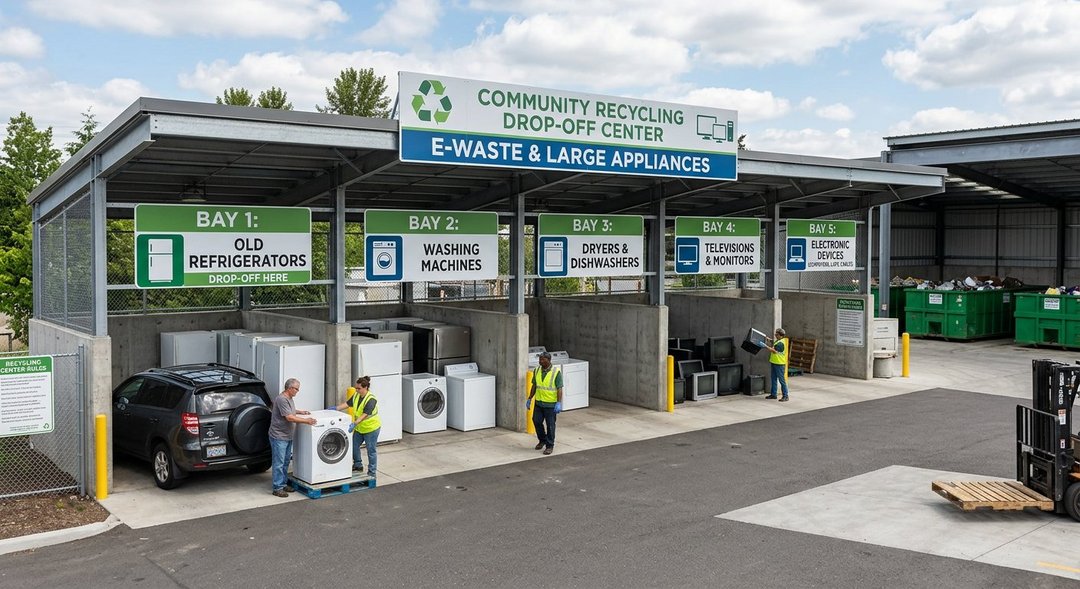
Clearing unwanted furniture, broken appliances, old mattresses, and other bulky belongings can quickly turn a simple home cleanout into a demanding project. Large items are difficult to move, may contain materials requiring special handling, and cannot always be placed in ordinary trash bins. Understanding safe household disposal practices helps homeowners avoid injuries, reduce unnecessary waste, and choose appropriate removal methods for items that no longer serve a useful purpose.
Whether preparing for a move, renovating a property, downsizing, or reclaiming valuable storage space, responsible household cleanouts require more than simply throwing unwanted belongings away. A practical disposal plan should consider item condition, lifting safety, local waste regulations, recycling opportunities, and available collection services. By organizing the process carefully, homeowners can remove bulky items efficiently while protecting their property, community, and the environment.
Why Safe Household Item Disposal Matters
A home cleanout often involves objects that are significantly heavier or more difficult to manage than everyday waste.
Sofas, wardrobes, refrigerators, washing machines, and large cabinets can create physical and logistical challenges.
Improper handling may result in injuries, damaged flooring, blocked access routes, or unsafe waste disposal.
Some household items also contain electrical components, refrigerants, batteries, or other materials that require specialized treatment.
For these reasons, responsible removal should begin with understanding what can be reused, recycled, collected, or professionally disposed of.
Common Problems During a Home Cleanout
Several challenges frequently arise when removing bulky items.
- Furniture that cannot fit through standard doorways.
- Heavy appliances requiring specialist moving equipment.
- Uncertainty about local bulky waste collection rules.
- Limited space for temporary storage.
- Items containing hazardous or regulated materials.
- Difficulty separating recyclable materials.
- Unexpected removal or disposal costs.
- Physical strain from lifting oversized objects.
Planning ahead can reduce many of these problems.
However, some items require professional assistance because of their weight, construction, or potential safety hazards.
What Counts as Large Household Waste?
Large household waste generally refers to unwanted items that are too bulky or heavy for ordinary residential waste collection.
The precise definition varies according to local authority rules and waste management arrangements.
Common examples include furniture, major appliances, mattresses, and large recreational equipment.
Bulky Furniture
Furniture commonly removed during cleanouts includes:
- Sofas and armchairs.
- Dining tables.
- Bed frames.
- Mattresses.
- Wardrobes.
- Bookshelves.
- Cabinets.
- Large desks.
Some furniture can be donated or resold when it remains in suitable condition.
Damaged items may require recycling or disposal.
Large Domestic Appliances
Major appliances often require separate collection arrangements.
Examples include refrigerators, freezers, washing machines, dryers, dishwashers, and cookers.
Electrical appliances should not automatically be treated as ordinary household rubbish.
Some contain materials that require controlled recovery or treatment.
Outdoor and Garden Items
Large outdoor belongings may also create disposal challenges.
These can include garden furniture, damaged storage units, old grills, and bulky recreational equipment.
Local collection rules determine whether particular items are accepted.
7 Smart Ways to Dispose of Large Household Items Safely
Choosing the correct removal method depends on item condition, local services, available transportation, and safety requirements.
1. Start With a Detailed Household Cleanout Plan
A successful cleanout begins before any heavy lifting takes place.
Walk through the property and identify the items that need to be removed.
Consider which belongings are still useful, which require repairs, and which are no longer suitable for continued use.
Creating an inventory can help prevent rushed decisions.
Organize Items Into Categories
A practical sorting system may include:
- Items to keep.
- Items suitable for donation.
- Items that can be sold.
- Materials accepted for recycling.
- Items requiring specialist disposal.
- General waste approved for local collection.
This approach helps reduce unnecessary disposal.
It also allows homeowners to arrange suitable collection services before moving heavy objects.
Create a Realistic Schedule
Large household cleanouts can take longer than expected.
Allow time for sorting, contacting service providers, arranging transportation, and cleaning the property afterward.
For major projects, dividing work across several days may be safer than attempting everything at once.
2. Donate Furniture That Is Still Usable
Donation can be a practical option for furniture that remains clean, functional, and structurally sound.
Charities, community organizations, and furniture reuse programs may accept suitable items.
However, acceptance policies vary.
Some organizations cannot accept damaged furniture, heavily stained mattresses, or products that do not meet applicable safety standards.
What Furniture Can Be Donated?
Potentially suitable items include:
- Clean sofas in good condition.
- Functional tables and chairs.
- Undamaged cabinets.
- Usable bed frames.
- Bookshelves.
- Office furniture.
- Selected household appliances.
Contact the organization before arranging delivery.
Some charities offer collection services, while others require donors to transport items themselves.
Check Upholstered Furniture Requirements
Upholstered furniture may be subject to fire safety and labeling requirements.
For example, certain jurisdictions regulate the resale or donation of upholstered products.
Charities may refuse items that lack required labels or fail condition checks.
Never assume that every unwanted sofa or mattress can be donated.
3. Use Local Bulky Waste Collection Services
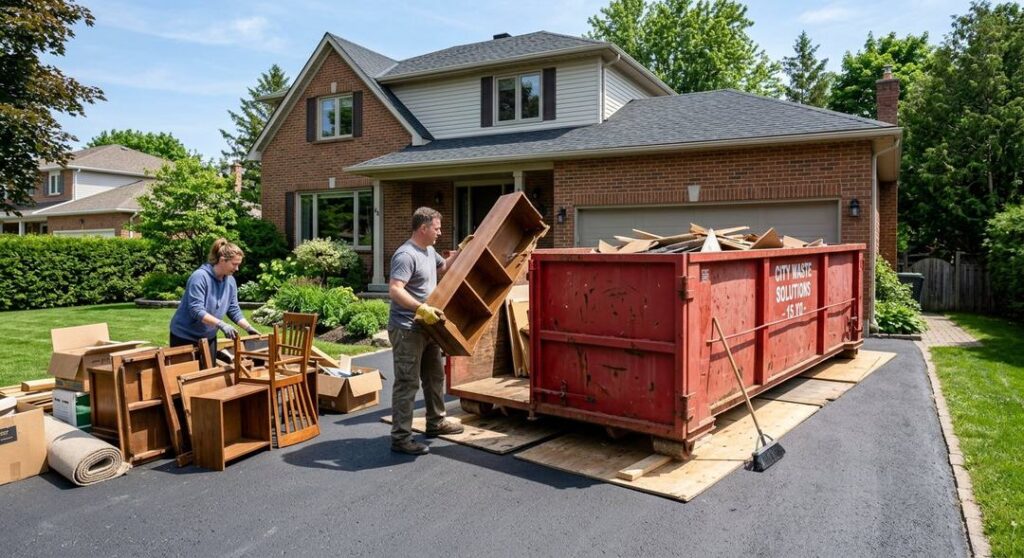
Many municipalities and local councils provide collection services for oversized residential items.
These services may operate through scheduled appointments or designated collection periods.
Availability and pricing depend on the area.
A local bulky waste collection service can be useful when homeowners cannot transport large household items independently.
How Bulky Waste Collection Works
The process commonly involves contacting the local waste authority, identifying the items, and arranging an approved collection time.
Some services require advance payment.
Others limit the number or type of items accepted.
Homeowners may need to place approved items at a designated collection point.
Follow Placement Instructions
Bulky waste should not be left on public pavements or roads without authorization.
Incorrect placement can obstruct pedestrians, wheelchair users, and emergency access.
Some locations impose penalties for unauthorized dumping.
Always follow the collection provider’s instructions.
4. Recycle Suitable Household Materials
Recycling can help recover useful materials from unwanted products.
However, not every large item can be placed in a conventional recycling container.
Furniture and appliances often contain several materials that require separation.
Metal Recycling
Metal bed frames, shelving, and certain appliance components may be suitable for scrap metal recycling.
Facilities may have specific preparation requirements.
Remove loose hazards only when it is safe to do so.
Wood Recycling
Some recycling facilities accept untreated or appropriately classified wood.
However, painted, laminated, pressure-treated, or composite materials may require different handling.
Acceptance rules vary by facility.
Appliance Recycling
Electrical appliances often contain recoverable metals and other materials.
Specialist recycling facilities may process these products.
However, appliances containing refrigerants require particular care.
Mattress Recycling
Mattresses contain materials such as steel springs, foam, textiles, and wood.
Specialist facilities may recover some of these components.
Availability depends on local recycling infrastructure.
5. Hire a Professional Junk Removal Service
Professional removal services can be useful for homeowners dealing with multiple heavy items.
These businesses typically provide labor and transportation.
Some also coordinate recycling or disposal through approved facilities.
However, service quality and waste handling practices vary.
When Professional Removal Makes Sense
Professional assistance may be appropriate when:
- Several large items must be removed.
- Appliances are difficult to access.
- Furniture cannot be moved safely by available helpers.
- The property has narrow stairways.
- The homeowner has physical limitations.
- The cleanout must be completed within a limited period.
- Specialized transportation is required.
Before booking, confirm exactly what the service includes.
Choosing a Responsible Removal Company
Ask whether the company is appropriately licensed or registered where required.
Request a written quotation and clarify disposal arrangements.
Homeowners should also ask whether the provider carries suitable insurance.
A reputable service should explain how unwanted household materials are handled rather than making unsupported claims that everything will be recycled.
6. Sell Valuable Household Items
Selling unwanted belongings may help offset cleanout expenses.
Furniture, appliances, and decorative items can retain resale value when they are functional and in good condition.
Online marketplaces, local classified platforms, and secondhand shops may provide opportunities.
Prepare Items for Sale
Clean suitable surfaces, take clear photographs, and describe the condition accurately.
Mention visible damage, missing components, or functional limitations.
Accurate descriptions reduce misunderstandings.
Prioritize Personal Safety
When arranging collection by a buyer, consider meeting arrangements carefully.
Avoid sharing unnecessary personal information.
For large items collected from home, keep access limited to appropriate areas.
Use secure payment methods and remain alert to common marketplace scams.
7. Arrange Specialist Disposal for Hazardous Items
Some household belongings contain substances or components that should not enter ordinary waste streams.
Examples may include refrigerators, certain batteries, chemicals, and electrical products.
These items require particular attention.
Refrigerators and Freezers
Cooling appliances may contain refrigerants and insulation materials requiring controlled treatment.
Do not cut refrigerant lines or attempt to release refrigerants.
Use an approved collection or recycling service.
Batteries
Batteries can create fire risks when damaged or disposed of incorrectly.
Rechargeable lithium-ion batteries are particularly important to handle carefully.
Follow local battery recycling guidance.
Paints and Chemicals
Certain paints, solvents, pesticides, and cleaning chemicals may be classified as hazardous waste.
Do not pour unwanted chemicals into drains or mix incompatible substances.
Contact the relevant local authority for disposal instructions.
How to Safely Move Heavy Household Furniture
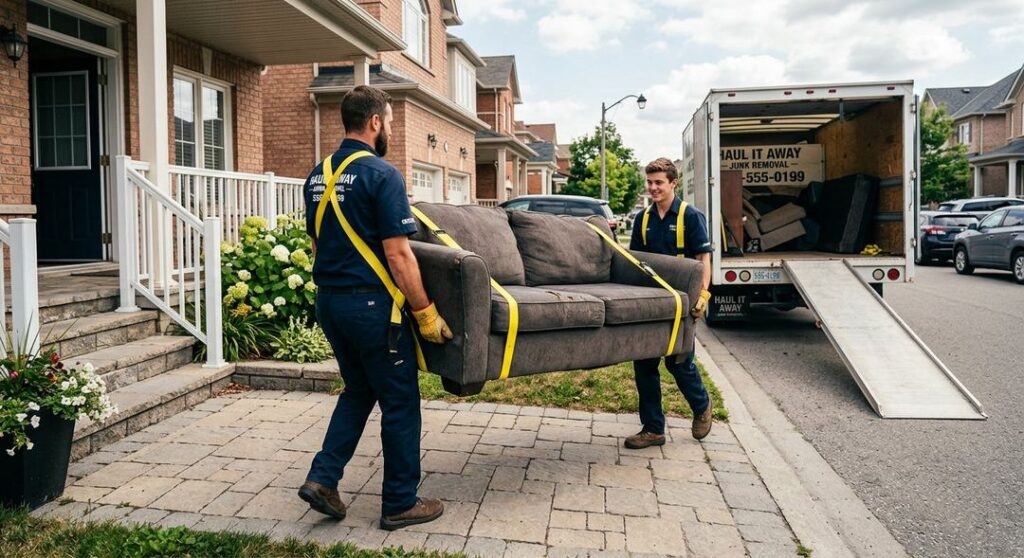
Moving bulky furniture is one of the most physically demanding parts of a cleanout.
Improper lifting can cause injuries and property damage.
The safest approach is to evaluate the item before attempting movement.
Assess Weight and Dimensions
Consider whether the furniture can pass through doors, hallways, and staircases.
Measure large objects and narrow access points.
If the item is too heavy or awkward to control safely, arrange appropriate assistance.
Clear the Moving Route
Remove loose rugs, boxes, cables, and other obstacles.
Ensure doors can open fully.
Protect vulnerable flooring and wall corners where appropriate.
Use Suitable Moving Equipment
Furniture dollies, moving straps, and protective blankets can help with some tasks.
However, equipment must be used correctly.
Improper use can create additional hazards.
Avoid Unsafe Lifting
Do not attempt to lift an object that exceeds your physical capacity.
Keep movements controlled and avoid twisting while carrying heavy loads.
For particularly heavy or awkward items, professional movers may be the safest choice.
Disassemble Furniture When Appropriate
Some household furniture can be taken apart for easier transportation.
Remove detachable shelves, drawers, or legs when the manufacturer allows it.
Keep screws and fittings organized if the item will be reused.
Do not dismantle furniture in ways that compromise structural safety.
Household Appliance Disposal and Recycling
Appliances require special consideration because they contain electrical components and, in some cases, regulated materials.
Refrigerator Disposal
Refrigerators should be handled through approved appliance collection or recycling programs.
Some retailers offer removal services when delivering replacement appliances.
Availability varies.
Never puncture refrigeration components or attempt to remove refrigerants without appropriate qualifications.
Washing Machine Disposal
Washing machines are heavy and may contain residual water.
Before moving one, follow manufacturer instructions for disconnecting water and electricity.
Professional assistance may be appropriate.
Dishwasher Disposal
Dishwashers may be connected to electrical, water, and drainage systems.
Disconnecting built-in appliances can involve additional risks.
Use qualified assistance where necessary.
Cooker and Oven Disposal
Gas appliances should be disconnected by appropriately qualified professionals.
Electrical cookers may also require specialist disconnection depending on their installation.
Safety should take priority over saving removal costs.
Household Waste Disposal Methods Compared
Different disposal methods offer different advantages.
| Disposal Method | Best Suited For | Main Advantage | Important Consideration |
|---|---|---|---|
| Donation | Usable furniture | Extends product life | Acceptance requirements |
| Resale | Valuable items | May recover money | Time and buyer coordination |
| Bulky waste collection | Approved oversized items | Convenient local option | Collection restrictions |
| Recycling center | Accepted recyclable materials | Material recovery | Transportation requirements |
| Junk removal service | Multiple heavy items | Labor and transport | Service costs |
| Specialist recycling | Appliances and regulated items | Appropriate material handling | Facility availability |
| Retailer take-back | Selected old appliances | Convenient during replacement | Scheme-specific conditions |
The most appropriate method depends on the item and local regulations.
How Much Does Household Junk Removal Cost?
Household junk removal prices vary according to location, waste volume, item weight, accessibility, and disposal requirements.
Some companies charge according to the amount of space occupied in a removal vehicle.
Others use individual item rates or hourly pricing.
Factors Affecting Removal Costs
Common pricing considerations include:
- Number of items.
- Total waste volume.
- Weight and material type.
- Property access.
- Staircases and elevators.
- Labor requirements.
- Transportation distance.
- Disposal facility charges.
- Specialist handling requirements.
- Urgency of collection.
A large household cleanout may cost more than removing a single sofa.
However, professional services can reduce the need for personal transportation and heavy lifting.
How to Avoid Unexpected Charges
Request an itemized quotation.
Explain the types of belongings involved and provide photographs when requested.
Ask whether the price includes labor, loading, transport, and disposal fees.
Clarify what happens if the final volume exceeds the original estimate.
Eco-Friendly Household Cleanout Strategies
Environmentally responsible disposal involves reducing unnecessary waste and selecting appropriate recovery methods.
However, no disposal method is entirely free from environmental impacts.
Transportation, processing, and manufacturing all consume resources.
Reuse Before Recycling
Reusing a functional item can avoid the immediate need to manufacture a replacement.
Donation, repair, and resale may therefore be worth considering before recycling.
However, damaged or unsafe products should not be passed to others.
Repair Suitable Items
Some furniture and appliances can be repaired economically.
Repair may extend useful life.
However, electrical repairs and structural modifications should be performed safely.
Separate Materials Correctly
Contaminated or incorrectly sorted materials may be rejected by recycling facilities.
Follow local instructions rather than assuming that all plastics, wood, or metals are accepted.
Avoid Illegal Dumping
Unauthorized dumping can damage local environments and create public safety problems.
Use approved collection services and facilities.
Reduce Future Clutter
Thoughtful purchasing decisions can reduce the frequency of major cleanouts.
Consider durability, repairability, storage needs, and actual usefulness before buying large household items.
Common Mistakes During Household Cleanouts
Several avoidable mistakes can make disposal more expensive or dangerous.
Trying to Move Everything Alone
Heavy furniture can cause serious injuries.
Arrange assistance when necessary.
Mixing Hazardous Waste With General Rubbish
Batteries, chemicals, and certain appliances may require separate handling.
Incorrect disposal can create safety and environmental risks.
Booking Removal Without Checking Restrictions
Collection services may refuse certain items.
Confirm acceptance before arranging pickup.
Leaving Items Outside Too Early
Unapproved placement may obstruct access or violate local rules.
Follow collection schedules.
Ignoring Donation Requirements
Charities may reject damaged or noncompliant furniture.
Confirm eligibility before transporting items.
Choosing Unverified Waste Collectors
An irresponsible collector may dispose of waste illegally.
Check appropriate registrations, licensing, and disposal practices.
How to Organize a Whole-House Cleanout
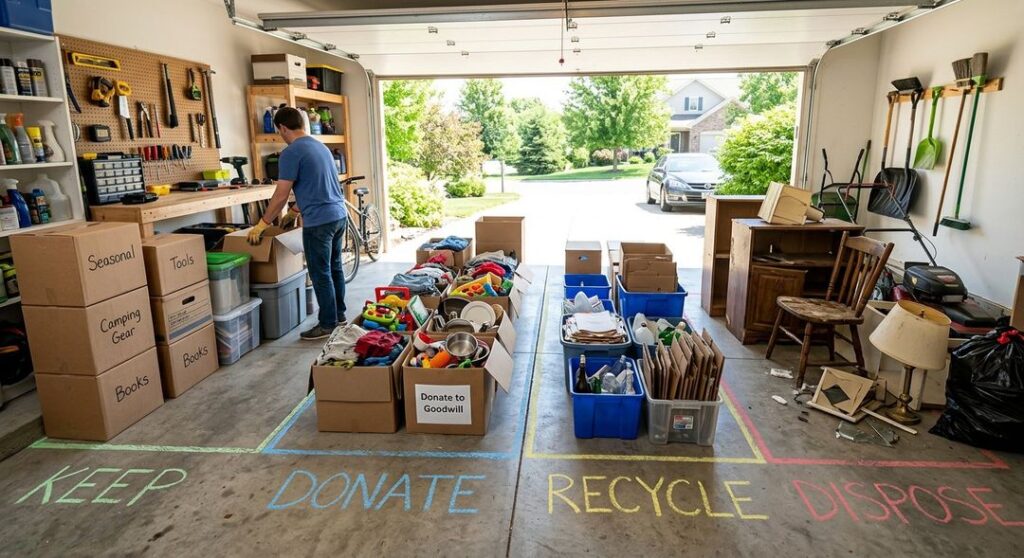
Large projects become easier when divided into manageable stages.
Start With Storage Areas
Garages, lofts, basements, and spare rooms often contain unused belongings.
However, some areas may present additional hazards, including unstable storage or limited access.
Use appropriate precautions.
Work Room by Room
Completing one area before moving to another can reduce confusion.
Create separate spaces for items being kept, donated, sold, or removed.
Label Large Items
Clearly identifying disposal categories can help prevent accidental removal of valuable belongings.
Arrange Collections in Advance
Book removal services before the cleanout reaches its final stages.
This reduces the need to store bulky waste for extended periods.
Inspect the Property Afterwards
Check for overlooked items, damage, and remaining waste.
Ensure access routes are clear.
Household Cleanout Safety for Older Adults and Families
Some households require additional planning because residents may have mobility limitations or other practical needs.
Avoid Unnecessary Physical Strain
Older adults and individuals with health conditions should not attempt heavy lifting beyond their capabilities.
Professional assistance may be appropriate.
Keep Children Away From Moving Areas
Children should remain clear of heavy furniture, tools, and removal equipment.
Large objects can tip unexpectedly.
Protect Pets
Pets may become distressed or enter unsafe areas during a cleanout.
Keep them away from active moving routes.
Manage Dust and Allergens
Stored belongings can accumulate dust and other contaminants.
Use appropriate cleaning methods and ventilation.
If mold, asbestos, or other significant hazards are suspected, seek qualified advice before disturbing materials.
Preparing Household Items for Collection
Proper preparation can make collection safer and more efficient.
Remove Personal Belongings
Check drawers, cabinets, and storage compartments.
Documents, jewelry, keys, and other valuables can be overlooked.
Disconnect Appliances Safely
Follow manufacturer instructions.
Use qualified professionals for connections requiring specialist work.
Secure Loose Components
Remove or secure detachable parts that could fall during movement.
Protect Fragile Materials
Glass doors, mirrors, and similar components may require special handling.
Check whether the collection service accepts them.
Confirm Collection Details
Verify the date, location, accepted items, and any preparation requirements.
When Should You Hire Professional Household Removal Services?
Professional assistance may be worthwhile when the project involves physical risks or complicated logistics.
Large cleanouts often include items that cannot be moved safely by one person.
Multiple Large Furniture Pieces
Removing several sofas, wardrobes, and beds may require additional labor and transportation.
Properties With Difficult Access
Narrow staircases, upper floors, and restricted parking can complicate removal.
Estate and Downsizing Cleanouts
Estate-related or downsizing projects may involve large quantities of belongings.
These situations often require careful sorting and respectful handling.
Renovation Preparation
Before renovation work begins, furniture and unwanted belongings may need to be removed.
However, construction debris may be subject to different collection rules from ordinary household waste.
Time-Sensitive Moves
When a property must be cleared by a specific deadline, professional services may provide practical support.
Always confirm availability and completion terms.
Legal and Local Rules for Household Waste Disposal
Waste disposal requirements differ between countries, states, municipalities, and local councils.
Homeowners should consult the relevant local authority.
Bulky Waste Collection Rules
Some areas require appointments or fees.
Others provide limited free collections.
Restrictions may apply to appliances, mattresses, and commercial waste.
Illegal Dumping Regulations
Leaving unwanted items in unauthorized locations may result in penalties.
The exact consequences depend on local law.
Waste Carrier Requirements
In some jurisdictions, commercial waste collectors must hold appropriate registrations or licenses.
For example, England requires relevant waste carriers to register with the Environment Agency, subject to applicable rules.
Homeowners should verify the requirements in their location.
Hazardous Waste Restrictions
Regulated materials may need to be delivered to designated facilities.
Do not assume that ordinary collection services can accept them.
How to Reduce Household Clutter Long Term
A successful cleanout can create an opportunity to improve future storage habits.
Review Storage Needs
Evaluate whether existing furniture and storage systems suit daily routines.
Avoid Unnecessary Purchases
Consider whether new items will provide lasting value.
Donate Usable Items Regularly
Periodic donations may prevent unwanted belongings from accumulating.
Maintain Appliances
Proper maintenance may extend appliance life.
However, unsafe or severely damaged appliances should not remain in use.
Schedule Occasional Reviews
A seasonal or annual review can help identify belongings that are no longer needed.
The objective is practical organization rather than removing items simply to achieve an arbitrary level of minimalism.
The Future of Household Waste Management
Waste management systems continue to develop as communities seek better methods for handling bulky products.
Some areas are expanding reuse programs, repair initiatives, and specialized recycling services.
However, access varies significantly.
Product Reuse Programs
Community reuse organizations may help functional furniture remain in circulation.
Improved Appliance Recycling
Specialist facilities can recover certain materials from discarded appliances.
The effectiveness of recovery depends on technology and local infrastructure.
Extended Producer Responsibility
Some jurisdictions require manufacturers or producers to contribute to waste management for particular products.
The rules vary by product category and location.
Digital Collection Booking
Online booking systems can simplify bulky waste collection where available.
However, service capacity and local rules still determine practical availability.
FAQ’s
1. How Do I Dispose of Large Household Items Safely?
Sort items by condition and material, use approved collection or recycling services, and arrange professional assistance for objects that cannot be moved safely.
2. Can I Put Large Household Furniture in Regular Trash?
Usually, bulky furniture requires special collection or disposal arrangements. Check local waste authority rules before placing oversized items outside.
3. What Is the Cheapest Way to Remove Household Junk?
Donation, resale, and certain municipal collection programs may reduce expenses. The most affordable option depends on local services and item condition.
4. Can Old Household Appliances Be Recycled?
Many appliances can be recycled through approved facilities. Refrigerators, batteries, and certain electrical products may require specialist handling.
5. Should I Hire Professionals for a Household Cleanout?
Professional removal may be worthwhile when items are heavy, access is difficult, or multiple bulky objects must be transported safely.
6. How Can I Make Household Disposal More Environmentally Responsible?
Prioritize safe reuse, donation, repair, and appropriate recycling. Use authorized disposal services for items that cannot be recovered.
Conclusion
Disposing of large household items safely requires thoughtful planning, appropriate handling, and an understanding of local waste regulations. Furniture, appliances, mattresses, and other bulky belongings can create physical hazards and disposal challenges when handled incorrectly. By sorting items before removal, identifying opportunities for donation or recycling, and arranging suitable collection services, homeowners can make the cleanout process more manageable. Professional assistance may be particularly valuable when heavy objects, difficult access routes, or regulated materials are involved.
A responsible household cleanout should balance convenience, safety, cost, and environmental considerations. Homeowners can reduce unnecessary waste by reusing functional belongings, repairing suitable products, and choosing legitimate removal providers. Checking collection restrictions, preparing items correctly, and avoiding unsafe lifting practices can also prevent common problems. With an organized approach and realistic expectations, clearing unwanted possessions becomes an opportunity to create a cleaner, safer, and more functional living environment.
Leave a Reply