
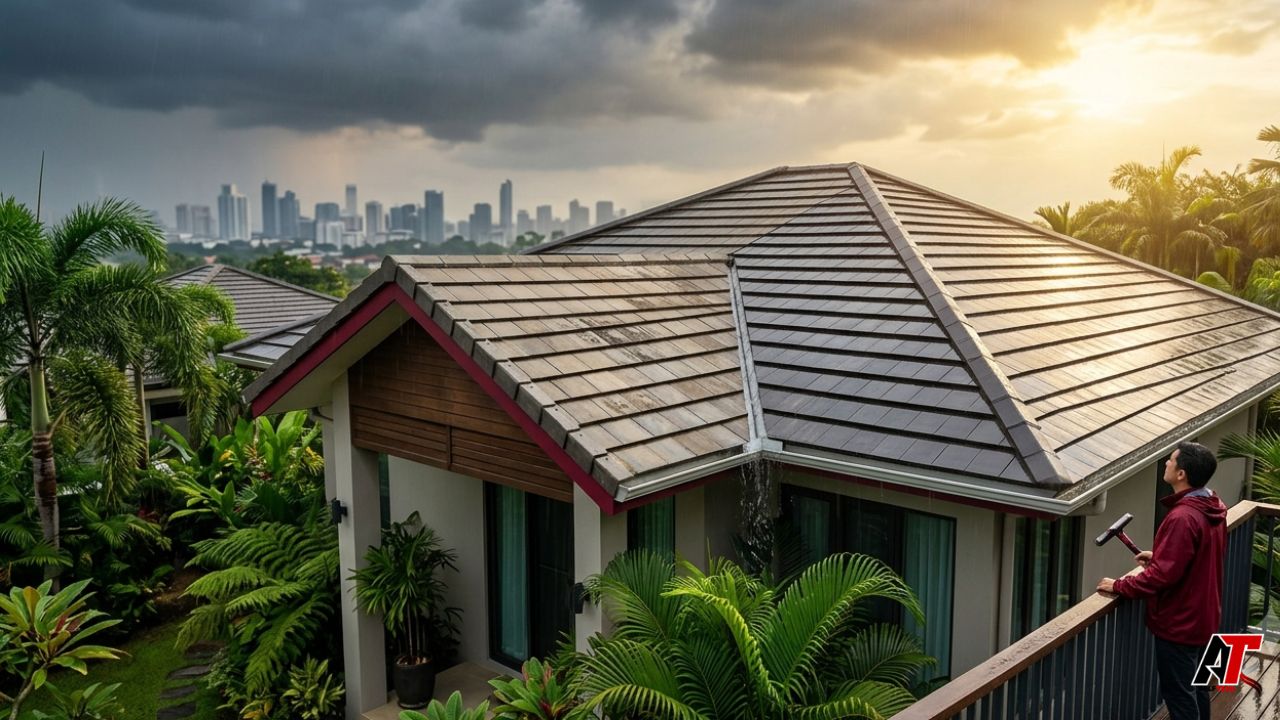
A roof in a tropical climate works harder than many homeowners realize. It must absorb intense sunlight, release trapped heat, withstand sudden downpours, resist wind-driven rain, and dry out in air that may remain humid for most of the day. These conditions rarely destroy a sound roof overnight. Instead, they accelerate small weaknesses until coatings chalk, seals separate, fasteners corrode, membranes blister, tiles shift, and moisture reaches the structure below.
Understanding tropical weather roof lifespan is therefore less about memorizing a fixed number of years and more about managing exposure. Material quality matters, but installation, drainage, ventilation, maintenance, roof shape, shade, salt air, and repair timing can matter just as much. The following guide explains why tropical roofs age faster and what homeowners can do to protect them without waiting for an obvious leak.
Why Tropical Climates Are So Hard on Roofs
Tropical weather combines several stressors that reinforce one another. Strong solar radiation heats the roof surface, while high humidity slows drying. Heavy rain tests every lap, joint, screw, flashing, valley, and penetration. Wind can push water beneath roofing components that perform well during gentle rainfall. Organic growth then holds moisture against the surface, and coastal air adds salt that speeds corrosion on exposed metal.
In places such as Singapore, warm temperatures, frequent thunderstorms, heavy rainfall, and seasonal gusts are normal features of the climate. A roof must repeatedly move from hot and dry to suddenly wet, then remain damp in humid air. That repeated cycling is one reason a product that lasts well in a mild climate may require more maintenance or a different specification in the tropics.
Heat and UV Radiation Break Materials Down
Sunlight does more than warm a home. Ultraviolet radiation can fade finishes, dry out asphaltic products, weaken some plastics, and degrade exposed sealants. Dark surfaces may become much hotter than the surrounding air, especially when the roof has little shade or airflow. Daily heating causes roofing materials to expand, followed by contraction as clouds, rain, or nightfall cool the surface.
Over thousands of cycles, movement can fatigue joints and fasteners. Asphalt shingles may lose protective granules and become brittle. Membranes can develop surface crazing, shrinkage, or stress around seams. Polycarbonate panels may discolor or crack if the material is not designed for prolonged UV exposure. Reflective or cool-roof products can reduce absorbed solar heat, but homeowners should select systems suited to the roof type and follow the manufacturer’s preparation, coating-thickness, and maintenance requirements.
Heavy Rain Finds the Smallest Weakness
Tropical downpours deliver large volumes of water in a short period. Even a small blockage can overwhelm a gutter, scupper, roof drain, or valley. Water may then pond on a low-slope roof, back up beneath tiles, spill against walls, or enter through deteriorated flashing. Roof-to-wall intersections, valleys, skylights, vents, pipe penetrations, and poorly sealed fasteners are common entry points because they interrupt the main water-shedding surface.
A leak may appear far from the actual defect. Water can travel along rafters, decking, insulation, wiring, or ceiling channels before becoming visible indoors. Stains should therefore be investigated rather than merely repainted. Effective repairs restore the water-management path: sound underlayment, correctly lapped flashing, secure roofing, open drainage, and properly sealed penetrations. Surface patching alone can hide a defect while moisture continues to damage concealed materials.
Humidity Slows Drying and Encourages Hidden Damage
High humidity reduces the speed at which wet roofing and roof cavities dry. Moisture that enters through a small defect can remain long enough to support mold, wood decay, corrosion, insulation damage, or delamination of roof-deck products. Condensation can also form when warm, moisture-laden air contacts cooler surfaces, particularly around air-conditioned spaces, poorly sealed ducts, or roof assemblies that were not designed for local conditions.
Ventilation and moisture control must be treated as a complete building-science issue. More ventilation is not automatically better if it pulls humid outdoor air into the wrong part of the assembly. The correct solution depends on whether the roof is vented or unvented, where insulation and air barriers are located, and how the home is cooled. A qualified building professional should assess recurring condensation, musty odors, rusted fasteners, damp insulation, or mold rather than relying on a universal attic-vent formula.
Algae, Moss, Lichen, and Debris Hold Moisture
Warmth and moisture encourage biological growth. Dark streaks may be algae, while shaded and poorly drained sections can support moss or lichen. These organisms are not only cosmetic. Thick growth and accumulated leaves can trap moisture, slow drainage, lift some roofing components, and hide cracks or corrosion. Debris collecting behind skylights, in valleys, or around roof equipment can create miniature dams during a storm.
Homeowners should avoid aggressive pressure washing, harsh chemicals, or scraping methods that may remove protective coatings, loosen granules, damage tiles, or void a warranty. Cleaning should match the roofing material and manufacturer’s instructions. Safe ground-level observation is useful, but steep, wet, fragile, or high roofs should be cleaned by trained professionals with appropriate access and fall protection.
Salt Air Accelerates Corrosion Near the Coast
Coastal tropical homes face an additional challenge: airborne salt. Salt deposits attract moisture and can speed corrosion on fasteners, flashings, gutters, roof sheets, brackets, and cut metal edges. Corrosion often begins at scratches, incompatible-metal connections, unprotected drill points, or locations where water and debris remain trapped. Once protective coatings fail, deterioration can spread beneath the visible surface.
Material compatibility is crucial. Stainless steel grade, coating system, fastener type, sealant, and separation between dissimilar metals should be specified for the exposure. Periodic fresh-water rinsing may help certain systems where manufacturers recommend it, but rinsing is not a substitute for repairing damaged coatings or replacing corroded components. Early attention is cheaper than waiting until fasteners lose holding strength or sheet edges perforate.
Wind and Storms Create Mechanical Damage
Tropical storms and strong squalls can lift loose roofing, dislodge tiles, bend flashings, tear membranes, and drive branches onto the roof. Wind pressure is especially demanding at corners, edges, ridges, eaves, and overhangs. A roof may look intact from the ground while clips, screws, adhesive zones, or underlayment have already been compromised.
After severe weather, inspect the property from a safe location for missing pieces, lifted edges, displaced ridge caps, dented metal, broken gutters, loose solar equipment, fallen branches, and interior moisture. Do not climb onto a wet or storm-damaged roof. Photograph visible issues and arrange a professional assessment when damage is suspected. Temporary covering should be installed safely and should not become a long-term repair.
Different Roof Materials Fail in Different Ways
Asphalt shingles may curl, crack, lose granules, or fail around adhesive strips under sustained heat and wind exposure. Concrete and clay tiles can be durable, but individual tiles may crack, shift, or allow water beneath them when flashings and underlayment deteriorate. Metal roofs resist many tropical conditions, yet scratches, cut edges, failed washers, loose fasteners, and salt exposure can create corrosion and leakage. Low-slope membranes are particularly dependent on sound seams, positive drainage, and protection around equipment and penetrations.
There is no universally best tropical roof. A suitable system must match roof slope, structure, coastal exposure, rainfall intensity, maintenance access, building use, local approvals, and available workmanship. When replacing a roof, compare the complete assembly rather than only the visible covering. Underlayment, flashing, drainage, fasteners, ventilation strategy, insulation, edge details, and installation quality determine whether the material can deliver its intended service life.
Inspect Before Problems Become Emergencies
A practical maintenance schedule includes a professional inspection at least once or twice a year, adjusted for the roof’s age, material, exposure, surrounding trees, and warranty conditions. Additional checks should follow unusually strong winds or prolonged heavy rain. Inspections should cover the roof surface, flashings, penetrations, ridges, edges, sealants, fasteners, gutters, downpipes, drains, interior ceilings, and the accessible underside of the roof deck.
Keep dated photographs and written notes. A visual history makes gradual changes easier to detect and helps a contractor distinguish a new defect from an old stain. Record repairs, coating applications, replaced components, warranties, invoices, and storm events. Consistent records are also useful during property sales and insurance claims.
Keep Water Moving Off the Roof
Drainage is one of the most effective ways to protect a tropical roof. Clean gutters, downpipes, scuppers, and roof drains before wet seasons and whenever nearby trees drop leaves, flowers, or seeds. Confirm that outlets discharge water away from foundations and walls. On low-slope roofs, recurring ponding may indicate blocked drains, settlement, damaged insulation, or inadequate slope and deserves professional assessment.
Trim overhanging branches that scrape roofing, shed debris, or could fall during storms. Do not allow vines to grow across the roof or into gutters. Check that additions, solar panels, air-conditioning equipment, and new awnings have not disrupted the original drainage route. A small construction change can create a hidden water trap that only becomes obvious during an intense downpour.
Choose Heat- and Moisture-Resistant Upgrades
When repair or replacement is due, ask for products tested and warranted for the local climate. UV-resistant membranes, compatible corrosion-resistant fasteners, durable flashings, reflective finishes, and properly designed underlayments can improve performance. A cool roof reflects more sunlight and absorbs less solar energy than a conventional dark roof, which can reduce surface temperature and heat entering the building. Suitability still depends on material, roof slope, appearance requirements, and maintenance.
Do not select a coating simply because it is labeled waterproof or heat-reflective. The existing substrate must be suitable, dry, clean, and structurally sound. Seams, cracks, and penetrations generally require specific preparation. Ask how the proposed system handles ponding water, movement, foot traffic, salt exposure, algae, and future recoating. Written specifications are more useful than broad promises about lifespan.
Hire Qualified Help and Ask Better Questions
Roofing work combines fall risk, structural decisions, weatherproofing details, and product compatibility. Homeowners should use experienced contractors for leak diagnosis, high-level inspection, replacement, and work involving flashings or roof penetrations. When comparing Roofers Singapore or another local provider, ask for relevant project experience, insurance, permits where required, written scope, material data, warranty terms, drainage details, and photographs of concealed work before it is covered.
A good quotation should identify what will be repaired or replaced, how adjacent materials will be protected, and how waste and water entry will be controlled during construction. Be cautious of proposals that diagnose the entire problem from a single interior stain or recommend coating over wet, rusted, loose, or poorly drained materials. For additional homeowner and property-maintenance guidance, visit aelftech.com.
A Simple Tropical Roof Care Plan
Homeowners can reduce premature aging by following a repeatable routine: visually check the roof and ceilings each month from safe locations; clear drainage and debris regularly; arrange professional inspections before and after the most severe weather periods; repair loose, cracked, or corroded details promptly; clean biological growth with a material-safe method; and review ventilation, insulation, and moisture control when condensation appears.
Budget for planned maintenance rather than treating every expense as an emergency. Sealants, coatings, washers, flashings, and drainage components have service lives of their own, often shorter than the main roof covering. Replacing these smaller elements at the right time can prevent water from reaching expensive decking, framing, ceilings, electrical systems, and interior finishes.
Final Thoughts
Tropical weather shortens roof life through accumulation. Heat stresses the material, rain tests the joints, humidity delays drying, biological growth traps moisture, salt attacks metal, and wind exploits anything already loose. The damage becomes expensive when these forces are allowed to work unnoticed for months or years.
A durable roof is not maintenance-free; it is well selected, correctly installed, regularly inspected, and repaired before minor defects spread. Homeowners who keep drainage open, document changes, use compatible materials, and call qualified professionals early can extend roof performance while protecting the rest of the home from water and heat.
Leave a Reply