
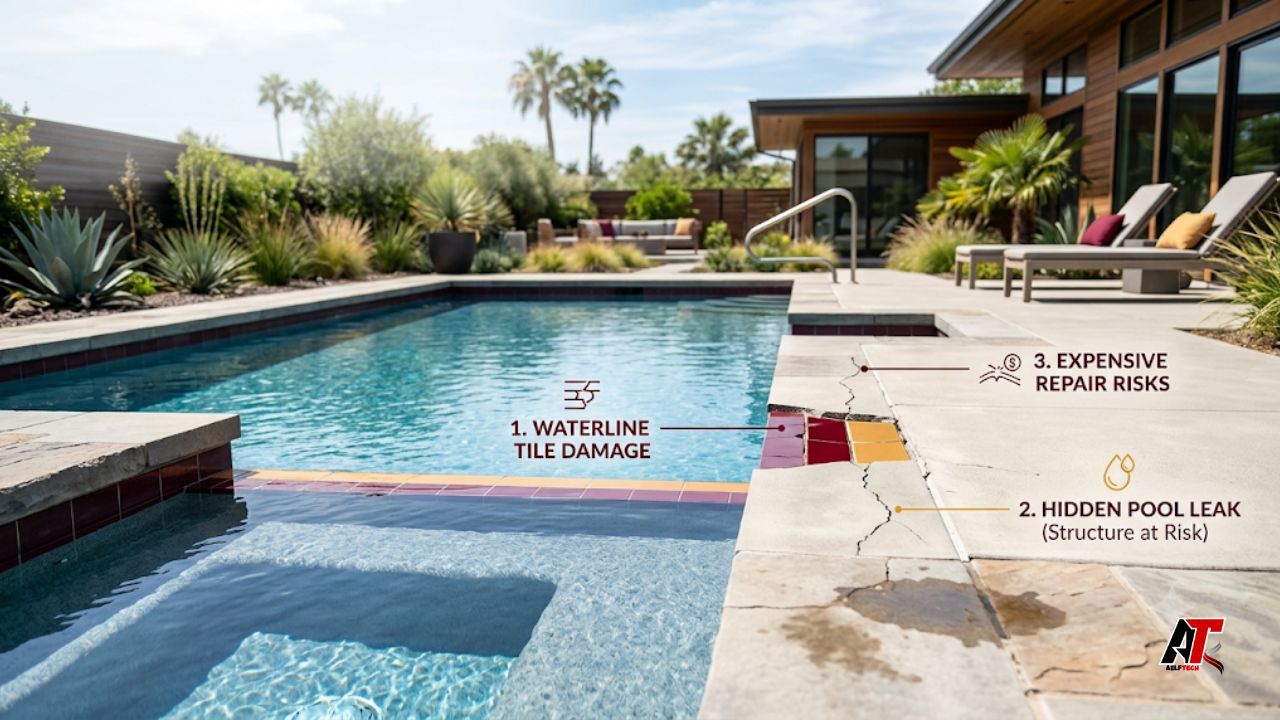
A small leak in a swimming pool may not seem like a big deal at first. Many homeowners notice the water level dropping a little faster than usual and assume it is only evaporation, splash-out, or hot weather. Because the change looks minor, it is easy to delay action. The problem is that even a slow leak can quietly create damage in several parts of the pool system. Over weeks and months, what starts as a tiny issue can turn into higher water bills, worn-out equipment, chemical imbalance, cracked surfaces, and even structural damage around the pool.
Understanding how this happens can save time, money, and stress. In this guide, team aelftech.com explains why ignoring small pool leaks often leads to expensive repairs, what signs to watch for, and how early action can protect your investment. If you own a residential pool or manage a property with one, learning the risks behind small pool leaks is one of the smartest maintenance steps you can take.
Why Small Pool Leaks Are Often Ignored
Pool leaks are easy to overlook because they do not always create dramatic symptoms right away. A pool can lose some water naturally from evaporation, especially during warm or windy weather. Because of that, many owners assume a slow drop in water level is normal. In reality, when water loss becomes consistent, it should be checked. Even a tiny crack in the shell, a loose fitting, a damaged pipe, or a worn-out seal can allow water to escape every day.
Another reason leaks get ignored is that the damage often happens out of sight. Water may leak underground, behind walls, near plumbing lines, or around fittings where it cannot be seen clearly. The pool still looks usable on the surface, so the urgency feels low. That delay is what makes the problem more expensive later. Small leaks rarely stay small in terms of overall cost.
Step 1: Continuous Water Loss Starts the Problem
The first direct cost of a leak is water loss. When pool water escapes every day, you keep refilling the pool to maintain the correct level. This may seem affordable in the short term, but over time it adds up. If the leak continues for months, the total water waste can become significant. In areas where water is costly or restricted, this becomes an even bigger issue.
More importantly, the need to refill the pool again and again is usually a sign that something deeper is wrong. If the leak source is not found, the escaping water can start affecting nearby soil, decking, landscaping, and underground plumbing. Homeowners who pay attention only to the refill cost often miss the hidden repair bill building underneath. If you suspect a problem, professional swimming pool leak detection can help identify the exact source before the damage grows.
Step 2: Leaks Put Pressure on Pool Equipment
A leaking pool does not only waste water. It also puts extra stress on the pool’s equipment. When the water level drops too low, the skimmer may stop working properly, and the pump can start pulling in air. Air in the system affects circulation, reduces efficiency, and can overwork the pump. In some cases, it may cause overheating or shorten the life of important components.
Leaks in plumbing lines can also make the filtration system work harder than necessary. That means more wear on the pump, filter, valves, and seals. Replacing pool equipment is much more expensive than fixing a small leak early. A problem that could have been handled with a focused repair may later require a new pump motor, plumbing work, or a full equipment inspection.
Step 3: Chemical Imbalance Raises Maintenance Costs
When water keeps leaving the pool, the chemical balance becomes harder to maintain. Every time water is lost and replaced, the level of chlorine, stabilizer, salt, pH, calcium hardness, and other treatment chemicals can change. This means the pool owner often spends more money on testing and rebalancing the water.
Unbalanced water does more than increase chemical costs. It can also lead to cloudy water, algae growth, staining, scaling, skin irritation, and reduced sanitation. If the pool chemistry stays unstable for too long, the pool surface and equipment may suffer additional damage. In that case, the leak creates a chain reaction: water loss leads to chemical imbalance, and chemical imbalance leads to even more maintenance and repair needs.
Step 4: Structural Damage Can Develop Over Time
This is where repair costs often rise sharply. When leaking water seeps into the surrounding soil, it can weaken the ground that supports the pool shell, nearby decking, or retaining structures. In concrete and gunite pools, that may contribute to movement, cracking, and voids beneath the structure. In fiberglass or vinyl liner pools, water pressure changes and soil movement can also create serious issues if ignored.
Moisture around the pool can also affect coping, tiles, grout, and expansion joints. You may start seeing loose tiles, cracks along the waterline, sinking pavers, or soft spots around the pool area. These are not only cosmetic problems. They often signal that water has been escaping for some time. Structural and surface repairs can be costly because they usually involve more labor, more materials, and sometimes multiple specialists.
Step 5: The Surrounding Area May Suffer Too
One of the most expensive parts of an untreated pool leak is the damage it causes outside the pool itself. Escaping water may wash away soil, affect nearby foundations, erode landscaping, or create damp conditions around patios and walkways. In some cases, homeowners notice puddles, muddy areas, or unusual plant growth near the pool. In other cases, the damage stays underground until the signs become severe.
If the pool is close to a home, outdoor kitchen, boundary wall, or other built structure, prolonged moisture exposure can create bigger property concerns. Fixing a pool leak at that point may involve more than one repair team because the issue extends beyond the pool system. That is why a problem that starts with a tiny water loss can eventually impact a much larger area of the property.
Warning Signs You Should Never Ignore
Catching a leak early is the best way to reduce repair costs. Some warning signs are subtle, but they matter. If you notice that the pool needs frequent topping up, the water level drops faster than normal, or you are using more chemicals than usual, do not dismiss it too quickly. These may be early clues that a leak is present.
Other signs include wet soil around the pool, cracks in tiles or coping, air bubbles in the return lines, algae that keeps returning despite treatment, higher-than-usual water bills, or equipment losing prime. Even a minor unexplained change in pool behavior is worth checking. A fast response usually means a smaller repair scope and a lower total cost.
How to Reduce the Risk of Expensive Repairs
The best approach is simple: treat unusual water loss as a maintenance issue, not as a normal part of pool ownership. Start by monitoring the water level and keeping basic records. If the pool is losing more water than expected, perform a bucket test or contact a professional to inspect the system. Small leaks are usually easier and cheaper to fix when they are found early.
Regular inspections also help. Check around the skimmer, return jets, lights, pump area, visible plumbing, tiles, and expansion joints. Stay consistent with cleaning and water chemistry, because balanced water helps protect the surface and equipment. If you want more practical home-care content and maintenance insights, visit aelftech.com for helpful resources written in a clear and simple way.
When to Call a Professional
Some homeowners try to guess the source of a leak on their own, but professional testing is often the safest option when the cause is unclear. Specialists use tools and methods that can pinpoint hidden leaks in plumbing lines, fittings, shells, and surrounding systems. This makes repairs more accurate and helps avoid unnecessary work.
Calling an expert early is usually much cheaper than waiting for visible damage. A professional can confirm whether the problem is a true leak or something else, explain the repair options, and help prevent more serious damage. In many cases, the cost of inspection is minor compared to the price of major structural repairs, equipment replacement, or hardscape restoration.
Final Thoughts
Small pool leaks may look harmless, but they can become expensive over time. Water loss leads to refilling costs, extra strain on equipment, unstable pool chemistry, and damage to the pool structure and surrounding area. The longer the leak continues, the more likely it is to create multiple problems at once.
The good news is that early detection makes a real difference. By paying attention to warning signs, acting quickly, and getting the right help when needed, pool owners can prevent avoidable damage and protect their property. If there is one key takeaway, it is this: do not wait for a small pool leak to turn into a major repair project.
Leave a Reply