
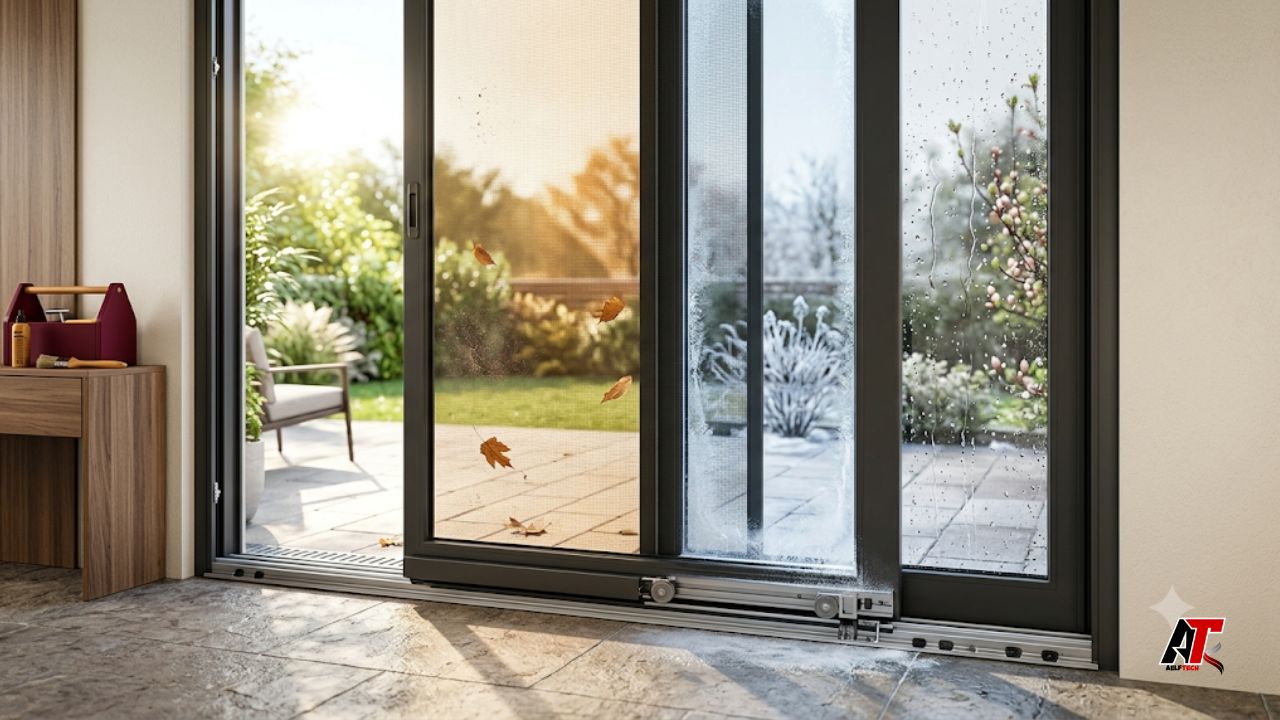
Screens, tracks, and sliding entries bring in fresh air, connect indoor and outdoor spaces, and allow natural light to enter. However, these systems are constantly exposed to changing weather. Heat can expand metal parts, cold can make seals stiff, rain can introduce moisture, and wind can push dust into the track. Over time, these small changes can affect how smoothly a door or screen opens and closes.
Understanding the seasonal weather effects on sliding doors helps homeowners and property managers prevent avoidable repairs. Weather damage rarely happens in one dramatic moment. It usually develops through repeated exposure, poor drainage, dirty tracks, worn rollers, loose screen mesh, or neglected seals. A simple seasonal care routine can keep sliding entries operating safely, quietly, and efficiently throughout the year.
Why Seasonal Weather Matters for Sliding Systems
A sliding entry depends on several parts working together. The frame must stay square, rollers must move freely, the track must remain clean, the screen must stay properly tensioned, and weather seals must block air and water. Seasonal changes place different pressure on each part. When one component begins to fail, the rest of the system often works harder. For example, a dirty track can strain the rollers, and worn rollers can cause the panel to drag against the frame.
Materials respond differently to weather. Aluminum expands in heat and contracts in cold conditions. Vinyl can soften in strong heat, while wood may absorb moisture and swell. Rubber and brush seals can dry out, flatten, or crack after long sunlight exposure. This explains why a sliding door may work well in one season but become difficult in another.
Summer Heat and Direct Sunlight
High temperatures can have a noticeable effect on sliding doors and screens, especially on south- or west-facing walls. Direct sunlight heats the glass, frame, handles, and track for several hours each day. Metal frames may expand slightly, reducing the space around a moving panel. This can create rubbing, stiffness, or a feeling that the door is suddenly heavier than usual. Dark-colored frames may absorb even more heat.
Strong ultraviolet exposure also affects flexible materials. Screen mesh can become brittle, vinyl spline may shrink, and weatherstripping may lose elasticity. If the screen is already loose, repeated heating and cooling can make the sagging more obvious. The lower track may also collect dry soil, pollen, insects, and fine sand during summer. When this debris mixes with old lubricant, it can form a sticky layer that slows the rollers.
During hot weather, clean tracks with a vacuum and a soft brush instead of forcing the panel through dirt. Use only a manufacturer-approved dry or silicone-based lubricant when lubrication is needed. Heavy oil attracts dust and can make the problem worse. Exterior shading, curtains, or suitable window films may also reduce heat exposure, but any film used on glass should be compatible with the glazing system.
Rain, Humidity, and Moisture
Rainy periods test the drainage and sealing of every sliding entry. Most exterior sliding door tracks are designed with small drainage openings, often called weep holes. These openings allow water to leave the sill. If they become blocked by leaves, mud, insect nests, or paint, water can remain in the track and move toward the interior. Standing water can stain flooring, damage nearby trim, and increase the risk of corrosion or mold.
Humidity creates another type of stress. Wood frames and surrounding trim may absorb moisture and swell. Metal components can corrode when protective finishes are damaged. Screws, roller housings, latches, and screen corners are especially vulnerable because moisture can sit in hidden spaces. In coastal areas, salt in the air can speed up corrosion and leave a rough deposit on tracks and hardware.
After heavy rain, inspect the sill, corners, and floor near the entry. Clear drainage openings carefully and check whether the door closes evenly against the weather seal. Water marks, bubbling paint, soft wood, or a musty smell should not be ignored. For more complex frame, glass, or entry-system concerns, a qualified service provider such as Lawrence Doors & Glazing can help assess whether the issue is limited to maintenance or requires professional repair.
Cold Weather, Frost, and Ice
Cold temperatures cause many materials to contract. A small amount of movement is normal, but existing wear may become more noticeable in winter. Seals can harden and stop making full contact. Rollers with old grease may move slowly. A slightly misaligned latch may no longer engage easily. Cold glass and frames can also collect condensation when warm indoor air contains high moisture levels.
Frost and ice are especially damaging when water remains in the lower track. Frozen water can block the panel, stress the rollers, and place pressure on the sill. Never force a frozen sliding door open. Pulling hard on the handle can damage the lock, bend the frame, or separate the handle from the panel. Instead, remove loose snow, warm the area gradually, and dry the track once the ice has melted.
Winter maintenance should also include checking for drafts. Move a hand slowly around the closed frame to feel for cold air. Visible gaps, whistling sounds, or moisture around the edges may indicate worn weatherstripping or poor alignment. Replacing a simple seal can improve comfort and reduce the workload on heating systems, but structural gaps or repeated water intrusion need a more detailed inspection.
Wind, Dust, Pollen, and Airborne Debris
Wind does more than shake a screen. It carries fine particles into the track and against the mesh. Dust, pollen, grass, pet hair, and tiny leaves settle around rollers and corners. In dry or windy climates, this buildup can happen quickly. A track that looks only slightly dirty may contain enough grit to damage roller surfaces each time the door moves.
Screens receive direct pressure during storms and strong gusts. Loose mesh can stretch, pull away from the spline, or tear near the corners. A screen frame that is not seated correctly may jump out of its track. Branches, outdoor furniture, or windblown objects can also dent the frame. Before a storm season, make sure screens slide securely, corner joints are firm, and nearby objects cannot strike the entry.
Regular cleaning is the best defense. Vacuum the track, wipe it with a damp cloth, and dry it before closing the door. Wash screen mesh gently with mild soap and low-pressure water. High-pressure spraying can stretch the mesh or push water into hidden areas.
How Weather Affects Screen Mesh and Frames
Screen damage is often treated as a cosmetic issue, but a damaged screen affects comfort and function. Small tears allow insects and windblown debris to enter. Loose mesh may flap in the wind and place extra pressure on the frame. Bent screen frames can drag in the track or fail to meet the locking side correctly.
Fiberglass mesh is flexible and common, but long exposure to sunlight can weaken it. Aluminum mesh is more rigid, yet it may crease or corrode in harsh environments. Pet-resistant mesh is stronger but adds weight, so the rollers and frame must be in good condition. The spline that holds mesh inside the frame also changes with age and temperature. When it becomes hard, cracked, or shrunken, the mesh can pull free.
Inspect screens at the beginning of spring and again after the stormiest part of the year. Look closely at corners, handle areas, and the lower edge. Small holes can sometimes be patched, but widespread brittleness usually means replacement is more practical. A correctly tensioned screen should look flat without pulling the frame out of shape.
How Weather Affects Tracks, Rollers, and Locks
The track carries the full weight of the sliding panel. Dirt, corrosion, dents, and standing water can all change the way rollers travel. When the track becomes rough, the rollers may wear unevenly or develop flat spots. The user then applies more force, which can loosen handles and stress the frame. This is why a hard-to-slide door should be inspected rather than repeatedly forced.
Rollers can often be adjusted, but adjustment will not solve every problem. If a track is damaged or the roller bearings are worn, raising the panel may only hide the issue for a short time. Locks are also sensitive to movement. Seasonal expansion or contraction can shift the panel enough to make the latch miss its keeper. A lock that requires lifting, pushing, or pulling the door into position is a sign of alignment trouble.
At aelftech.com usa, practical maintenance is treated as a way to protect both function and safety. Cleaning, early inspection, and correct adjustment reduce strain on the moving parts. However, cracked glass, a bent frame, failed insulated glass, major water leakage, or a panel that may leave the track should be handled by a trained professional.
A Simple Seasonal Maintenance Schedule
Spring is a good time for a complete cleaning. Remove winter dirt, inspect drainage openings, wash the screen, and test the lock. Check the mesh for tears before insects become active. Open and close the panel several times and listen for grinding, clicking, or scraping.
In summer, pay attention to heat-related stiffness and sun damage. Keep the lower track free of dry debris and inspect exposed seals for cracking. Avoid using thick grease. If the door faces intense afternoon sun, check whether the frame rubs only during the hottest hours, as this can help identify temperature-related movement.
During autumn, remove leaves and organic material before seasonal rain begins. Clear outdoor drainage paths and trim plants that touch the screen. Secure furniture and loose objects before windy weather. This is also a useful time to confirm that the lock and handle are secure.
In winter, keep snow and water away from the sill. Do not force frozen panels. Watch for condensation, drafts, and indoor water marks. Dry the track after wet weather and maintain reasonable indoor humidity. A brief inspection each month is usually easier and less expensive than repairing damage after an entire season.
Warning Signs That Need Prompt Attention
Some problems should be addressed quickly because they can affect security, energy performance, or safety. Warning signs include a panel that lifts out of the track, glass that is cracked or loose, a lock that does not engage, repeated water entry, a frame that is visibly bent, or grinding that continues after cleaning. Fog between panes may indicate a failed insulated glass seal, while soft or discolored wood can point to ongoing moisture damage.
The timing of a problem provides useful information. A door that sticks during hot afternoons may be reacting to expansion. Difficulty after rain can suggest drainage, swelling, or corrosion issues. A lock that fails only in winter may be affected by contraction or hard seals. Sharing these details can make diagnosis faster.
Long-Term Ways to Reduce Weather Damage
Good installation is the strongest long-term protection. The opening must be square, the sill must be supported, and exterior flashing must direct water away from the building. Drainage openings should remain accessible. Appropriate sealants and weatherstripping must be used for the frame material and local climate.
Routine care also matters. Keep tracks clean, avoid slamming panels, replace damaged screens, and repair loose handles before they cause more strain. In coastal or dusty areas, clean hardware more frequently. Use replacement parts that match the system rather than forcing universal components to fit. A correctly maintained sliding entry should move with steady pressure, close evenly, and lock without lifting or twisting the panel.
The most effective approach is prevention. Seasonal weather effects on sliding doors are easier to manage when small changes are noticed early. A few minutes of cleaning and inspection at the start of each season can extend the life of screens, tracks, rollers, locks, seals, and surrounding finishes.
Conclusion
Seasonal weather affects every exposed part of a sliding entry. Summer heat can expand frames and weaken seals. Rain and humidity can block drainage, swell wood, and encourage corrosion. Cold weather can stiffen seals and freeze water in tracks. Wind carries dust and debris that wear down rollers and damage screens.
A clean track, open drainage path, secure screen, working lock, and flexible weather seal provide strong protection throughout the year. By following a simple seasonal maintenance routine and responding early to warning signs, property owners can keep sliding doors and screens smooth, safe, and reliable for much longer.
Leave a Reply