
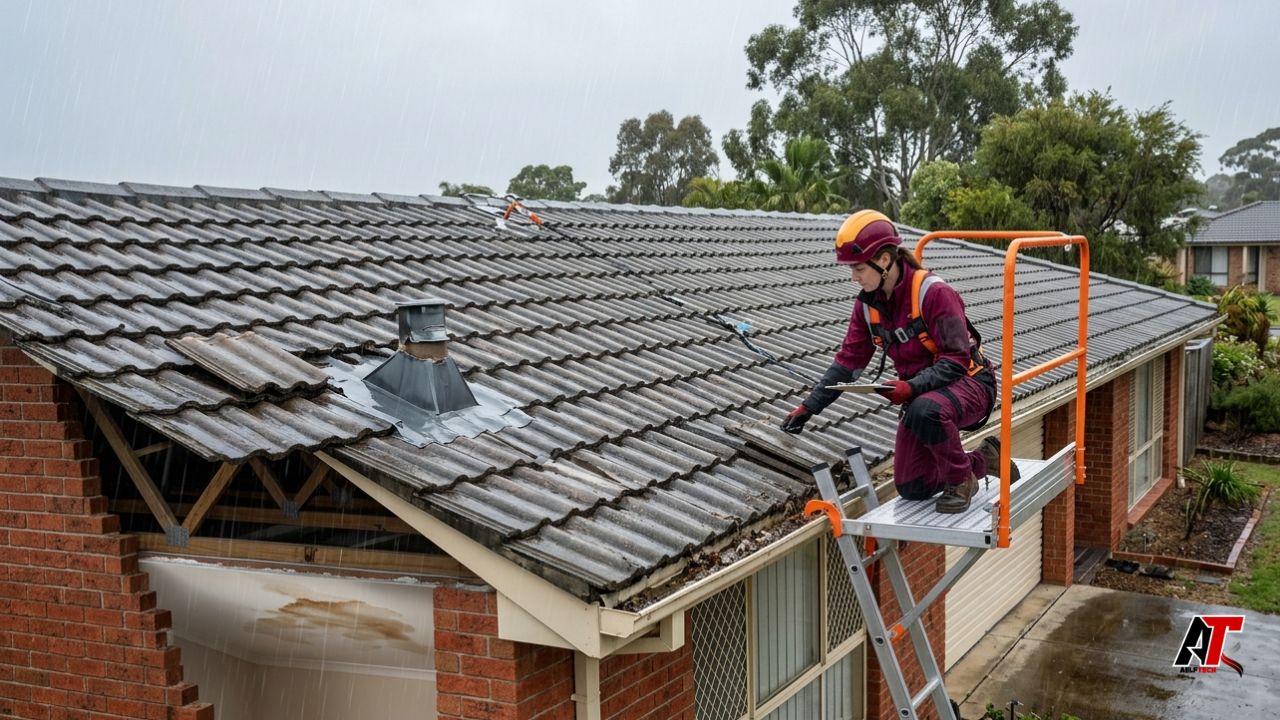
A roof leak rarely begins with water pouring through the ceiling. Early signs may be a faint stain, peeling paint, a damp smell, mould near a cornice, or a drip that appears only during wind-driven rain. Water may travel along battens, rafters, insulation, or plaster before it becomes visible indoors.
Understanding the causes helps homeowners respond before damage spreads. Australia’s sun, coastal salt, tropical rain, hail, wind, branches, and temperature changes place different stresses on tiled and metal roofs. A reliable repair identifies the entry point, corrects the failed detail, and checks materials below.
Why Roof Leaks Can Be Difficult to Diagnose
Water does not always drip directly beneath the defect. It may enter through a cracked tile, loose flashing, failed fastener, valley, skylight, or roof penetration, then follow the roof slope or timber framing before reaching the ceiling. A stain near a wall can therefore originate higher up the roof.
Timing matters. A leak during light rain may have a different cause from one that appears only in wind-driven storms. Condensation can create similar symptoms without external rain entry. A good inspection considers weather, roof type, age, previous repairs, indoor moisture, and the stain location.
1. Damaged, Cracked, or Missing Roof Tiles
Concrete and terracotta tiles can crack because of hail, foot traffic, fallen branches, building movement, age, or incorrect installation. Strong wind may shift a loose tile or expose an underlap. Once the tiled surface is disrupted, rain can reach the sarking or roof cavity, particularly during wind-driven storms.
NSW SES recommends repairing roof damage such as loose tiles and checking drainage channels before storms. Homeowners who notice damaged or missing roof tiles should arrange a professional inspection rather than walking across the roof. Replacing one tile may solve an isolated impact problem, but repeated breakage can indicate deteriorated bedding, battens, fixings, or movement that requires broader repair. [1]
2. Loose, Corroded, or Failed Metal Roofing Fasteners
Metal roofs depend on correctly installed sheets, flashings, washers, and fasteners. Over time, ultraviolet exposure, temperature cycling, corrosion, vibration, and movement can weaken seals or enlarge fixing holes. A missing screw or deteriorated washer may admit water, while incompatible metals or coastal salt exposure can accelerate corrosion.
Diagnosis should include sheet laps, ridge capping, penetrations, fixings, and rust. Sealant over every screw is not a substitute for replacing failed components. Widespread corrosion may make restoration or replacement more economical than repeated local repairs.
3. Blocked Gutters, Downpipes, and Roof Valleys
Leaves, twigs, seed pods, dirt, bird nesting material, and roof debris can block gutters and valleys. During heavy rain, trapped water can overflow under the eaves, enter the roof cavity, or spill against fascia and wall materials. NSW SES specifically advises homeowners to clear gutters, downpipes, drains, and roof drainage channels because blockages can cause water to overflow into the roof space. [1]
Valleys deserve special attention because they carry water from two roof slopes. A restricted valley can back up quickly in a storm. Cleaning should be performed regularly and before severe-weather seasons, but roof access involves fall risks. SafeWork NSW reports serious injuries from roof and ladder falls during gutter cleaning and advises completing work from ground level where reasonably practicable or using competent people and proper fall controls. [2]
4. Deteriorated Flashing Around Roof Junctions
Flashing directs water away from changes in roof shape and from openings such as chimneys, skylights, vents, parapets, walls, and roof-to-roof junctions. It may fail because of corrosion, cracking, poor installation, movement, inadequate overlap, or an unsuitable repair material.
Leaks around a chimney or wall are often blamed on the nearest tile, but the actual problem may be apron, step, counter, or soaker flashing. Smearing sealant across a joint can hide the defect without restoring the correct drainage path. A roofer should inspect how each flashing collects and discharges water, not simply whether the surface looks sealed.
5. Worn Ridge Capping, Pointing, and Bedding
On many tiled roofs, ridge and hip tiles sit on bedding and are finished with pointing material. Age, movement, weather exposure, and earlier workmanship can cause cracking or separation. Water may enter beneath loose capping, while unstable ridge tiles can also become a safety hazard during strong wind.
Minor local deterioration may be repaired by rebedding or repointing the affected section. Widespread cracking, loose ridges, or repeated patch failure may justify a larger restoration. The repair should use products compatible with the existing roof and allow for expected movement rather than creating rigid weak points.
6. Leaking Skylights and Roof Windows
Skylights interrupt the roof covering and rely on correctly integrated flashing, seals, and drainage. Leaks may develop when flashing is damaged, debris collects above the unit, seals age, the frame moves, or condensation forms on cold glazing or metal frames.
YourHome notes that roof windows and skylights can experience condensation, particularly where frames conduct heat or indoor moisture is high. A wet mark around a skylight therefore requires careful diagnosis: external rain entry, internal condensation, or both may be involved. Repeatedly caulking the inside edge will not correct failed external flashing. [3]
7. Failed Sealant Around Pipes, Vents, and Solar Mounts
Every roof penetration creates a detail that must shed water. Plumbing vents, exhaust flues, antennas, air-conditioning lines, satellite equipment, and solar attachments may leak when rubber boots split, sealants shrink, flashing is poorly fitted, or later work disturbs the roofing.
After rooftop installation, confirm who is responsible for weatherproofing and warranties. Equipment installers and roofing professionals may have different roles. Sealant should not block drainage paths or react with roofing materials.
8. Cracked Roof Membranes and Flat-Roof Drainage Problems
Low-slope and flat roofs rely heavily on membrane continuity, correct falls, outlets, overflows, and maintained drainage. Punctures, open seams, blistering, shrinkage, deteriorated coatings, and ponding water can lead to leaks. Even a small obstruction at an outlet can allow water to build above the level intended by the design.
A surface patch may fail if water is trapped below the membrane or if the roof lacks adequate fall. Professional assessment should examine the membrane system, upturns, penetrations, outlets, box gutters, overflows, and signs of structural movement. Persistent ponding is a design or drainage concern, not merely an appearance issue.
9. Storm, Hail, and Wind Damage
Australian storms can lift sheets, move tiles, damage ridge capping, loosen fasteners, drive debris into the roof, and force rain through openings that remain dry in normal weather. Hail can crack tiles, dent metal, and damage skylights or coatings. A nearby tree branch may also puncture roofing or bend gutters.
Inspect the property from the ground after a severe event and check ceilings and roof spaces for new moisture where it is safe to do so. Do not climb onto a wet or storm-damaged roof. NSW SES recommends arranging professional safety inspections and repairs after storm damage, while SafeWork guidance highlights wet, sloping, fragile, and deteriorated roofs as serious fall hazards. [4][5]
10. Condensation Mistaken for an External Roof Leak
Not every wet ceiling or damp roof space means rain has entered through the covering. Warm, moisture-laden indoor air can reach cold roof surfaces and condense. Bathrooms, kitchens, unvented dryers, exhaust fans discharging into the roof space, gaps around ceiling penetrations, and poorly designed insulation or membranes can increase the risk.
Australian Government guidance explains that condensation can form on the underside of roofing when the surface falls below the dew point. If moisture is not drained or dried, it can wet insulation and ceiling materials and contribute to mould or decay. YourHome also advises that bathroom and kitchen exhaust should discharge outdoors rather than into the roof cavity. [6][7]
Condensation usually requires a different remedy from a rain leak. The solution may involve ventilation, ducting, insulation continuity, air sealing, or correctly specified membranes. Sealing the roof surface will not solve moisture generated inside the home.
11. Ageing Roofing Materials and Deferred Maintenance
Roofs do not fail only because of one dramatic defect. Small problems accumulate: cracked mortar, worn coatings, brittle seals, corroded flashings, loose fasteners, blocked gutters, damaged sarking, and repeated foot traffic. Older repairs may also use materials that have separated or trapped moisture.
A planned inspection can find deterioration before the next storm. Frequency should reflect roof age, material, nearby trees, coastal exposure, severe weather, and manufacturer guidance. Maintenance is less disruptive than emergency work after water reaches ceilings, wiring, insulation, or timber.
12. Poor Installation or Incompatible Repairs
Some roof leaks begin soon after construction or renovation because sheets, tiles, flashings, gutters, or penetrations were installed incorrectly. Common issues include inadequate overlaps, misplaced fixings, poorly formed valleys, insufficient roof fall, incompatible sealants, and drainage systems that cannot manage heavy rainfall.
A repair can also create a new leak when it blocks a drainage path or combines incompatible materials. Good roofers explain the roof system, photograph defects where practical, and specify how the repair will reinstate water flow. For metal roofing, gutters, downpipes, and stormwater systems, licensing and compliance requirements vary by state or territory, so homeowners should check the relevant regulator.
Signs Your Roof May Be Leaking
Common warning signs include brown or yellow ceiling stains, bubbling paint, sagging plasterboard, damp insulation, mould, rust marks, water sounds during rain, swollen timber, peeling cornice paint, and musty odours. Outside, look from the ground for shifted tiles, damaged capping, sagging gutters, debris-filled valleys, corrosion, and loose roof components.
Treat water near lights, switches, or electrical wiring as urgent. Avoid touching wet fittings and arrange qualified assistance. A serious active leak, structural movement, storm damage, or a ceiling at risk of collapse should not wait for routine maintenance.
What to Do When You Discover a Roof Leak
First, protect people and the interior. Move valuables, place a container beneath a safe drip, and keep away from bulging ceilings. Do not enter a roof space with electrical, structural, asbestos, pest, or access hazards. Photograph visible damage and contact the insurer when relevant.
Arrange an inspection while the evidence is fresh and describe exactly when the leak occurs. A roofer may inspect the exterior, roof cavity, drainage, penetrations, and moisture pattern. Avoid accepting a quote that names only the symptom without explaining the likely cause, scope, materials, and warranty.
Repair or Replace: How Professionals Decide
Repair is often appropriate when damage is localised and the surrounding roof remains serviceable. Replacement or restoration may be more economical when leaks occur in multiple areas, materials are near the end of their useful life, corrosion or tile failure is widespread, or the roof has recurring defects caused by poor design.
The decision should consider condition, safety, access, remaining life, repair history, condensation upgrades, and repeated call-out costs. Ask for photographs and a written comparison of alternatives and expected durability.
How to Reduce the Risk of Future Roof Leaks
Keep gutters, downpipes, drains, and valleys clear; trim branches that could damage the roof; repair broken tiles or loose sheets promptly; inspect sealants and flashings around penetrations; and check the roof after major storms. Ensure indoor exhaust fans discharge outdoors and watch for condensation or mould in the roof space.
Do not pressure wash or walk on a roof without understanding the material and fall risks. Glazed tiles, wet metal, skylights, brittle sheets, asbestos cement, and deteriorated surfaces may be unsafe. Use qualified tradespeople with suitable insurance, safety controls, and experience with the specific roofing system.
Conclusion
Roof leaks in Australian homes are commonly caused by damaged tiles, failed fasteners, blocked drainage, deteriorated flashing, ageing ridge capping, leaking penetrations, membrane failure, storm damage, condensation, and poor workmanship. Because water can travel before it becomes visible, the nearest stain is not always the source.
Early investigation protects ceilings, insulation, timber, electrical systems, and indoor air quality. Homeowners should combine regular maintenance with professional diagnosis, especially after severe weather or when a leak keeps returning. For more practical property, technology, and consumer guides, readers can visit aelftech.com.
Leave a Reply