
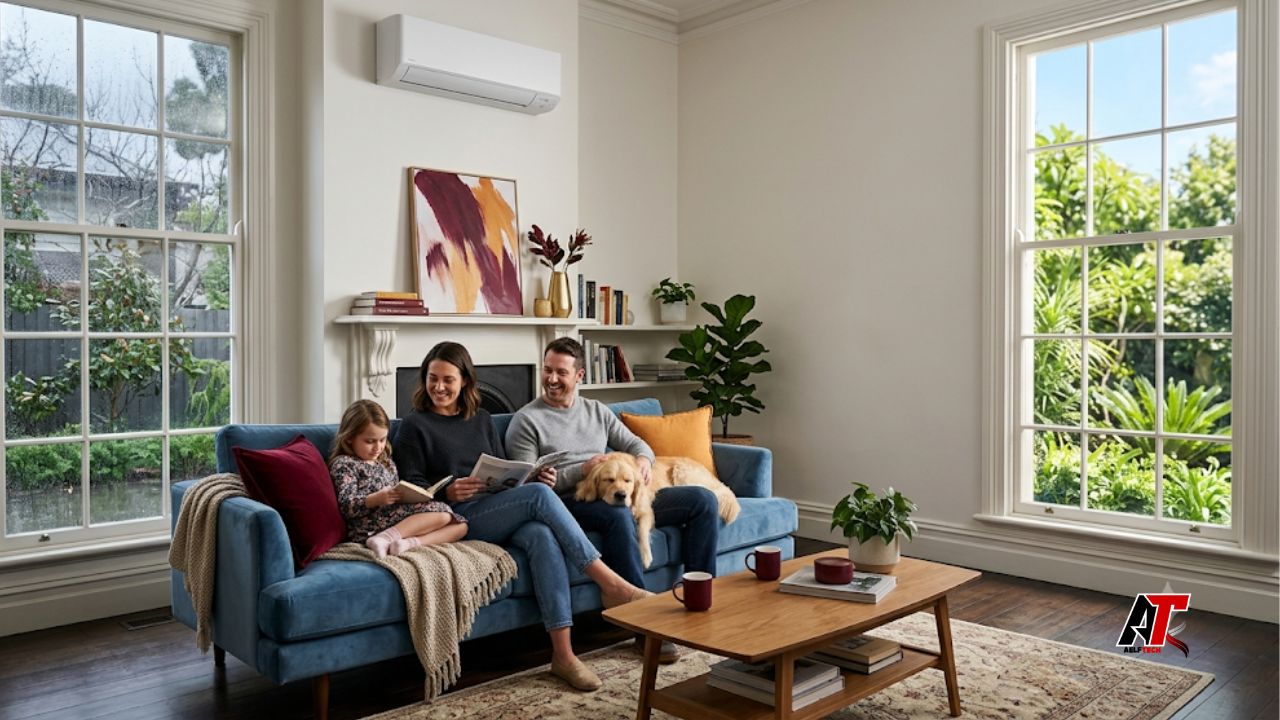
Victorian households face a difficult comfort challenge. A cool morning can turn into a warm afternoon, winter nights can feel sharply cold, and summer heatwaves can push indoor temperatures well beyond a comfortable level. Because of these changing conditions, many homeowners want a heating and cooling solution that is practical, efficient, and easy to control throughout the year. Reverse cycle air conditioners meet that need by providing both heating and cooling from one electrical system.
Instead of buying and maintaining separate appliances for summer and winter, households can use a single unit to manage indoor temperature in every season. Modern systems are also quieter, more energy efficient, and more flexible than many older heating or cooling options. Add government-supported upgrade incentives, rooftop solar compatibility, smart controls, and a growing desire to reduce gas use, and it becomes easy to understand why reverse cycle air conditioners in Victorian homes are becoming increasingly common.
This guide explains what is driving the trend, what benefits homeowners can expect, and what should be considered before choosing a system.
Victoria’s Climate Creates a Need for Year-Round Comfort
Victoria’s climate is one of the strongest reasons behind the growing demand for reverse cycle systems. Homes may need reliable heating for long periods in winter, especially in Melbourne’s outer suburbs, regional towns, elevated areas, and properties with limited insulation. During summer, the same homes can experience hot days and uncomfortable overnight temperatures. A system designed for only one season leaves households dependent on extra appliances when conditions change.
Reverse cycle technology solves this problem by changing the direction of the refrigeration process. In cooling mode, the unit removes heat from the room and transfers it outdoors. In heating mode, it collects heat from outside air and moves it indoors. Even when the outdoor temperature feels cold, usable heat remains in the air and can be transferred into the home.
Energy Efficiency Is Driving the Shift
Energy efficiency is another important reason for the shift. Reverse cycle air conditioners operate as heat pumps. Instead of creating heat directly from electricity, they use electricity to transfer heat from one place to another. This process can deliver several units of heating or cooling energy for each unit of electricity consumed, depending on the model, outdoor conditions, installation quality, and how the system is used.
That difference matters because space heating and cooling can represent a large share of household energy use. An efficient system, correctly sized for the room, can reduce wasted energy compared with older electric resistance heaters or poorly performing appliances. It may also provide a more economical pathway for households replacing ageing gas heating, particularly when electricity is partly supplied by rooftop solar.
Efficiency is not automatic, however. A high-capacity unit is not always the best choice. An undersized system may run continuously and struggle on extreme days, while an oversized system may cycle on and off too frequently, create uneven temperatures, and cost more to purchase. Home orientation, ceiling height, insulation, window area, draughts, room use, and local climate all affect the capacity required.
Victorian homeowners are also becoming more familiar with Zoned Energy Rating Labels. These labels show separate heating and cooling performance for different Australian climate zones. Comparing the relevant climate-zone stars, estimated annual energy use, capacity, and noise levels helps buyers choose a model based on real operating conditions rather than brand name or purchase price alone.
Rebates Are Making Efficient Upgrades More Accessible
Financial incentives have also accelerated interest in efficient reverse cycle air conditioning. Through the Victorian Energy Upgrades framework, eligible households and businesses may receive discounts when installing approved high-efficiency systems through an accredited provider. The value of an upgrade depends on factors such as the existing heater being replaced, the new system type and capacity, the property, current program rules, and the provider completing the work.
Homeowners researching an air conditioning rebate should obtain a written quote that clearly identifies the product, installation work, discount, warranty, electrical requirements, and any additional costs. It is also sensible to compare multiple quotes because equipment quality, installer experience, pipework, switchboard work, mounting, drainage, and after-sales service can vary.
Information about a government split system rebate can make the opportunity sound simple, but households should confirm eligibility before installation begins. In many incentive programs, the approved product and accredited provider must be selected in advance. Starting work too early or choosing a non-approved unit may affect the discount.
Rebates should support a sound purchase decision rather than replace one. The most suitable system is still the one that matches the home, offers strong heating performance in Victoria’s climate, has a reliable warranty, and is installed correctly. Program details and available discounts can change, so customers should verify current terms with the provider and relevant Victorian program information.
Flexible Options Suit Different Victorian Homes
Reverse cycle air conditioners are popular because they can be adapted to very different home layouts and budgets. A household does not always need to electrify the entire property in one project. Some owners begin with the living area, where the family spends most of its time, and later add systems to bedrooms or workspaces. This staged approach can make the upgrade more manageable.
Single-split systems are often suitable for one room or an open-plan zone. They are generally straightforward to install and allow the household to heat or cool only the area being used. Multi-split systems reduce the number of outdoor units and can serve several rooms, although installation design and simultaneous demand need careful assessment. Ducted systems offer a clean, whole-home appearance and central control, but duct losses, zoning design, roof space, and installation cost should be considered.
The ability to zone a home is especially valuable. Instead of conditioning unused bedrooms, residents can focus energy on occupied spaces. This is useful for couples in larger homes, families with different schedules, and people who work remotely. Correct zoning can improve comfort and help control running costs, but it must be designed so airflow remains balanced and the system operates within the manufacturer’s requirements.
Modern Systems Deliver More Consistent Indoor Comfort
Modern reverse cycle systems provide more than a basic hot or cold setting. Inverter technology allows the compressor to adjust its output instead of repeatedly operating at full power and switching off. Once the room approaches the selected temperature, the system can reduce output and maintain comfort more steadily. This can limit sudden temperature swings and make operation quieter.
Many units also include fan-only modes, dehumidification, timers, sleep settings, air-direction controls, and washable filters. During humid weather, a dry mode may improve comfort without aggressively lowering the temperature. In winter, programmed start times can warm occupied rooms before the household begins its morning routine.
Comfort still depends on the building. Insulation, curtains, shading, sealing gaps, and closing unused zones can reduce the load on the air conditioner. A well-performing home allows the unit to reach the desired temperature faster and maintain it with less energy.
Reverse Cycle Technology Supports Home Electrification
The move toward all-electric homes is another factor shaping demand. Many Victorian households are reviewing the long-term cost of maintaining separate gas and electricity services. Replacing gas space heating with efficient electric reverse cycle systems may reduce gas consumption and can support a broader electrification plan that later includes heat-pump hot water, induction cooking, solar panels, or battery storage.
Reverse cycle air conditioners work particularly well with rooftop solar because daytime heating or cooling can use electricity generated on-site. A household may pre-cool the home before a hot evening or warm living areas during sunny winter hours. Smart timers and app controls can help align operation with solar production, electricity tariffs, and occupancy.
The environmental benefit depends on the home’s electricity source, equipment efficiency, refrigerant management, and operating habits. Even so, moving from combustion-based space heating to efficient electric heat-pump technology can create a clearer pathway toward lower household emissions as the electricity grid continues to change.
This trend is not only about sustainability. It is also about future flexibility. An electric system can interact with solar generation, smart-home controls, time-of-use tariffs, and future energy-management tools in ways that many older heating systems cannot.
What Homeowners Should Check Before Installation
Before purchasing a reverse cycle air conditioner, homeowners should arrange a proper assessment rather than relying only on room area. The installer should consider ceiling height, glazing, insulation, orientation, number of occupants, heat-producing appliances, draughts, and whether doors are usually open or closed. For whole-home projects, the assessment should also examine electrical capacity, switchboard condition, outdoor-unit locations, drainage, pipe routes, and zoning.
Buyers should ask for the exact model number and review both heating and cooling ratings. In Victoria, heating performance in cold conditions is particularly important. The cheapest unit may cost more over its working life if it uses more electricity, performs poorly on cold mornings, has limited parts support, or comes with weak installation workmanship.
A good quote should state what is included: removal of old equipment, wall brackets or ground stands, pipe length, electrical work, condensate drainage, patching, certificates, commissioning, warranty, and rebate processing where relevant. Customers should also confirm who will handle future servicing and warranty claims.
After installation, efficient use is straightforward. Keep filters clean, avoid extreme thermostat settings, close doors to unused areas, use curtains and shading, and schedule professional servicing as recommended. In winter, a moderate set temperature is generally more economical than turning the system to its maximum setting. These habits protect performance and help the household receive the full value of the upgrade.
Final Thoughts
Reverse cycle air conditioners are becoming popular in Victorian homes because they solve several problems at once. They provide reliable winter heating and summer cooling, offer strong energy efficiency, support room-by-room or whole-home designs, and fit naturally with solar and household electrification. Available upgrade incentives can make the initial investment easier, while modern controls make the systems more convenient to operate.
The best results come from careful planning. Homeowners should improve obvious draught and insulation problems, choose a system sized for the actual space, compare climate-relevant energy ratings, use an experienced installer, and verify rebate requirements before work begins. When these steps are followed, reverse cycle air conditioning can deliver comfortable, flexible, and cost-conscious climate control for many years.
For more practical technology and home-improvement insights, readers can explore aelftech.com.
Frequently Asked Questions
Are Reverse Cycle Air Conditioners Suitable for Victorian Winters?
Yes. Modern reverse cycle systems are designed to provide heating as well as cooling. Homeowners should compare cold-climate heating performance, choose the correct capacity, and use an experienced installer so the unit can perform effectively during colder conditions.
Can a Reverse Cycle System Replace Gas Heating?
In many homes, it can replace individual gas heaters or a ducted gas system, depending on the building layout and chosen equipment. A whole-home assessment should consider room coverage, insulation, electrical capacity, zoning, and the household’s comfort expectations.
Are Victorian Rebates Available for Every Split-System Installation?
Not automatically. Eligibility can depend on the property, existing equipment, approved product, accredited provider, and current program rules. Confirm the discount and all conditions in writing before installation or removal work begins.
Which Is Better: Single-Split, Multi-Split, or Ducted Reverse Cycle Air Conditioning?
The best option depends on how many rooms need conditioning, available outdoor space, budget, zoning needs, roof space, and desired appearance. Single splits suit targeted rooms, while multi-split and ducted systems can serve larger areas.
How Can Homeowners Reduce Reverse Cycle Running Costs?
Choose a correctly sized efficient model, clean filters, seal draughts, use curtains and shading, close unused zones, and avoid extreme thermostat settings. Where available, schedule daytime operation to use rooftop solar generation.
Leave a Reply