
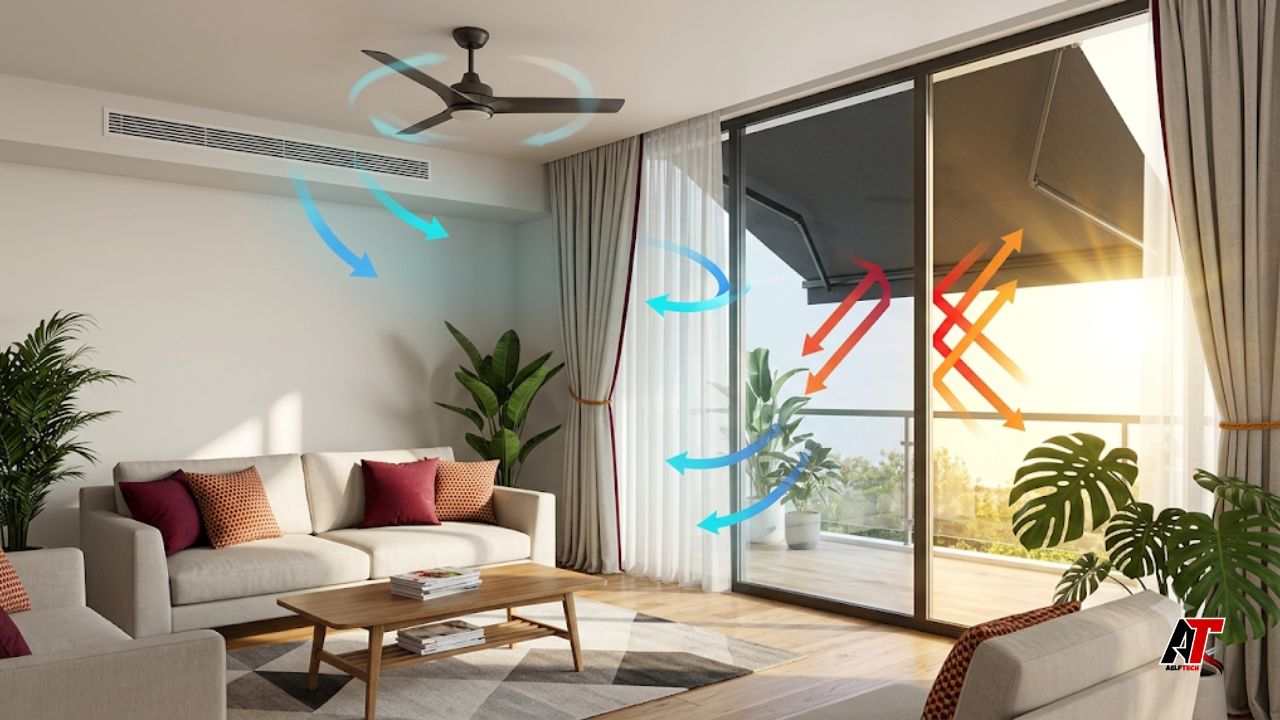
Sun-facing rooms can become uncomfortable long before the rest of a home feels warm. Large windows, dark roofs, thin curtains, air leaks, and limited ventilation allow solar heat to enter and remain trapped indoors. By late afternoon, the room may feel several degrees warmer than nearby spaces, even when the air conditioner is running. This often leads to higher energy use, uneven temperatures, poor sleep, faded furniture, and frustration for anyone using the room.
The good news is that you do not always need a major renovation to improve comfort. The best results usually come from combining several practical steps: stop direct sunlight before it enters, reduce heat transfer through windows and walls, improve air movement, remove indoor heat sources, and make sure the cooling system is working correctly. This guide explains how to reduce heat buildup in sun-facing rooms with simple changes first, followed by stronger upgrades when the heat problem is more serious.
Why Sun-Facing Rooms Heat Up So Quickly
Sunlight carries energy through the glass. When it strikes floors, walls, furniture, and bedding, those surfaces absorb the energy and release it as heat. The heat then remains inside because ordinary window glass does not allow it to escape as easily as it entered. This is often described as a greenhouse effect. West-facing rooms are commonly difficult in the afternoon because they receive low, intense sunlight when outdoor temperatures are already high. South-facing rooms can also collect strong solar heat for long periods, depending on the season and location.
The problem becomes worse when the room has large windows, little exterior shade, poor insulation, gaps around the window frame, blocked supply vents, or weak return airflow. Upper-floor rooms may receive additional heat from the roof or attic. Electronic devices, lamps, cooking equipment, and several occupants can add even more warmth. Before buying a larger air conditioner, it is important to identify which of these heat sources is affecting the room.
1. Block Direct Sunlight Before It Enters
The most effective starting point is to stop solar heat at the window. Exterior shading works especially well because it intercepts sunlight before the glass becomes hot. Awnings, exterior roller shades, shutters, pergolas, shade sails, and well-placed trees can reduce the amount of direct sun reaching a window. For a west-facing room, an exterior shade that blocks low afternoon sun can make a noticeable difference.
When exterior changes are not possible, improve the interior window coverings. Use close-fitting cellular shades, insulated curtains, solar roller shades, or light-coloured blackout curtains. Keep them closed during the hours when direct sunlight hits the glass. Open them again after the sun has moved away so the room does not remain dark all day. Curtains should cover the full width and height of the window, with as few gaps as possible around the edges.
Standard horizontal blinds can help, but their angle matters. Tilt the slats upward so sunlight is reflected toward the ceiling rather than directed onto the floor. Avoid thin, dark curtains that absorb heat and then radiate it into the room. Layering a reflective blind with a thicker curtain often provides better control than using either product alone.
2. Consider Solar Film or Better Glazing
Window film can reduce glare and unwanted solar heat without covering the view completely. Modern solar-control films are available in clear, lightly tinted, and reflective finishes. They can be useful for rooms with large fixed windows or where curtains are not practical. Choose a film designed for the window type, because some products are not suitable for certain insulated or coated glass units. Professional installation can also reduce the risk of bubbles, peeling, or thermal stress.
For a long-term renovation, consider energy-efficient windows with low-emissivity coatings and a low solar heat gain rating. Double- or triple-glazed units can improve comfort by reducing heat transfer, but the correct coating and orientation still matter. A window chosen mainly for cold-weather insulation may not provide the best solar control for a room that overheats in summer. Ask the supplier to explain how the glazing manages both insulation and solar gain.
3. Seal Air Leaks Around Windows and Doors
Hot outdoor air can enter through small gaps around frames, sashes, doors, electrical outlets, and trim. These leaks force the cooling system to work harder and can make one room feel much warmer than the rest of the house. On a hot or windy day, slowly move your hand around the closed window and door edges to feel for airflow. You can also look for visible daylight, cracked caulk, loose weatherstripping, or damaged seals.
Use suitable exterior-grade caulk around stationary gaps and replace worn weatherstripping on moving parts. Add a door sweep where warm air enters below an exterior door. Do not block drainage openings built into the window frame, and avoid sealing areas that require ventilation. When there is moisture damage, rot, or movement in the frame, repair the underlying problem instead of simply covering it with new caulk.
Air sealing is inexpensive, but it works best as part of a complete plan. It limits hot-air infiltration, while shading and insulation reduce heat passing through the building materials themselves.
4. Improve Airflow Inside the Room
Moving air helps people feel cooler by increasing evaporation from the skin. A ceiling fan is especially helpful in a bedroom, office, or living room where occupants stay for long periods. During warm weather, set the fan to push air downward. Turn it off when the room is empty because a fan cools people, not the room itself.
A portable fan can also improve comfort when placed carefully. In the evening, when outdoor air is cooler than indoor air, position one fan to bring cool air into the shaded side of the home and another to push warm air out through the hot room. This creates cross-ventilation. Keep windows closed during the hottest part of the day if the outside temperature is higher than the indoor temperature.
Check that supply vents are fully open and not hidden behind curtains, furniture, or rugs. Make sure return-air grilles are clear as well. A closed bedroom door can reduce circulation when there is no return vent or transfer path. Leaving the door open, using a transfer grille, or having an HVAC professional review the airflow can help balance the room.
5. Reduce Heat Transfer Through the Roof and Walls
Top-floor sun-facing rooms may be affected by attic heat as much as window heat. A dark roof exposed to summer sun can make the attic extremely warm, and insufficient insulation allows that heat to move through the ceiling. Check whether the attic insulation is evenly distributed and meets local recommendations. Gaps around recessed lights, attic hatches, wiring penetrations, and duct openings should be sealed correctly before more insulation is added.
Attic ventilation and roof condition should also be inspected. Ventilation must be designed as a balanced system rather than improved by adding random vents. In some homes, a radiant barrier or a lighter, more reflective roofing material may help during a roof replacement. These options are climate-dependent, so professional advice is useful before spending money.
6. Remove Unnecessary Indoor Heat Sources
A sun-facing room may already be close to its comfort limit, so small indoor heat sources can make a real difference. Replace hot incandescent or halogen bulbs with efficient LED lighting. Turn off gaming computers, printers, televisions, chargers, and other devices when they are not needed. Even equipment in standby mode can release some heat.
Avoid using ovens, clothes dryers, or other high-heat appliances during the hottest hours when they are close to the room. In a home office, place the computer tower where airflow is not restricted and clean dust from vents. If several people regularly use the space, consider whether the room needs more ventilation or cooling capacity than it was originally designed to provide.
7. Use Your Air Conditioner More Effectively
Air conditioning should remove the remaining heat after shading, sealing, and airflow improvements have reduced the load. Start with basic maintenance. Replace or clean the air filter as recommended, keep the outdoor unit clear of leaves and debris, and schedule service when airflow is weak, temperatures are uneven, or the system runs continuously. Dirty components and restricted airflow reduce performance.
Use a programmable or smart thermostat to begin cooling before the room becomes extremely hot. A large temperature setback during the day may not work well in a room with strong afternoon solar gain, because the system must then remove a large amount of stored heat from walls and furniture. A steady, reasonable setting is often more comfortable than repeatedly turning the system off and forcing it to recover later.
If the current system is old, unreliable, or unable to cool the home evenly, professional assessment is sensible. A professional assessment for Oakville air conditioner installation can help determine whether the existing unit is correctly sized and whether replacement would improve comfort and efficiency. A qualified installer should inspect the home’s layout, insulation, ductwork, window exposure, and airflow before recommending new equipment.
8. Explore Zoning or a Ductless Mini-Split
Sometimes the central system cools most of the home properly, but one sunny bedroom, loft, extension, or office remains too warm. Lowering the thermostat for the entire house wastes energy and can make other rooms uncomfortably cold. Zoning may solve this by controlling different areas separately through dampers and individual thermostats, provided the duct system and equipment are designed for it.
A ductless mini-split is another option for a room that needs independent cooling. It can be useful in additions, converted attics, older homes without ducts, or spaces with a much higher heat load than nearby rooms. Correct sizing is essential. An oversized unit may cool quickly but control humidity poorly, while an undersized unit may run continuously without reaching the desired temperature.
Before adding equipment, ask the contractor to calculate the room heat load and inspect insulation, windows, air leakage, and electrical capacity. A complete HVAC review can also identify whether poor duct balance, weak return airflow, or equipment condition is contributing to the hot room. This prevents a room-specific problem from being treated with an unsuitable whole-home solution.
9. Follow a Practical Order of Improvements
A clear order helps you avoid unnecessary spending. Begin by observing when the room overheats and which surfaces feel hot. Close effective window coverings before direct sunlight arrives. Seal obvious air leaks, clear the vents, use a ceiling or portable fan, and reduce internal heat from lights and electronics. These low-cost actions can provide quick improvement.
Next, consider better shades, exterior awnings, solar-control film, attic air sealing, or added insulation. Monitor the room after each change rather than completing every upgrade at once. A simple indoor thermometer can help you compare conditions at the same time on similar sunny days.
Common Mistakes to Avoid
One common mistake is opening windows during the hottest part of the day. Fresh air feels appealing, but it can bring in hotter and more humid outdoor air. Ventilate early in the morning, at night, or whenever outdoor conditions are cooler than indoors. Another mistake is leaving blinds open for natural light while the sun is directly striking the glass. Use adjustable shades that preserve daylight without allowing full solar exposure.
Do not block return vents, close too many supply registers, or add a larger air conditioner without proper sizing. These actions can create pressure and airflow problems. Avoid applying unknown window films to insulated glass, and do not add attic insulation before repairing roof leaks or sealing major air gaps. Finally, do not expect one solution to fix every room. The strongest results normally come from combining shading, air sealing, insulation, airflow, and efficient cooling.
Final Thoughts
To reduce heat buildup in sun-facing rooms, focus first on the heat before it enters. Exterior shade, suitable curtains, solar film, and efficient glazing control direct sunlight. Air sealing and insulation slow heat transfer through the building, while fans and balanced ventilation improve comfort. Reducing indoor heat sources and maintaining the air-conditioning system then lowers the remaining cooling demand.
Start with the simplest changes, measure the result, and move toward professional upgrades only when needed. A room that once felt unusable in the afternoon can often become comfortable through several well-planned improvements rather than one expensive fix.
For more clear home-improvement and technology guides, visit aelftech.com.
Leave a Reply