
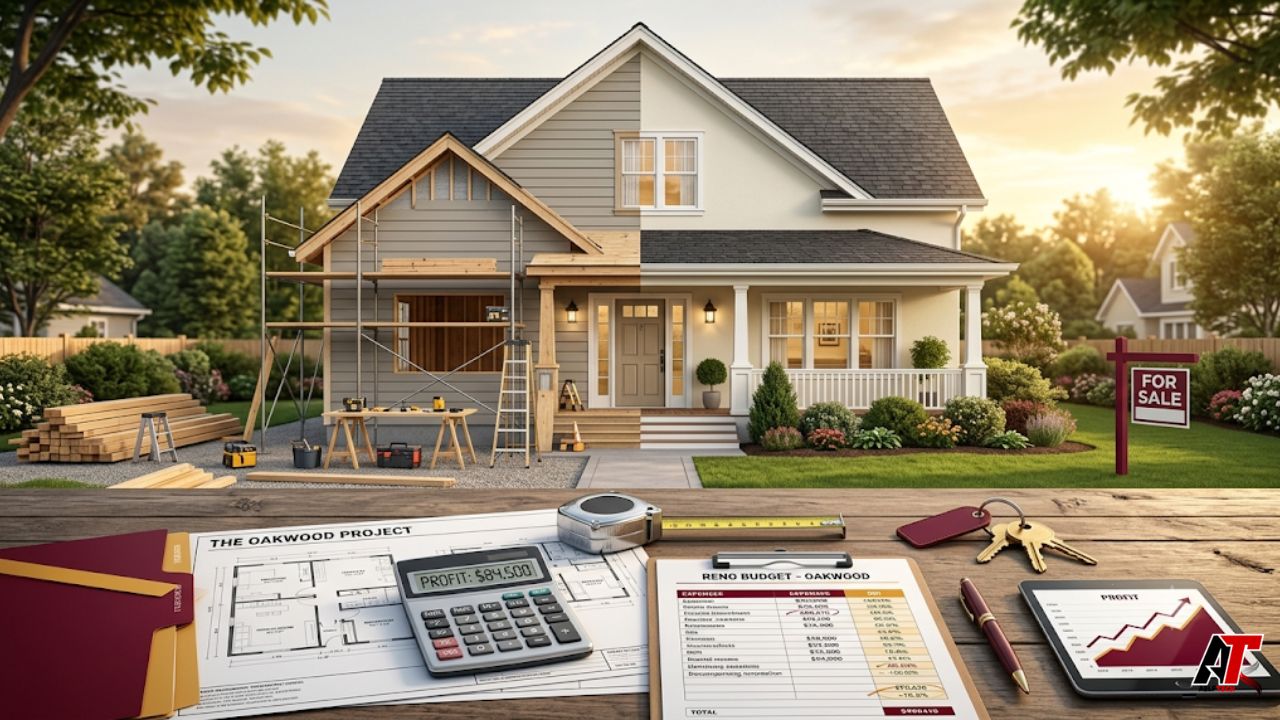
House flipping can look simple from the outside: buy a tired property, renovate it, and sell it for more. In practice, the profit is usually created before demolition begins. It comes from disciplined valuation, realistic budgets, fast decisions, careful contractor management, and an exit plan that still works when the market or project changes.
A beautiful renovation does not automatically produce a profitable flip. Investors lose money when they overestimate resale value, overlook structural defects, underestimate holding costs, or improve the home beyond what neighborhood buyers will pay for. The ten secrets below focus on the business decisions that protect margin from acquisition through closing.
1. Buy the Deal, Not the Dream
The purchase price is the first and most powerful profit lever. A property can have excellent design potential and still be a poor investment if the acquisition cost leaves no room for repairs, financing, selling expenses, taxes, and uncertainty. Emotional attachment is especially dangerous when several buyers are competing for the same distressed home.
Set a maximum offer before negotiating. Base it on verified comparable sales, a detailed repair estimate, expected transaction costs, and a contingency reserve. Walk away when the numbers no longer support the required return. Profitable house flipping depends less on winning every property and more on avoiding the wrong one.
2. Calculate ARV From Real Comparables
After Repair Value, or ARV, is the estimated market value of a property after the planned renovations are complete. It should reflect what buyers are currently paying for similar finished homes—not the highest active listing or the most optimistic online estimate. Review the After Repair Value (ARV) concept before building your acquisition model.
Use recently sold properties with similar location, size, age, bedroom count, lot characteristics, parking, and renovation quality. Adjust for meaningful differences rather than pretending every nearby sale is equivalent. Ask a local agent or appraiser to challenge your assumptions, especially when the neighborhood has few renovated comparables.
3. Build a Complete Cost Model Before Closing
Renovation cost is only one line in a flip budget. A complete model also includes inspection and due-diligence fees, title and closing charges, loan points, interest, utilities, insurance, permits, dumpsters, lawn care, staging, commissions, transfer charges, and unexpected repair work. Small omissions across many categories can consume the projected profit.
Create best-case, expected, and stress-case budgets. Add a contingency appropriate to the property’s condition and the quality of available information. An older home with limited access, outdated systems, water damage, or unverified additions needs a larger reserve than a cosmetic project with clear documentation. Never treat contingency money as planned profit.
4. Inspect the Expensive Systems First
Cosmetic defects are visible, but the largest financial surprises often sit behind walls, below grade, or above the ceiling. Prioritize the roof, foundation, drainage, sewer line, plumbing supply, electrical service, heating and cooling equipment, moisture intrusion, and any evidence of unpermitted work. Specialist inspections may cost more upfront but can prevent a disastrous purchase.
For homes built before 1978, renovation planning must also address lead-safe requirements. The U.S. Environmental Protection Agency states that its Renovation, Repair and Painting rule applies to paid work that disturbs painted surfaces in covered pre-1978 properties, including homes bought, renovated, and sold for profit. Local rules may impose additional obligations.
5. Renovate for the Buyer and the Neighborhood
The best renovation is not the one with the most expensive finishes. It is the one that solves buyer objections, supports the target price, photographs well, and fits the surrounding market. Spend first on safety, function, durability, layout, light, cleanliness, and consistent design. Then add selected visual upgrades that help the listing stand out.
Exterior improvements can create a strong first impression, but they should match the property type and local expectations. In markets where a masonry-style accent supports the resale strategy, materials such as cultured stone promontory may be worth reviewing alongside installation requirements, climate suitability, and comparable-home finishes.
6. Control the Scope Before Contractors Start
A vague renovation plan invites change orders, scheduling disputes, and uneven quality. Prepare a written scope that identifies each room, demolition item, repair, finish, fixture, product allowance, responsibility, and completion standard. Attach drawings or photographs where words may be interpreted differently. Obtain comparable bids based on the same scope.
Use milestone-based payments tied to inspected work rather than large advances based only on dates. Confirm licenses, insurance, references, permits, subcontractor responsibilities, cleanup duties, and warranty terms. Keep decisions and approvals in writing. A strong contractor relationship still needs documentation because memory becomes unreliable when cost and schedule pressure rise.
7. Treat Time as a Direct Project Cost
Every extra week can add interest, utilities, insurance, taxes, maintenance, security, and opportunity cost. Delays may also push the listing into a weaker selling season. Build a realistic sequence for inspections, design, permits, ordering, demolition, rough trades, inspections, finishes, cleanup, staging, and listing preparation before the work begins.
Order long-lead materials early and select practical alternatives before shortages occur. Hold brief, regular progress meetings and maintain a decision log. Resolve blockers quickly, but do not sacrifice required inspections or conceal defects to save time. The objective is controlled speed: fewer idle days, fewer repeated tasks, and no preventable compliance failures.
8. Match Financing to the Real Timeline
Cheap money is not always the lowest-cost financing if the lender cannot close quickly or fund construction draws reliably. Compare interest rate, origination points, appraisal costs, draw fees, extension charges, minimum interest, prepayment terms, personal guarantees, required reserves, and the timing of reimbursements. Model the cost if the project lasts longer than expected.
Maintain liquidity outside the renovation budget. Contractors, utilities, insurance providers, and inspectors may need payment before a lender releases funds. A profitable deal on paper can stall when cash flow is poorly timed. Never rely entirely on the final sale to solve short-term obligations that arise during construction.
9. Plan Taxes, Records, and Compliance Early
Keep separate project records for acquisition, labor, materials, financing, permits, utilities, insurance, marketing, and selling costs. Save invoices, contracts, lien releases, inspection reports, photographs, and change approvals. Organized records support better decisions during the project and make post-sale accounting more reliable.
Tax treatment can vary with facts and business activity. IRS guidance distinguishes capital assets from property held mainly for sale to customers, and inventory sales generally produce ordinary income rather than capital gain. Frequent flippers may also face self-employment and estimated-tax considerations. Consult a qualified tax professional before assuming a preferred treatment or using a home-sale exclusion.
10. Design More Than One Exit Strategy
A flip should not depend on one perfect sale price on one exact date. Before buying, evaluate the likely resale path, a reduced-price sale, a rental hold, a refinance option, or a wholesale disposition if the project changes. Not every alternative will be attractive, but knowing the break-even point and available choices reduces forced decisions.
Set decision triggers in advance. Examples include a maximum repair overrun, a deadline for resolving title or permit issues, a minimum acceptable net price, and a date when the property should be listed even if optional upgrades remain. Predefined triggers make it easier to protect capital when optimism begins to replace evidence.
A Practical Profit Check Before You Make an Offer
Before submitting an offer, write down the expected sale price and subtract every cost required to reach that sale: purchase price, closing costs, renovation, financing, holding expenses, selling costs, taxes, and contingency. The remaining amount is not automatically profit; it must also compensate you for execution risk, time, and the possibility that the market moves against you.
- Confirm the resale value with relevant sold comparables, not asking prices alone.
- Use a room-by-room repair scope supported by contractor or specialist input.
- Include financing, carrying, selling, compliance, and closing expenses.
- Stress-test a lower sale price and a longer project schedule.
- Verify permits, title, zoning, occupancy, and pre-1978 lead-safe obligations.
- Keep sufficient cash reserves for draws, surprises, and delayed closing.
Common Mistakes That Quietly Destroy Margin
Many failed flips are not caused by one dramatic event. Margin disappears through a series of smaller errors: optimistic ARV, incomplete inspections, premium finishes buyers do not value, repeated scope changes, weak payment controls, delayed materials, poor recordkeeping, and listing before the home is truly ready. Each mistake also tends to create another.
Professional discipline is therefore more valuable than dramatic design. Use consistent acquisition criteria, repeatable budgets, written scopes, approved change orders, and weekly cost-to-complete reviews. For additional business and digital growth resources, visit aelftech.
Final Thoughts
Profitable house flipping is a risk-management business wrapped around a renovation project. The strongest operators do not depend on luck, a booming market, or a single rule of thumb. They create margin at purchase, verify the resale case, control the construction process, track time and cash, follow applicable rules, and prepare for more than one outcome.
Use the ten secrets as a decision framework rather than a promise of profit. Every property, lender, contractor, tax situation, and local market is different. Independent legal, tax, lending, appraisal, inspection, and construction advice should be part of the process whenever the financial or compliance consequences are material.
Frequently Asked Questions
What is the most important number in a house flip?
No single number is sufficient, but a defensible ARV and an all-in cost estimate are the foundation. Profitability depends on the gap between realistic net sale proceeds and every acquisition, renovation, financing, holding, selling, tax, and contingency cost.
Is the 70% rule always reliable?
No. It is a screening shortcut, not a universal valuation method. Local selling costs, financing rates, project duration, property taxes, renovation intensity, and required profit differ widely. Build a property-specific model and use the rule only as a preliminary reference.
How much contingency should a flipper keep?
The right reserve depends on property age, inspection quality, renovation complexity, contractor certainty, and access to backup capital. Cosmetic projects may require less than homes with structural, moisture, sewer, electrical, or permitting uncertainty. The reserve should be separate from expected profit.
Should a flipper choose the cheapest contractor?
Not automatically. Compare complete scope, reliability, insurance, licensing, references, schedule, communication, supervision, warranty, and change-order practices. A low bid can become expensive when work is incomplete, delayed, noncompliant, or repeatedly corrected.
Leave a Reply