
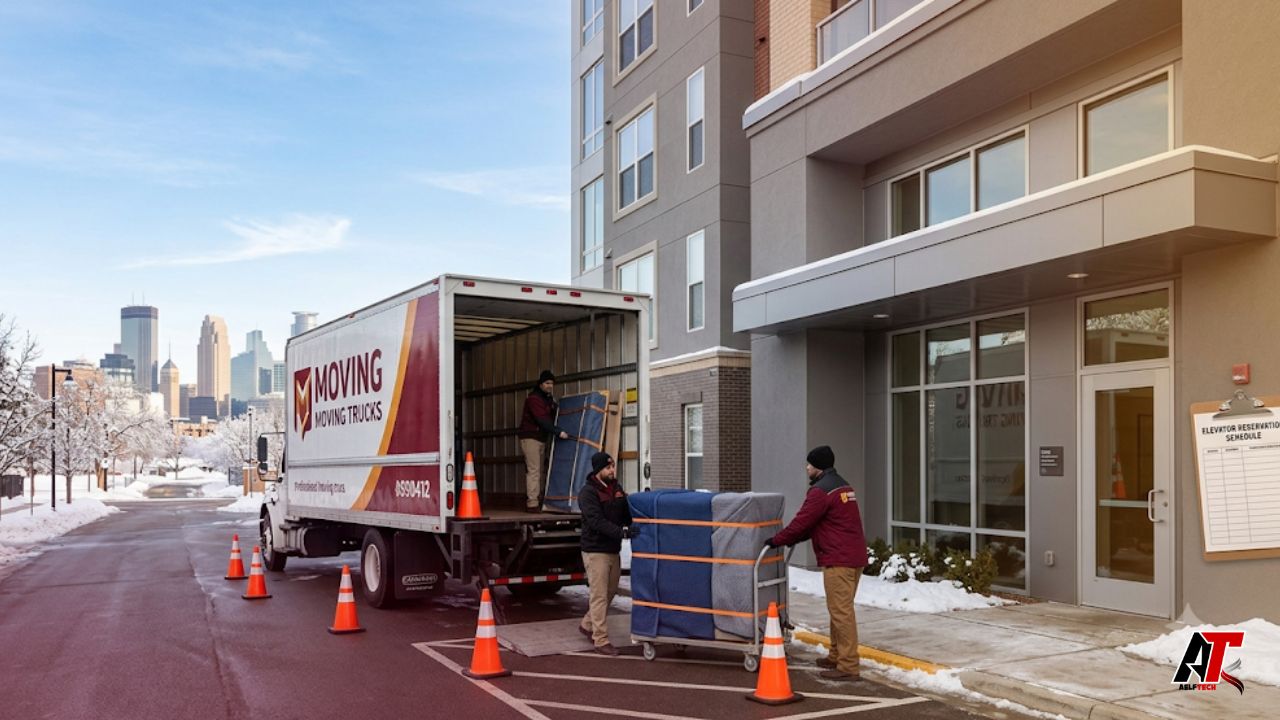
Moving in Minneapolis is rarely difficult because of the boxes alone. The problems usually start outside the apartment: the truck has nowhere legal to stop, the freight elevator is already booked, the loading dock has a height limit, or a snow emergency changes the parking rules overnight. A move that looks simple on paper can lose hours when these details are handled too late.
This Minneapolis moving guide focuses on the logistics that make the biggest difference on moving day. It explains how to plan truck access, coordinate elevators and building staff, prepare for ice and snow, and build a schedule that works for your neighborhood. The goal is not to overcomplicate your move. It is to remove the small surprises that create large delays.
Why Minneapolis Moves Need Local Planning
Minneapolis combines dense downtown blocks, older walk-up buildings, modern high-rises, residential streets, alleys, metered spaces, bike lanes, and seasonal parking restrictions. Two addresses only a few miles apart can require completely different moving plans. A North Loop loft may depend on a scheduled loading dock and freight elevator. A South Minneapolis duplex may be easier to access from an alley, but the truck still needs enough turning room. An Uptown apartment may have limited curb space, active bus stops, and heavy pedestrian traffic.
That is why the first planning question should not be, “How many boxes do we have?” It should be, “How will the truck, crew, and furniture legally reach both doors?” Once access is confirmed, the rest of the move becomes much easier to estimate.
1. Secure Truck Parking Before Moving Day
A moving truck needs more than an empty-looking curb. It needs a legal space that is long enough for the vehicle, close enough to the entrance, and safe for workers carrying large items. Do not assume the space in front of your building will remain open. Street cleaning, construction, deliveries, snow rules, meters, bus stops, bike lanes, and posted restrictions can all affect access.
Inspect Both Addresses in Person
Visit the pickup and delivery addresses at the same time of day as the planned move. Photograph every sign on the block, measure the likely truck space, and identify the shortest safe path to the door. Check whether the entrance has stairs, a narrow vestibule, a locked gate, or a long hallway. If an alley seems like the best option, confirm its width, overhead clearance, turning space, and whether the building actually permits moving access there.
Know When Temporary Street Use Approval May Be Needed
The City of Minneapolis explains that a street use permit may be required when equipment restricts the public right-of-way, when temporary no-parking signs are needed, or when parking meters must be hooded. Your mover, building manager, or property owner may handle the request, but you should confirm responsibility early instead of discovering the requirement on moving morning.
Permit processing, sign placement, and meter arrangements can take time. Ask these questions at least one to two weeks ahead: Who requests the permit? Who pays the fee? Who posts the signs? How many feet of curb are being reserved? What happens if another vehicle is still parked there?
Respect Basic No-Parking Clearances
The city’s no-parking guidance includes minimum clearances around driveways, alley entrances, hydrants, crosswalks, intersections, stop signs, and traffic signals. These rules still apply when the truck is actively loading. A hazard-light signal does not turn a restricted area into a legal loading space.
Also read every meter and curb sign at the exact space. Minneapolis meter rates, enforcement hours, and time limits can vary by block and even by side of the street. Plan for the full moving window, not only the time needed to carry the first item inside.
For neighborhood-level planning and service coverage, review this Minneapolis moving service by district. It can help you compare access needs before choosing a truck size, crew, or arrival time.
2. Treat the Elevator as a Reserved Resource
In apartment and condominium buildings, elevator access can control the entire schedule. A moving crew cannot work efficiently when residents are using the same elevator, the doors close too quickly, or the approved moving window ends before unloading is complete.
Ask the Building for Its Full Moving Policy
Contact both the old and new property managers. Do not ask only, “Can I reserve the elevator?” Request the complete moving policy in writing. Buildings may require a reservation, refundable deposit, certificate of insurance, approved mover, loading-dock booking, protective elevator pads, floor coverings, or a specific service entrance.
Confirm the reservation time, including setup and cleanup. A two-hour elevator slot does not always mean two hours of carrying. Building staff may need time to install pads, unlock the freight elevator, open the dock, or inspect common areas afterward.
Verify Dimensions and Weight Limits
Measure the elevator door, interior height, interior depth, hallway turns, stairwell width, and apartment doorway. Compare those dimensions with sofas, mattresses, dressers, desks, and oversized artwork. An item that fit through the old building may not fit into the new one without removing legs, doors, railings, or packaging.
Ask whether the service elevator has a weight limit and whether the building limits the number of workers or carts per trip. If there is no elevator, tell the mover the exact floor and stair configuration. A third-floor straight staircase is different from a narrow staircase with several tight landings.
Coordinate the Loading Dock and Elevator as One System
A reserved elevator is not useful if the truck cannot reach the service entrance. Confirm dock height, truck-length limits, garage clearance, ramp slope, and where the driver waits if the dock is occupied. Request a building contact who will answer the phone on moving day. The crew should not lose thirty minutes searching for a key, fob, dock attendant, or unlocked service door.
3. Build a Real Winter Moving Plan
Winter moving in Minneapolis is not simply a summer move with coats. Snow changes curb availability, ice slows every walking trip, cold affects certain belongings, and shorter daylight reduces the margin for delays. The plan should account for conditions at both addresses and along the route.
Monitor Snow Emergencies, Not Just the Forecast
After a heavy snowfall, Minneapolis may declare a snow emergency with special parking rules that run through a three-day sequence. The legal side of the street can change by day and by whether the road is a snow emergency route, parkway, or ordinary street. Check the city’s snow emergency parking rules the evening before the move and again before the truck departs. Do not rely on an old screenshot or a neighbor’s memory.
Keep the truck driver informed. A space that was legal during the estimate may become unavailable after plowing restrictions begin. Have a backup loading location and calculate the extra carrying distance. If the backup is across a busy street or around a snowbank, the move may need additional time or another worker.
Prepare the Walking Route
Shovel and treat the path before the crew arrives. Clear the curb cut, steps, ramp, sidewalk, porch, and service entrance. Break down hard ridges left by snowplows. Use an ice melt product that is appropriate for the surface, and place absorbent floor protection inside both buildings. Wet cardboard and slush can damage floors and weaken boxes.
Keep a shovel, ice scraper, broom, traction material, towels, extra gloves, and dry socks accessible instead of packing them. Good winter preparation protects the crew and also prevents repeated stops to clean floors or recover from slips.
Protect Temperature-Sensitive Belongings
Cold can affect electronics, musical instruments, houseplants, candles, liquids, artwork, and some furniture finishes. Pack these items last, transport them in a heated passenger vehicle when possible, and bring them inside first. After electronics have been exposed to severe cold, allow them to return gradually to room temperature before powering them on so condensation is less likely to cause trouble.
Drain outdoor equipment and check whether cleaning supplies, beverages, or other liquids can freeze. Use sealed plastic bins for items that cannot tolerate wet snow. Wrap wood furniture and upholstered pieces without trapping snow or moisture against the surface.
Plan for Slower Travel and Less Daylight
Allow more driving time and review MnDOT winter driving guidance before a storm-day move. The fastest route in dry weather may not be the best route during active snow, poor visibility, or plowing operations. Start earlier than you would in summer and avoid creating a schedule that depends on perfect traffic.
4. Adjust the Plan to the Minneapolis Neighborhood
Neighborhood context changes the most practical approach. Downtown and North Loop moves often require close coordination with building management, loading docks, meters, and freight elevators. Uptown and dense commercial corridors may offer less curb flexibility and more competition for loading space. Residential areas may provide easier street access, but alleys, snowbanks, mature trees, and narrow driveways can still limit larger trucks.
University-area moves can be affected by lease turnover, event traffic, and crowded move-in dates. Older buildings in Northeast, Whittier, Stevens Square, and other established areas may have tighter staircases or smaller elevators. Newer developments may have better service access but stricter reservation windows. The correct plan comes from the exact building, not from the ZIP code alone.
5. Create a Moving-Day Access Sheet
Put all access details on one page and share it with the mover before the job. Include the addresses, building names, unit numbers, parking instructions, permit details, elevator times, loading-dock instructions, entry codes, contact names, and backup parking location. Add photographs of the truck approach, service door, elevator, and difficult turns.
This simple sheet prevents information from being scattered across emails and text messages. It also helps the crew choose the correct truck, equipment, and staffing level before arrival.
A Practical Timeline
Two to four weeks before: Confirm mover availability, building requirements, elevator rules, insurance documents, and truck access.
One to two weeks before: Submit any permit or curb-use request, reserve elevators and docks, measure large furniture, and share access photos.
Three days before: Check the forecast, parking notices, construction, and building contacts. Prepare a backup route and loading space.
The evening before: Recheck snow emergency status, clear walkways, charge phones, separate winter supplies, and protect floors.
Moving morning: Verify the curb, meet building staff, open service doors, photograph existing damage, and keep the access sheet available.
6. Get a Quote Based on Real Access Conditions
A useful moving estimate should reflect more than the number of rooms. Tell the company about stairs, elevator reservations, long carries, parking distance, dock rules, oversized furniture, winter conditions, and any time limits imposed by the building. Accurate information helps the mover estimate labor hours and avoids preventable adjustments on moving day.
For a tailored estimate, request a moving quote from Affinity and include photographs plus the access details from both properties. The clearer the information, the easier it is to match the crew, equipment, and schedule to the job.
7. Minneapolis Moving Checklist
- Confirm legal truck parking at both addresses.
- Identify whether temporary no-parking signs or meter hooding are needed.
- Read all curb, meter, bike-lane, bus-stop, and loading-zone signs.
- Reserve the freight elevator and loading dock in writing.
- Provide any certificate of insurance or deposit before the deadline.
- Measure elevators, stair turns, hallways, and oversized furniture.
- Check snow emergency status the night before and morning of the move.
- Clear and treat all outdoor walking surfaces.
- Keep winter tools, floor protection, and dry clothing accessible.
- Protect electronics, plants, liquids, instruments, and artwork from cold.
- Share an access sheet and backup loading plan with the crew.
- Build extra time into the schedule for traffic, snow, and building delays.
Final Thoughts
A successful Minneapolis move depends on controlling access. When the truck has a legal space, the elevator is reserved, the building is ready, and the winter plan matches current conditions, the crew can focus on moving your belongings instead of solving avoidable problems.
Use this guide as a planning document, confirm city and building rules close to the moving date, and keep every instruction in one place. For more practical digital guides and planning resources, visit aelftech.com. The best moving day is not the one with no challenges; it is the one where the important challenges were planned for before the truck arrived.
Leave a Reply