
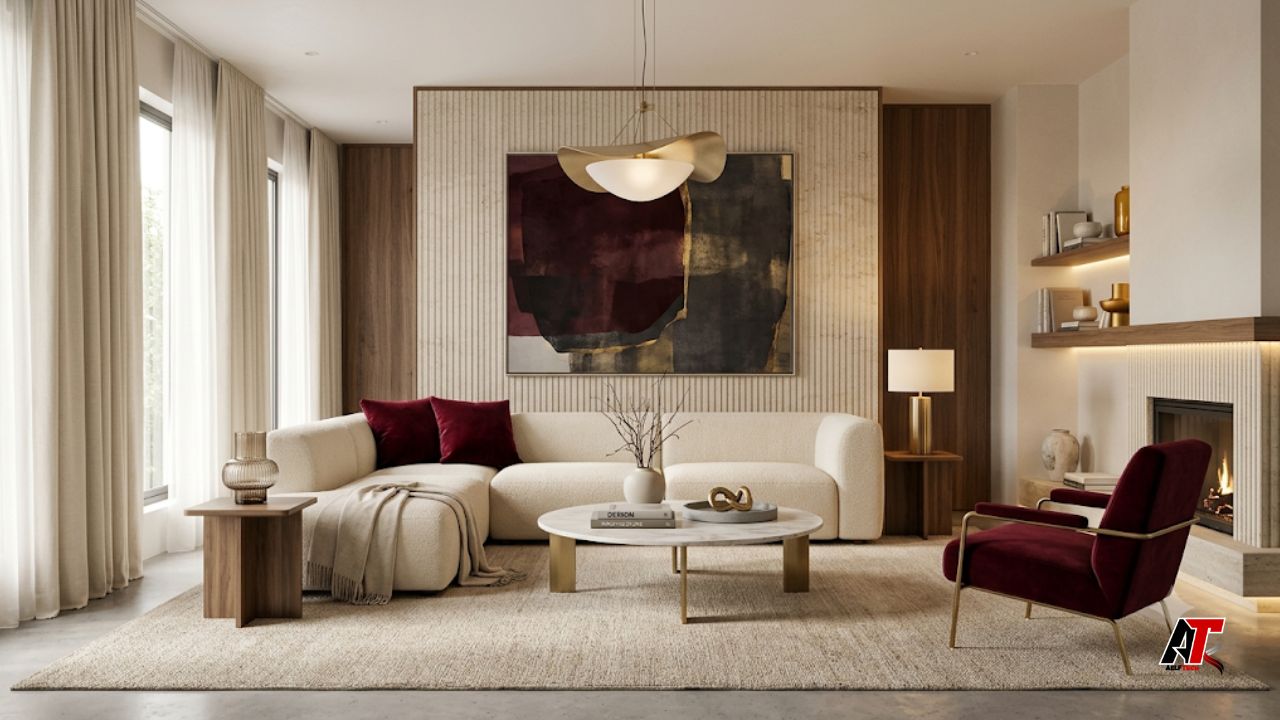
A luxurious home is not defined only by its size, price, or the number of designer labels inside it. The feeling of luxury usually comes from thoughtful decisions: how light moves through a room, how materials interact, whether the proportions feel balanced, and whether every visible object appears intentional. At aelftech.com, we believe the strongest design content should be practical as well as inspiring. The good news is that many high-impact upgrades do not require a complete renovation. A few carefully chosen interior design details can make an ordinary room feel calmer, richer, and far more polished.
The key is to focus on elements that influence the entire room rather than buying many small decorative items. Luxury is often communicated through restraint, consistency, comfort, and visual depth. When lighting, window treatments, textures, proportions, and styling work together, even a modest home can feel custom-designed. The following five details offer the greatest visual return and can be adapted to almost any interior style, from modern minimalism to classic, contemporary, or eclectic design.
1. Layered Lighting That Creates Depth and Atmosphere
Lighting is one of the fastest ways to change how expensive a room feels. A single bright ceiling fixture may provide enough illumination, but it often makes a space appear flat and functional. Luxurious interiors use several layers of light so that the eye notices depth, texture, and focal points. The most effective plan combines ambient lighting for general visibility, task lighting for activities, and accent lighting for mood or architectural emphasis.
Start with the ambient layer, such as recessed lights, a pendant, or a central chandelier. Then add task lighting where people actually need it: table lamps beside a sofa, reading lights near a chair, under-cabinet lights in the kitchen, or a focused lamp on a desk. Finally, introduce accent lighting behind shelving, beneath cabinetry, near artwork, or around a textured wall. This last layer is especially important because it gives the room a soft glow and draws attention to selected features rather than lighting everything equally.
Smart lighting can make this approach easier because brightness and color temperature can be adjusted throughout the day. Systems such as Philips Hue include bulbs, strip lights, lamps, recessed options, and controls that can help homeowners create different scenes for working, relaxing, dining, or entertaining. Regardless of the brand, choose warm white light for living rooms and bedrooms, and avoid mixing several noticeably different color temperatures in the same sightline.
2. Full-Length Window Treatments with Generous Fabric
Window treatments strongly influence the perceived height and softness of a room. Curtains that stop at the window sill, use too little fabric, or hang from a narrow rod can make the architecture feel smaller. For a more luxurious result, hang the curtain rod close to the ceiling or several inches above the window frame, then extend it beyond both sides of the window. This allows the panels to frame the opening without blocking too much natural light.
The fabric should reach the floor. A clean break that just touches the floor works well in modern spaces, while a slight puddle can suit formal or romantic interiors. Width is equally important. Curtains should look full when closed, not stretched flat across the window. As a general visual rule, the total fabric width should be significantly wider than the window so that the folds remain generous. Even affordable curtains can look custom when two panels are layered on each side or when ready-made panels are altered to the correct length.
Consider using two layers: a sheer curtain for filtered daylight and a heavier outer panel for privacy and softness. Linen blends, velvet, textured cotton, and fabrics with a subtle weave tend to look richer than very shiny synthetic materials. Choose rods and rings that coordinate with nearby hardware, but keep the design simple. Hidden tracks can create a clean hotel-like effect, while slim metal rods add a tailored finish.
3. A Carefully Mixed Material and Texture Palette
Rooms often feel inexpensive when every surface has the same visual weight. A space filled only with smooth laminate, plain cotton, and matching furniture may be tidy, but it can lack depth. Luxury interiors create contrast by mixing materials that reflect, absorb, and soften light in different ways. The goal is not to use the most expensive material everywhere. It is to combine a few finishes thoughtfully so the room feels layered and tactile.
Begin with the largest surfaces: flooring, walls, upholstery, and major furniture. Then add a controlled mix of natural-looking textures such as wood grain, stone, woven fabric, leather, boucle, brushed metal, ceramic, or glass. A living room might pair a matte wall with a soft rug, a smooth stone-topped table, linen curtains, and one metallic detail. A bedroom could combine upholstered panels, crisp bedding, a wool throw, warm timber, and ribbed glass lighting. Each material should contribute a different sensation without competing for attention.
Small decorative objects are useful when they support the material story rather than create clutter. A substantial tray, sculptural vase, handcrafted bowl, decorative box, candleholder, or textured cushion can provide a focal point. Retailers such as Pieces offer curated categories that include tableware, decorative pieces, cushions and throws, vases, furniture, lighting, and home scents. When selecting accessories, look for form, texture, and craftsmanship rather than buying many items simply to fill empty surfaces.
Limit the main palette to a few repeated finishes. For example, if brushed brass appears in a lamp, repeat it subtly in a tray or cabinet handle. If dark wood anchors the dining table, echo that tone in a picture frame or side table. Repetition creates cohesion, while variation in texture prevents the room from feeling overly matched. This balance between consistency and contrast is one of the most recognizable luxury interior design details.
4. Correct Scale in Furniture, Rugs, Art, and Accessories
Scale is an invisible design detail that immediately separates a polished room from an improvised one. Many homes feel less luxurious because the furnishings are too small for the space. A tiny rug floating in the center of a living room, a small artwork above a wide sofa, or a narrow light fixture over a long dining table creates visual gaps that make the room feel unfinished. Larger, correctly proportioned pieces usually make a space feel calmer and more intentional.
In a living room, the rug should connect the seating arrangement. Ideally, at least the front legs of the sofa and chairs should sit on it. In a bedroom, the rug should extend far enough beyond the sides and foot of the bed to be visible and comfortable underfoot. Artwork should relate to the furniture beneath it. One large piece or a well-planned group often looks more confident than several unrelated small frames scattered across a wall.
Accessories should follow the same principle. One substantial vase, bowl, lamp, or stack of books can have more impact than a collection of tiny objects. Vary heights to create rhythm, but do not fill every surface. Negative space is essential because it allows the eye to appreciate shape and material. When the scale is right, the room feels designed around human comfort and architectural balance, not around the quantity of possessions.
5. Edited Styling and High-Touch Finishing Details
The final layer of luxury comes from the details people see and touch every day. Door handles, cabinet pulls, switches, faucets, outlet covers, towels, bedding, and even the arrangement of objects can influence the overall impression. These elements may be small, but they are repeated throughout a home. When their finishes are coordinated and their quality feels consistent, the interior appears more complete.
Start by identifying the most visible mismatches. Replacing worn or inconsistent cabinet hardware can refresh a kitchen or bathroom without changing the cabinetry. Coordinated switch plates and simple outlet covers reduce visual noise. In a bathroom, matching dispensers, thick towels, a neatly styled tray, and concealed everyday packaging can create a spa-like effect. In a bedroom, well-sized pillows, smooth bedding, a folded throw, and clear bedside surfaces make the room feel restful rather than crowded.
Styling should be edited, not empty. Group objects in purposeful arrangements, usually using different heights and shapes. A coffee table might hold a low tray, one book, and a sculptural object. A console could feature a lamp, a large artwork or mirror, and one organic element such as branches or flowers. The exact number matters less than the visual relationship. Repeating a color or material across the arrangement helps it feel connected.
Do not overlook scent and maintenance. A clean, well-ventilated home with a subtle signature fragrance often feels more luxurious than a room filled with expensive objects. Keep cords hidden, remove damaged accessories, repair loose hardware, and clean glass, metal, and mirrors regularly. Luxury is closely linked to care. The most impressive rooms communicate that every element has been chosen, placed, and maintained deliberately.
Common Mistakes That Can Make a Room Feel Less Luxurious
The most common mistake is trying to create luxury by adding more. Too many metallic finishes, decorative objects, cushions, patterns, or statement pieces can make a room feel busy rather than refined. Another problem is buying matching furniture sets, which can remove personality and make the room resemble a showroom. A better approach is to coordinate pieces through color, proportion, or material while allowing some variation.
Poor installation can also reduce the impact of good products. Curtains hung too low, artwork placed too high, rugs that are too small, visible lighting cables, and uneven spacing are immediately noticeable. Finally, do not ignore comfort. A room may look fashionable, but if the seating is awkward, the lighting is harsh, or the surfaces are difficult to use, it will not feel truly luxurious. High-end design should make daily life easier, calmer, and more enjoyable.
How to Apply These Details Without Overspending
Begin with one room and evaluate it in daylight and at night. Photograph the space from the doorway, then identify the single issue with the widest visual effect. In many rooms, the best first investment is lighting, window treatments, or a correctly sized rug. These elements influence a large area and can make existing furniture look better. After that, improve one repeated detail, such as cabinet hardware or matching lamps, before purchasing additional decor.
Use a simple priority order: fix proportion, improve light, add softness, introduce texture, and edit accessories. Shop slowly and measure carefully. Ready-made curtains can be hemmed, second-hand furniture can be refinished, and inexpensive frames can look cohesive when used in one color. Spend more on items that receive daily use or dominate the room, and save on decorative accents that can be changed seasonally. A luxurious result comes from a clear plan, not from buying everything at once.
Final Thoughts
A home feels luxurious when its design appears calm, balanced, and intentional. Layered lighting creates atmosphere, full-length curtains improve proportion, varied materials add depth, correct scale brings confidence, and edited finishing details create a polished experience. None of these ideas depends on a particular interior style or a very large budget. They depend on observation, consistency, and careful execution. Rather than chasing every trend, choose upgrades that improve both appearance and daily comfort. Measure before buying, repeat finishes thoughtfully, leave room for negative space, and maintain the details you already own. When these five interior design details work together, the result is not merely a room that looks expensive. It is a home that feels composed, welcoming, and distinctly personal.
Leave a Reply