
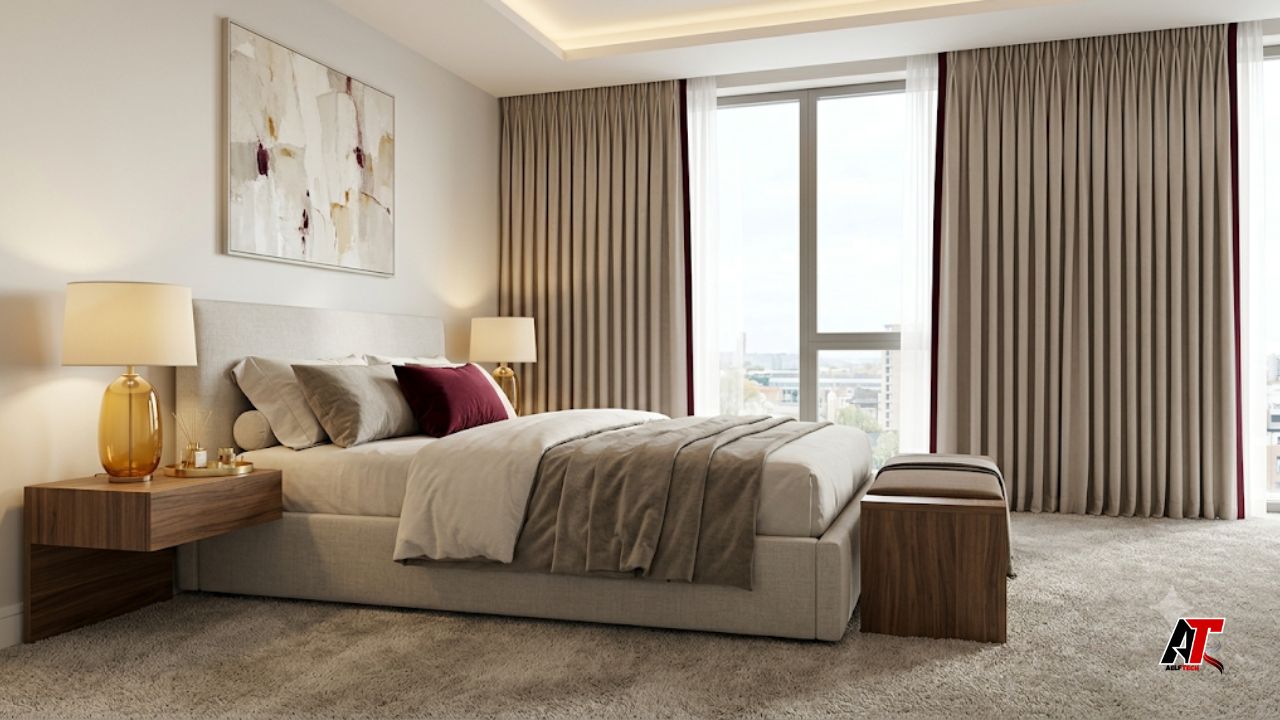
A bedroom should feel calm, comfortable, and intentionally designed from the moment you enter. While furniture often receives most of the attention, the surfaces that frame the room have an equally powerful influence. A plush floor softens every step, while beautifully structured curtains control light, privacy, and visual height. When a luxury bedroom carpet and pinch pleat curtains are selected as a coordinated pair, they create a complete design story rather than two unrelated finishing touches.
The key is not to make the carpet and curtains match perfectly. A successful bedroom uses related tones, complementary textures, and balanced visual weight. For homeowners exploring a premium Bedroom Carpet, the goal should be to choose a surface that supports comfort, proportion, and long-term practicality. The curtains can then repeat or gently contrast the carpet’s undertone, creating depth without making the room feel overly coordinated.
This guide explains how to combine these two timeless elements, choose suitable materials, plan color relationships, measure correctly, and avoid the mistakes that can make an expensive bedroom feel unfinished.
Why This Carpet-and-Curtain Combination Feels Luxurious
Luxury interiors usually feel layered rather than decorated. A carpet adds physical softness and absorbs some of the hard visual character created by walls, wardrobes, windows, and bedside tables. Pinch pleat curtains bring order and rhythm to the vertical plane because the pleats remain evenly spaced from top to bottom. Together, these surfaces surround the bed with softness, making the bedroom feel quieter, warmer, and more private.
Wall-to-wall or generously sized carpeting creates a broad visual foundation, while floor-length curtains guide the eye upward. This balance can make a compact bedroom feel more composed and a large bedroom feel more intimate. The same principle works in classic, contemporary, hotel-inspired, and transitional interiors.
The pairing also improves everyday comfort. A soft carpet feels pleasant underfoot, while lined curtains reduce glare and unwanted light. These practical qualities make the room feel genuinely luxurious rather than simply decorative.
Start with the Right Luxury Bedroom Carpet
Because the floor occupies a large visible area, choose the carpet before confirming the curtain fabric. Consider how the room is used: a primary suite may suit a deeper pile, while a guest room may need an easy-care construction. Pets, children, allergies, and foot traffic should influence fiber and maintenance choices.
Choose a Texture That Supports the Mood
A smooth, dense pile feels formal and hotel-like, while a lightly textured surface appears relaxed and hides footprints more effectively. When the curtains are velvet, jacquard, or another rich fabric, choose a quieter carpet texture. With simple linen-look curtains, the floor can carry more tactile interest.
Select Color with Long-Term Flexibility in Mind
Warm beige, mushroom, taupe, greige, stone, and muted charcoal are flexible bedroom colors. Pale carpet can expand the room visually but may show marks; dark carpet adds intimacy but can enclose a small space. Mid-tone neutrals offer a forgiving balance. View a large sample in daylight and artificial light before ordering.
Why Pinch Pleat Curtains Remain Timeless
Pinch pleats have a tailored shape that works across changing interior styles. Evenly spaced pleats create a controlled fall, so the curtains look polished when open and orderly when closed. They also give plain fabric an architectural quality, which is valuable when the carpet already has noticeable texture.
Well-made Pinch Pleat Curtains can be hung from a decorative pole or a discreet track, depending on the room’s character. Double pleats produce a clean and versatile finish, while triple pleats create more fullness and formality. The best choice depends on window width, ceiling height, fabric weight, and the amount of visual detail already present in the bedroom.
Fabric Weight and Fullness Matter
Linen blends, cotton blends, chenille, velvet, and quality polyester can all work. Lightweight fabric creates a relaxed flow, while heavier fabric frames the window more dramatically. Adequate fullness is essential: the heading should hold its shape, and the lower fabric should fall in generous, even folds.
Use Lining to Improve Comfort and Appearance
Lining adds body, protects the face fabric, improves the drape, and supports privacy. Blackout lining suits rooms affected by streetlights or early sunrise, while standard lining works where moderate control is enough. Sheers can be layered behind the main curtains for daytime privacy and softness.
How to Coordinate Carpet and Curtains without Overmatching
Refined rooms use connection rather than duplication. Identify the carpet undertone and repeat it in a lighter, darker, warmer, or cooler curtain shade. Warm greige can pair with oatmeal, while cool grey works with pearl, slate blue, or smoky taupe. The variation creates dimension.
Repeat Undertones, Not Exact Shades
Place carpet and curtain samples beside the wall paint, bed, and main furniture finish. Look for a shared undertone such as warm brown, cool grey, muted red, golden beige, or soft green. When the undertone connects, the materials feel related even when their visible colors differ.
Balance Pattern and Texture
If the carpet has a noticeable pattern, use mostly solid curtains with a subtle weave. When the curtains feature a motif, choose a quieter floor. Strong patterns on both surfaces can compete. Texture is easier to layer, because carpet, upholstery, bedding, and curtains reflect light in different ways.
Elegant Color Palettes That Work in Bedrooms
A clear palette makes shopping easier and prevents expensive last-minute changes. The following combinations are adaptable enough for both modern and traditional bedrooms:
- Warm neutral: mushroom or beige carpet with ivory, oatmeal, or sand pinch pleat curtains. Add walnut furniture and brushed brass accents.
- Modern contrast: medium greige carpet with deep burgundy curtains, balanced by cream bedding and warm wood. The burgundy can echo #99041E in small decorative details.
- Soft luxury: pale taupe carpet with champagne, warm white, or muted gold curtains. Use #F0A630 as a restrained accent in cushions, artwork, or bedside accessories.
- Calm contemporary: soft charcoal carpet with light grey or off-white curtains, then introduce texture through boucle, linen, and matte ceramics.
- Nature-inspired: warm stone carpet with sage or olive curtains, natural timber, and woven accessories for a grounded, restful mood.
Keep the strongest color limited to one or two major areas. When curtains are dark and dramatic, the carpet should usually remain quieter. When the carpet is deep in tone, lighter curtains can stop the room from feeling visually compressed.
Get the Scale, Measurements, and Installation Right
Beautiful materials can disappoint when proportions are wrong. Professional carpet measurement should account for room shape, door clearances, wardrobes, joins, underlay, and pile direction. Quality underlay improves comfort and can help the floor feel more substantial, while neat threshold transitions complete the installation.
Mount curtains high and wide enough to frame the window and preserve daylight. Extending the track or pole beyond the opening can make the window look larger. Floor-length curtains usually appear more luxurious than short ones. The hem may sit just above the floor, lightly touch it, or create a small decorative break.
Before ordering, confirm the curtain drop, track or pole length, stack-back space, pleat style, lining, and opening direction. For carpet, confirm the pile, underlay, installation method, care requirements, and seam position.
Practical Comfort: Light, Sound, Cleaning, and Air Quality
Carpet softens footfall and reduces some of the sharp echo found in rooms with hard surfaces. Full, lined curtains add another layer of acoustic softness. They will not soundproof the bedroom, but they can help create a calmer environment for rest.
Choose materials you can maintain realistically. Vacuum carpet with a suitable setting, treat spills promptly, and follow professional cleaning guidance. Vacuum curtains gently or clean them according to the fabric label; machine washing unsuitable fabric can shrink panels and distort the pleats.
For dust-sensitive households, prioritize low-shedding, easy-clean materials, ventilation, and consistent maintenance. A luxury finish should remain attractive without demanding an impractical care routine.
Styling Ideas for Different Bedroom Types
Small Bedrooms
Use a mid-light carpet, curtains close to the wall color, and a high-mounted track to create visual height. Keep patterns restrained and let the curtains stack clear of the glass.
Large Primary Suites
A spacious suite can support deeper carpet tones, heavier curtain fabrics, triple pleats, and stronger contrast. Repeat the curtain color in one controlled detail, such as headboard piping or a cushion.
Hotel-Inspired Bedrooms
Choose dense neutral carpet, blackout curtains, layered sheers, symmetrical lighting, and a tall upholstered headboard. Limit the palette and add warmth through metal finishes, artwork, and tactile bedding.
Common Mistakes to Avoid
- Choosing carpet and curtains from small samples without checking them in the actual bedroom lighting.
- Matching both materials too closely, which can make the room appear flat and overly coordinated.
- Using strong patterns on the floor and windows at the same time without a quiet element to balance them.
- Ordering curtains with insufficient fullness or hanging them too low and too narrow.
- Selecting carpet only for softness while ignoring stain resistance, traffic level, pets, or cleaning requirements.
- Forgetting how the scheme relates to wall paint, the headboard, wardrobes, and existing wood or metal finishes.
- Allowing dramatic curtains to block too much daylight because stack-back space was not planned.
Final Thoughts
A luxury bedroom carpet paired with timeless pinch pleat curtains creates a strong foundation for a comfortable and elegant room. The carpet brings warmth, softness, and visual stability, while the curtains add height, privacy, light control, and tailored detail. The most successful result comes from coordinating undertones, balancing texture with pattern, choosing practical materials, and giving careful attention to measurements and installation.
Rather than chasing a temporary trend, build the scheme around quality, proportion, and a palette that can evolve with new bedding and accessories. This creates a bedroom that remains polished for years while still feeling personal and welcoming. For more practical home, design, and digital lifestyle ideas, explore aelftech.com.
Frequently Asked Questions
Should bedroom carpet be lighter or darker than the curtains?
Both approaches work. Lighter carpet with darker curtains creates drama, while darker carpet with lighter curtains brightens the window area. Keep the undertones related and let one surface remain visually quieter.
Are pinch pleat curtains suitable for modern bedrooms?
Yes. Their heading is classic, but plain fabrics, discreet tracks, simple colors, and clean floor-length hems create a modern result. Double pinch pleats are particularly versatile.
What carpet color is easiest to coordinate with curtains?
Greige, taupe, mushroom, stone, and warm grey are easy to coordinate. These mid-tone neutrals work with light or dark curtains and are more forgiving than very pale or very deep carpet.
Do blackout linings make pinch pleat curtains look bulky?
Quality blackout lining adds body without looking bulky when the curtain is correctly measured and made with suitable fullness. Lightweight face fabrics may need professional guidance.
Should the curtains match the bed or the carpet?
They do not need to match exactly. Connect the curtains to the carpet undertone, then repeat a smaller color from the bedding for a layered, coordinated result.
Leave a Reply