
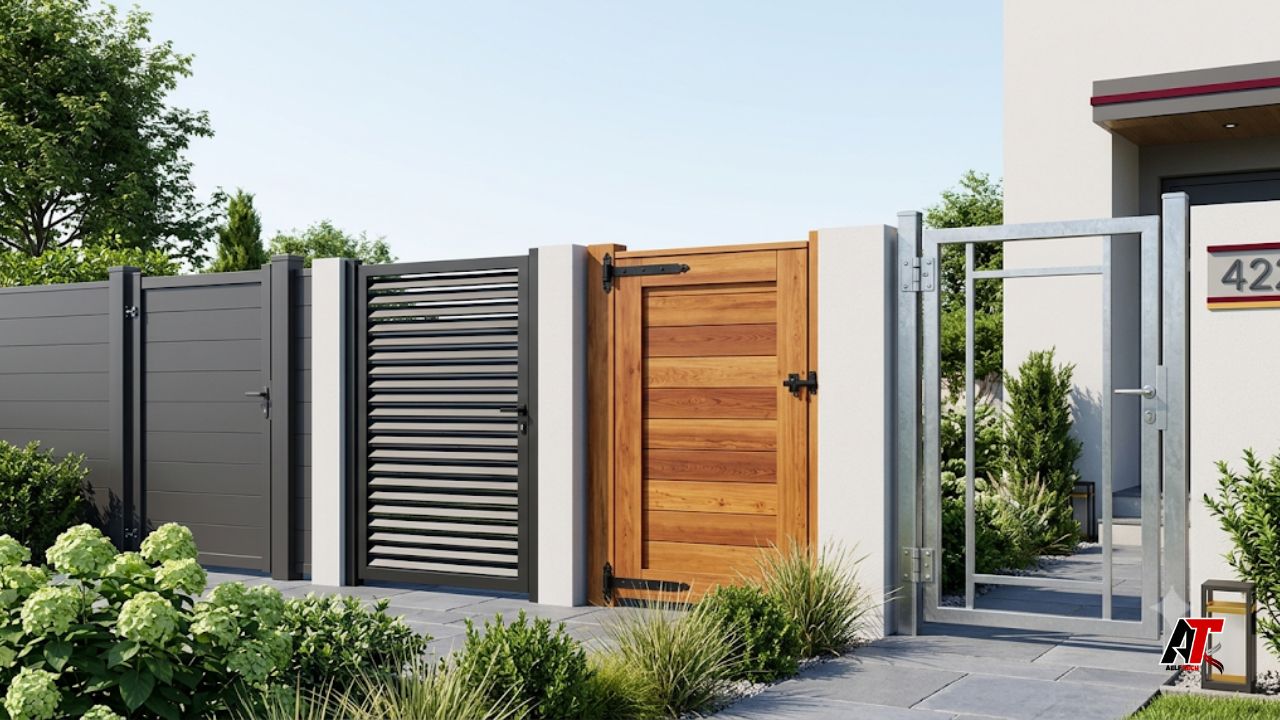
A fence gate does more work than the rest of a fence. It opens, closes, carries its own weight, holds locks and hinges, and faces repeated pressure from wind, rain, heat, moisture, and daily use. That is why a material that performs well as a fixed fence panel may not always be the best choice for a moving gate. A long-lasting gate needs the right balance of strength, weight, weather resistance, maintenance, and price.
The good news is that durable fence gates are available at almost every budget level. Pressure-treated wood and mesh gates can work well for cost-conscious projects. Galvanized steel and aluminum offer strong long-term value. Composite, vinyl, cedar, and decorative iron provide different combinations of appearance, upkeep, and service life. This guide compares the top materials, explains where each one performs best, and helps you avoid paying for a gate that looks attractive but sags or fails too soon.
What Makes a Fence Gate Last?
Durability is not only about the gate panel. A gate lasts when the frame, posts, hinges, fasteners, finish, and installation all work together. Because the gate leaf hangs from one side, its weight creates leverage against the hinge post. A wide or heavy gate needs a rigid frame, deep and stable posts, properly spaced hinges, and diagonal bracing. Without these details, even premium material can drop out of alignment.
Climate also changes the best choice. Wood absorbs and releases moisture, so it can swell, shrink, warp, or split when it is poorly sealed. Bare steel can rust, especially near the coast or in humid areas. Dark composite or vinyl may expand in strong sun. Aluminum resists rust but needs enough structural thickness for wide gates. Before comparing prices, consider the gate width, privacy level, wind exposure, security needs, local climate, and the amount of maintenance you are willing to do.
1. Pressure-Treated Wood: Best for a Tight Budget
Pressure-treated timber is one of the most affordable choices for a solid privacy gate. It is widely available, easy to cut, and simple to repair. It also accepts paint or stain, so homeowners can match the gate to an existing fence or exterior colour. For a small pedestrian gate, treated wood can offer excellent value when it is built with a strong frame and protected from standing water.
Its main weakness is movement. Wood naturally reacts to changes in moisture, and a heavy timber gate can sag if it lacks diagonal bracing. Use dry, straight boards, exterior-rated screws, and a frame designed to transfer weight back toward the lower hinge. Seal cut ends and keep the bottom clear of soil. A stain or protective finish will need renewal over time. Treated wood is a strong budget option, but it rewards regular inspection and maintenance.
2. Cedar or Redwood: Best Natural-Wood Upgrade
Cedar and redwood are popular upgrades for buyers who want a natural look with better dimensional stability and natural resistance to decay than many basic softwoods. Their grain and colour work well with modern slatted gates, traditional garden entrances, and decorative privacy designs. They are also lighter than some treated lumber, which reduces the load on the hinges and post.
These woods still need care. Sunlight can fade the colour, moisture can cause movement, and unprotected end grain can absorb water. Stainless-steel or compatible coated fasteners help reduce staining. A high-quality exterior finish can preserve the appearance, while an unfinished gate will weather to a grey tone. Cedar or redwood is usually a mid-range to premium choice, depending on local supply, but it can provide a refined appearance without the weight of a full steel gate.
3. Galvanized Steel: Best for Strength and Security
Galvanized steel is one of the strongest materials for a long-lasting fence gate. The zinc coating separates the steel from the environment and also provides sacrificial protection if small areas of the surface are damaged. This makes galvanized steel a practical choice for security gates, driveway gates, welded mesh gates, farm entrances, and locations exposed to frequent use.
Steel can support wide openings and heavy-duty hardware, but the frame must be designed correctly to prevent twisting. A hot-dip galvanized frame with a quality powder-coated finish offers a useful combination of corrosion protection and colour. Buyers comparing a complete system or a fence for sale should check whether the frame, welds, hinges, posts, and fasteners have compatible protective finishes, not just the visible panel.
The upfront price is higher than basic wood or mesh, and very heavy gates may need larger posts or automation equipment. However, steel often delivers strong value when security, impact resistance, and a long service life matter more than the lowest initial price.
4. Aluminum: Best Low-Maintenance Metal
Aluminum is a strong choice for homeowners who want the clean appearance of metal without the rust risk associated with untreated steel. It is lightweight, easy to operate, and well suited to pedestrian gates, pool-style fencing, decorative front gates, and many automated driveway systems. Its low weight reduces stress on hinges, posts, and gate motors.
The key is to choose a properly engineered gate rather than the thinnest available product. Lightweight aluminum can dent or flex under impact, and a large privacy gate can catch strong wind. Look for reinforced rails, strong welded corners or mechanical connections, and a durable powder-coated finish. Aluminum normally costs more than pressure-treated wood, but lower maintenance can make it economical over the full ownership period. It is especially attractive in damp or coastal settings when the coating and hardware are suitable for those conditions.
5. Wood-Plastic Composite: Best for Modern, Low-Maintenance Privacy
Wood-plastic composite combines wood fibres with plastic to create boards or panels that offer a timber-like appearance with less routine upkeep. It does not need the same painting or staining schedule as natural wood, and quality systems are designed to resist common problems such as rot, splintering, mould, and weather-related movement. Homeowners looking for beautiful composite fence panels can choose from modern colours, horizontal profiles, and wood-effect finishes.
Composite is an excellent infill material, but it must be used carefully in a gate. The boards can be heavier than expected, and they may expand and contract with temperature. A strong aluminum or galvanized-steel frame is often the best way to support them. Follow the product’s spacing and fastening instructions, and confirm that the system is approved for gates rather than fixed panels only. Composite usually falls in the mid-to-premium price range, but its consistent appearance and reduced maintenance can justify the cost.
6. Vinyl or PVC: Best for Easy Cleaning and a Consistent Look
Vinyl or PVC gates are popular with homeowners who want a bright, uniform appearance and simple cleaning. The material does not rot, and it does not require repainting in the way that wood does. It works well for garden gates, privacy fencing, and homes where a matching modular fence system is available.
Quality varies significantly. Thin profiles can flex, become brittle, or lose shape under heat, cold, or strong wind. A durable vinyl gate should have reinforced rails, suitable internal support, UV-resistant material, and enough clearance for seasonal movement. Large vinyl gates may use metal reinforcement inside the frame. Vinyl is normally a mid-range option: it costs more than basic treated wood, but its low upkeep can reduce future labour and finishing expenses.
7. Wrought Iron or Decorative Steel: Best Premium Statement Gate
Traditional wrought iron and modern decorative steel create a strong, high-end entrance. They suit formal homes, heritage designs, and properties where security and visual impact are priorities. Custom fabrication allows scrollwork, spear tops, geometric patterns, and matching side panels. A well-built decorative metal gate can remain functional for many years when the frame, coating, and hardware receive proper care.
The disadvantages are cost, weight, and maintenance. True wrought iron is less common and can be expensive, while many products sold under that name are fabricated steel. Any damaged coating should be repaired before rust spreads. Heavy gates need substantial posts and hinges, and automated systems must be sized for the load. This is a premium choice, but it can add architectural character that simpler materials cannot match.
8. Chain-Link or Welded Mesh: Best Practical Economy Option
Chain-link and welded mesh gates are among the most economical choices for side yards, pet areas, utility spaces, farms, and commercial boundaries. They provide visibility, airflow, and reliable access without the cost or wind load of a solid privacy gate. Galvanized or PVC-coated mesh improves weather resistance, while a tubular metal frame keeps the gate square.
This material is not the first choice when privacy or luxury appearance is the priority, but it is difficult to beat for function per dollar. Pay attention to the frame diameter, wire gauge, coating quality, latch, and post strength. A cheap mesh panel on a weak frame will still sag, while a properly built gate can handle frequent use with minimal maintenance.
Fence Gate Material Comparison by Budget
For a low initial budget, pressure-treated wood and galvanized mesh usually offer the best balance of availability and function. For a moderate budget, cedar, quality vinyl, and reinforced aluminum provide better appearance or lower upkeep. Composite infill on a metal frame is a good mid-to-premium solution for modern privacy. At the premium end, heavy galvanized steel, custom aluminum, and decorative iron provide the greatest design freedom, security, or structural capacity.
The cheapest purchase is not always the lowest-cost gate. Include finishing, repairs, replacement hardware, cleaning, repainting, and possible post movement in your comparison. A slightly more expensive material may cost less over ten or fifteen years if it avoids repeated sanding, sealing, rust treatment, or board replacement.
Do Not Ignore the Frame, Posts, and Hardware
A long-lasting material cannot compensate for weak hardware. Hinges should be rated for the actual gate weight, not chosen by appearance alone. Exterior fasteners should be corrosion resistant and compatible with the gate material. Galvanic corrosion can occur when unsuitable metals remain in contact in a wet environment, so use manufacturer-recommended hardware and isolating washers where required.
The hinge post must remain vertical under a constant side load. For wide driveway gates, a double-leaf design may reduce stress compared with one very long leaf. A gate wheel can help in some situations, but it should not be used to hide a flexible frame or unstable post. Self-closing hinges, drop bolts, latches, stops, and automation equipment also need to match the gate’s size and use.
How to Choose the Right Material for Your Property
Start with the purpose of the gate. Choose galvanized steel or robust mesh when security and frequent use are most important. Choose aluminum when corrosion resistance, low weight, and minimal maintenance are priorities. Select pressure-treated wood for an affordable privacy gate, or cedar for a lighter and more refined natural finish. Consider composite or vinyl when you want consistent colour and less ongoing finishing work.
Next, match the design to the environment. Open metal or mesh gates allow wind to pass through, while solid wood, vinyl, and composite privacy gates create greater wind pressure. Coastal settings need suitable coatings and hardware. Hot, sunny areas require attention to UV stability and thermal expansion. Wet climates make drainage, sealed cut ends, and post protection especially important.
Finally, compare complete systems rather than material samples. Ask who makes the frame, how the corners are joined, what coating protects the welds, how replacement parts are obtained, and whether the warranty covers gate use. For more practical home improvement and property guidance, readers can visit aelftech.com.
Final Verdict
There is no single fence gate material that is best for every home. Pressure-treated wood and mesh lead on affordability. Cedar gives natural beauty with less weight. Galvanized steel is the strongest all-round choice for security and wide openings. Aluminum offers excellent corrosion resistance and easy operation. Composite and vinyl reduce routine maintenance, while decorative iron delivers a premium architectural finish. The most reliable gate is the one that fits the budget, climate, width, privacy requirement, and maintenance plan of the property. Spend as much attention on the frame, posts, hinges, and protective finish as you do on the visible material. A correctly designed mid-priced gate will usually outlast an expensive material installed with weak support.
Leave a Reply