
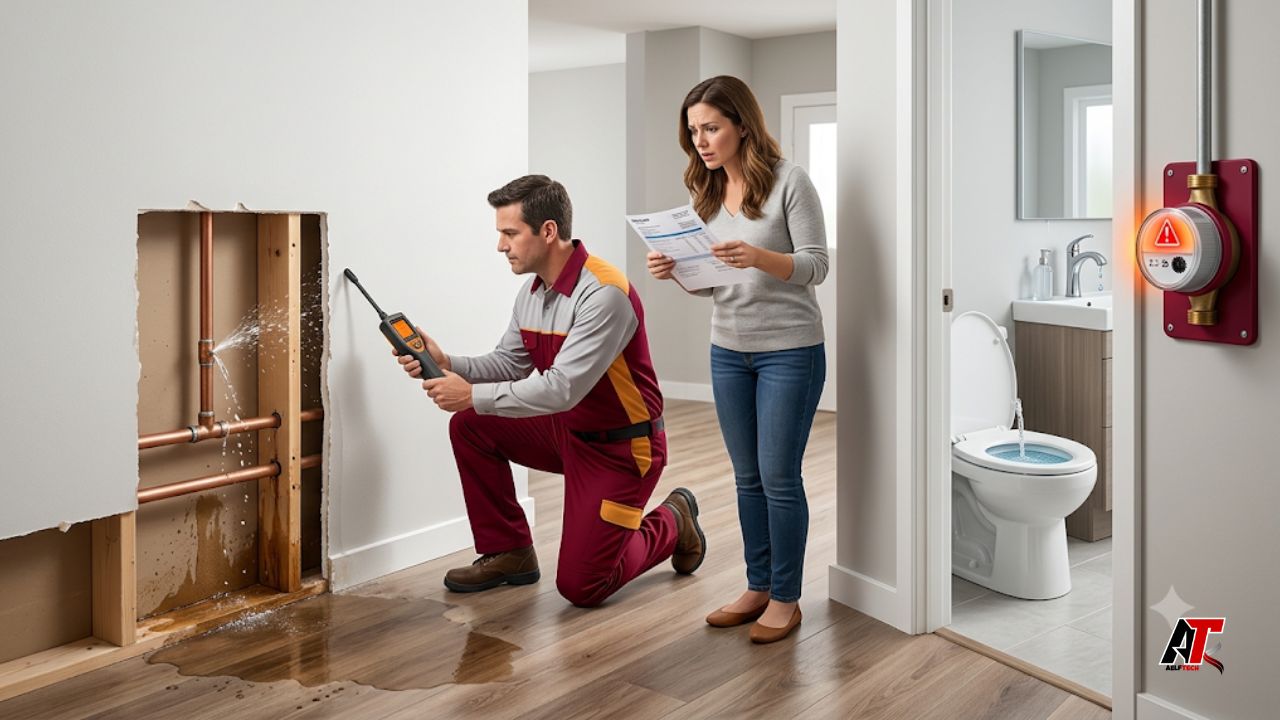
A higher water bill does not always mean your family used more water. In many homes, the cause is a plumbing problem hidden behind walls, under floors, inside toilets, or below the ground. A slow leak can waste water every hour without leaving an obvious puddle.
This guide explains common hidden plumbing issues, the warning signs to watch for, simple checks you can do safely, and when to call a licensed plumber before water waste turns into property damage.
How Hidden Plumbing Problems Increase Water Use
Your plumbing system stays under pressure, so water is ready whenever you open a tap or use an appliance. If a pipe, valve, seal, or fixture develops a small fault, water may continue escaping even when everything appears to be off.
A worn toilet flapper, pinhole pipe leak, or damaged underground line can run day and night. Hidden moisture may also damage paint, wood, flooring, and drywall. Early detection protects both your water budget and your home.
1. A Toilet That Runs Quietly
Toilets are one of the most common sources of hidden water waste. A toilet may look normal but still allow water to move from the tank into the bowl. Common causes include a damaged flapper, a loose chain, an incorrect float setting, a cracked overflow tube, or a worn fill valve.
Sometimes the toilet runs loudly, but many leaks are almost silent. You may hear a short refill sound every few minutes, even when no one has used the toilet. You can also place a few drops of food colouring in the tank, wait about 15 to 20 minutes without flushing, and check the bowl. If coloured water appears in the bowl, the tank is leaking.
Replacing a simple flapper may solve the issue, but recurring leaks can point to a damaged valve or an older toilet mechanism. Fixing the problem quickly prevents constant water loss.
2. Leaking Taps and Shower Valves
A dripping tap is easy to ignore because each drop seems small. However, a tap that drips throughout the day can add unnecessary water use to every billing cycle. The cause may be a worn washer, damaged cartridge, loose O-ring, corroded valve seat, or poor seal.
Shower leaks can be less obvious. Water may escape behind the handle or inside the wall when the shower is running. A faulty mixing valve can also allow water to move between hot and cold supply lines. Look for water marks near the shower, loose tiles, soft drywall, peeling paint, or a musty smell in the adjoining room.
Do not tighten handles with excessive force. This can damage the fixture. A plumber can identify the correct replacement parts and check whether water has reached the wall cavity.
3. Leaks Behind Walls or Under Floors
Supply pipes often run through areas you cannot see. A small crack, loose joint, damaged fitting, or pinhole leak may stay hidden until it creates a stain or changes the surface of a wall or floor. Warm spots on flooring can also suggest a hot-water pipe leak below the surface.
Warning signs include bubbling paint, discoloured patches, warped skirting boards, soft drywall, damp carpet, lifted flooring, or a persistent earthy smell. You may also hear faint dripping or hissing when the house is quiet.
Avoid opening walls without knowing the pipe location. Professional leak detection may use moisture meters, pressure testing, acoustic equipment, or thermal imaging to narrow down the source with less damage.
4. Underground Water Service Line Leaks
The main service line carries water from the meter to your home. If this pipe cracks underground, the water can escape into the soil before you use it. These leaks may be caused by age, ground movement, tree roots, corrosion, freezing conditions, or poor installation.
Possible signs include wet soil during dry weather, unusually green patches of grass, soft ground, low water pressure, or water pooling near the route between the meter and the house. The meter may also continue moving when all indoor and outdoor water fixtures are off.
Underground line repairs require accurate location and safe excavation. A qualified plumbing company such as Wright Choice Plumbing can assess suspected line leaks and recommend an appropriate repair method.
5. Irrigation System Leaks
Sprinklers and garden irrigation systems can waste a large amount of water without affecting indoor fixtures. Cracked pipes, broken sprinkler heads, faulty valves, poor timer settings, and loose connections may release water into the soil. Because irrigation often runs early in the morning, leaks can go unnoticed.
Walk through each watering zone while the system is operating. Look for misting, uneven spray, sunken ground, water flowing onto paths, or one area that stays muddy. Check whether a valve continues to pass water after the zone turns off.
Seasonal inspections are useful, especially after cold weather, landscaping work, or lawn maintenance. Adjust the timer for rainfall and plant needs so the system does not run longer than necessary.
6. Water Heater Leaks and Pressure Problems
A water heater can lose water through a drain valve, pipe connection, tank seam, or temperature and pressure relief valve. Small leaks may evaporate or flow into a drain, which makes them harder to notice. Check the floor around the unit, the drain pan, connected pipes, and nearby walls for rust, mineral deposits, or dampness.
A relief valve that releases water repeatedly may signal excessive pressure, overheating, or a faulty expansion system. Do not plug or cap this safety valve. It protects the tank from dangerous pressure. A plumber should inspect repeated discharge.
Older tanks can also corrode from the inside. If water appears beneath the tank body, replacement may be safer than repair.
7. Hidden Leaks in Appliances
Dishwashers, washing machines, refrigerators, water filters, and ice makers all connect to the plumbing system. A loose hose or cracked supply line may leak only while the appliance runs. Water can collect underneath the unit where it remains hidden for weeks.
Check hoses for bulges, cracks, rust, and loose fittings. Pull appliances forward only when it is safe and the floor allows it. Look for damp cabinets, damaged laminate, swollen wood, or staining behind the machine.
Braided supply lines can offer better protection than old rubber hoses, but every connection still needs regular inspection. Replace damaged lines before they fail completely.
8. Faulty Pressure-Reducing Valve
Some homes use a pressure-reducing valve to control the water pressure entering the building. If the valve fails, pressure may become too high or unstable. High pressure can force more water through taps and showers while placing extra stress on pipes, toilet valves, appliance hoses, and fittings.
Common signs include banging pipes, frequent fixture leaks, unusually strong flow, or appliances that develop repeated connection problems. A simple pressure gauge attached to an outdoor tap can provide a basic reading, but the result should be interpreted correctly.
A plumber can test the pressure under different conditions and repair or replace the valve when needed.
How to Check for a Hidden Leak at Home
A water meter test can help confirm whether water is moving through the system when it should not be. Choose a time when no one needs water and follow these steps:
- Turn off taps, showers, appliances, irrigation, and any automatic water-using equipment.
- Check that toilets are not being flushed and the water heater is not being drained.
- Record the meter reading or take a clear photo of it.
- Wait 30 to 60 minutes without using water.
- Check the meter again. Any movement may indicate a leak or an appliance cycle that was not fully disabled.
You can repeat the test with the main house shutoff closed. If the meter still moves, the leak may be between the meter and the shutoff. If it stops, the leak is more likely inside the home or in a connected outdoor system.
Do not rely on the meter test alone. Some slow leaks need a longer test period, and certain systems may use water automatically.
Compare Your Water Bills Carefully
Review several months of bills instead of looking at one total. Compare the amount of water used, not only the price, because utility rates and service charges can change. Check the same season from the previous year when possible.
A sudden increase often points to a new leak, irrigation problem, guest usage, or appliance issue. A steady rise may suggest a slow leak, growing household demand, or an inefficient fixture. Some water providers also offer daily usage data or high-use alerts through an online account.
Keep notes when you repair a fixture or change irrigation settings. The next bill can help confirm whether the action reduced usage.
When You Should Call a Professional Plumber
Simple tasks such as replacing an accessible toilet flapper may be manageable for some homeowners. However, hidden leaks can involve pressurised pipes, electrical equipment, gas-fired water heaters, structural materials, or underground services. Call a licensed plumber when you notice repeated meter movement, low pressure, wall or ceiling stains, hot floor areas, sewage smells, unexplained dampness, or water near electrical systems.
You should also seek urgent help if a pipe bursts, the water heater tank leaks, the main shutoff will not close, or water is damaging the ceiling. Turn off the water supply when it is safe, move valuables away from the area, and avoid touching wet electrical equipment.
For more home maintenance, digital guidance, and practical property-related content, visit aelftech.com usa.
Ways to Prevent Future Water Waste
Prevention starts with regular observation. Check under sinks, around toilets, near appliances, and beside the water heater every month. Repair dripping fixtures early. Replace damaged hoses and seals. Keep the main shutoff accessible and make sure household members know where it is.
Consider installing leak sensors near high-risk areas such as the washing machine, water heater, dishwasher, and basement. Smart leak monitors can track unusual flow patterns and send alerts, although they do not replace physical inspections.
Schedule a plumbing inspection when buying an older home, completing a major renovation, or dealing with repeated pressure and drainage issues. A small repair today can prevent higher water bills and major property damage later.
Frequently Asked Questions
Can a small hidden leak really raise my water bill?
Yes. A small leak can run continuously for days or weeks. Even when the flow looks minor, constant water loss can noticeably increase monthly usage.
Why is my water bill high when there are no visible leaks?
The leak may be inside a toilet, behind a wall, under a floor, below the ground, or within an appliance. Irrigation settings and water softener cycles can also increase use.
How can I tell whether my toilet is leaking?
Listen for random refill sounds and perform a food-colouring test in the tank. Colour appearing in the bowl without flushing indicates water is passing through.
Will my water meter detect a slow leak?
Often, yes, but very slow leaks may require a longer no-use test. Automatic appliances must be turned off so they do not affect the result.
Who is responsible for a leak near the water meter?
Responsibility depends on whether the leak is on the utility side or property side of the meter and on local rules. Contact the water provider and a plumber to confirm.
Conclusion
Hidden plumbing issues can quietly waste water and raise your household costs. Running toilets, leaking valves, underground lines, faulty appliances, pressure problems, and irrigation damage are common causes. The best approach is to watch for small changes, test your meter, compare usage, and act before water damage spreads.
Do not ignore a bill increase that has no clear explanation. A timely inspection can identify the source, reduce waste, protect your home, and restore predictable water use.
Leave a Reply