
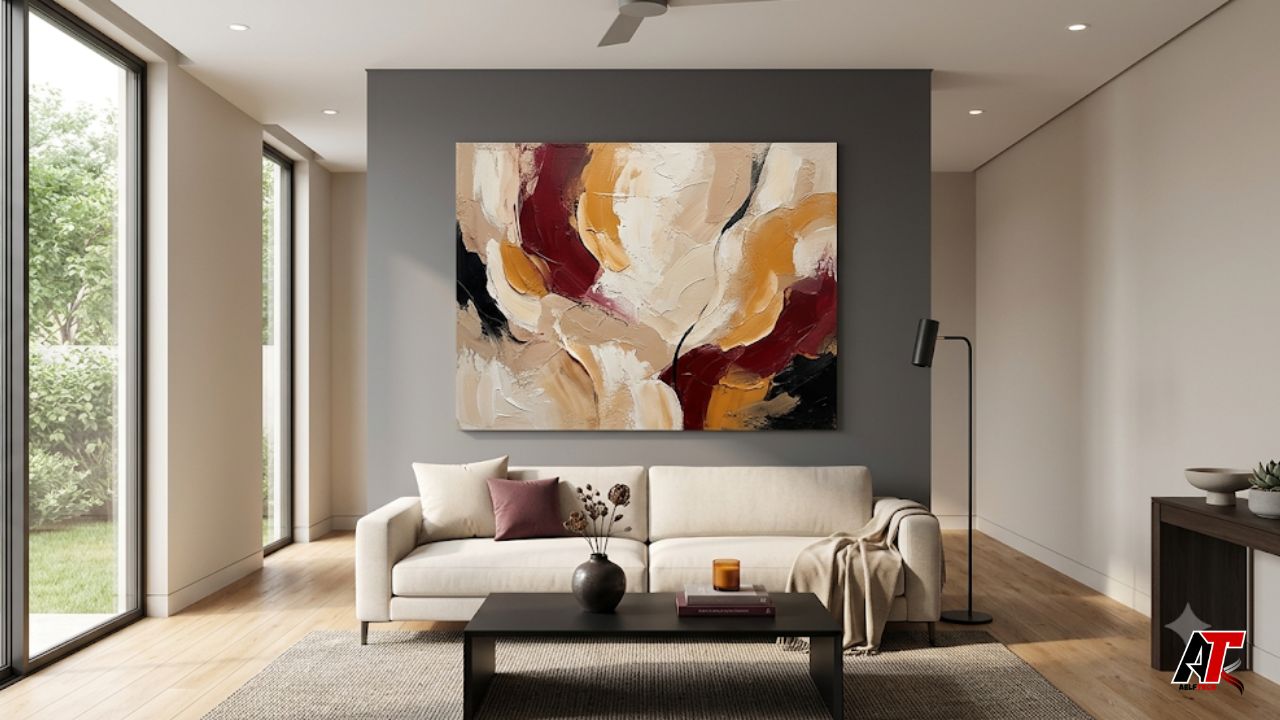
Modern living rooms often use clean lines, open space, neutral colors, and simple furniture. This creates a calm and polished look. However, it can also make a room feel cold or unfinished when every surface is smooth and perfectly matched.
Hand-painted art adds the human element that modern interiors sometimes lack. You can see the artist’s brushstrokes, color choices, and small variations in the surface. These details give the room warmth, depth, and personality without adding clutter.
Choosing hand-painted art for a modern living room is not only about filling an empty wall. The right piece can set the mood, connect your color palette, and create a clear focal point. This guide explains how to select, place, light, and style artwork so it feels like a natural part of your home.
Why Hand-Painted Art Works in Modern Interiors
Modern design depends on balance. Straight furniture, polished materials, and open areas create order. A painted canvas adds contrast through texture, movement, and visible craftsmanship. That contrast softens the room while keeping its modern character.
This effect is especially useful in spaces with white walls, glass tables, metal lighting, or built-in storage. These features can look elegant, but they may also feel hard or impersonal. A painting introduces an organic surface and gives the eye something meaningful to explore.
Original artwork also changes as you move around the room. From a distance, you notice the main colors and shapes. Up close, you see fine brushwork, layered pigment, and subtle marks. This visual depth keeps the room interesting without filling it with extra objects.
Create a Clear Focal Point
Every successful living room needs a visual anchor. In many homes, the television becomes the main focus by default. A well-placed painting can shift attention away from the screen and make the room feel more expressive.
The wall above the sofa is a popular location because the sofa already carries strong visual weight. A large canvas connects the seating area to the wall behind it. In an open-plan home, it can also define where the living zone begins without using a divider.
A focal point does not have to be huge. A smaller, detailed painting above a console or beside a reading chair can create a quiet moment of interest. The key is to give it enough empty space so it does not compete with nearby decor.
Add Warmth, Texture, and Character
Minimal rooms can look flat when they rely on plain walls, smooth upholstery, and hard surfaces. Hand-painted artwork adds texture through canvas grain, thick paint, soft washes, and layered color. These surfaces catch light and create gentle shadows throughout the day.
For a rich and classic finish, a hand oil painting can add deep color, gradual tonal changes, and a sense of craftsmanship. Oil paint works especially well when a modern room needs more warmth or a refined, luxurious presence.
A neutral interior can also benefit from textured wall art because raised surfaces add depth without relying on a busy image. This approach suits beige, cream, gray, and monochrome rooms where texture matters more than bold color.
Most importantly, a painted piece shows that a person created it. That visible human touch helps a carefully designed room feel welcoming rather than staged.
Choose Artwork by Mood, Not Trends
Start with the feeling you want the room to create. Art should support how you want to live in the space, not simply follow a popular style.
- A calm room benefits from soft geometry, tonal landscapes, gentle abstract forms, or paintings with generous negative space.
- To create energy and conversation, look for expressive brushwork, saturated color, figurative work, or an unexpected subject.
- For timeless appeal, consider limited palettes, organic shapes, architectural forms, or modern interpretations of nature.
Do not choose a painting only because it matches the sofa. Perfect matching can make the room look too calculated. Instead, find one or two colors that relate to the existing decor, then let the artwork introduce a fresh accent.
Select the Right Size and Proportion
Artwork that is too small is one of the main reasons a living room feels unfinished. A tiny frame above a wide sofa looks disconnected and leaves too much empty wall around it.
As a practical guide, artwork above a sofa should cover about two-thirds to three-quarters of the sofa’s width. You can achieve this with one large canvas, a diptych, a triptych, or a closely arranged group of smaller works.
Leave about 15 to 25 centimeters between the top of the sofa and the bottom of the artwork. The exact gap depends on the ceiling height, furniture scale, and frame size. The painting should feel connected to the seating area, not as though it is floating near the ceiling.
On an empty wall, place the visual center near average eye level. In a room where people spend most of their time seated, a slightly lower position often feels more natural.
Use Color to Connect the Room
A painting can link furniture, textiles, flooring, and accessories. You do not need to repeat every color in the canvas. A more natural approach is to select two or three tones and echo them in small details.
For example, a rust brushstroke might connect with a cushion, while a soft blue may appear in a throw. Warm gold can relate to timber furniture or a brass lamp. These small repetitions create unity without making the room look themed.
If the room already contains strong colors, choose artwork with quieter areas to avoid visual overload. If the room is mostly neutral, the painting can carry brighter color and become the main source of energy. In many cases, thoughtful contrast works better than exact coordination.
Match the Art to the Architecture
The best artwork responds to the shape of the wall and the architecture around it. Modern living rooms may include low ceilings, narrow walls, double-height spaces, fireplaces, or large windows. Each condition needs a different approach.
- Vertical artwork suits spaces between tall windows, beside a fireplace, or on a narrow wall.
- A horizontal piece works well above a sofa, sideboard, or long console.
- In a double-height room, choose a large vertical canvas to connect the seating area with the upper wall.
- Along a long wall, arrange a series of smaller works when one oversized canvas would feel too heavy.
Before hanging anything, check the view from the entrance, the main sofa, and nearby open-plan areas. A painting should look balanced from the places where people will see it most often.
Style the Area with Restraint
Once the artwork is in place, avoid surrounding it with too many objects. Modern styling works best when each element has room to breathe. A simple console, one lamp, a small stack of books, or a single vase may be enough.
For a gallery wall, use one clear organizing rule. You might repeat the frame color, keep equal spacing, follow a shared palette, or arrange the pieces within a balanced outer shape. Mixed frames can still look modern when the layout feels deliberate.
Tall plants and floor lamps can frame a painting, but they should not cover important parts of it. Keep the composition open and easy to read.
For more practical ideas about design and technology, visit aelftech.com.
Use Lighting to Reveal the Artwork
Good lighting can completely change the way a painting looks. Natural daylight shows color well, but strong direct sun may fade pigments and create glare. Keep valuable artwork away from long periods of harsh sunlight, especially near large south- or west-facing windows.
At night, use an adjustable picture light, ceiling spotlight, or track light with a soft, wide beam. The light should cover the full canvas instead of creating one bright circle in the center.
Warm white light usually suits living rooms because it supports a comfortable atmosphere and enhances warm pigments. Avoid reflective glass over heavily textured work unless protection is necessary, as glare can hide the brushwork.
Practical Placement Ideas
- Above the sofa: use one large piece or a balanced multi-panel arrangement.
- Above the fireplace: leave visible space around the frame and keep the mantel display simple.
- On a side wall: choose a vertical painting to add depth and balance the main seating wall.
- In a reading corner: hang a smaller piece beside a chair and lamp to create intimacy.
- On built-in shelves: lean a small unframed canvas among books and ceramics for a relaxed look.
- In an open-plan room: use related colors or similar frames to connect different zones without making them identical.
Common Mistakes to Avoid
Do not treat art as a last-minute accessory. If a painting is important to you, let it influence the room’s color palette and layout from an early stage.
Avoid hanging artwork too high. It should relate to people and furniture, not float close to the ceiling. Also, resist the urge to crowd a strong painting with mirrors, clocks, signs, and shelves.
Do not buy a piece only because it is fashionable. Trends change, but art works best when the subject, mood, or technique has personal meaning. A modern interior can support landscapes, portraits, botanical art, and traditional techniques as easily as abstract work.
Finally, consider the frame. Slim black, natural wood, white, or metallic frames can connect the painting to the room. Some canvases look better without a frame, especially when the painted edges are finished.
Care for Hand-Painted Artwork
Dust the surface gently with a clean, soft, dry brush or microfiber cloth. Never use household spray, water, or cleaning chemicals on the paint.
Keep the artwork away from damp walls, heating vents, and areas with frequent temperature changes. When moving it, hold the frame from both sides. Do not press the canvas.
For valuable, stained, or damaged work, contact a professional conservator instead of trying a home repair.
Frequently Asked Questions
What type of painting suits a modern living room?
Abstract, minimalist, landscape, figurative, and textured paintings can all work. Choose a piece that suits the wall size, room palette, architecture, and mood.
Should the artwork match the sofa?
It should connect with the room, but it does not need to match exactly. Repeating one or two colors is usually enough to create harmony while keeping useful contrast.
Is one large painting better than a gallery wall?
One large painting creates a clean and confident focal point. A gallery wall adds variety and personality. The best choice depends on the wall size and how much visual activity you want.
Can traditional art work in a modern interior?
Yes. Traditional subjects can create striking contrast when you pair them with simple furniture, open spacing, and a clean frame.
Conclusion
Hand-painted art completes a modern living room by adding focus, texture, warmth, and individuality. It balances clean architecture with human expression and helps a thoughtful home feel different from a generic showroom.
The best piece is not always the most expensive or fashionable. It is the one that fits the wall, supports the mood of the room, and continues to hold your attention.
Choose artwork with personal meaning. Give it enough space, light it carefully, and repeat a few of its colors or textures nearby. When you treat art as part of the room’s foundation, the whole space feels more complete.
Leave a Reply