
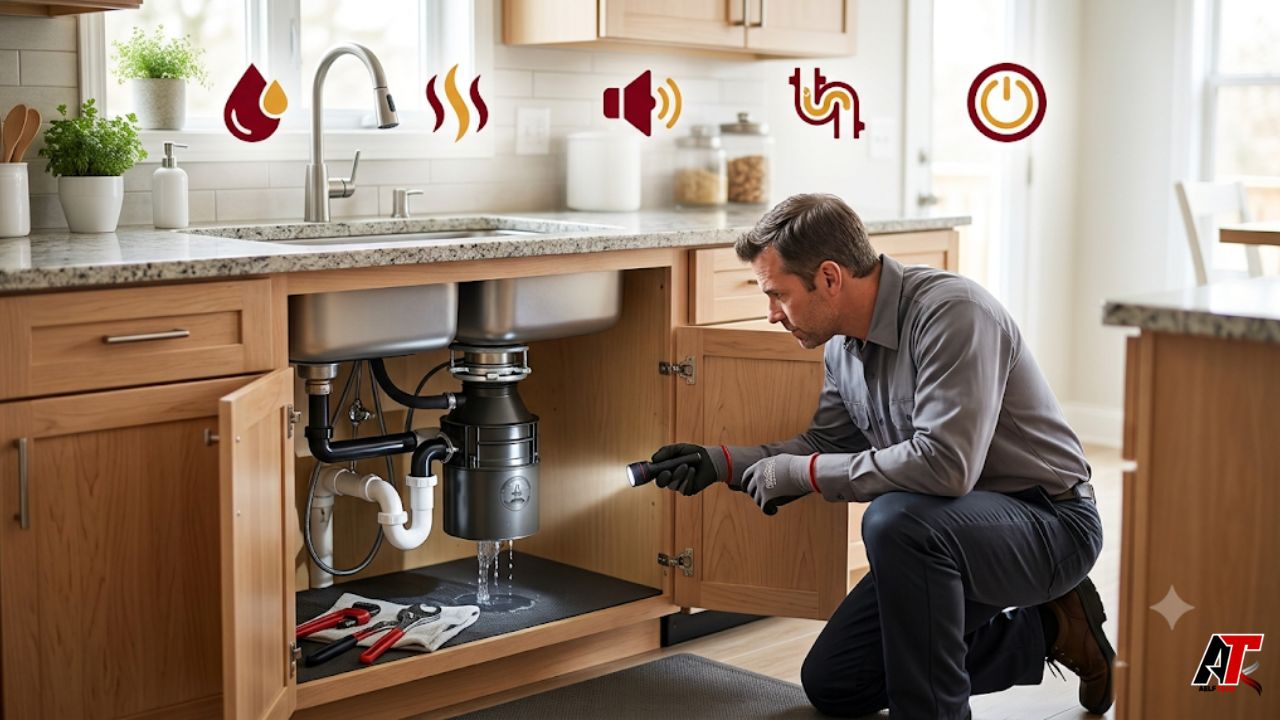
A working garbage disposal makes daily kitchen cleanup simple. It handles small food scraps, keeps the sink moving, and helps prevent unpleasant smells after cooking. However, when the unit starts to fail, the signs are often easy to miss at first.
The good news is that most disposal problems give warning signs before complete failure. When you understand those signs, you can act early. You can also decide whether the problem needs a quick reset, careful cleaning, professional repair, or replacement. This guide explains the most common signs your garbage disposal needs repair and what each warning may mean.
Why Garbage Disposal Problems Should Not Be Ignored
A garbage disposal is connected to your sink, drain line, and electrical system. That means one small issue can affect more than one part of the kitchen. A jammed disposal can slow water drainage. A loose connection can leak into the cabinet. A failing motor can create noise, heat, and repeated shutdowns.
You do not need to panic every time the disposal sounds different. Still, you should take repeated warning signs seriously. If the issue keeps returning, the unit is asking for attention.
1. The Disposal Will Not Turn On
One of the clearest warning signs is a disposal that does not respond when you flip the switch. There may be no sound at all. The unit may seem completely dead. In some cases, the reset button may have tripped. In other cases, the switch, outlet, wiring, or motor may be the problem.
Before assuming the worst, turn the disposal off. Then check whether the reset button on the bottom of the unit has popped out. If the disposal is plugged into an outlet under the sink, make sure the plug has not come loose. You can also check the breaker if the unit has no power.
If the disposal still does not respond, avoid taking it apart yourself. Electrical faults can be dangerous. A plumber or qualified technician can test the power safely and decide whether the motor can be repaired. If you need professional sink disposal repair, it is better to call before repeated attempts damage the unit further.
2. It Hums but Does Not Grind
A humming sound often means the motor is receiving power, but the grinding parts are not moving. This commonly happens when food, a utensil, a bottle cap, or another object jams the flywheel. The motor tries to run, but the blades or impellers cannot spin freely.
This sign should not be ignored. If the disposal hums for more than a few seconds, turn it off. Letting it hum can overheat the motor. It may also trip the reset button.
Never put your hand inside the disposal. Even when the unit is off, the sharp internal parts can hurt you. If the unit has a bottom hex socket, the correct wrench may help move the jam manually. However, if the jam is stubborn or you are unsure what is inside, call a professional. Safe clearing is always better than risking injury or motor damage.
3. Water Drains Slowly from the Sink
Slow drainage is another common sign that your disposal needs attention. Water may sit in the sink for several minutes. It may drain only when the disposal runs. Sometimes the water may move down slowly and then return with small food particles.
A slow drain may come from trapped food inside the disposal. It may also point to a clog in the drain pipe, P-trap, or connected kitchen plumbing. Grease, starches, fibrous foods, and coffee grounds can collect over time. Once buildup forms, the disposal cannot move waste smoothly.
Do not keep pushing more food into a slow disposal. This can make the clog worse. Also be careful with harsh chemical drain cleaners. They may damage parts and create safety risks. If plunging or simple cleaning does not help, the drain line may need professional attention.
4. Bad Odors Keep Coming Back
Garbage disposals can smell bad from time to time. Food particles may stick inside the grinding chamber. A short cleaning routine can usually solve a mild odor. However, a smell that keeps coming back may be a repair warning.
Persistent odors can mean food waste is trapped deeper in the unit or drain line. It may also mean the disposal is not grinding properly. When scraps remain inside the chamber, they break down and create a sour smell. If the sink smells even after cleaning, the issue may be hidden below the surface.
Try flushing the disposal with cold water while it runs. You can also use mild cleaning methods that are safe for the unit. If the odor returns quickly, ask a plumber to inspect the disposal, trap, and drain line. The real cause may be buildup, a partial clog, or poor water flow.
5. You Notice Leaks Under the Sink
A leak under the sink should always be taken seriously. Even a slow drip can damage cabinets, flooring, and stored items. With a garbage disposal, leaks may come from several places. The sink flange may be loose. The mounting assembly may fail. The drain connection may loosen. The dishwasher hose connection may leak. The disposal body itself may also crack.
First, stop using the disposal if water is dripping near electrical parts. Place a towel or shallow container under the leak to protect the cabinet. Then look at where the water appears. A connection leak may be repairable. A crack in the disposal housing often means replacement is the safer choice.
Leaks can spread quietly. That is why it is wise to check under the sink every few weeks. If you see moisture, staining, swelling wood, or a musty smell, do not wait.
6. The Disposal Makes Loud Grinding or Rattling Noises
Some noise is normal when a disposal runs. However, loud grinding, rattling, or metal-on-metal sounds are not normal. These sounds often mean something hard is inside the unit. It could be a small spoon, screw, bone fragment, or broken internal part.
Turn off the disposal as soon as you hear a harsh noise. Running the unit can damage the impellers, motor, or grinding ring. After the power is off, use a flashlight to look into the opening. Do not reach in with your fingers. Use tongs or pliers only if the object is clearly visible and the unit is safely off.
If the noise continues after removing visible debris, the issue may be internal. A technician can tell whether the unit can be repaired or whether the damage is too severe.
7. The Reset Button Keeps Tripping
The reset button is designed to protect the motor when the disposal overheats or jams. Pressing it once after a simple overload may restore normal function. But if the button keeps tripping, there is a deeper problem.
Repeated resets can point to an ongoing jam, worn motor, electrical issue, or overload problem. It may also happen when the disposal is used with too much food at once. You should not keep resetting the unit again and again. That does not solve the cause. It only delays the repair.
When the reset button trips often, stop using the disposal until it is inspected. This protects the motor and reduces the risk of electrical trouble.
8. Food Waste Does Not Grind Properly
A disposal that used to work well may start leaving large pieces of food behind. You may hear the motor running, but the scraps do not break down as expected. This can happen when internal parts are dull, loose, jammed, or worn.
Poor grinding often causes more problems. Larger food pieces may move into the drain and create clogs. Water may start draining slowly. Odors may appear. The unit may also run longer, which puts extra stress on the motor.
If the disposal struggles with normal scraps, avoid overloading it. Run cold water before, during, and after use. Feed food waste slowly. If performance does not improve, the grinding chamber may need service.
9. The Sink Backs Up When the Disposal Runs
A backup is more serious than a slow drain. Water may rise into the sink when the disposal turns on. It may carry food particles, grease, or dirty water. Sometimes the other side of a double sink may fill up at the same time.
This usually means the blockage is not only inside the disposal. The drain line may be clogged. The P-trap may be blocked. If a dishwasher is connected, there may also be a problem with the hose or knockout plug on a newer installation.
Do not keep running the disposal during a backup. It can push water and waste into places where they should not go. A plumber can clear the line and check whether the disposal caused the clog or simply exposed it.
10. The Unit Is Old and Repairs Are Becoming Frequent
Age matters. Many disposals work well for years, but they do not last forever. If your unit is older and needs frequent resets, leak repairs, clog clearing, or jam removal, it may be near the end of its useful life.
Repair can still make sense for a simple jam, loose connection, or minor issue. Replacement may be better when the motor is failing, the housing is cracked, the unit leaks from the body, or the same problem returns after several repairs.
A professional can compare the repair cost with the value of a new unit. This helps you avoid spending money on short-term fixes when replacement would be more practical.
What You Can Check Before Calling a Plumber
You can make a few safe checks before scheduling repair. First, turn the disposal off. If the unit has no power, check the reset button and the breaker. If there is a visible object inside, make sure the power is off and remove it with tongs, not your hand. If the sink drains slowly, avoid adding more food waste.
You should also look under the sink for signs of water. Check around the mounting ring, discharge pipe, dishwasher hose, and bottom of the disposal. A photo of the leak can help the repair technician understand the problem faster.
How to Prevent Garbage Disposal Damage
Good habits can extend the life of your disposal. Run cold water whenever the unit is operating. Keep the water running for a short time after grinding to flush waste through the line. Add food slowly instead of forcing large amounts into the disposal at once.
Avoid grease, oil, bones, coffee grounds, eggshells, and fibrous foods like celery or corn husks. These items can jam the unit or clog the drain. Also avoid non-food items. Small objects can fall into the sink and cause loud rattling or internal damage.
When Professional Repair Is the Best Choice
Call a professional if the disposal leaks, hums without grinding, trips the reset button repeatedly, backs up the sink, or smells bad after cleaning. You should also call if you see water near electrical components or hear loud metal sounds.
Professional repair is not only about fixing the disposal. It also helps protect the drain system. A plumber can inspect the connections, trap, dishwasher hose, power issue, and drain line. That complete view is important because disposal symptoms often come from more than one cause.
For homeowners who want simple maintenance advice, team aelftech.com recommends treating disposal problems early instead of waiting for a full kitchen disruption. A small repair today can prevent water damage, odors, and emergency service later.
Final Thoughts
Garbage disposal problems are easy to overlook until they interrupt your routine. A unit that hums, leaks, smells bad, drains slowly, or needs constant resetting is not working as it should. These signs may start small, but they can lead to bigger plumbing issues if ignored.
The best approach is simple. Listen for changes. Watch for leaks. Pay attention to drainage. Use the disposal carefully. When a warning sign repeats, get it checked. With quick action and better habits, you can protect your kitchen, avoid messy backups, and keep your sink working smoothly.
Leave a Reply